

If you’re a pickleball fan who also jogs, sprints, or power‑walks, you may have seen the term heel to toe drop in shoe reviews.
It sounds technical. Misread it, and your calves, Achilles, or knees can pay the price. Your body may even feel too tired for your next game.
This guide is aimed at American Picklers. These players love dinks, drives, and kitchen battles but also want smooth moves and less pain—on the run and on the court.
What is heel to toe drop—and why should Picklers care?
Heel to toe drop (also called “shoe drop” or “offset”) is the height difference between your shoe’s heel and forefoot.
• A 10 mm drop means the heel sits 10 mm above the ball of your foot.
• A 0 mm drop means both parts are level (often called “zero-drop”).
For runners who play pickleball, this drop matters. It changes how your foot lands and shifts stress up your legs and back. This same chain helps with split-steps, lunges, overheads, and quick slides on the court.
Many Picklers use running to build endurance or lose weight. But the wrong drop or a fast switch can turn a good habit into discomfort.
Mistake #1: Choosing shoes by hype, not by heel to toe drop
Many players pick shoes based on:
• A buddy’s tip
• A flashy YouTube review
• A sale at the outlet
They do not check the heel to toe drop.
Why it hurts Picklers:
If hard courts already make your calves, Achilles, or knees tight, a big change in drop can be the worst change. That extra stress adds to your split-steps, stops, and lunges.
How to fix it:
- Check the heel to toe drop on each shoe website.
- If your current shoes feel fine, stay within 2–3 mm of that drop.
- If you are unsure, search your shoe model with “drop” online.
No need to obsess over it. Just know the number and work with it.
Mistake #2: Dropping too fast into low‑drop or zero‑drop shoes
Many low‑drop shoes feel natural and give an “athletic” feel. Picklers might think, “I move on my toes at the kitchen line, so I should run in low‑drop shoes.”
The idea is not bad—but the transition speed is key.
When you switch from a 10–12 mm drop to 4 mm or less:
• Your calves and Achilles take more load.
• Your strike can shift toward the midfoot or forefoot.
• Your stride mechanics change even if you do not plan them to.
For someone who runs miles and plays many pickleball games, this switch can bring overuse pain.
How to fix it: gradual transition
If you want a lower drop:
• Change by only 2–4 mm at once.
• Use the new shoes for warm‑ups, short easy runs, or light off‑court drills for 2–3 weeks.
• Keep your old shoes for longer runs or hard workouts until your legs adjust.
Think of it like learning a new spin serve. You do not use it in tournament play on day one. Your feet and calves need time.
Mistake #3: Ignoring how heel to toe drop affects court moves
Pickleball moves include:
• Lateral shuffles
• Split steps
• Short forward and backward sprints
• Lunges with quick recovery steps
Running is mostly forward motion. If your running shoes differ greatly from your court shoes, your body must switch between two movement modes.
Potential issues:
• High‑drop running shoes paired with lower‑drop court shoes stretch your calves and Achilles more during play.
• Low‑drop running shoes with higher‑drop court shoes create two movement patterns.
Neither mix is bad by itself. But a big mismatch can cause more soreness.
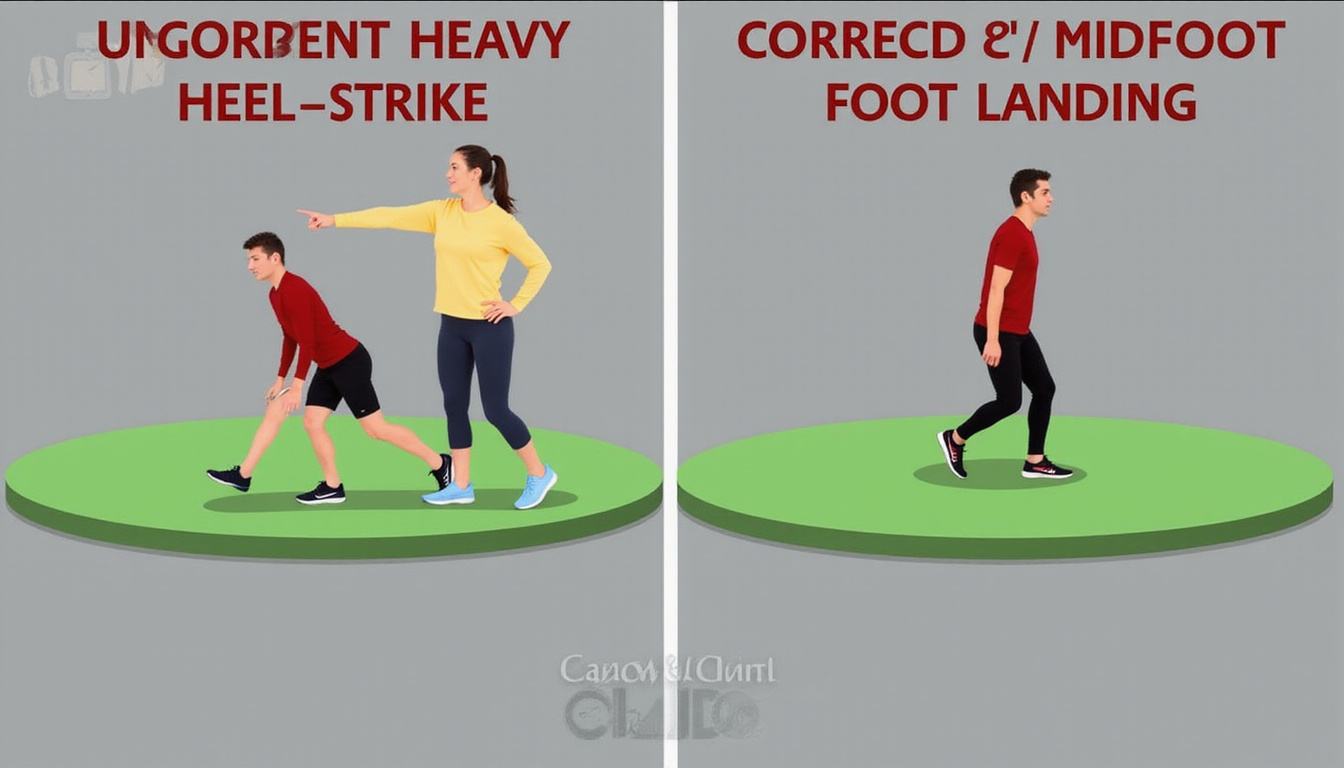
Smart approach for Picklers:
• Aim for a moderate drop (6–10 mm) in both your running and court shoes.
• If you love low‑drop running shoes, use court shoes on the lower end too—and transition slowly.
Mistake #4: Using heel to toe drop to “fix” form overnight
Some say that a lower drop shoe forces a midfoot strike or better form. That is like buying a new paddle and expecting it to fix a bad backhand without practice.
Heel to toe drop can influence your mechanics, but it does not replace good technique.
If you simply put on a low‑drop shoe:
• You might overstride less, but overload your calves.
• You might land more under your center, but get sloppy when tired.
Better plan:
Use drop changes as a gentle guide, not a fix-all tool. Work on basic form:
• A slight forward lean from the ankles, not the waist.
• Shorter, quicker steps instead of long strides.
• Relaxed shoulders and arms, as if gliding toward the kitchen.
Then choose a drop that feels natural with improved form instead of expecting it to fix everything.
Mistake #5: Forgetting strength and mobility when changing heel to toe drop
Picklers often have tight calves from leaning on their toes, stiff ankles from hard courts, and hips that are strong one way but weak the next.
Changing your shoe drop can highlight these weak links.
Make your body “drop‑ready”
Before or while changing shoe drop, add a simple routine:
• Calf raises (with both bent and straight knees)
• Single‑leg balance
• Easy calf and ankle mobility work
• Glute bridges or hip thrusts
Do these exercises 3–4 times per week. Even 10 minutes helps. Strong, mobile legs and hips let you handle changes in running and pickleball without extra pain.
Mistake #6: Ignoring your body’s early warnings
Picklers can be stubborn. We tape, stretch, and ice things, and then say we are fine for league night. But if you switch drops and then feel new or worse pain in:
• Calves
• Achilles area
• Front of the shins
• Knees or hips
• The bottom or front of the foot
That is your body saying, “Fix something before I scream.”
Try these adjustments:
- Rotate back to your old shoes for some runs.
- Reduce distance or intensity for 1–2 weeks.
- Double-check your form (try filming yourself).
- Lean into recovery: sleep well, stay hydrated, and do gentle mobility work.
If any pain feels sharp or worsens fast, stop and talk to a professional.
Where Regenerix Gold fits into the picture
Shoe choice and heel to toe drop are just one part of your game. Another part is joint and muscle support from the inside out.
A nutrition‑based ally for busy Picklers
Regenerix Gold is a nutrition‑based supplement made to support healthy joints and muscles. It has been:
• Recommended by some doctors and physical therapists for joint health
• Used internationally for over a decade with many reports of positive results
• Designed for anyone who stresses their joints—from runners to court athletes
As with any supplement in the U.S., Regenerix Gold is not intended to diagnose, treat, cure, or prevent any disease. Still, many active adults use it along with:
• Smart footwear choices (like the right heel to toe drop)
• Regular strength and mobility work
• Adequate rest and recovery
• A balanced diet
For a body that endures the pounding of hard courts and long runs, supporting joint and muscle health from both the outside (with shoes and form) and the inside (with nutrition) is wise.
Regenerix Gold
Practical checklist: dialing in your heel to toe drop as a Pickler
Use this quick list to choose shoes wisely:
-
Find your current drop
• Look up your shoe model online with “heel to toe drop.” -
Assess how you feel now
• Do you feel calf, Achilles, shin, or knee pain during runs or long pickleball sessions? -
Decide your direction
• If you feel good, stick close to your current drop.
• If your knees are sore but not your calves, a slightly lower drop might work—transition with care.
• If your calves or Achilles are always tight, try a slightly higher drop. -
Change gradually
• Keep your total change to 2–4 mm at a time.
• Use new shoes for short runs and light drills first. -
Strength + mobility
• Include basic lower‑leg and hip exercises 3–4 times each week. -
Monitor and adjust
• Listen to your body. Tweak your workout volume, intensity, or shoe rotation as needed.
FAQ: Heel to toe drop questions from Picklers
Q1: What is a good heel to toe drop for runners who play pickleball?
There is no single “best” drop. Most active adults do well with a 6–10 mm drop. This range gives cushioning and a natural feel while protecting your calves. Stay near what you know and change slowly.
Q2: Can changing heel to toe drop help my running form for pickleball?
A change in drop can influence your form. Lower drops may encourage a midfoot strike. However, they do not fix all problems. You still need to practice short strides, a slight forward lean, and a relaxed upper body. Think of heel to toe drop as one tool—not a fix-all.
Q3: How long does it take to adapt to a new heel to toe drop?
For most people, full adjustment takes 4–8 weeks. Use the new shoes for short distances first. Mix in runs with your old pair. Focus on recovery and joint support during the change.
Bring it all together—and protect your time on court
As a serious Pickler, you are not just running. You build the engine for your third‑shot drops, rushes to Ernes, and your fifth game to 11 at league night. A poor heel to toe drop chips away at that engine. A smart choice helps you move smoothly and play longer.
Pair clever shoe choices and slow transitions with:
• Solid strength and mobility routines
• Careful training loads
• Nutrition that supports joints and muscles—like adding Regenerix Gold (with guidance from your healthcare provider)
Court time is precious. So is your health, work time, and time spent out of tournaments due to pain. A thoughtful, joint‑savvy approach sets you apart from players who grab any shoes and hope for the best.
If you see yourself as a thoughtful, health‑smart player who plans on winning rec games and tournaments for years, consider trying Regenerix Gold. Many players find that it supports their joints and muscles. It may help keep your body ready for the next match—and the next run.
https://youtu.be/mGrH5UWFxUs?si=X9bScbG6dvejGkZf
Health Note
Always consult a licensed medical doctor for your health issues.
Special Discount
If you prefer preventive nutrition to minimize expensive knee surgery and potentially addictive pharmaceuticals, Regenerix Gold is your savvy solution.
You qualify for a special discount.
Simply use the link below and a discount will automatically be applied during checkout.
Get Regenerix Gold => HERE


