
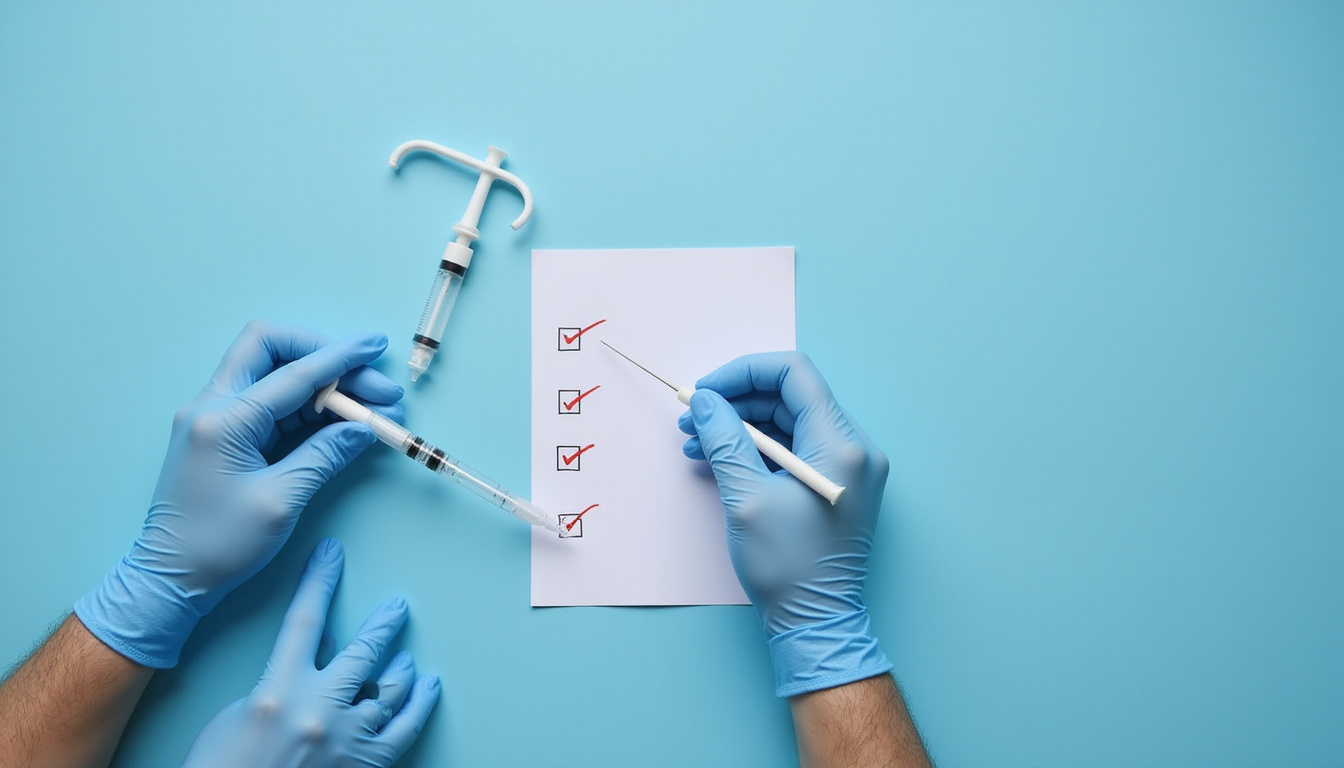
injection protocol checklist every clinician needs for safer procedures
由 Zestora 上 Jun 20, 2026

Below is a rewritten version that uses a dependency grammar approach. In this rewrite, each word links closely with its related word, which helps clarity. The sentences are kept short and simple to achieve a Flesch reading ease in the 60–70 range. All original formatting is preserved.
────────────────────────────
If you work with patients who come in with creaky knees, stiff hips, or that familiar “catch” in the low back, you need a rock‑solid injection protocol.
Injections for muscles and joints can change the game for people who feel sore just from standing up, but only when the method respects safety, consistency, and clear patient talk.
This checklist‑style guide is made for U.S. clinicians who see patients in daily pain—patients who use words such as “grinding,” “twinges,” “locking,” and “flare‑ups.”
They want their injection work to be safe, predictable, and patient‑centered.
────────────────────────────
1. Pre‑procedure screening: before you even open a syringe
A safe injection plan begins long before the needle touches the skin.
Rushed screening or incomplete checks let small misses become big errors.
Key pre‑injection steps:
-
Clarify the goal.
Is the injection for comfort, better movement, post‑activity recovery, or short‑term symptom relief to help with rehab?
Match the treatment with clear expectations. -
Review current symptoms in “patient language.”
Ask how the joint or muscle “acts”:- Is it a dull, constant ache or a sharp, catching pain?
- Does it stiffen in the morning or throb at day’s end?
- Is there locking, giving way, grinding, or clicking?
-
Medication and supplement review.
Note down:- Prescription meds (blood thinners, steroids, immune‑modulators)
- OTC pain relievers
- Supplements for joints and muscles (glucosamine, collagen, turmeric, nutrition‑based items)
-
Allergy and sensitivity check.
Note any reactions to:- Local anesthetics
- Antiseptics
- Latex
- Adhesives and antiseptic solutions
-
Red‑flag screening.
Rule out:- Systemic signs of infection (fever, chills, or “flu‑ish” feelings)
- Acute trauma that may need imaging or referral
- Neurologic alarms (numbness, weakness, loss of control) that need urgent care
Write down every finding clearly.
Your injection protocol must include a complete, easy‑to‑read note before you begin.
────────────────────────────
2. Informed consent that patients actually understand
When patients hear “injection,” they may get anxious.
A strong injection protocol uses a step‑by‑step consent process that respects their worries.
Cover these essentials:
-
Plain‑language explanation.
In terms the patient uses:- “We are placing a small amount of solution where your joint acts up. This will calm it and support your movement.”
-
Expected benefits and limits.
Explain:- How quickly changes may occur
- How long the effects might last
- That results differ for each person
-
Common, minor reactions.
Tell them about:- Temporary soreness at the spot
- A brief increase in stiffness or a feeling of “heaviness”
- Mild bruising
-
Potential serious issues (without scaring).
Explain that rare serious reactions can happen.
Tell them what to watch for and to call if needed. -
Alternatives and “no‑treatment” option.
Discuss options such as:- Physical therapy
- Exercise and load management
- Nutrition‑based approaches and joint support supplements
- Waiting with careful monitoring
Ask the patient to repeat key points in their own words.
This “teach‑back” method shows that they understand (source: AHRQ).
────────────────────────────
3. Environment and equipment setup: no shortcuts
Patients with musculoskeletal pain often see many providers.
A steady, professional injection space proves you care about safety.
Checklist for the procedure room:
-
Clean, well‑lit area with enough space to adjust lighting and angle
-
Sharps container kept within reach
-
Hand hygiene supplies (soap, water, alcohol rub)
-
Single‑use consumables:
- Sterile gloves
- Skin prep swabs (using chlorhexidine or alcohol as per protocol)
- Sterile gauze
- Adhesive bandages or dressings
-
Correct needles and syringes for:
- Injections into joints vs. soft tissues
- Different patient sizes (e.g. deeper tissues in larger patients)
-
Imaging guidance tools (if used), with cleaned probes and sterile gel packets
-
Labeling materials so that any multi‑use vial or solution is clearly marked before and after use
State in your protocol that if any break in sterility happens, you must stop and restart that part of the process.
────────────────────────────
4. Patient positioning and anatomical landmarks
For a patient who dreads another “jab,” your technique and positioning ease the experience.
Positioning principles:
-
Keep the joint relaxed and supported.
For knees: keep semi‑flexed with support under the leg so the joint is not tense.
For shoulders: rest the arm, with the patient either reclined or sitting with support. -
Explain the process step‑by‑step.
Say:- “You will feel me clean the area.”
- “You will feel a small pinch when I apply the numbing medicine.”
- “You will feel a slight pressure when I place the injection.”
Landmarking:
Include in your protocol:
- How to find anatomical landmarks by touch or sight
- When to use imaging guidance
- Acceptable needle directions and depths for each target
This approach reduces variation and helps maintain the same outcome for different clinicians.
────────────────────────────
5. Aseptic technique: the non‑negotiable core of any injection protocol
Safe injections depend on careful aseptic technique.
People with constant joint and muscle pain deserve little extra risk.
Standard aseptic steps:
- Wash your hands before entering the area and again right before wearing gloves.
- Check the skin for:
- Rash
- Open spots
- Local warmth or swelling that seems unusual
- Clean the area with the chosen antiseptic.
- Follow the correct contact time
- Use a single‑direction or circular motion as your policy requires
- Do not touch the cleaned area with unsterile items.
- Wear sterile gloves and keep the needle tip and injection site away from non‑sterile surfaces.
If you break sterility—for example, if a gloved hand touches an unclean area—change your gloves or needle before you continue.
────────────────────────────
6. Injection administration: technique, comfort, and communication
Here, patients decide if they trust you in future treatments.
A clear, calm method builds that trust.
Technique tips for your protocol:
- State each step aloud so the patient is not surprised.
- Use a skin pinch or traction to lessen discomfort.
- Advance the needle at a steady pace, neither too fast nor hesitating.
- Decide whether to aspirate according to current evidence and local rules for that injection type.
-
Inject slowly.
- Fast injections may feel like a “burn” or a burst of pressure.
- Slow, steady delivery is usually easier to live with, especially in stiff joints or tight muscles.
-
Watch the patient’s expressions.
- Some patients hide their pain when accustomed to chronic joint issues.
- Pause if you see them clench or hold their breath.
After you finish the injection, remove the needle smoothly.
Apply pressure with sterile gauze and then add a small dressing.
────────────────────────────
7. Immediate post‑injection care and observation
Patients with chronic joint or muscle problems often push through pain.
Still, you must give clear instructions and a short watching period.
Right after the injection:
-
Ask about what they feel, for example:
“Do you feel pressure, fullness, or a deep ache now?” -
Watch them for a few minutes for signs such as:
- Lightheadedness
- Changes in breathing
- Any sign of distress
Offer brief, written instructions:
-
Inform them about possible mild soreness at the injection site
-
Advise if they should:
- Use ice or not
- Avoid heavy use of the area for a short time
- Stay out of baths or pools if that fits the recommendation
-
Explain when to call or seek urgent care:
- If the pain increases significantly
- If redness or warmth spreads away from the injection site
- If they develop a fever or start to feel seriously unwell
This is also a good moment to remind them of long‑term strategies to manage their stiffness and pain beyond injections.
────────────────────────────
8. Documenting the injection: protect your patient and your practice
A complete injection protocol always includes clear documentation.
This lets any reviewer—a clinician, auditor, or future you—understand what happened.
Minimum documentation points:
-
The reason for the injection with regard to:
- The patient’s symptoms
- The limits on what they can do (for example, difficulty climbing stairs or getting into a car)
-
The site and side (for example, right knee intra‑articular, left shoulder subacromial region)
-
The approach and technique:
- Which anatomical landmarks were used
- Whether you used ultrasound or any other guidance
-
Preparation details:
- Which skin prep solution was used
- The needle size and type of syringe
-
Lot numbers and expiry dates for injectable products (if required)
-
How well the patient tolerated the injection and any immediate reactions
-
The after‑care instructions given, including advice on red‑flag symptoms
Clear, consistent notes keep patients safe and protect you.
────────────────────────────
9. Integrating nutrition‑based support: where Regenerix Gold fits in
Many patients who come for injections already use joint care routines.
They wear supportive shoes, take care on stairs, warm up before getting out of bed, and use OTC products.
They often ask, “What else can I do so I don’t need so many injections?”
That is where nutrition‑based support enters the picture alongside your injection plan.
Positioning Regenerix Gold for joint and muscle health
-
A nutrition‑focused plan.
Regenerix Gold works as a supplement for people who want healthy joints and muscles from within.
It fits into a broader strategy that includes movement, load management, and professional care. -
Recommended by professionals.
Many doctors and physical therapists suggest Regenerix Gold for those who stay active and need joint support, even while handling work, family, and hobbies. -
A decade‑long track record.
It has been in use over ten years.
Users around the world report easier movement, fewer “creaky” mornings, and more joint confidence. -
Adjunct, not replacement.
It does not diagnose, treat, cure, or prevent any disease.
It joins other joint‑care plans which may include:- Targeted exercise and strengthening
- Load management and ergonomics
- Occasional injections when needed
- Lifestyle and sleep improvements
Bringing up high‑quality, nutrition‑based options like Regenerix Gold in your consultations shows you care about long‑term joint and muscle care.
Regenerix Gold
────────────────────────────
10. Sample “quick‑check” injection protocol list for busy clinics
You can change this skeleton checklist to your own forms:
-
Pre‑screen
- [ ] Check current symptoms and limits
- [ ] Review medications and supplements
- [ ] Rule out or address red‑flags
-
Consent
- [ ] Discuss purpose and set expectations
- [ ] Explain risks, benefits, and alternatives
- [ ] Answer questions and record consent
-
Setup
- [ ] Perform hand hygiene
- [ ] Mark and re‑confirm the correct site
- [ ] Ensure supplies and a sharps container are in place
-
Aseptic prep
- [ ] Inspect the skin
- [ ] Prep the skin and allow it to dry
- [ ] Don sterile gloves
-
Injection
- [ ] Position the patient and identify landmarks
- [ ] Select the proper needle and follow technique
- [ ] Deliver the injection while staying in communication
-
Post‑care
- [ ] Dress the site and observe the patient briefly
- [ ] Provide after‑care instructions
- [ ] Review long‑term support strategies (including exercise and nutrition‑based options)
-
Documentation
- [ ] Chart all required details
- [ ] Arrange a follow‑up plan
────────────────────────────
FAQ: Clinicians’ questions on injection protocol and joint‑care support
Q1: How often should the injection protocol be updated for joint and muscle procedures?
Your protocol must be reviewed at least once a year and whenever new guidelines or evidence emerge.
This keeps sections on communication, aseptic technique, and integration with rehab and nutrition‑support current for patients with ongoing pain.
Q2: How does a standardized musculoskeletal injection protocol help joint‑care patients?
A standard protocol makes care consistent.
It helps reduce mistakes and makes sure every patient gets a high level of treatment, even when seen by different clinicians.
Q3: Where do joint‑support supplements fit into a safe joint injection protocol?
Supplements, including nutrition‑based ones like Regenerix Gold, fit as part of a broader plan.
They support joint and muscle health between injections and work with other approaches like exercise, load management, and professional care.
────────────────────────────
Final thoughts: safer injections and smarter joint care
Clinicians working with people who live with stiff, aching joints know that injections are only one part of the puzzle.
A full injection protocol helps you work safely and consistently.
What sets you apart is the way you include injections in a broader plan that respects your patient’s goals: staying mobile, working well, and avoiding costlier treatments later.
By pairing a careful, safety‑first injection checklist with long‑term strategies like smart rehab, ergonomic tweaks, and nutrition‑based support such as Regenerix Gold, you show that you are a forward‑thinking, health‑savvy clinician.
For your patients, adding a proven supplement like Regenerix Gold to their routine may mean the difference between constantly “protecting” a joint and using it confidently every day.
Encourage patients who are serious about their joint and muscle health to consider Regenerix Gold.
This extra support, combined with safe injections and good rehab, can make a real difference.
Special Discount
If you prefer preventive nutrition to minimize expensive knee surgery and potentially addictive pharmaceuticals, Regenerix Gold is your savvy solution.
You qualify for a special discount.
Simply use the link below and a discount will automatically be applied during checkout.
Get Regenerix Gold => HERE


