

If your knees feel “cranky,” stiff, or unreliable, you have likely tried ice, heat, braces, stretching, and more. You also may have lost track of what truly gets better—or worse. The KOOS score helps you see a clearer picture. It gives you a simple, standard measure of your knee function in daily life. It covers walking, climbing stairs, getting out of a car, and even sleeping without that nagging ache.
Below you will learn how the KOOS score works. You will also see how to use it to manage your knee recovery and how nutrition-based support like Regenerix Gold can work with your plan. This plan aims to keep your joints and muscles strong and reliable.
──────────────────────────────
What Is the KOOS Score, in Plain English?
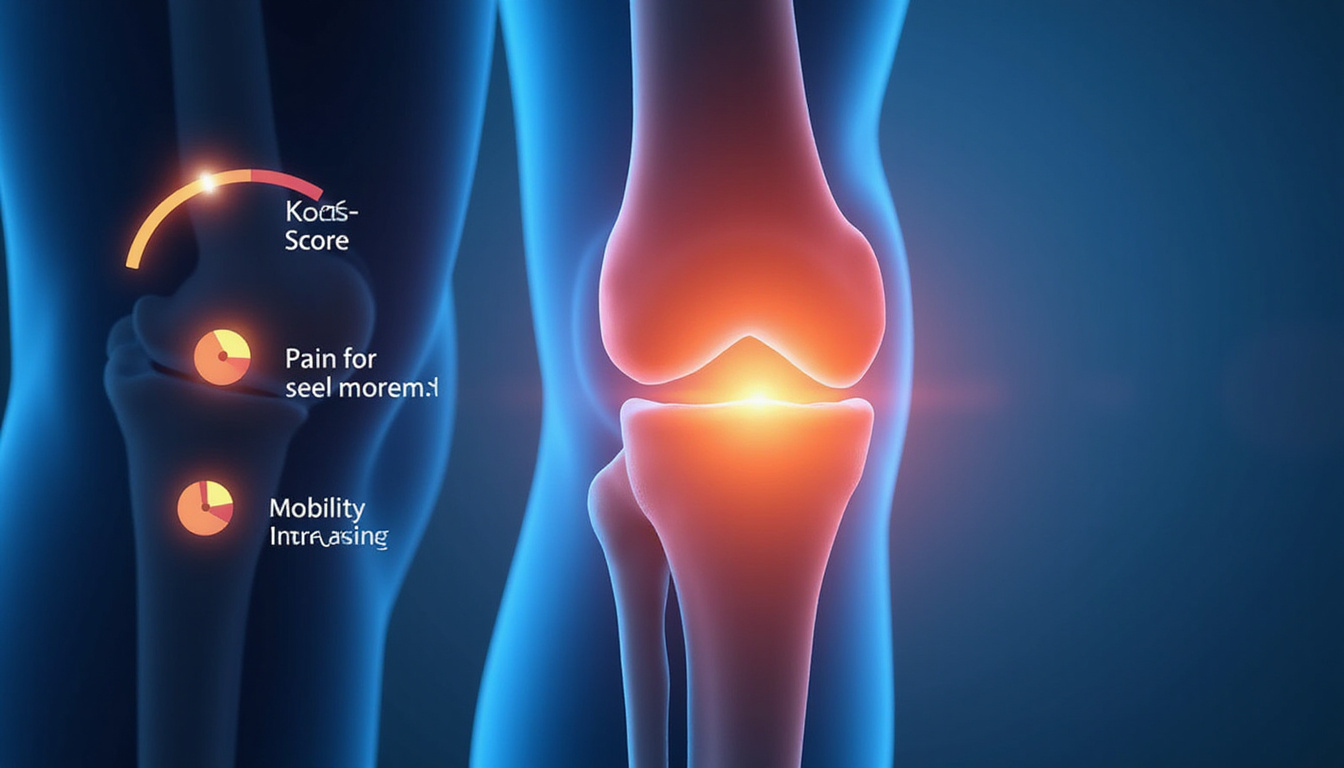
KOOS means Knee injury and Osteoarthritis Outcome Score. In short, it is a questionnaire that asks about your knee. Your answers turn into numbers that form your KOOS score.
It looks at five areas:
- Pain – How much your knee hurts during everyday tasks.
- Symptoms – Signs such as swelling, stiffness, and sounds like grinding or clicking.
- ADL (Activities of Daily Living) – Walking, bending, kneeling, and using stairs.
- Sport/Rec – For active people: squatting, jumping, running, and pivoting.
- Quality of Life – The mental and social effect your knee has on you.
Every section gets a score from 0 to 100:
• 0 means extreme problems.
• 100 means no problems.
If your KOOS Pain score reads 55, you deal with persistent discomfort. If your KOOS ADL score shows 80, most daily tasks are manageable but not perfect.
Clinicians and researchers use the KOOS score to track progress over time (source: KOOS official site).
──────────────────────────────
Why Your KOOS Score Matters More Than “How Bad It Hurts Today”
Knee pain can go up and down. One day your knee works almost normally; the next, it causes pain even with small tasks. The KOOS score shows you the overall trend. It does not focus on one good day or one bad day.
How KOOS Helps You Take Control
• It sets your starting point.
– You know exactly how your knee behaves.
• It shows real progress or lack of it.
– For example, a KOOS Pain score rising from 50 to 65 means improvement.
• It guides your health decisions.
– Your doctor may adjust treatments or exercises based on the score.
• It keeps you honest.
– A low KOOS score warns you when you downplay your knee problems.
──────────────────────────────
How Is the KOOS Score Calculated?
You complete a paper or digital questionnaire. For each item, you choose from options like “no problems” to “extreme problems.” Each answer holds a number. Those numbers become a 0–100 score for each section.
For instance, you might get:
• KOOS Pain: 62
• KOOS Symptoms: 55
• KOOS ADL: 70
• KOOS Sport/Rec: 40
• KOOS QOL: 48
You do not have to do the math. Your clinician or an online system calculates the scores. Knowing the numbers helps you set realistic goals.
In general:
• 80–100 means mild or minimal issues.
• 60–79 implies noticeable problems that still allow function.
• 40–59 suggests clear limitations.
• Below 40 means a major impact on mobility and quality of life.
──────────────────────────────
What Your KOOS Score Says About Your Daily Life
Different sections point to real-life challenges.
Low KOOS Pain (More Pain)
If your pain score is low, you might:
• Take over-the-counter pain relievers every day.
• Skip walks with friends or family.
• Shift your weight to protect your knee.
Low KOOS ADL (Trouble with Daily Tasks)
A low ADL score may mean:
• Taking one step at a time on stairs and holding the railing tight.
• Struggling with entering or leaving vehicles or chairs.
• Choosing places based on how far you must walk.
Low KOOS QOL (Knee Affects Your Peace of Mind)
A low QOL score tells you:
• You constantly wonder, “Will my knee hold up?”
• You turn down trips or activities to avoid knee pain.
• You worry about work if you need to move around a lot.
These scores make it clear that your knee issues are more than a minor annoyance. They affect your living, working, and social life.
──────────────────────────────
Using KOOS to Master Your Knee Recovery Plan
Knowing your baseline KOOS score gives you a roadmap.
1. Share Your KOOS Score with Your Provider
Show your results to your:
• Family doctor or internist
• Orthopedic specialist
• Physical therapist or chiropractor
They use your scores to:
• Pinpoint the area that needs work (pain, stiffness, or function).
• Adjust your treatment, exercise, or nutrition plan.
• Monitor progress over time.
2. Track KOOS Over Time
Think of KOOS as your “knee report card.” You retest:
• After 4–6 weeks of focused exercise.
• After you change your joint-support supplement.
• After finishing a round of physical therapy.
Keep track of your scores. Even a 5–10 point change is noteworthy.
3. Match Your Recovery Tools to Your Weak Areas
For example:
• Low KOOS Pain: Talk to your provider about pain management and gentle strengthening.
• Low KOOS ADL: Work with a therapist on functional movements like sit-to-stand or stair climbing.
• Low KOOS QOL: Try both physical and mental strategies like better sleep or pacing activities.
A nutrition-based joint supplement can support your movement and muscle function along this journey.
──────────────────────────────
Where Nutrition and Regenerix Gold Fit In
Many people with joint issues realize soon: they cannot simply rely on ice and pain relievers. They need to support their joints inside and out.
That is where Regenerix Gold fits into the plan. It is a nutrition-based solution for healthy joints and muscles.
Regenerix Gold has been:
• Recommended by doctors and physical therapists as part of a joint-support strategy.
• Used worldwide for over a decade. People report positive results.
• Formulated to support joint comfort, flexibility, and muscle function.
While the KOOS score tracks your function, a supplement like Regenerix Gold may help you:
• Move through your full range more comfortably, which makes your exercises easier.
• Keep your muscles and joints strong through daily activities.
• Stay active at work, with family, or during leisure activities.
Always discuss the use of supplements with your healthcare provider before starting.
──────────────────────────────
A Simple Knee-Savvy Routine That Pairs with KOOS
Follow this practical plan:
-
Get Your Baseline KOOS Score
Fill out the KOOS questionnaire and write down each score. -
Start or Update Your Exercise Plan
Work with a therapist or trainer to: • Strengthen your quads, hips, and glutes.
• Improve balance and alignment.
• Progress slowly without overloading your knee. -
Support Your Joints Nutritionally
Talk with your provider about adding Regenerix Gold to your plan. -
Retest Your KOOS Score Every 4–8 Weeks
Watch changes in: • Pain during walking and stair climbing.
• Confidence in bending, kneeling, or squatting.
• How often your knee stays on your mind. -
Adjust Based on Your Numbers
If pain scores improve but ADL lags, try more functional training. If QOL is low, experiment with pacing and ergonomic changes.
──────────────────────────────
Frequently Asked Questions About the KOOS Score
1. What Is a Good KOOS Score for Knee Function?
A good KOOS score shows high numbers in every section, ideally above 80 out of 100. This means you have few problems with pain, daily tasks, and quality of life. However, watch changes over time. Moving from 55 to 70 is a win even if you are not at 90 yet.
2. How Can I Improve My KOOS Knee Pain Score?
Improve your KOOS knee pain score by:
• Following a specific strengthening and flexibility program from a therapist.
• Managing your body weight if recommended by your provider.
• Supporting your joint and muscle health with good nutrition and lifestyle habits.
• Discussing safe pain-management options with your doctor.
Many also choose a nutrition-based joint supplement like Regenerix Gold (after medical advice) to support ongoing joint comfort and muscle function.
3. How Often Should I Repeat the KOOS Knee Survey?
Most people take the KOOS survey:
• Every 4–8 weeks when they are actively rehabbing or changing their routine.
• Before and after major changes in activity or treatment.
• At regular check-ins with their doctor or therapist.
This helps you see if your knee truly improves in the tasks that matter.
──────────────────────────────
Why Now Is the Right Time to Take Your Knee Seriously
In America today, healthcare is expensive and time off work is difficult to get. A nagging knee problem can lead to:
• Higher medical bills due to more intensive care.
• Fewer job options if your work needs heavy physical activity.
• Missing the simple joys of walking, traveling, or spending time with family.
Using your KOOS score gives you data rather than just gut feelings about your knee. By combining it with movement, lifestyle changes, and nutritional support like Regenerix Gold, you take control of your health.
If you consider yourself proactive and health-savvy, now is the time to act. Talk with your healthcare provider, record your KOOS baseline, and consider a bottle of Regenerix Gold. Experience how a nutrition-based, professionally recommended supplement can work with your joint and muscle wellness plan.
Regenerix Gold
Special Discount
If you prefer preventive nutrition to minimize expensive knee surgery and potentially addictive pharmaceuticals, Regenerix Gold is your savvy solution.
You qualify for a special discount.
Simply use the link below and a discount will automatically be applied during checkout.
Get Regenerix Gold => HERE


