

If reading “dental shot” makes your jaw tense, you are not alone. You feel the same if you deal with joint pain, stiff backs, or sore necks. Many people in America share these aches. A local anesthetic injection in the mouth can hurt, but its pain is often avoidable. Small mistakes—from you or the provider—can worsen the pain from a numbing shot.
Below, we explain common causes of dental shot pain, ways to lessen that pain, and how supporting your joints and muscles with nutrition (for example, with Regenerix Gold) can help you feel less tense and more confident during your dental visit.
Why Dental Local Anesthetic Shots Hurt
A local anesthetic should block pain. So why does the injection burn or sting?
Several factors, each linked directly to the pain, play a role:
- The solution’s pH (its acidity)
- The temperature of the anesthetic
- How fast and at which angle the injection goes in
- The state of nearby muscles and soft tissues
- How tense your body is from ongoing joint or muscle pain
If creaky knees, tight hips, or a stiff neck mark your day, you know what it means to brace continuously. You brace in the dental chair, too—with a locked jaw, tense shoulders, and clenched fists. When your muscles stand on alert, even a minor injection error can feel much stronger.
Mistake #1: Injecting Too Fast
One big cause of pain is that the dentist or hygienist pushes the plunger very quickly.
When the anesthetic goes into the tissue fast, two things happen:
- Pressure builds up; this creates a sharp, burning feeling
- The tissue stretches suddenly and nerves signal pain
If you feel a shot that explodes in your gum or cheek, the injection speed is the likely cause.
What you can do:
Before the injection, tell your dentist, “Please go very slow with the local anesthetic. I am sensitive.” A slow, careful injection connects with your muscles in a gentler way.
Mistake #2: Not Numbing the Surface First
Using topical numbing gels or sprays softens the first needle poke. When misused, they do not work well.
Problems include:
- Not keeping the topical on for enough time (it needs 1–2 minutes)
- Removing it too early
- Using too little or missing the spot
When a needle pinches your gum, it is because the surface numbing did not connect long enough.
Tip for those whose bodies already hurt:
If your back or knees feel sore each day, your pain sensitivity is high. Ask for a slow, patient application of topical anesthetic before an injection.
Mistake #3: Using Cold Local Anesthetic Solution
Local anesthetic liquids are stored cool. A cold solution meeting warm tissue creates discord.
This clash can:
- Amplify the burning sensation
- Make your jaw muscles spasm or tighten
- Increase your overall discomfort
Just as cold water shocks aching hands, a cold anesthetic shocks your mouth.
What to ask for:
“Could you use room-temperature anesthetic, please?” Many practices will warm the carpule briefly in hand.
Mistake #4: Missing the Right Spot or Using the Wrong Technique
Dental anesthesia needs precision. A missed injection hurts more and numbs less.
Errors include:
- Hitting sensitive parts like the periosteum (the bone’s outer layer)
- Injecting into overworked, tight muscles
- Reusing a spot that is already sore from past visits
People who clench or grind—and thus keep neck and shoulder muscles tight—often have tender jaw muscles. A misplaced shot may connect with these trigger points.
How to protect yourself:
- Tell your provider if you clench, grind, or wear a night guard
- Explain where your jaw feels sore so they can avoid that spot
- Ask to change the injection site if one area remains tender
Mistake #5: Ignoring Your Overall Muscle and Joint Tension
Sometimes the mistake is not the dentist’s, but the state of your body. When your whole body is tight from chronic discomfort, your pain system stays on alert.
Common signs include:
- Automatically tensing your knees or back
- Clamping your jaw once you recline in the chair
- Tightening your shoulder and neck muscles, making you feel exposed
Like injecting a muscle that is already hard, a dental shot hurts more.
Simple pre-shot resets:
- Take 3–5 slow, deep belly breaths before starting
- Uncross your feet and relax your legs if your knees ache
- Gently roll your shoulders and rest your hands loosely on your lap
Even slight loosening of everyday aches connects with a milder injection pain.
Mistake #6: Not Communicating Past Bad Experiences
Many people with long-term joint, neck, or back pain have suffered painful injections before. When your mind links needles with awful pain, every shot feels worse.
If you do not speak up:
- Your dentist may assume you are fine with standard methods
- They might not slow down or use extra topical applications
- They may overlook your need for a pause if you feel overwhelmed
Speak simply and clearly:
- “Shots usually hurt a lot for me; I feel very sensitive.”
- “My jaw and neck are tense; could you go slowly and use extra numbing gel?”
- “I have had painful dental injections before, and I feel nervous.”
Most dentists connect with your concerns and adjust their technique.
Mistake #7: Skipping Proper Aftercare for Sore Tissues
If your joints complain with every flight of stairs, you know the difference between a slight twinge and a lingering flare. After a local anesthetic shot, your jaw and cheek muscles might feel bruised or tired if:
- The injection went deep
- The dental work took a long time
- Your mouth stayed open wide throughout
Simple aftercare connects with better recovery:
- Use a cool compress on the area intermittently during the first day
- Avoid chewy or tough foods for 24 hours
- Later, gently stretch your jaw with slow open–close movements
If soreness continues or worsens, call your office. Explain if you feel pressure, a dull ache, or sharp twinges.
How Joint and Muscle Health Relates to Dental Numbing
Your overall state of muscles and joints connects directly to how you feel dental injections.
When your body cycles through:
- Stiff starts in the morning
- Throbbing knees after standing
- A low-grade ache in your hips or shoulders
…your nerves become more reactive. Researchers name this process central sensitization. In plain words, if your muscles and joints flare often, every pain signal—including those from dental shots—feels amplified.
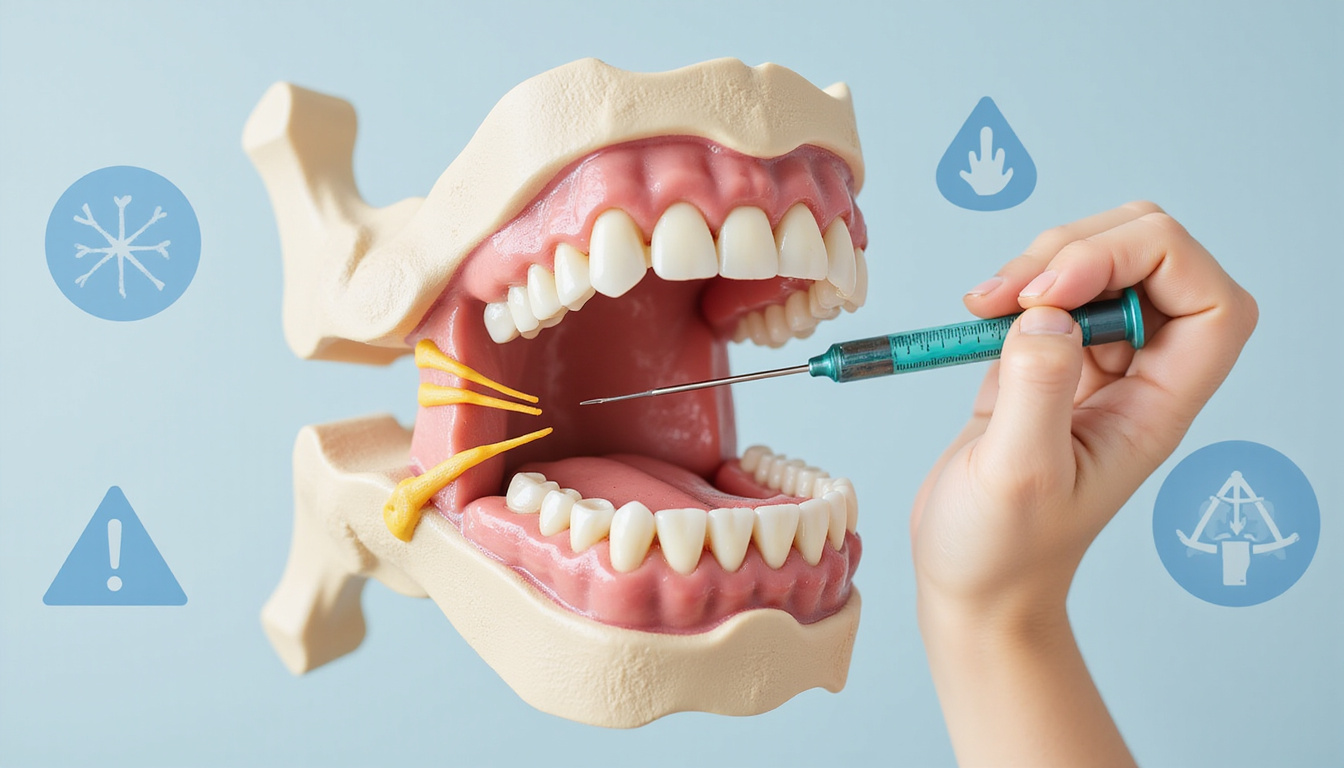
A nutrition-based approach to joint and muscle support connects indirectly to a more relaxed dental experience.
Regenerix Gold: Nutrition Support for Healthy Joints and Muscles
Many people in America now choose nutrition-focused solutions to support movement and strong muscles. They do this instead of reaching for another quick pain pill.
Regenerix Gold is a supplement for those who care about healthy joints and muscles. It is not a drug and does not diagnose, treat, or cure conditions. Instead, it connects with your body to nourish the structures that help you move, lift, bend, and chew.
Key points:
- It is a nutrition-based solution and not a quick-fix painkiller
- Doctors and physical therapists, who value movement and comfort, recommend it
- It has been used for many years and has positive reviews from people worldwide
When your joints and muscles feel supported, you are less likely to clench or guard in the dental chair. Everyday aches add less to injection discomfort. In other words, your body links relaxation with less intense local anesthetic shots.
How people with joint issues describe their results:
- They feel less creaky in the morning
- They can stand or walk longer before needing a break
- They experience less end-of-day throbbing
This approach supports normal, healthy structure and function rather than treating a specific medical condition.
Practical Tips: Making Your Next Dental Shot Hurt Less
Here is a simple checklist that connects with your next dental visit:
-
Before the visit
- Support your joints and muscles with good nutrition and, if you choose, Regenerix Gold.
- Stay well hydrated; dry tissues feel more tender.
-
In the chair before the local anesthetic
- Tell the dentist or hygienist that you are sensitive to injections.
- Ask for topical anesthetic and let it work for a full minute or two.
- Request room-temperature anesthetic if it is available.
-
During the injection
- Request a very slow injection and ask for a pause if needed.
- Breathe steadily; let your feet remain uncrossed and your shoulders relax.
-
After the appointment
- Use cool compresses and soft foods if your jaw feels overworked.
- Later, gently stretch your jaw with slow open and close movements.
Video: Learn More About Supporting Joints and Muscles With Regenerix Gold
Regenerix Gold
FAQs About Local Anesthetic and Dental Shot Discomfort
Q1: Why does local anesthetic in the mouth burn sometimes?
A1: The burn comes from the acidity and pressure when the anesthetic is injected. A cold solution, fast injection, and tense tissues all add to the burning. Ask for room-temperature anesthetic, extra topical, and a slower injection.
Q2: Are there gentler types of dental local anesthesia?
A2: Different formulations exist, but technique matters more. The connection between needle placement, injection rate, temperature, and muscle tension is key. Talk with your dentist about your sensitivity to adjust the approach.
Q3: Can supporting my joints and muscles help with local anesthetic tolerance?
A3: Indirectly, yes. When your joints and muscles feel healthier, your nervous system connects with less reactivity. Better musculoskeletal comfort, along with nutritional support like Regenerix Gold, lets your body relax. This often means local anesthetic shots feel less intense.
Take Control: Don’t Let Dental Shots or Achy Joints Run Your Life
You work hard to manage daily aches—you brace your knees when you stand, you roll your neck between tasks—and you deserve a dental visit that does not add more pain.
By connecting with:
- An understanding of common local anesthetic mistakes
- Clear communication with your dental team
- Daily joint and muscle support, including a trusted supplement like Regenerix Gold
…you can enter the dental office feeling more in control and less at the mercy of a needle.
If you want to stay active, protect your work and lifestyle, and avoid costly medical issues later, act now. Consider a bottle of Regenerix Gold and see how it can support your joints and muscles. People who support their bodies early, rather than when problems arise, generally stay ahead in both health and life.
You do not have to sit in the waiting room gripping the armrests, jaw tense, and braced for pain. With better joint and muscle support and a few targeted changes in how local anesthetic is given, your next dental visit can feel very different.
Special Discount
If you prefer preventive nutrition to minimize expensive knee surgery and potentially addictive pharmaceuticals, Regenerix Gold is your savvy solution.
You qualify for a special discount.
Simply use the link below and a discount will automatically be applied during checkout.
Get Regenerix Gold => HERE


