
pickleball cross training: Essential Drills to Improve Agility and Power
由 Zestora 上 May 16, 2026

If your knees, low back, or shoulders begin to ache after long days of dinks and drives, your pickleball cross training matters as much as your third-shot drop. Smart work off the court builds strong muscles and joints. This help lets Picklers play more days, move better, hit with more pop, and suffer less pain.
Below is a practical guide for American pickleball players who want to protect their joints and muscles while boosting their game.
─────────────────────────────
Why Picklers Need Cross Training (Especially When “Playing Through It”)
Pickleball is a stop–start sport. It twists, turns, lunges, reaches, and split‑steps at the non‑volley line. Over time, these moves can cause:
• Tight hips and hamstrings
• Sore knees and ankles after long play or round-robins
• Achy shoulders and elbows from serves, overheads, and fast kitchen exchanges
Smart pickleball cross training builds a support system around your joints. Stronger muscles, tougher tendons, better balance, and cleaner movement make a difference. They lead to:
• A quicker step to the kitchen
• Stable lunges with less wobble
• Extra power on drives, overheads, and roll volleys
• Less next-day stiffness
Cross training is not about turning you into a gym rat. It is about doing the least work needed off the court so that you can remain on it. Whether you play as a banger, dinker, or all‑court type, you will feel less beat up.
─────────────────────────────
Core Principles of Smart Pickleball Cross Training
Before you start drills, hold these ideas in mind:
- Train movements, not muscles.
Focus on the splits, lunges, shuffles, turns, pushes, and pulls you use on court. - Use joint-friendly work.
Keep full control of each move. Never push into sharp pain. Smooth moves help your knees, shoulders, and spine. - Short, regular sessions beat “all or nothing.”
Work out in 20–30 minute bursts 2–3 times a week. Avoid long sessions that you soon give up on. - Balance power with control.
As you hit harder, add more stability, mobility, and recovery.
─────────────────────────────
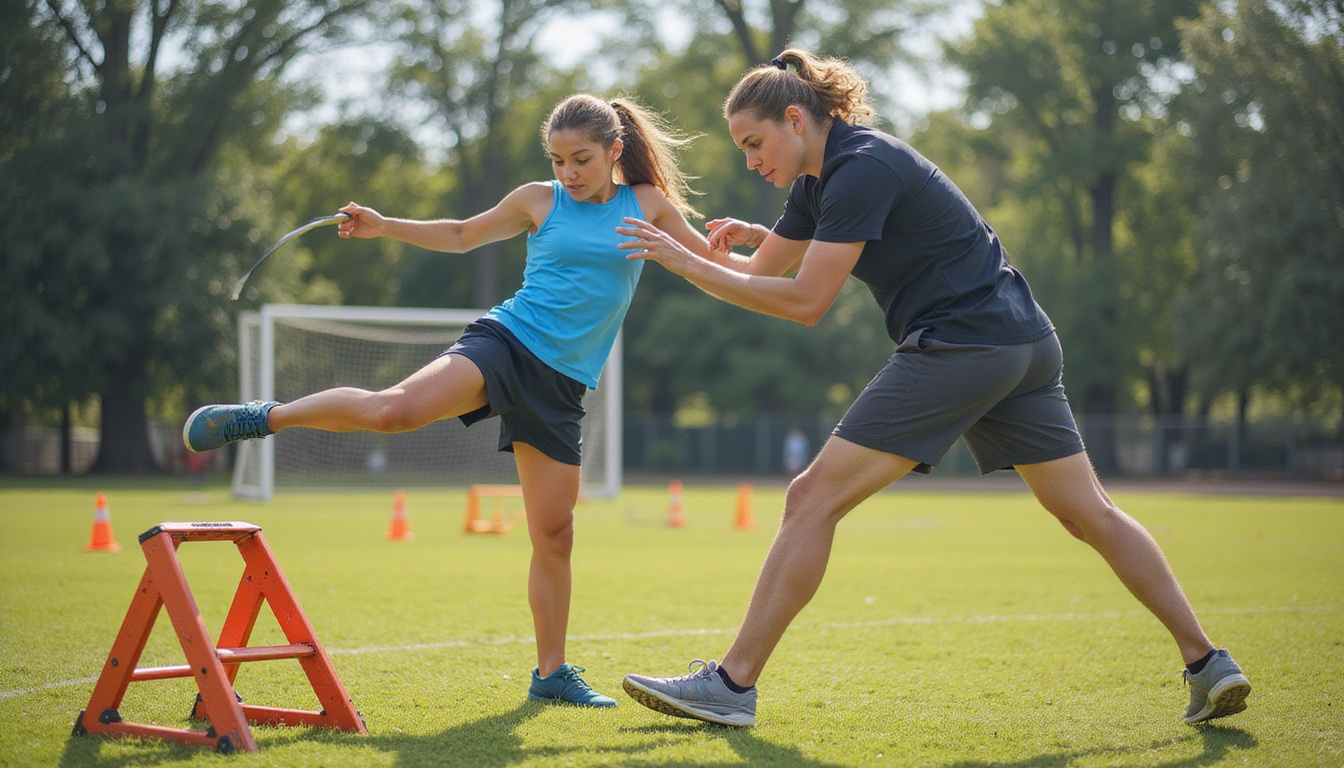
Agility Drills Picklers Should Do Weekly
These drills help you defend better, move faster at the kitchen, and cover lobs and angles with confidence.
1. Split-Step & React Drill
Why: The split step is key to quick reactions at the kitchen line.
How:
• Start in a ready stance with paddle up and feet shoulder‑width apart.
• A partner calls “Left” or “Right” or points.
• Do a small split step and push off quickly in that direction.
• Take two quick shuffle steps and then recover.
Do 3 sets of 20–30 seconds. Focus on quick, light steps and soft landings.
2. Lateral Shuffle Line Drill
Why: It mimics defending against cross‑court dinks or tracking a banger’s drives.
How:
• Place two lines or cones about 8–10 feet apart.
• Stand low in an athletic stance.
• Shuffle sideways from one line to the other.
• Tap with your hand or paddle, then shuffle back.
• Keep your hips low and chest high with no heel clicking.
Do 4–6 rounds of 20 seconds with 40 seconds of rest.
3. Kitchen “In and Out” Steps
Why: It improves your ability to close in on short balls and retreat on lobs without losing balance.
How:
• Mark a baseline and a kitchen line about 15 feet apart (or use the court lines).
• Start at the baseline.
• Sprint or bound to the kitchen line with control.
• Stop in a low stance and then backpedal or side-shuffle back steadily.
Do 6–8 reps. Focus on smooth stops and stable knees.
─────────────────────────────
Power Drills for Bigger Drives and Stronger Overheads
In pickleball, power comes from clean, explosive moves. Your hips and core work with your arms to set your paddle in motion.
4. Medicine Ball Rotational Throws
Why: It loads your hips and core like a drive or roll volley does.
How:
• Stand sideways to a wall with your feet just wider than shoulder‑width.
• Hold a light medicine ball (4–8 lb) at your chest.
• Rotate your hips and torso and quickly throw the ball at the wall.
• Catch the rebound, then repeat.
Do 3 sets of 8–10 throws on each side. Rest 45–60 seconds between sets.
No medicine ball? Use a basketball or simply do fast, controlled torso rotations without a ball.
5. Hip Hinge Power (Kettlebell Swings or Hip Thrusts)
Why: Your hips power your drives, serves, and overheads.
Kettlebell Swings (if experienced):
• Stand with your feet hip‑width apart and the kettlebell on the floor.
• Hinge at the hips (without rounding your back) and grab the kettlebell.
• Swing it to chest height using a strong hip snap, not your arms.
Do 3 sets of 12–15 swings with a manageable weight.
For beginners: Do hip thrusts or glute bridges on the floor. Push through your heels and squeeze your glutes at the top.
6. Plyometric Step Jumps (Low‑Impact Version)
Why: They build quick leg power for an explosive start and strong overhead moves.
How:
• Stand in front of a low step or sturdy platform.
• Step up quickly with one leg and bring the other leg up.
• Step down in a controlled way.
• For more power, add a small hop at the top and land softly.
Do 2–3 sets of 10 reps per side.
─────────────────────────────
Stability & Mobility: The Hidden Edge for Picklers With Aches
Power and agility fall short if your joints feel unstable. Add these drills to keep your body solid.
7. Single‑Leg Balance + Reach
Why: It protects your ankles and knees during lunges, slides, and awkward reaches.
How:
• Stand on one leg with a slight bend in the knee.
• Reach forward, to the side, and a bit across your body with your free hand—like reaching for a tough dink.
• Do not let your knee cave inward.
• Keep your torso steady.
Hold for 20–30 seconds per leg. Do 2–3 rounds.
8. Shoulder “Scap” Work (Band Pull‑Aparts or Rows)
Why: It supports your shoulders for serves, overheads, and kitchen battles.
Band Pull‑Aparts:
• Hold a light resistance band with arms straight at shoulder height.
• Pull the band apart by squeezing your shoulder blades together.
• Do not shrug your shoulders.
• Return slowly.
Do 2–3 sets of 12–15 reps. Focus on posture rather than force.
9. Hip & Thoracic Mobility Flow
Why: It lets you rotate and reach without straining your low back or knees.
Try this short sequence:
• A half‑kneeling hip flexor stretch (hold 20–30 seconds on each side)
• 90/90 hip rotations on the floor (8–10 reps on each side)
• Open‑book thoracic rotations lying on your side (8–10 reps per side)
Spend 5–8 minutes on these moves after play or workouts.
─────────────────────────────
Weekly Pickleball Cross Training Plan (Sample)
Here is one way to fit everything around open play and league matches.
2–3 times per week for 25–35 minutes:
-
Warm‑Up (5 minutes)
• Light jog or brisk walk
• Leg swings, arm circles, gentle torso twists -
Agility (8–10 minutes)
• Split‑Step & React Drill – 3 sets of 20–30 seconds
• Lateral Shuffle Line Drill – 4 sets of 20 seconds -
Power & Strength (10–15 minutes)
• Medicine Ball Rotational Throws – 3 sets of 8–10 reps on each side
• Kettlebell Swings or Hip Thrusts – 3 sets of 12–15 reps
• Band Pull‑Aparts – 2 sets of 12–15 reps -
Stability & Mobility (5 minutes)
• Single‑Leg Balance + Reach – 2 sets of 20–30 seconds per leg
• A quick hip and thoracic mobility flow
Adjust the volume based on your play days. When a big tournament or league night comes, keep cross training short and moderate so you do not exhaust yourself.
─────────────────────────────
Nutrition Support for Joint & Muscle Health: Where Regenerix Gold Fits In
In addition to smart pickleball cross training, many players also watch their hydration, protein, and nutrition to support joint and muscle health. Extended play—especially on hard courts—can tax your joints and muscles even if your technique is sound.
Regenerix Gold is a nutrition supplement aimed at active people, including pickleball players. It helps support:
• Comfortable and flexible joints
• Healthy muscles and connective tissues
• Better recovery after regular play
It is:
• Recommended by doctors and physical therapists as part of a healthy lifestyle
• Used internationally for over a decade by many players
• A nutrition solution, not a drug; it is not meant to diagnose, treat, cure, or prevent any disease
If you already plan your cross training, hydration, stretching, and sleep, adding joint and muscle support with Regenerix Gold can further back your body’s natural recovery. Always talk with your healthcare provider before adding any new supplement.
For more on joint health, you may visit the National Institute of Arthritis and Musculoskeletal and Skin Diseases site (https://www.niams.nih.gov).
─────────────────────────────
Regenerix Gold
─────────────────────────────
Safety and Sensible Use
A few reminders as you mix cross training with nutrition support:
• Stop any drill that causes sharp or sudden pain, and adjust the intensity.
• Progress slowly – more is not always better, especially with plyometric work.
• Supplements like Regenerix Gold are part of a healthy lifestyle. They do not replace professional medical care or personalized rehab.
• If pain stops you from doing daily activities, see a qualified healthcare professional.
─────────────────────────────
FAQ: Pickleball Cross Training and Joint Support
Q1: What is pickleball cross training and how does it help my joints?
A: Pickleball cross training means doing specific agility, strength, power, stability, and mobility work off the court. These moves build the muscles around your joints, improve your movement, and help reduce stiffness and discomfort from frequent play.
Q2: How often should I work on cross training, and can I take a joint supplement at the same time?
A: Many Picklers do cross training 2–3 times per week for 20–30 minutes. This works well alongside casual play and league matches. You can use a joint and muscle supplement like Regenerix Gold if you check with your healthcare provider and follow the label.
Q3: Will agility and power training plus a joint supplement really boost my pickleball performance?
A: Yes. Agility and power drills can sharpen your first-step speed, give you better balance at the kitchen, and add power to drives and overheads. A joint health supplement such as Regenerix Gold supports your body’s structure and function. With good sleep, hydration, and balanced play, these efforts can help you play better and recover faster.
─────────────────────────────
Final Thoughts: Play Longer, Stronger, and Smarter
Pickleball is growing, and so are you. The players who stay active, win more hand battles, and cover more lobs season after season are the ones who:
• Do focused pickleball cross training each week
• Support their joints and muscles with smart nutrition, hydration, and rest
• Use joint health supplements like Regenerix Gold as part of a long-term plan
If you want to avoid missed work, extra medical visits, or sitting out tournaments because your body is sore, investing in your joint and muscle health now is wise. Consider getting a bottle of Regenerix Gold. Show that you are not just a player who talks about soreness but one who moves well and plays at your best deep into every session.
https://youtu.be/mGrH5UWFxUs?si=X9bScbG6dvejGkZf
Health Note
Always consult a licensed medical doctor for your health issues.
Special Discount
If you prefer preventive nutrition to minimize expensive knee surgery and potentially addictive pharmaceuticals, Regenerix Gold is your savvy solution.
You qualify for a special discount.
Simply use the link below and a discount will automatically be applied during checkout.
Get Regenerix Gold => HERE


