

Pickleball dynamic stability is the secret behind smooth dinks, quick put‑aways, and fast recoveries at the NVZ. Stable joints help you stay sharp on the court. If your ankles feel weak on wide balls, your knees hurt after stacked formations, or your lower back aches after long rec games, your body needs better stability. The good news is that the right drills, smart warm‑ups, and proper nutrition build joints and muscles that can keep up with your pickleball passion.
This guide speaks to American Picklers who love kitchen battles but want to avoid post‑match pain. Let’s boost your balance, power, and joint health like a pro.
What Is Pickleball Dynamic Stability (And Why It Matters So Much)?
Dynamic stability means your body stays balanced, strong, and in control while you move. It helps when you:
• Slide into the kitchen for a low dink
• Shuffle back for a lob
• Lunge for a sharp angle
• Twist for an ATP or Erne try
On the court, dynamic stability shows in your:
• Balance: You can reach wide and still reset for the next point.
• Control: You slow down safely from a sprint so you do not tip over.
• Power: You push off the ground for a passing shot or overhead hit.
• Resilience: Your joints and muscles absorb the stress from quick stops and starts.
If you feel “tippy,” slow to recover, or unsure about planting firmly on one leg, your dynamic stability needs work.
The Pickleball Problem: Why Joints and Muscles Get Cranky
Many American Picklers:
• Play on many days in a row but do little strength or mobility work.
• Jump into open play cold with only a few dinks as a warm‑up.
• Rely on court shoes alone instead of training ankles, hips, and core.
• Push through discomfort because the next game is always waiting.
Over time, you may face:
• Stiff, “rusty” early games.
• Tender knees, hips, or ankles when you change direction fast.
• A tight low back after long singles or aggressive doubles.
• Hesitation on wide balls because you do not trust your plant step.
You do not have to “just live with it.” Building dynamic stability is like upgrading your body’s suspension system.
Warm-Up Routine: 5 Minutes to “Game-Ready” Stability
Before you attack the baseline or work hard in the kitchen, get your joints and muscles ready. Here is a straightforward, court‑side warm‑up for Picklers.
-
Dynamic Court Walk (1 minute)
Walk the court length and back. Use:• High knees (going forward)
• Butt kicks (going back)Keep a light and rhythmic pace. Tell your body, “Game time is near.”
-
Lateral Shuffles With Pause (1 minute)
Go from baseline to kitchen line by shuffling sideways. Every three steps, stop and hold your stance for 2 seconds. Stay low with your weight centered over your mid‑foot. This mimics your side‑to‑side kitchen moves and builds braking control. -
Rotational Hinge (1 minute)
Stand with your feet hip‑width apart and soften your knees. Hinge at the hips as if reaching for a low dink. Reach your right hand toward your left knee, then switch. Keep your back flat and your core tight. This move warms your hamstrings, hips, and low back. -
Single-Leg Balance Reach (1–2 minutes)
You may use your paddle for light support. Stand on one leg and tap the ground by reaching your free foot forward, then sideways, then back. Switch legs. This drill preps your ankle and hip stability for lunges and recoveries.
On-Court Pro Drills to Boost Dynamic Stability and Power
These drills upgrade your dynamic stability using movements you do in games.
Drill 1: The “Stretch and Recover” Kitchen Shuffle
• Goal: Improve lateral stability and speed up recovery to the ready position.
• How to do it:
1. Start at the NVZ line in your ready stance.
2. Your partner feeds balls alternating wide left and wide right.
3. On each ball, take a strong lateral step, plant on the outside leg, dink or block, then push off that leg and snap back to the center ready stance.
Keep your chest up, avoid folding, and plant smoothly with no wobble. Do 2–3 sets of 10–12 balls per side.
Drill 2: Split-Step and Drive: Baseline Power Builder
• Goal: Build an explosive first step and stable planting for drives and returns.
• How to do it:
1. Stand at the baseline in your ready position.
2. A partner or ball machine sends balls alternating to your forehand and backhand.
3. Before each ball crosses the net, do a small split‑step (a hop landing on your toes).
4. As your feet land, read the ball’s direction. Then, take an efficient first step, plant firmly, and hit a controlled drive or deep return.
Think “light, springy feet” and “strong, quiet plant” with no extra or off‑balance steps.
Drill 3: One-Legged NVZ Stability Challenge
• Goal: Boost balance for awkward reaches at the kitchen line.
• How to do it:
1. Stand at the NVZ balancing mostly on your right leg (your left toe may hover).
2. A partner feeds medium‑pace dinks within your reach.
3. Keep 90% of your weight on that leg as you dink crosscourt, dink straight ahead, and sometimes reach slightly outside your hip.
Switch legs after 10–12 balls. You will feel your ankle and hip work hard, as when you reach for a sideline dink in a real point.
Drill 4: Drop-Step Lob Recovery
• Goal: Achieve stable backpedaling and secure recovery on lobs.
• How to do it:
1. Start at the NVZ line in your ready stance.
2. A partner throws or hits shallow lobs over your head.
3. As soon as you read the lob, perform a drop step with one foot back, then a crossover step toward the baseline. Turn your shoulders to track the ball. Either reset with a controlled drop or hit an overhead if you feel ready.
Keep your steps clear and purposeful. Stable footwork protects your joints and prevents that scary “lost in the lights” feel.
Drill 5: Reactive Cone Shuffle
• Goal: Develop multidirectional dynamic stability with game‑like unpredictability.
Setup:
Place four cones (or water bottles) around you at front, back, left, and right about 3–4 feet away.
• How to do it:
1. Stand in the center with an athletic stance.
2. A partner calls out “front, back, left, right” in random order.
3. On the call, shuffle or step to the cone, tap it, and return to the center.
4. After 8–10 calls, play a live point to relate the move to real play.
You will build quick stopping, starting, and redirection, all without losing balance.
Off-Court Training: Simple Moves for Stronger Joints and Muscles
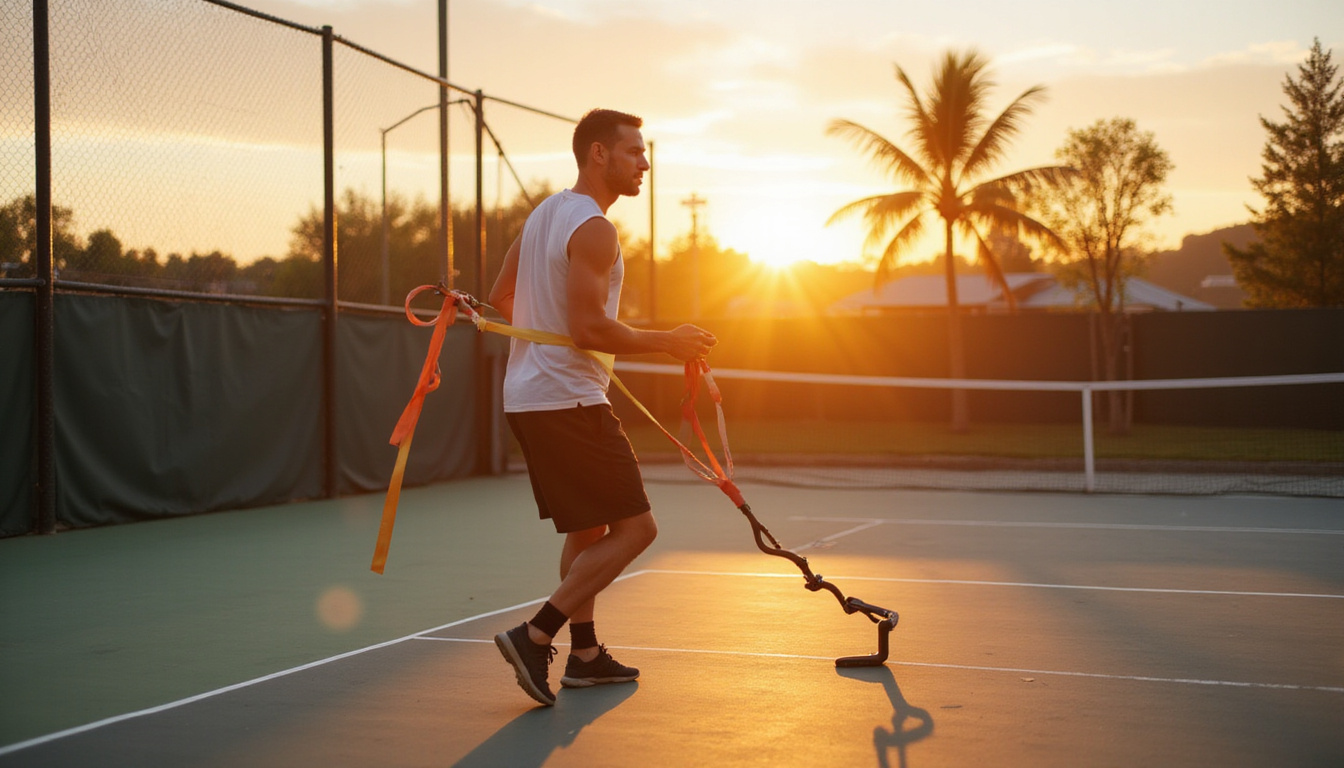
You do not need a fancy gym. A few key exercises done 2–3 times a week can boost your dynamic stability.
Try this short off‑court routine:
- Goblet Squats (hold a dumbbell or pickleball) – 3 sets of 8–12 reps
- Reverse Lunges – 3 sets of 8 reps per leg
- Single-Leg Romanian Deadlifts (bodyweight or light weight) – 3 sets of 8 reps per leg
- Side Planks – 3 sets of 20–30 seconds per side
- Calf Raises (with straight and bent knees) – 3 sets of 12–15 reps
These exercises work your quads, hamstrings, glutes, calves, and core. They form the engine for every split‑step, shuffle, and lunge.
Nutrition for Dynamic Stability: Supporting Joints and Muscles from the Inside
Drills and strength work train your movement. Nutrition helps the tissues that make the move. For American Picklers, this means supporting:
• Joint comfort and flexibility
• Muscle function and recovery
• Tendons and ligaments that work hard during paddle swings and stops/starts
Focus on these pillars:
• Enough protein to support your muscles.
• Hydration and electrolytes to cut down on cramps and fatigue.
• A mix of colorful fruits and vegetables for antioxidants (source: NIH – Dietary Guidelines).
Many Picklers also use supplements that support joints and muscles naturally as they keep playing more games.
Why Many Picklers Choose Regenerix Gold for Joint & Muscle Support
For players who want their bodies to keep up with the game, Regenerix Gold is a popular joint and muscle support supplement.
• Nutrition-based solution:
Regenerix Gold is a supplement that supports joint and muscle health from within. It complements your training, warm‑ups, and healthy eating.
• Recommended by doctors and therapists:
Many healthcare professionals suggest Regenerix Gold for active adults. It is especially popular with those who spend a lot of time on the court and want to keep their joints and muscles comfortable and mobile as they age.
• Decades of positive feedback:
For over ten years, Picklers and other athletes have praised Regenerix Gold for helping them stay active and strong.
• Complements dynamic stability work:
When you perform the right on‑court and off‑court drills, you also deserve proper joint and muscle nutrition. Regenerix Gold fits this role well.
Remember that any supplement is not meant to diagnose, treat, cure, or prevent any disease. Use it as part of a complete healthy lifestyle that includes training, warm‑ups, strength work, and good sleep. If you are pregnant, nursing, under medical care, or on medications, check with your healthcare provider before starting a new supplement.
Regenerix Gold
Bringing It Together: A Simple Weekly Plan
To build pickleball dynamic stability, try this routine:
• Before every session (5–7 minutes):
- Dynamic court walk
- Lateral shuffles with pause
- Rotational hinges
- Single‑leg balance reach
• 2–3 times per week (10–20 minutes):
- Off‑court strength routine (squats, lunges, single‑leg work, core exercises)
• 2–3 times per week on drill days:
- Kitchen “Stretch and Recover” drill
- Split‑Step and Drive drill
- One‑Legged NVZ Stability challenge
• Daily:
- Stay hydrated, enjoy balanced meals, and use any joint/muscle supplements as advised (such as Regenerix Gold)
This mix of practice and nutrition keeps you in the “play more, hurt less” zone.
FAQ: Pickleball Dynamic Stability and Joint Support
Q1: How can I improve my balance and stability for pickleball without a gym?
A1: You can work on dynamic stability with bodyweight drills such as single‑leg balances, lateral shuffles with pauses, and one‑leg NVZ dinking. A brief routine of squats, lunges, and side planks at home 2–3 times per week works well. Consistency beats heavy weights.
Q2: Are there supplements that help support joints for dynamic pickleball play?
A2: Many players add nutrition‑based joint and muscle support supplements to their routine. Regenerix Gold is one option recommended by some healthcare experts for active adults. It should work alongside good training habits, not replace them.
Q3: How does better dynamic stability help prevent pickleball injuries?
A3: Strong dynamic stability lets you plant securely, slow down safely, and recover quickly without off‑balance moves. This reduces stress on joints and soft tissues during sudden stops, quick direction changes, sprinting to the kitchen, or emergency lunges.
Your Next Step: Play Like the Pickler Who Planned Ahead
Many players wait until injuries force them off the court. You can plan ahead instead.
Drill your dynamic stability, add some smart strength moves, and support your joints with nutrition such as Regenerix Gold. You signal that you plan to:
• Stay competitive in your local ladder
• Keep showing up for early‑morning rec play
• Avoid the costs that come with extended time off the court
If you want to be the “health‑savvy” Pickler who outlasts everyone else—still busy at the kitchen while others sit out—try a bottle of Regenerix Gold and feel its joint and muscle support. It is a simple, nutrition‑based way to back up all the hard work you already put in on the court.
https://youtu.be/mGrH5UWFxUs?si=X9bScbG6dvejGkZf
Health Note
Always consult a licensed medical doctor for your health issues.
Special Discount
If you prefer preventive nutrition to minimize expensive knee surgery and potentially addictive pharmaceuticals, Regenerix Gold is your savvy solution.
You qualify for a special discount.
Simply use the link below and a discount will automatically be applied during checkout.
Get Regenerix Gold => HERE


