
pickleball knee preservation essential exercises and tips to prevent injury
由 Zestora 上 May 14, 2026

If you play more than a couple of games a week, your knees need care. Pickleball knee preservation is not a bonus; it is survival. Hard stops, dinks, sudden sprints, kitchen battles, and lunges load your knees. These moves stress your knees in ways a casual walk or jog does not. The good news is that smart prep, targeted exercises, and proper nutrition can protect your knees. You stay on the courts instead of on the couch icing them.
Below is a practical, people-first guide for rec warriors, league grinders, and tournament junkies across America who want their knees to last.
Why pickleball knees feel the heat
Pickleball is an explosive sport. It seems mellow until you jump into a real rally.
Common knee stressors in pickleball:
- Constant start–stop steps from the baseline to the non-volley zone
- Side shuffles and quick turns during kitchen battles
- Low lunges for dinks, thirds, and drop shots
- Hard landings from overheads or jumping for Ernes
- Hours on unforgiving, hard courts
Over time, these moves can cause:
- Stiffness after playing
- Soreness near the kneecap or along the joint line
- “Heavy” legs by game three or four
- Fear of explosive moves you once performed easily
You do not need to wait for a big problem. Pickleball knee preservation builds resilience before your body sends a red flag.
The 3 pillars of pickleball knee preservation
Think of your knee like the hinge on your favorite paddle case. The hinge lasts longer when (1) the screws are tight, (2) the surrounding material is strong, and (3) you do not slam it around carelessly.
For your body, this means:
- Strength – muscles support and stabilize your joint.
- Mobility – a healthy range of motion at the hips, knees, and ankles.
- Recovery & Nutrition – giving joints and muscles what they need to rebuild between sessions.
Let us review each pillar with exercises and on-court tips that fit real pickleball life.
Essential strength exercises for knee-friendly pickleball
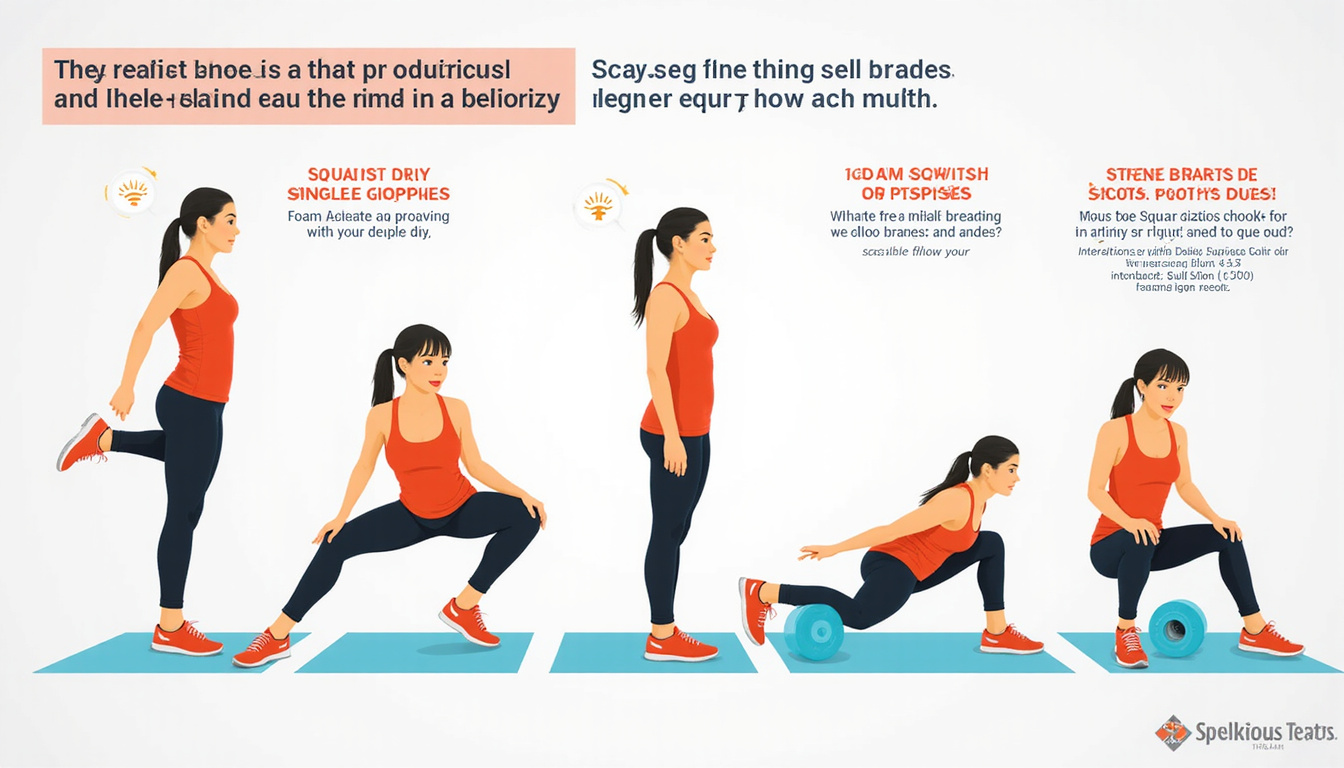
Aim to do these moves 2–3 times per week. You do not need a fancy gym. Bodyweight moves and light dumbbells or bands work fine. If you feel sharp pain, skip the move and see a professional.
1. Glute bridge (for hip power and knee support)
Strong glutes help your knees track well during shuffles and lunges.
• Lie on your back with bent knees and feet flat. Place your feet hip-width apart.
• Push through your heels, squeeze your glutes, and lift your hips. Your body should form a straight line from your shoulders to your knees.
• Pause for 1–2 seconds and lower slowly.
Work up to: 3 sets of 12–15 reps.
2. Wall sit (for quadriceps endurance)
This move builds front-thigh stamina for long rallies.
• Stand with your back against a wall. Place your feet about 2 feet from the wall.
• Slide down until your knees form roughly a 90-degree angle. Do not go too deep if it hurts.
• Hold, keeping your knees in line with your toes.
Goal: 3 sets of 30–45 seconds.
If your knees complain, try a shallower angle first.
3. Split squat (for controlled lunge strength)
This move mimics the stretch you use while reaching wide for dinks.
• Stand in a staggered stance. Put one foot forward and one back.
• Drop your back knee toward the floor. Keep your front knee above your mid-foot and do not let it cave inward.
• Push through your front heel to rise back to the start.
Work up to: 3 sets of 8–10 reps per leg.
A chair or a fence can help you balance.
4. Lateral band walks (for shuffles and changes of direction)
This move strengthens the hips to keep your knees steady when you move side to side.
• Loop a mini-band around your legs, just above your knees or ankles.
• Bend your knees slightly. Move your hips back as if in a mini-squat, and keep your chest up.
• Step sideways slowly, keeping the band tight. Move your trailing foot inward, but not too far, so the band stays tight.
Try: 2 sets of 10–15 steps in each direction.
5. Calf raises (for deceleration and push-off)
Strong calves help share the load with your knees.
• Stand near a wall or fence for balance.
• Rise onto the balls of your feet, pause, and lower slowly.
Work up to: 3 sets of 12–15 reps.
Advance by doing one leg at a time.
Weekly “Pickler Strength” checklist
Aim to add at least:
• 1 glute-focused exercise (for example, glute bridge)
• 1 quad-focused exercise (like wall sit or split squat)
• 1 hip/lateral stability move (such as lateral band walks)
• 1 calf/ankle exercise (like calf raises)
Just 15–20 minutes twice a week can improve how your knees feel by game three of a ladder session.
Mobility moves to keep your knees happy
Strength without mobility is like a powerful paddle with weak spots. You waste potential and risk mishits or tweaks.
Do these moves on off-days or after a light warm-up.
1. Hip flexor stretch (for a better stride and lunges)
Tight hip flexors force your knees to work too hard.
• Kneel on one knee and plant the other foot in front.
• Gently shift your hips forward. You should feel a stretch in the hip of the kneeling leg.
• Keep your torso tall. Avoid over-arching your lower back.
Hold for 20–30 seconds per side, for 2–3 rounds.
2. Hamstring sweep (dynamic warm-up)
• Stand with one heel slightly ahead. Keep your toes up.
• Hinge at the hips without rounding your back. Sweep your hands toward the toes.
• Alternate legs in a walking pattern.
Do 10–12 sweeps per leg before you play.
3. Ankle circles and dorsiflexion rocks
Mobile ankles help reduce harsh impact on your knees.
• Trace large circles with your toes, doing 10 in each direction.
• In a half-kneeling stance, gently drive your front knee over your toes while keeping your heel down. Rock back and forth 10–15 times.
Spend 1–2 minutes per ankle before or after playing.
Smart on-court habits for knee preservation
Good technique and habits protect your knees as well as gym work does.
Warm up like your knees matter
Many players warm up by hitting a few drives or jumping into heavy play. Instead, spend 5–10 minutes warming up with:
• A light jog or fast walk around the court
• Side shuffles or carioca at 50–70% effort
• A few practice lunges (both forward and diagonal)
• Dynamic leg swings (front-to-back and side-to-side)
You will feel the difference by the second game.
Respect the kitchen, but keep your depth too
Crowding the kitchen with stiff knees forces deep bends. Mix your play:
• Use small split-steps as the ball is hit so you land softly.
• Avoid deep lunges. Use quick shuffles instead to get close to the ball.
• If you cannot reach the ball comfortably, let it go. There is always the next rally.
Choose your footwear like you choose your paddle
Running shoes suit straight-ahead motion. They are not made for side shuffles or quick stops.
For pickleball knee preservation, choose shoes that have:
• Good lateral support (court or tennis shoes work best)
• A sturdy heel counter to stop excessive wobble
• Adequate cushioning for hard courts, without losing stability
Good shoes are cheaper than medical bills and downtime on the court.
Manage volume and surfaces
If your knees are hurting:
• Alternate hard courts with softer, more forgiving surfaces when you can
• Avoid playing back-to-back marathon sessions; build your play time gradually
• On some days, use a lighter, more controlled style instead of hitting it hard
Your goal is a lasting pickleball career, not a single hot season.
Nutrition and supplement support for knee and muscle health
Your knees are not just gears. They are living tissue that breaks down and rebuilds. This rebuild needs:
• Enough daily protein
• Omega-3 and other healthy fats
• Micronutrients (like vitamin C and minerals) that help tissue maintenance
• Good hydration to keep cartilage and soft tissue healthy
Many active adults find it hard to balance meals around work, family, or retirement adventures. Thoughtful supplements can complement a solid diet and training plan. The American College of Sports Medicine even notes that targeted nutrition can support joint comfort, recovery, and performance. (source: ACSM Position Stand – Nutrition and Athletic Performance)
Why many Picklers choose Regenerix Gold
Players who live on the courts want long-term support for healthy joints and muscles. Doctors and physical therapists often recommend Regenerix Gold as part of a joint-care routine.
What makes it special for Pickleball players:
• Nutrition-based solution
Regenerix Gold is a nutritional supplement. It supports joint comfort, mobility, and muscle function. It is not a drug and will not diagnose, treat, cure, or prevent any disease. It simply gives your body nutrients to help repair itself.
• Recommended by doctors and PTs
Many clinicians who work with active adults and competitive athletes suggest Regenerix Gold. They use it alongside proper exercise, weight management, and good mechanics for extra joint support.
• Trusted for over a decade
Picklers have used Regenerix Gold internationally for more than 10 years. People who put stress on their joints all day have given positive feedback.
• Fits easily into a Pickler’s routine
It is simple to use. There is no complicated protocol—just a consistent choice that supports your body while you focus on your game.
If you have health conditions, take medications, or have concerns, talk with your healthcare provider before starting a new supplement.
Regenerix Gold
FAQ: common questions about pickleball knee preservation
1. What is the best way to start with pickleball knee preservation if I’m already sore?
Start by reducing your playing volume for 1–2 weeks. Use low-load strength work like glute bridges, wall sits, and calf raises 2–3 times per week. Always warm up well before playing. Check your shoes and replace them if they are worn. Then, slowly increase play and consider nutrition support with a joint supplement like Regenerix Gold. Always consult your clinician.
2. Are there specific stretches for pickleball knee joint preservation?
Yes. Focus on stretches above and below the knee:
• Hip flexor stretches
• Hamstring and calf stretches
• Ankle mobility drills
These moves help your joints move smoothly and lower knee strain. Do them consistently as part of your long-term plan.
3. Can a joint supplement really help with pickleball knee protection?
A supplement does not replace strength work, smart technique, or proper shoes. But a well-formulated joint and muscle support product like Regenerix Gold can work well with your training, recovery, and diet. Many active adults and Pickleball players notice better comfort when they combine exercise, mobility work, and proper supplementation under professional guidance.
Your next move: protect your knees like you protect your rating
You already invest in premium paddles, court shoes, and tournament fees. Your body—especially your knees—is a bigger investment. Ignoring your knees until they hurt can lead to:
• Expensive medical appointments and procedures
• Time off work or side gigs when you need it most
• Missing leagues and tournaments you look forward to
Instead, be the player who does the “boring” work. Work on strength, mobility, warm-ups, and smart nutrition. This consistent effort keeps you in the game season after season while others fight injury after injury.
To stack the odds in your favor, combine:
• The strength and mobility routine above
• Better on-court habits and proper footwear
• Thoughtful nutrition and, if it suits your situation, a doctor- or PT-recommended supplement like Regenerix Gold
Consider picking up a bottle of Regenerix Gold. Give your body a chance to show its best when it gets the support it needs. You have worked hard for your pickleball skills and status. Protecting your knees is a smart, cost-effective way to stay ahead of the game.
https://youtu.be/mGrH5UWFxUs?si=X9bScbG6dvejGkZf
Health Note
Always consult a licensed medical doctor for your health issues.
Special Discount
If you prefer preventive nutrition to minimize expensive knee surgery and potentially addictive pharmaceuticals, Regenerix Gold is your savvy solution.
You qualify for a special discount.
Simply use the link below and a discount will automatically be applied during checkout.
Get Regenerix Gold => HERE


