
pickleball movement quality drills to instantly boost your court speed
由 Zestora 上 Mar 02, 2026

If you play pickleball many times a week, your movement on the court is a hidden skill. Good movement means quick feet, steady posture, and strong joints. You may only see paddles and swings, yet your body moves first. It is the footwork, posture, joint control, and recovery that help you reach the perfect dink or avoid a double bounce.
This article shows easy drills that work on movement quality. It is for Picklers who feel small aches: tight knees after a long game, sore hips from stacking, or stiff lower backs after many serves. Learn to move with clean steps. Also see how a nutrition supplement like Regenerix Gold can help your joints and muscles as you win more games.
Why pickleball movement quality matters more than “hustle”
Picklers think that more games or basic fitness make them faster. That helps, but without strong movement quality you may:
- Overstride and jam your knees
- Twist your lower back on a third-shot drop
- Reach out with your arm instead of using your feet
- Plant awkwardly when you move for lobs
Good movement quality uses:
- Alignment – stack your hips, knees, and ankles when you push off or land
- Balance – stay centered during rapid turns
- Control – start, stop, and pivot without wobbling
- Efficiency – take the shortest, cleanest path to the ball
When you work on these, your court speed grows even if you are not the fastest sprinter.
Warm-up like a serious Pickler, not a weekend warrior
Before any drill, you need a warm-up. This warm-up wakes your joints and muscles without tiring you.
5-minute dynamic warm-up for Picklers
Do each for 20–30 seconds:
- Court Skips – Skip lightly along the sideline. Keep your feet springy.
- Lateral Shuffles – Shuffle side to side from the kitchen line to the baseline. Stay low.
- Hip Openers – Walk forward. Lift your knee. Rotate it outward as if clearing a low net.
- Leg Swings – Hold the net post. Swing one leg forward and back, then side to side.
- Torso Rotations – Stand with an athletic stance. Rotate your torso side to side. Keep your heels light.
You should feel warm and loose, not tired. Then you add movement drills.
Drill 1: Split-step + first-step burst (Your “ready position engine”)
A split-step forms the base of good movement quality. Top players use this small hop and soft landing for fast reactions.
How to do it
- Stand at the kitchen line in a ready position.
- Ask a partner to stand opposite or toss a ball yourself.
- When your opponent winds up or you toss the ball, do a small split-step:
- Hop a tiny bit off the ground.
- Land softly on the balls of your feet.
- Keep your knees bent and weight centered.
- Push off toward a target on your forehand or backhand side.
- Shuffle back to the middle and repeat.
Focus cues
- “Quiet feet” – Land softly without stomping.
- “Chest over toes” – Stay low and athletic.
- “Push, then glide” – Use a strong push-off followed by a smooth shuffle.
Do 2–3 sets of 6–8 reps side-to-side. This drill makes you explode quickly when needed.
Drill 2: Kitchen lateral glide for joint-friendly side movement
Shuffling at the kitchen may stress your joints if you do not move cleanly. This drill improves your side-stepping technique while protecting your body.
Setup
- Place two cones or markers about 8–10 feet apart along the kitchen line.
How to do it
- Stand in the middle in a ready position.
- Shuffle to the right cone and touch it.
- Shuffle to the left cone and touch it.
- Stay low and steady. Do not bob up and down.
Focus cues
- Let your toes and knees point the same way.
- Do not cross your feet. Use quick, light shuffles.
- Keep your paddle in front as if you are ready for a dink.
Do 3 rounds of 20–30 seconds. Choose quality over speed. Your goal is smooth, controlled shuffles.
Drill 3: “Drop and recover” pattern for third-shot and transition zone
Many Picklers lose points because of poor movement between shots. This drill teaches safe and efficient steps from the baseline to the kitchen.
How to do it
- Start at the baseline.
- Have a partner or machine feed you a ball.
- Hit a soft, controlled third shot drop.
- Take 3–4 quick, short steps into the transition zone (do not sprint).
- Land in a balanced, ready stance as you wait for the next shot.
- Reset and repeat.
Focus cues
- Do not lunge. Take small, controlled steps.
- Keep your chest tall.
- Keep your hips square to the net.
This drill ties together stroke mechanics and movement. Soon, you will glide forward without stumbling.
Drill 4: Diagonal crossover steps for chasing lobs
When you back up to chase lobs, many Picklers may hurt their backs or knees. Use clean crossover steps instead of blind shuffling or backpedaling.
Setup
- Stand a bit inside the kitchen line and center yourself.
How to do it
- Ask a partner to toss or lob a ball over your right shoulder and then your left.
- As the ball rises, turn your hips and shoulders toward the ball.
- Use crossover steps:
- Let your back foot cross behind the front foot in a diagonal way.
- Track the ball, get under it, and hit a controlled overhead or defensive lob.
- Recover to the court with quick, short steps.
Focus cues
- Do not fully backpedal. Open your hips.
- Stay tall and keep your upper body relaxed.
- Land softly after the overhead hit. Do not lock your knees.
This drill makes lob defense safer, protecting your joints from hard backward moves.
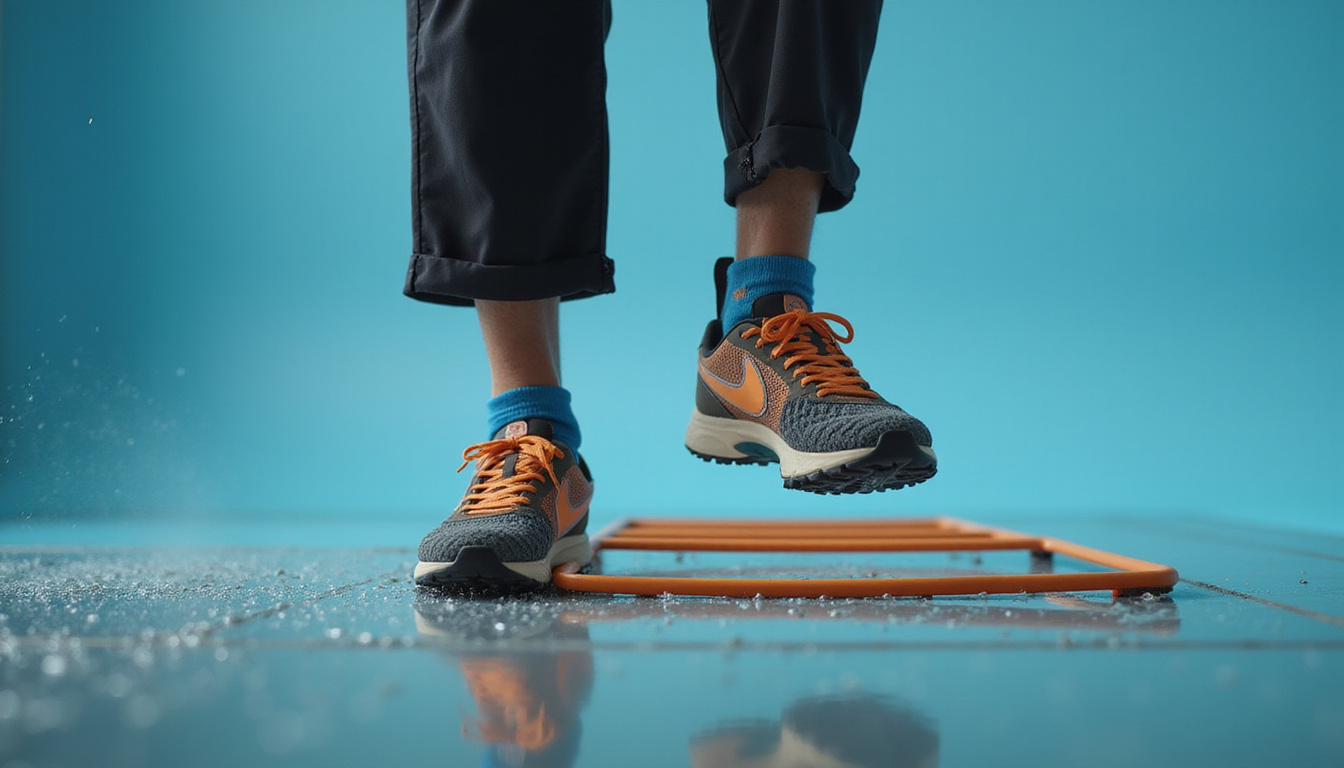
Drill 5: Single-leg balance + reach: Bulletproofing ankles and knees
Strong movement starts from the ground. If your ankles and hips are weak, the rest of your body must work harder. This drill improves your stability.
How to do it
- Stand on one leg near the baseline.
- Keep a slight bend in the knee.
- Lift the other leg slightly behind you.
- With your paddle hand, reach toward an imaginary ball in front.
- Return to upright without wobbling.
- Then reach diagonally to the side and slightly behind.
- Switch legs.
Focus cues
- Keep your knee aligned over your toes.
- Move slowly. A little wobble shows that your stabilizers are working.
- Hold your core lightly engaged.
Do 2 sets of 6–8 reaches on each leg. This drill strengthens your joints so your court moves feel secure.
Sample weekly movement-quality routine for Picklers
Here is one way to add these drills to your routine so you spend less time in injury pain.
2–3x per week (15–20 minutes before play or on off days):
- Dynamic warm-up (5 minutes)
- Split-step + first-step burst – 2–3 sets
- Kitchen lateral glide – 3 rounds of 20–30 seconds
- Drop and recover – 8–10 reps
- Diagonal crossover steps – 6–8 lobs each side
- Single-leg balance + reach – 2 sets per leg
You may run through a shorter 10-minute version before your rec play and still get clear benefits.
Supporting healthy movement with smart nutrition
When you play regularly and feel stiffness after games, a smart diet can help. Research from the National Institutes of Health shows that diet and certain ingredients aid joint and muscle health (source: NIH).
Regenerix Gold is a nutrition supplement that many Picklers use to support:
- Healthy joints that withstand quick starts, stops, and pivots
- Muscles that feel comfortable during and after long play
- Overall movement quality so you keep improving your footwork and mobility
It is:
- Recommended by doctors and physical therapists for active adults
- Used internationally for over a decade with positive reviews
- A daily supplement that works with your training, rest, and good movement mechanics
Remember:
- It is not intended to diagnose, treat, cure, or prevent any disease.
- Consult your healthcare professional if you have health concerns, take medications, or are pregnant or nursing.
When you join better movement with a smart warm-up and nutrition, you give your body what it needs for long court sessions.
Regenerix Gold
FAQ: Pickleball movement quality and staying court-ready
1. How can I improve my pickleball movement without stressing my joints?
Do low-impact drills that focus on alignment and control. Use the kitchen lateral glide, single-leg balance + reach, and split-step drills. They work on proper mechanics and care for your joints. Support these drills with hydration, recovery, and a joint-friendly supplement like Regenerix Gold.
2. What are signs my pickleball movement quality needs work?
You might feel off-balance during quick turns. You may reach with your arm instead of moving your feet. You can feel stiffness after games or discomfort on lobs. These signs mean you need to work on movement drills and consider joint support through nutrition.
3. Does better pickleball footwork help prevent movement-related aches?
Yes. Good footwork and movement quality help reduce stress on joints and muscles. They distribute forces evenly and avoid awkward positions. While no method stops all discomfort, proper mechanics, regular mobility work, and smart nutrition—like adding Regenerix Gold under guidance—can help you move with less pain.
Ready to move like the “quiet pro” at your courts?
Successful players do not always swing the hardest. They move with smooth, controlled steps. They split-step at the right time, glide laterally with ease, and track lobs with calm. That is pickleball movement quality at work.
You can take risky hero moves or train serious movement. Add smart nutrition and daily Regenerix Gold with these drills. It is a small cost compared to time off work, medical bills, or watching from the bench as your crew runs the court.
If you want the respect of players who always get to the ball and stay fresh for the next game, add Regenerix Gold to your routine and practice these movement drills. Feel the change and stay one step ahead every time you enter the court.
https://youtu.be/mGrH5UWFxUs?si=X9bScbG6dvejGkZf
Health Note
Always consult a licensed medical doctor for your health issues.
Special Discount
If you prefer preventive nutrition to minimize expensive knee surgery and potentially addictive pharmaceuticals, Regenerix Gold is your savvy solution.
You qualify for a special discount.
Simply use the link below and a discount will automatically be applied during checkout.
Get Regenerix Gold => HERE


