
pickleball shoulder impingement: Proven rehab, prevention, and strengthening tips
由 Zestora 上 May 31, 2026

If you hit dinks, third-shot drops, and overhead slams, and you feel a sharp pinch or ache on your shoulder, you may have pickleball shoulder impingement symptoms. Only a medical expert can say for sure. Still, many American Picklers—especially weekend warriors who play like pros—feel a pinch, catch, or soreness after a game.
This guide explains what happens in your shoulder. It shares simple rehab moves, on-court prevention tips, and smart strengthening strategies. It also shows how a nutrition solution like Regenerix Gold can help your joints and muscles so you stay on the court, not on the couch.
What is “pickleball shoulder impingement”-type pain?
In simple Pickler words, your shoulder gets cranky from too many swings that your body is not ready for.
Shoulder impingement pain feels like:
• A small pinch or ache when you lift your arm
• Pain when you move your arm overhead, as in serves and smashes
• Soreness after playing, especially if you lie on your shoulder at night
• Weak or tired muscles during long games
Doctors explain that “impingement” means shoulder structures get irritated when your arm goes above your head. In pickleball, this usually happens when you:
• Hit many overhead shots, drives, or serves
• Lacks rotator cuff and shoulder blade strength
• Have tight upper-back muscles
• Skip proper warm-ups or recovery
You do not have to stop playing forever. Yet, you must heed your body’s signals before a small pinch grows into a long-term issue.
Common causes of shoulder irritation in Picklers
Pickleball is “just a paddle and a whiffle ball” until your shoulder protests. These factors often cause shoulder issues:
1. Overhead-heavy play
• You hit hard overheads instead of placing the ball smartly.
• You serve high and use brute force instead of spin and control.
• You reach for lobs instead of moving your feet back.
2. Weak supporting muscles
• Your rotator cuff (deep shoulder stabilizers) is undertrained.
• Your scapular muscles (shoulder blade controllers) are weak.
• Your core strength is low, so your shoulder must work too hard.
3. Desk jobs and stiff posture
Many American Picklers sit long hours at a computer or on a phone. Rounded shoulders and a tight upper back can hinder smooth overhead movement. This extra strain can irritate shoulder tissues.
4. No real warm-up
Many players go straight from the car to a hot game. Cold muscles plus explosive movements can trigger shoulder discomfort.
Rehab-style tips: what to do when your shoulder is already sore
If you feel that familiar pinch, try to calm the pain and rebuild strength. Always ask a healthcare expert for advice if your pain is severe, constant, or worsening.
Short-term relief strategies
• Dial down the intensity, but not your whole game.
– Limit full-power overheads and serves.
– Favor drops, dinks, and careful placement.
• Use relative rest rather than total rest.
– You may play while reducing volume and avoiding painful moves.
• Ice after play if you can.
– Apply ice for 10–15 minutes after a heavy play session. Follow expert advice.
• Check your paddle.
– A lighter paddle or a better grip size might ease stress on your shoulder and elbow.
Key mobility drills for cranky Pickleball shoulders
Improving shoulder and upper-back movement can ease pinching and improve strokes.
Perform these drills slowly and gently. Stop if pain increases.
1. Doorway chest stretch
• Stand in a doorway with forearms on the frame and elbows at 90°.
• Lean forward gently until you feel a chest stretch.
• Hold for 20–30 seconds, 2–3 times.
This stretch opens the tight front part of the shoulders.
2. Thoracic extension over a chair
• Sit in a sturdy chair with a firm back.
• Place a towel over the top edge if needed.
• Cross your arms on your chest. Lean back over the chair to extend your upper spine.
• Hold for 3–5 seconds, return, and repeat 8–10 times.
Better upper-back mobility helps your shoulder move correctly when reaching overhead.
3. Wall slides
• Stand with your back, hips, and head lightly touching a wall.
• Raise your arms like a goalpost, keeping the backs of your hands against the wall.
• Slide your arms up and down as far as you can without pain, trying to keep contact with the wall.
• Do 2 sets of 8–10 reps.
Wall slides help improve shoulder mechanics and scapular control.
Strengthening: your long-term fix for pickleball shoulder issues
Many Picklers focus on hitting the ball but forget to train the muscles that play safe.
Try these exercises 2–3 times each week, on non-consecutive days, or as advised by your healthcare provider.
1. Rotator cuff band external rotations
• Anchor a resistance band at elbow height.
• Stand sideways to the band. Keep your elbow bent at 90° and tucked by your side.
• Rotate your forearm away from your body. Then slowly return.
• Do 2–3 sets of 10–15 reps per side.
This builds muscles that stabilize your shoulder during serves and overheads.
2. Scapular rows
• Use a band or cable anchored at chest height.
• Stand tall with straight arms. Pull your elbows back and squeeze your shoulder blades together and slightly down.
• Do not shrug.
• Do 2–3 sets of 10–15 reps.
This move helps your shoulder blades move correctly, protecting your shoulder joint.
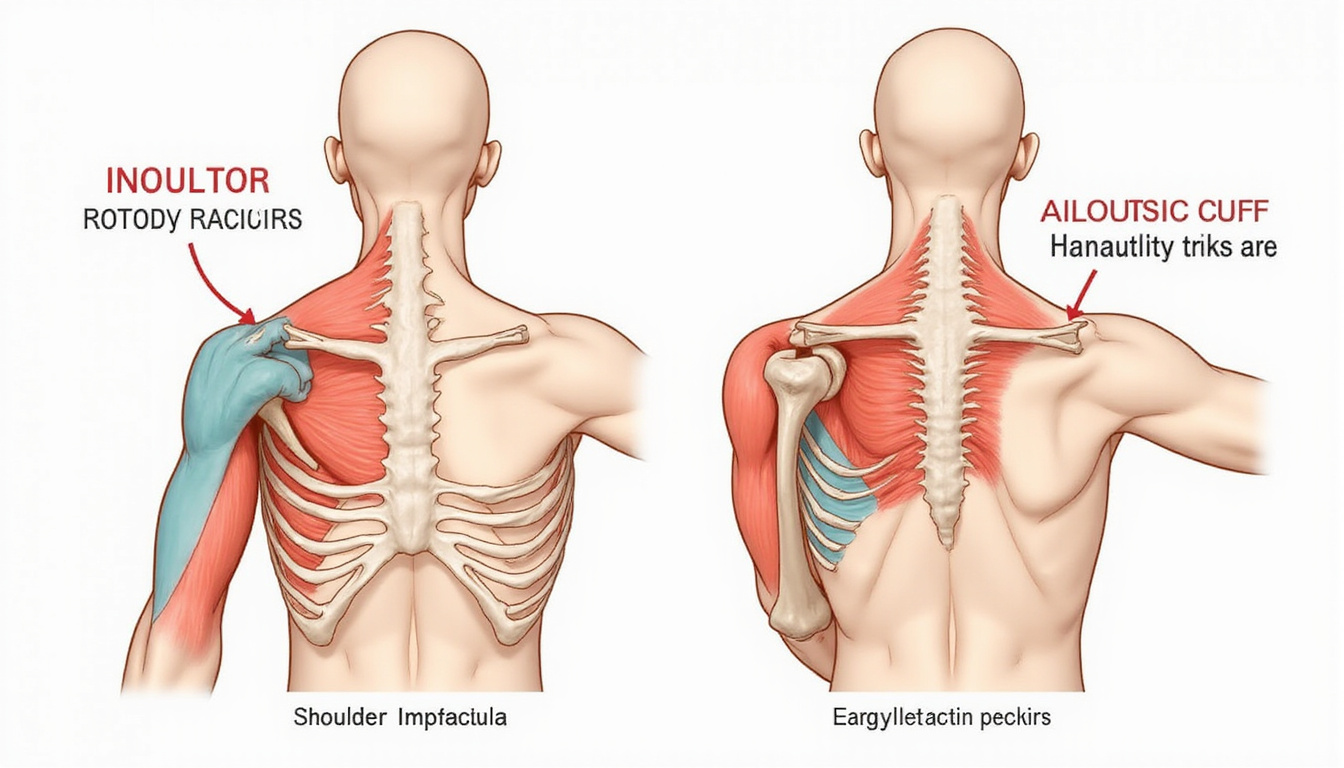
3. Prone T’s (for shoulder blade control)
• Lie face down on a bench or bed with arms hanging straight.
• Lift your arms out to the side to form a “T.” Keep your thumbs up and squeeze your shoulder blades together.
• Keep your neck relaxed.
• Do 2 sets of 8–12 reps.
Prone T’s improve stability for volleys and quick shots.
4. Controlled overhead press (when tolerated)
Once your pain calms and your rotator cuff grows stronger — and with clearance from an expert — you can try this:
• Use light dumbbells.
• Start with your elbows at shoulder height. Press upward in a smooth path, without causing pain.
• Do 2–3 sets of 8–10 reps.
• Focus on your form, not the weight.
This exercise teaches your shoulder to move overhead safely.
On-court prevention: smarter habits for shoulder longevity
There is no need to baby your shoulder forever, but smart play is key.
Warm up like you mean it
Spend five minutes warming up before your first game:
- Arm circles (move forward and backward, small then big)
- Torso rotations (place your hands on your hips and gently twist side to side)
- Use a band for light rows and external rotations if you have one
- Practice shadow strokes at half speed: serve, hit overheads, and dinks
Adjust your playing style
• Use more drops and dinks instead of pure muscle drives.
• Move your feet so you get under the ball instead of reaching awkwardly.
• Pick your overheads. Not every lob needs full power.
Manage your weekly load
• Space out your intense play days when possible.
• Build up your court time gradually if you are training for a tournament.
Nutrition-based support for healthy joints and muscles: Regenerix Gold
Many American Picklers focus on paddles, shoes, and court time. They may forget that good nutrition supports healthy joints and muscles.
Regenerix Gold is a nutrition-based supplement. It is made to support joint and muscle health. It has been:
• Recommended by doctors and physical therapists as part of an active lifestyle
• Used for over a decade with positive international feedback
• Formulated for people who want to move comfortably in sports like pickleball, tennis, and other court games
No supplement can replace a proper diagnosis, rehab, or training. But adding targeted nutrients is a smart part of a shoulder-care strategy.
Regenerix Gold
Remember: In the U.S., dietary supplements are not meant to diagnose, treat, cure, or prevent any disease. If your pain continues or worsens, speak with your healthcare provider before starting any new product or exercise plan.
Simple shoulder-care routine for Picklers
Here is a basic weekly routine:
• Pre-play (5–7 minutes):
- Arm circles
- Torso rotations
- Wall slides
- A few light dinks and half-speed serves
• Off-court (2–3 times per week):
- Band external rotations
- Scapular rows
- Prone T’s
- Chest stretch and thoracic extension drill
• Daily habits:
- Avoid slumping over screens
- Carry your bag on both shoulders or switch sides
- Stay well-hydrated and eat to support your muscles and joints
When to seek professional help
Stop guessing and see a healthcare professional (a physical therapist, sports chiropractor, or physician) if:
• Your pain is sharp, severe, or often wakes you at night
• Your shoulder moves very little or the movement worsens
• You feel weakness, numbness, or instability
• Your symptoms continue for weeks despite easing off and doing simple rehab exercises
A professional can tell if your symptoms match shoulder impingement or another condition. Early evaluation helps prevent more serious problems later (source: AAOS – Shoulder Conditions).
FAQ: Pickleball shoulder pain and impingement-style issues
-
How do I know if my pickleball shoulder pain is from impingement-style irritation?
You feel a pinch or ache when you raise your arm. You may feel pain with serves or overhead moves, and you notice soreness at the front or top of your shoulder after playing. Use these signs to get a check-up rather than to self-diagnose. -
What exercises help shoulder impingement from pickleball?
Mobility work such as wall slides and thoracic extension drills, combined with strengthening moves like band external rotations, scapular rows, and prone T’s, can support your shoulder. Keep your movements gentle and ask a provider for tips if unsure. -
Can a joint supplement help with pickleball shoulder issues?
No supplement replaces proper rehab, coaching, or medical care. However, many Picklers add joint and muscle–support supplements like Regenerix Gold as part of an overall plan to keep their joints and muscles strong.
Play longer, smarter, and more confidently
Around America, courts fill up as smart Picklers learn that hitting hard is not a long-term plan. Guard your shoulder against pickleball shoulder impingement by:
• Warming up thoroughly
• Strengthening the right muscles
• Paying attention to early pain signals
• Supporting your body with healthy lifestyle and nutrition choices
When you play well into your 50s, 60s, and beyond, a strong shoulder matters. It is better to care for your shoulder now than to face long recovery periods, high medical bills, or losing your court spot.
Consider adding Regenerix Gold to your shoulder-care toolkit along with targeted exercises and smart play. Pick up a bottle and feel the difference. The best players on court do more than perfect their drops; they invest quietly in the joints and muscles that let them play year after year.
https://youtu.be/mGrH5UWFxUs?si=X9bScbG6dvejGkZf
Health Note
Always consult a licensed medical doctor for your health issues.
Special Discount
If you prefer preventive nutrition to minimize expensive knee surgery and potentially addictive pharmaceuticals, Regenerix Gold is your savvy solution.
You qualify for a special discount.
Simply use the link below and a discount will automatically be applied during checkout.
Get Regenerix Gold => HERE


