

If you play pickleball a lot, your legs, hips, and knees take a hard hit.
They absorb dinks, split-steps, and lunges at the kitchen line.
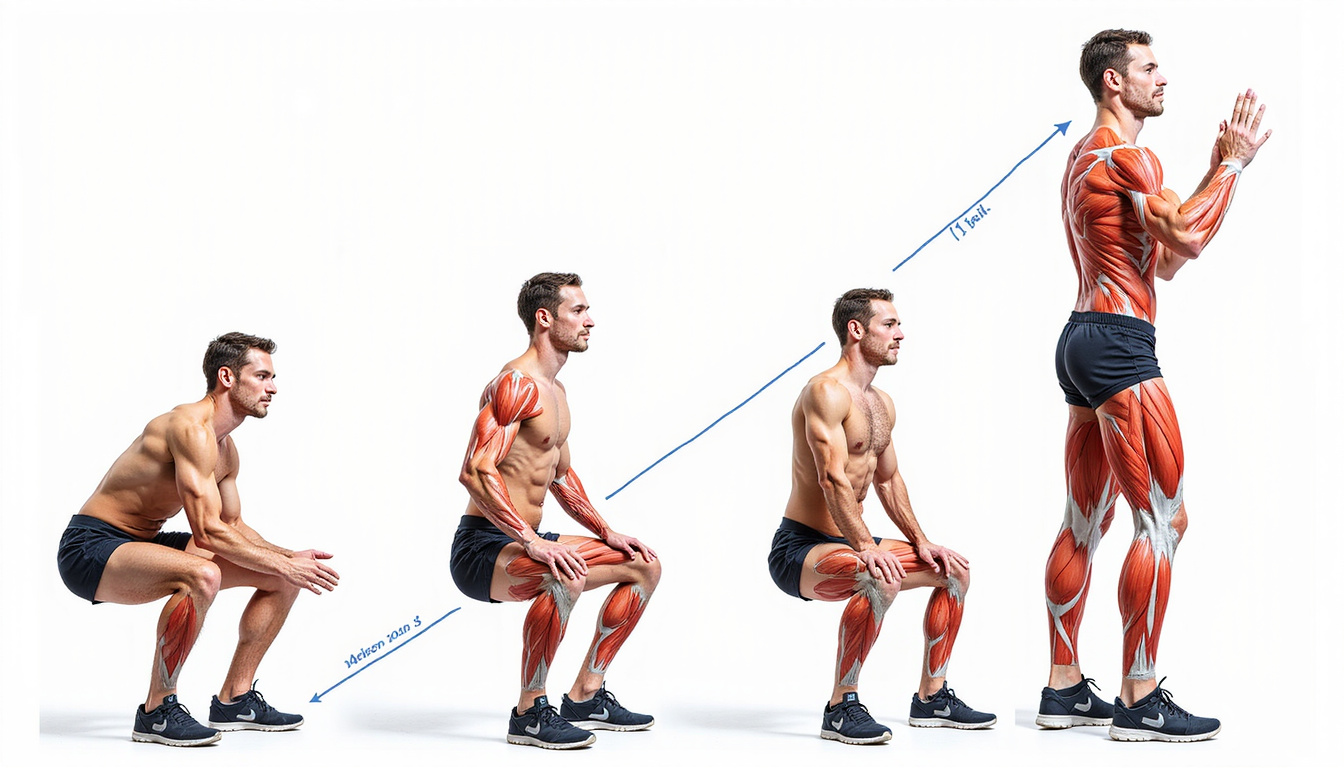
The single leg squat is a strong move made for pickleball.
It builds power for your drives, keeps you stable for quick turns, and helps your body fight off aches and tightness.
If you do it wrong, your knees and hips bear the extra load.
If you do it right, it becomes your secret weapon.
It helps you stay on court longer with happier joints and muscles.
Below is a pickleball guide that uses clear, linked word pairs.
It covers common single-leg squat mistakes, how to fix them, and how to progress safely.
It also shows how a nutrition-based supplement like Regenerix Gold can keep your joints and muscles strong during rec play, ladders, or tournaments.
Why pickleball players should care about the single leg squat
Pickleball fills your game with moves like:
- Split-steps
- Wide lateral shuffles
- Sudden stops and starts
- Off-balance reaches at the kitchen
- One-footed recoveries from awkward lunges
All these moves put your body in a state of single-leg loading.
The single leg squat helps you:
- Build strength in your quads, glutes, and hamstrings
- Improve balance as your body reacts fast
- Support strong knees and hips under pickleball stress
- Generate more power for serves, drives, and overhead hits
- Stay controlled on those last-step lunges at the NVZ
Think of it as training your “plant leg” and “push-off leg.”
It stops you from wobbling or collapsing when an opponent speeds a ball at you.
The most common single leg squat mistakes picklers make
1. Knee collapsing inward (“valgus” wobble)
On the court, this error appears when your knee caves inward toward your big toe as you lunge for a wide dink.
In the single leg squat, you see the same collapse.
Why this matters for pickleball:
The inward collapse stresses your knee.
It makes it harder for your muscles to keep your joints working properly over time.
Fixes:
• Think: “Knee tracks over 2nd–3rd toe.”
• Lightly push your knee outward as you squat.
• Use a shallow range of motion until you control a deeper dip.
• Check your form in a mirror or film your reps for feedback.
2. Heel coming off the ground
Many players turn the single leg squat into a move that uses just the quads by lifting the heel.
This shift puts stress on the front of your knee.
Why this matters for pickleball:
When you plant for a third-shot drive or stop from a sprint, you need full contact with the floor.
Full contact gives you stable power.
Fixes:
• Think: “Foot is a tripod” – your big toe, little toe, and heel must all touch the ground.
• Wiggle your toes slightly to prevent gripping only with the front of your foot.
• If your ankle does not move well, reduce your squat depth or use a firm wedge to elevate your heel.
• Gradually wean off the wedge as you gain mobility.
3. Torso collapsing forward
Sometimes you lean so far forward in a single leg squat that you appear to bow.
Why this matters for pickleball:
Too much forward lean stops your hips and core from sharing the load.
It does not help with upright moves like split-steps and volleys.
Fixes:
• Keep your chest proud and your eyes straight ahead.
• Imagine a string pulling upward from the crown of your head.
• Hold your arms out in front to serve as a counterbalance.
• Reduce the squat depth until your torso stays upright.
4. Dropping straight down instead of sitting back and down
Many players drop straight down and let the knee move forward with little hip engagement.
Why this matters for pickleball:
Your glutes and hamstrings should help each push-off and lateral shuffle.
Relying only on your quads is not enough.
Fixes:
• Think: “Hips go back and then down, not just down.”
• Stand a foot in front of a bench and reach your hips toward it as you squat.
• Practice a small hip hinge first; then add the squat bend.
5. Rushing the reps and bouncing at the bottom
On the court, rushing can lead to stumbles or overstepping the kitchen line.
In the gym, it causes you to lose control in your single leg squat.
Why this matters for pickleball:
You need control under heavy speed.
But first, you need control under slow and careful movement.
Fixes:
• Use a 3–1–1 tempo: take 3 seconds down, pause for 1 second, and rise in 1 second.
• Stop the set when you lose control, not when you feel the burn.
• Choose quality over quantity, especially when adding weight.
6. Using momentum from the free leg
Swinging the free leg like a pendulum may let you cheat through the hardest part of the move.
Why this matters for pickleball:
You must train true strength and stability.
Letting the free leg work takes away from that goal.
Fixes:
• Keep the free leg relaxed and still, hovering just off the floor.
• Imagine your free foot rests on an unmoving stool.
• If you need extra balance, lightly rest your fingertips on a wall while you work on the planted leg.
Step-by-step: how to do a clean single leg squat
- Stand tall on one leg with your other foot slightly in front and off the floor.
- Brace your core as if you will change direction quickly.
- Slowly bend your hip and knee.
Let your hips move back and down. - Keep your knee tracking over the middle of your foot and your heel firmly planted.
- Lower until you feel tension in your leg yet can keep good form.
At first, this might be only a slight bend. - Press through your entire foot, stand back up, and squeeze your glute at the top.
Aim for 2–3 sets of 6–10 controlled reps per leg.
Do this 2–3 times per week on days that are not consecutive.
It works best when your pickleball weeks are busy.
Progressions: from beginner to advanced pickler
Here is one way to move forward with your single leg squat while keeping your joints and muscles happy:
-
Assisted single leg squat to box
• Hold onto a stable support like a post, railing, or TRX.
• Tap your hips lightly to a box or chair, then stand.
• Focus on keeping the knee on track and the foot flat. -
Unassisted box single leg squat
• Do the same move without using your hands.
• Lower until your glute just taps the box; do not fully sit down. -
Supported air single leg squat
• Remove the box; use only a light fingertip hold on a wall or net post for balance.
• Work within a comfortable range of motion. -
Unassisted single leg squat (bodyweight)
• Reach full control with no external support and a pain-free range.
• Use this as your baseline before adding resistance. -
Weighted single leg squat
• Hold a light dumbbell or kettlebell at your chest (goblet style).
• Increase the load gradually as you gain strength and control. -
Sport-specific variations for picklers
• Add a slight forward lean to mimic your ready position.
• Include a small lateral step at the top to simulate pushing off for a wide dink.
• Hold a light medicine ball to encourage core engagement.
As you grow stronger, your movement can lead to more explosive serves, better recovery after lobs, and less wobble when you emergency-brake at the kitchen.
Supporting your joints and muscles from the inside: Regenerix Gold
Smart training is only part of the solution for busy picklers.
Many players also want nutrition-based ways to support healthy joints and muscles.
This helps them handle regular court time plus strength work like the single leg squat.
Regenerix Gold is a supplement backed by doctors and physical therapists.
It supports:
• Healthy joint comfort and mobility
• Resilient muscles under repeated strain
• Recovery after tough sessions in court and the gym
Regenerix Gold has been used internationally for over a decade.
Active users, including racket and paddle-sport athletes, give it positive reviews.
They use it to keep their play consistent while giving their bodies targeted support.
Supplements do not diagnose, treat, cure, or prevent any disease.
Many American picklers add Regenerix Gold into their overall routine, which also includes:
• A proper warm-up and cool-down
• Strength training (including the single leg squat)
• Adequate protein and hydration
• Sufficient sleep and recovery days
If you feel regular soreness from drills, tournaments, or long rec sessions,
combining smart exercise progressions with joint- and muscle-focused nutrition can help.
This routine builds long-term durability on-court.
Regenerix Gold
How to fit single leg squats into a pickleball week
Here is a simple way to include this move in your schedule without overdoing it:
• Use 2 days per week for lower-body strength
• Do these sessions on your lighter pickleball days or off-court days
• Ensure at least one day per week of rest or very light activity
Example schedule:
• Monday – Rec play with light strength work (single leg squats + core)
• Wednesday – Drills with strength work (single leg squats + lateral lunges)
• Saturday – League or tournament day; do only a warm-up and mobility work
Quick checklist: are your single leg squats pickleball-ready?
Before you increase the intensity, you should be able to:
• Do 8–10 controlled reps per leg with:
- A flat heel
- A knee tracking over the 2nd–3rd toe
- Minimal side-to-side wobble
- Smooth, controlled speed (no bouncing)
If any item on the checklist fails, go back to an easier version (assisted or box squat) until you feel confident.
FAQ: single leg squat questions from picklers
1. Are single leg squats good for pickleball players’ knees?
Single leg squats can help keep the muscles around your knees strong and supportive if you use good technique.
They are valuable for the lunges and quick stops in pickleball.
Always focus on a controlled depth, proper knee tracking, and a pain-free range.
If you feel discomfort, adjust your range or variation, and talk to a professional before adding more load.
2. How often should I do a single leg squat workout if I play pickleball a lot?
For most recreational players, doing single leg squats 2–3 times per week on non-consecutive days works well.
Pair them with other hip and core exercises.
On heavy match or tournament weeks, consider reducing volume or moving strength sessions to non-playing days to prevent extra fatigue.
3. Can I combine single leg squat training with a joint support supplement?
Yes. Many pickleball players pair targeted strength exercises like the single leg squat with a supplement that supports joint and muscle health, such as Regenerix Gold.
This product is meant to work alongside good training, recovery, and nutrition routines—not replace them.
Always follow the label directions and consult your healthcare provider if you have any concerns.
Play stronger, longer: why now is the time to act
Court fees, paddles, shoes, tournament travel, and possible medical bills can add up.
Many picklers worry about keeping pace with the schedule they love.
They wonder if joint or muscle issues will one day affect not just their game but also their work.
Working on your single leg squat now is a smart, low-cost move.
It builds stronger, more stable legs that help you every time you step on the court.
Pair this training with a trusted supplement like Regenerix Gold—recommended by doctors and physical therapists and used worldwide for over a decade.
You take a more “pro-level” approach than most local players.
If you want to be the one who still moves crisply in game three as others slow down,
tighten up your training and focus on joint and muscle nutrition.
Get a bottle of Regenerix Gold, add single leg squats to your weekly routine,
and feel the difference.
It is a small step today that can keep you ahead of injuries and costs, all while stacking wins and loving the game.
https://youtu.be/mGrH5UWFxUs?si=X9bScbG6dvejGkZf
Health Note
Always consult a licensed medical doctor for your health issues.
Special Discount
If you prefer preventive nutrition to minimize expensive knee surgery and potentially addictive pharmaceuticals, Regenerix Gold is your savvy solution.
You qualify for a special discount.
Simply use the link below and a discount will automatically be applied during checkout.
Get Regenerix Gold => HERE


