

If you have cranky knees, stiff hips, a grumbly lower back, or shoulders that hurt after almost any move, try swimming. Water helps you move without harsh, bone‐on‐bone impact. You may still feel tired midway, your shoulders may burn fast, or your kick may seem to flail instead of drive.
This guide is for people in America who live with daily joint aches, creaks, or stiffness. They want to use swimming to build endurance, speed, and form without paying later with more joint pain.
Why Swimming Is So Joint‑Friendly (When You Do It Right)
People whose knees “talk” when they climb stairs or whose hips lock after long sitting find that swimming feels gentle on the joints. Here are key reasons:
- Buoyancy unloads your joints. Water takes a big bite out of your body weight. This eases pressure on your knees, hips, and spine.
- Smooth, repetitive motion. You move in a fluid, constant range. There is no pounding or jarring.
- Natural resistance. Water pushes back in every direction. It helps build muscle support around the joints without heavy loads.
Yet, poor form still can hurt your body. A sloppy stroke might trade knee pain for shoulder pain. The goal is not to simply do laps—it is to move smart in the water.
Foundation First: Comfortable Joints, Strong Muscles
If your joints already feel worn, simply pushing harder will not help. You need a firm base:
- Gentle mobility work. Do easy hip circles, the cat‑cow, or shoulder rolls before you hit the pool.
- Light strength work. Try rows, bridges, or mini‑squats. These exercises support your joints so the workload does not fall on irritated spots.
- Targeted nutrition. Many swimmers add nutrition‑based support to feed the tissues that work hard every day.
This is where Regenerix Gold fits in. It is a nutrition‑based supplement for those who want healthy joints and muscles. Doctors and therapists have recommended it for over a decade. Although it is not a drug and does not treat any disease, many people use it to keep their joints moving comfortably when they train. Always talk with your healthcare provider before starting any supplement.
Building Swimming Endurance Without Wrecking Your Body
When shoulders burn or breathing falters early, joint‑friendly endurance is your main focus. It is not just about heart and lungs but about keeping your joints safe, too.
Start Slower Than You Think
People with sensitive joints often swing from too easy to too hard. The body does not handle big jumps well. Try this structure 2–3 times per week:
-
Warm‑up (5–10 minutes):
Swim easy freestyle or backstroke. Add gentle kicking with a board. Focus on smooth, pain‑free moves. -
Main set:
Alternate short swims with rest. For example, swim 8 × 25 yards at a relaxed, steady pace. Rest 20–30 seconds between each length. -
Cool‑down (5 minutes):
Do easy backstroke or a gentle water walk.
When your joints feel fine later that day and the next morning, add a few more lengths or shorten your rest slightly. Change only one factor at a time.
Use Intervals, Not Endless Laps
Intervals build stamina and let you check your joints. For example, you might progress this way:
- Week 1–2: 8 × 25 yards
- Week 3–4: 6 × 50 yards
- Week 5–6: 4 × 75 yards
Stop while your stroke feels controlled. If your form suffers, your joints will soon feel it.
Respect Joint “Aftermath” Signals
Watch how your joints feel:
• That evening
• When you get up the next morning
• As you go down stairs the following day
If your knees lock, your hips feel jammed, or your shoulders hurt when lifted overhead, scale back volume or intensity and clean up your technique.
Technique Tweaks to Protect Joints and Boost Speed
You do not need Olympic speed. Poor mechanics can harm your shoulders and lower back. Try these adjustments.
Freestyle Form for Joint Comfort and Speed
Pay attention to these checkpoints:
- Head position: Look straight down or slightly ahead. This keeps your neck relaxed and your lower back safe.
- Body line: Keep a long, straight spine. Draw your ribcage gently downward. A flared ribcage often links to tight lower backs.
- Rotation, not twisting: Rotate your body as one unit from the shoulders to the hips. Do not force your lower back to twist.
- Hand entry: Let your fingers enter just in front of your shoulder and avoid crossing midline. This lowers shoulder and neck stress.
- High elbow catch: Keep the elbow slightly bent and higher than the wrist during the pull. A straight‑arm pull may cause shoulder discomfort.
Breathing Without Neck Strain
If you wake with a stiff neck or tight upper back, your breathing technique may add strain. Instead:
• Turn your head just enough to clear your mouth; keep one goggle in the water.
• Exhale slowly through your nose while your face is underwater. Breathe in quickly when you turn.
• Avoid lifting your head forward. Let your body roll naturally rather than craning your neck.
Smarter Kicking for Angry Knees and Hips
Many with joint issues find that kicking makes hips pinch or knees sore. To protect these joints:
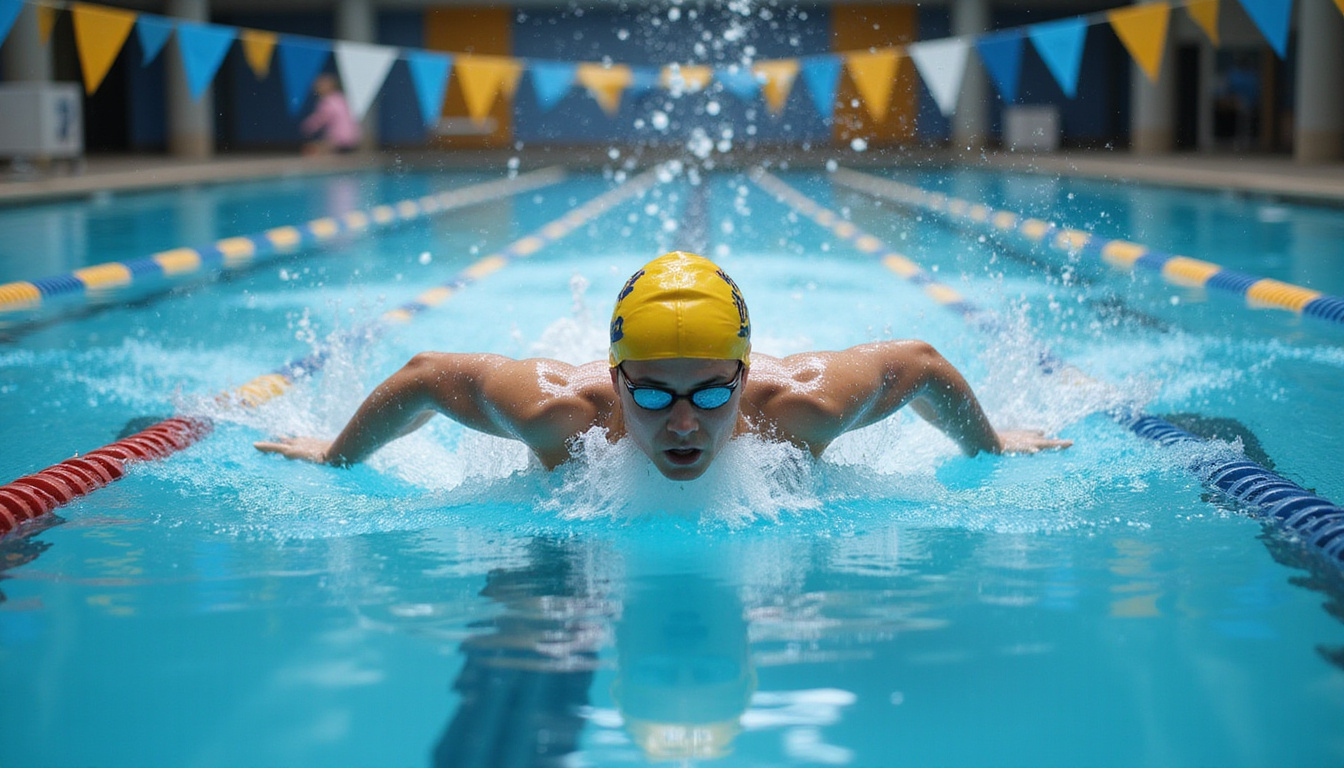
- Keep your kick small and quick rather than big and wild.
- Kick from the hips while keeping the knees softly bent.
- Point your toes gently; do not force the movement, especially if your ankles feel tight.
If a flutter kick bothers your knees, try these alternatives:
- Backstroke kick: This puts less load on your lower back.
- Pull sets: Use a buoy between your legs to focus on the upper body.
- Fins (with caution): Use short, flexible fins lightly. Skip them if you feel more irritation.
Land Support: Strength and Nutrition for Swimmers’ Joints
Water is kind, but your joints still need land‑based support so your muscles can share the load.
Simple Joint‑Friendly Strength Moves
Include these moves 2–3 times per week:
- Glute bridge: Strengthens hips and supports your lower back.
- Wall sit (shallow angle): Builds thigh strength while easing stress on the knees.
- Band rows: Strengthens your upper back and helps keep shoulders safe.
- Side‑lying leg lifts: Boosts hip stability, especially if your hips feel wobbly.
- Farmer’s carry (light weights): Builds core and shoulder stability.
Keep your repetitions moderate (8–12) and focus on avoiding sharp joint pain. Muscle tiredness is normal; joint pain is not.
Nutrition: Supporting Joints and Muscles from the Inside
For those with “gravelly” knees or aching shoulders, nutrition is a key piece:
• Eat enough protein to rebuild muscles that support your joints.
• Drink plenty of fluids, especially when you swim in heated pools.
• Look for nutrients that help maintain joint and muscle health.
Regenerix Gold fits here as a nutrition‑based solution for healthy joints and muscles. Many doctors and therapists recommend it as part of a holistic approach that includes movement, strength work, and smart training. It has been trusted internationally for over a decade. Remember: dietary supplements are not magic bullets and do not diagnose or treat any disease. They work best as one piece of a larger plan that includes exercise, rest, and professional guidance (source: National Institutes of Health Office of Dietary Supplements, https://ods.od.nih.gov).
Swimming Workouts for Endurance, Speed, and Form
Below is a sample week for someone with sensitive joints who still wants measurable gains without harm.
Workout A: Endurance‑First (Joint‑Friendly)
-
Warm‑up:
- 4 × 25 yards of easy freestyle
- 2 × 25 yards backstroke
-
Main set:
- 6 × 50 yards at a comfortable pace, with 30 seconds rest
- 4 × 25 yards at a slightly faster pace, with 20 seconds rest
-
Cool‑down:
- 4 × 25 yards very easy, in your choice stroke
Workout B: Technique & Form Focus
-
Warm‑up:
- 4 × 25 yards of easy freestyle with perfect form
-
Drills (2 rounds):
- 25 yards catch‑up drill (one arm at a time; focus on a long body line)
- 25 yards side kicking (face in the water; rotate to breathe)
- 25 yards fingertip drag (use a light drag to promote a high elbow)
-
Main set:
- 4 × 50 yards “quality” swim: relaxed but technically sound
-
Cool‑down:
- 2 × 25 yards backstroke
Workout C: Speed Without Beating Up Your Joints
-
Warm‑up:
- 4 × 25 yards easy swim
- 2 × 25 yards drill of your choice
-
Main set:
- 6 × 25 yards fast but controlled, with 30–45 seconds rest
- 4 × 25 yards of easy recovery between faster 25s; focus on gentle motion
-
Cool‑down:
- 4 × 25 yards very easy
Listen to your body the next day. If your joints feel stiffer than usual, back off a bit on volume or intensity next time.
How Regenerix Gold Fits Into a Swimmer’s Routine
For people who live with constant creaks and clicks yet want to improve their lap times, a common routine is as follows:
-
Daily:
• Do gentle mobility exercises.
• Take Regenerix Gold as directed for joint and muscle support (always follow your healthcare provider’s advice). -
2–4 days per week:
• Swim with a focus on form and endurance, rather than simply “grinding it out.” -
2–3 days per week:
• Perform strength and stability exercises.
For over a decade, users worldwide have reported that adding Regenerix Gold helps them stay active—be it keeping up at work, remaining independent, or simply living with less pain. Remember, supplements are not magic. For joint‑conscious swimmers, smart training, strength work, and thoughtful nutritional support can mark the difference between “I can kind of swim” and “I feel comfortable and capable in the water.”
Video: Learn More About Regenerix Gold
Regenerix Gold
FAQs About Swimming, Joints, and Performance
Q1: Is swimming good for joints and muscles if I already have a lot of stiffness?
Yes. Swimming is low impact and lets you move through a full range without pounding. Start with short, easy sessions. Focus on good technique. Many people also add nutrition‑based support like Regenerix Gold while following advice from their healthcare provider.
Q2: How often should I swim for joint‑friendly fitness and stamina?
Most adults see good results with 2–4 sessions per week. The key is to give your shoulders, hips, and knees enough time to recover. If your joint soreness lingers for more than 24–48 hours, scale back your next session.
Q3: What helps joint pain after swimming workouts?
Many people find relief with a mix of gentle stretching, light walking, or even a cold or warm shower. Keeping your technique good, adding land‑based strength exercises, and paying attention to your nutrition (including options like Regenerix Gold) can all help over time. Always check with your healthcare provider.
Take the Next Step: Swim Smarter, Protect Your Joints, and Stay Ahead
You are not just grinding through laps and hoping your joints hold up. You are choosing a smarter path.
Bring it all together:
• Use swimming as your main joint‑friendly cardio.
• Focus on clean form so your shoulders, hips, and back feel better.
• Add some strength work to support areas that need help.
• Support your body with thoughtful nutrition, which may include Regenerix Gold for healthy joints and muscles.
In a world of high medical bills and lost work time due to injury, staying active, strong, and in control is a real advantage. Many people choose not to wait until something “gives out.” They invest in movement, smart training, and nutrition to keep moving. If that sounds like you, consider trying Regenerix Gold. See how it fits in your plan to move better, train smarter, and stay one step ahead—both in the pool and in life.
Special Discount
If you prefer preventive nutrition to minimize expensive knee surgery and potentially addictive pharmaceuticals, Regenerix Gold is your savvy solution.
You qualify for a special discount.
Simply use the link below and a discount will automatically be applied during checkout.
Get Regenerix Gold => HERE


