

If you’re a pickleball addict who feels woozy when tracking a lob or bending down for a dink, you are not alone.
Many players battle lightheadedness, imbalance, or “sea legs” on court.
That is why we use vestibular training.
These targeted exercises retrain your inner ear and brain systems to keep you steady.
They help you move confidently in the kitchen, at the NVZ, and all over the court.
This guide explains daily vestibular training.
It fits the stop–start, twist–heavy world of pickleball.
We also show how smart joint and muscle nutrition—like Regenerix Gold—supports your body as you work.
Why Pickleball Players Are Vulnerable to Dizziness and Imbalance
Pickleball makes you turn your head fast, stop quickly, and scan constantly.
You watch the ball, your partner, your opponent, the lines, the fence, and the wind.
This activity loads your sensory system.
When your vestibular system (inner ear + brain) does not work well, you may feel:
- You feel unsteady after a hard rally.
- You have brief “spinny” moments when you look up for a lob.
- You wobble when you pivot or backpedal.
- You need a second to “recalibrate” after fast head turns.
None of these feelings mean a serious problem.
They show that your balance system is challenged.
Structured vestibular training helps meet that challenge.
Your vestibular system works in a tight link.
It coordinates what your eyes see, what your inner ear senses about movement and position, and what your joints and muscles report.
When this system loses its close links, you feel off-balance.
That is exactly what you do not want when you poach or hold the kitchen line.
What Is Vestibular Training, in Pickleball Terms?
Think of vestibular training as “balance drills for your brain.”
Just as you practice your third–shot drops, you can practice your balance and gaze stability.
The core goals of vestibular training are:
- Improve gaze stability – keep your eyes on the ball or target even if your head moves.
- Improve dynamic balance – remain steady during lunges, pivots, and changes of direction.
- Reduce motion sensitivity – feel less triggered by fast head turns, quick looks upward, or sudden bends.
These exercises do not replace medical care.
If your dizziness is sudden, severe, or comes with other worrisome symptoms, have a healthcare professional evaluate you first.
After you are cleared, daily vestibular exercises can be a powerful, drug-free, non–invasive tool.
Foundation: Safety First for Dizzy Picklers
Before you start any vestibular training routine, remember these safety rules:
- Practice near a countertop, wall, or sturdy chair for support.
- If you feel more than mild symptoms (severe spinning, nausea, or a strong fear of falling), stop and rest.
- Start with short sessions (5–10 minutes) and build up slowly.
- Use a court buddy or have a household member nearby when you try new or advanced drills.
Daily Vestibular Training Routine for Pickleball Players
Below is a practical routine inspired by court moves.
Aim for 1–2 sessions per day on most days.
A mild flare of symptoms is normal; it should not feel overwhelming or last long.
1. Gaze Stability: “Ball Tracking” for Your Inner Ear
These exercises train you to keep your gaze on a target even as your head moves.
This is crucial for tracking a fast drive.
A. VOR x1: Basic Head Turns with a Target
- Sit or stand that you face a letter on a sticky note.
- Place the note at eye level and an arm’s length away.
- Stare at the letter.
- Turn your head side-to-side about 30° each way as if saying “no.”
- Keep your eyes fixed on the letter.
- Begin slow (1–2 turns per second) and then increase speed gradually.
- Do this for 30–60 seconds. Then rest and repeat 2–3 times.
Repeat the exercise up-and-down, as if you are nodding “yes.”
On–court translation:
This drill mimics watching the ball while you turn your head during a cross–court dink exchange or when tracking a quick poach.
2. Progression: Gaze Stability with Movement
When the basic drill feels easier, try adding motion:
B. VOR with Steps
• While doing VOR x1 (side-to-side turns), take small steps forward and backward.
• Keep your gaze on the target the entire time.
• Do 30 seconds, rest, and repeat 2–3 times.
C. VOR Walking “Baseline Drill”
• Hold a target card with a large letter at arm’s length in front of you.
• Walk a straight line in your hallway or along an empty court baseline.
• Move your head side-to-side while keeping your eyes on the card.
• Make 2–4 passes, resting as needed.
This drill challenges gaze control while in motion – just like moving from the baseline to the NVZ while reading the ball’s spin.
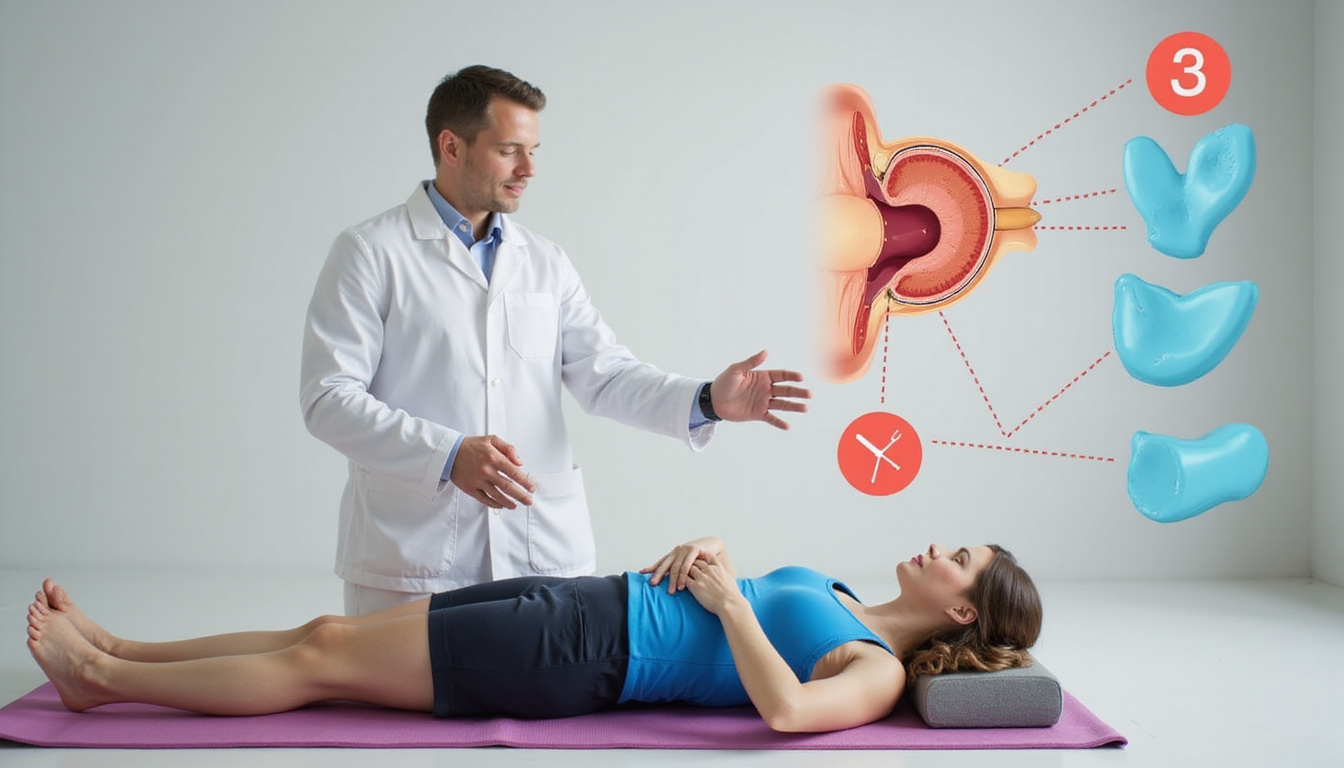
3. Balance Basics: Stable Base Before the Kitchen Dance
Start on flat ground near a counter.
A. Feet Together Balance
- Stand with your feet touching and your arms relaxed by your sides.
- Hold this position for 30–60 seconds.
- To make it more challenging:
- Cross your arms over your chest.
- Try closing your eyes if you feel stable.
B. Semi–Tandem and Tandem Stance
• In a semi–tandem stance, place one foot a bit ahead, with the heel near the arch of the other foot.
• In a tandem stance, place your heel directly in front of the toe of the other foot.
• Hold each stance for 30–60 seconds.
• Switch which foot is in front.
C. Single–Leg Stance (“One–Leg Kitchen Hold”)
• Stand on one leg while lightly touching a counter for support.
• Hold for 10–20 seconds.
• Progress to holding it for 30–45 seconds.
• Do 2–3 rounds per leg.
On–court translation:
Better single–leg stability helps you lunge sharply to dink, recover quickly, and land smoothly after reaching for an Erne.
4. Dynamic Balance: Mimicking Real Pickleball Movement
Once you feel steady with the basics, add movements similar to those on court.
A. Lateral Weight Shifts
- Stand with your feet shoulder–width apart.
- Slowly shift your weight onto your right leg while your left toe lightly stays on the floor.
- Hold for 3–5 seconds, then shift to the left.
- Repeat 10–20 times.
B. Mini Lunges in Four Directions
• Do a lunge forward, backward, and diagonally – simulating a quick move to a dink and then a recovery.
• Keep the movements small and controlled.
• Do 5–10 lunges each direction with each leg.
C. “Kitchen Line Chaos” Drill (No Ball Required)
- Stand on a line – use a seam in the hallway, tape on the floor, or the actual NVZ line.
- Step forward and back over the line with a random rhythm: quick-quick-slow, or quick-slow-quick.
- Add gentle head turns side-to-side as you move.
- Perform this drill for 20–30 seconds, rest, and then do 3–5 rounds.
5. Visual–Vestibular Challenge: Recreating Game–Day Chaos
Your brain must learn to handle busy visual scenes—like club nights with full courts and flying balls.
A. Busy Background Gaze Training
• Place your gaze target (the letter) on a wall that has a patterned background (such as curtains, posters, or a muted TV).
• Perform the VOR x1 drill with head turns while keeping the busy background in view.
• Do this for 30–45 seconds, then rest and repeat 2–3 times.
B. Ball–Tracking at Home
• Ask a partner to gently toss a ball side-to-side or up-and-down.
• Keep your eyes on the ball and gently move your head with it.
• Perform this controlled drill for 1–2 minutes.
How Often Should You Do Vestibular Training?
Practice makes you better – just like working on your serve.
• Frequency: Do the training 1–2 times per day.
• Duration: Spend 10–20 minutes in total per day.
• Timeline: Many players notice improved steadiness and confidence in a few weeks of regular practice.
(Source: American Physical Therapy Association – Vestibular Rehab)
Mild dizziness or imbalance during training is normal.
Keep the symptoms at a level that fades after you stop.
Supporting Your Vestibular Training with Joint & Muscle Nutrition
Vestibular training works on your inner ear and brain.
However, your joints and muscles carry your body through action.
If you play regularly, you may suffer:
• Sore knees and ankles after long sessions.
• Stiff hips and back from twisting and bending.
• Tired shoulders from serves, overhead shots, and resets.
That is where a nutrition–based supplement like Regenerix Gold helps.
Why Many Picklers Turn to Regenerix Gold
Regenerix Gold helps active people maintain healthy, resilient joints and muscles.
Its nutritional focus supports joint comfort and muscle mobility.
It is recommended by doctors and physical therapists for active adults.
Its positive feedback comes from weekend warriors, league players, and everyday movers.
While vestibular training rebuilds your balance system, well–supported joints and muscles help you do the exercises with less pain.
This means you can bend, twist, and lunge without daily aches holding you back.
How Regenerix Gold Fits Into a Pickleball Lifestyle
For American players balancing competition, fun, and real–life tasks, Regenerix Gold makes sense:
• It gives practical comfort support for an active lifestyle.
• It helps you feel more consistent, supporting your training and court time.
• It may prevent extra appointments or worries from long absences due to injury.
Always read the label carefully.
Speak with your healthcare provider, especially if you are pregnant, nursing, take medications, or have existing health issues.
Remember: supplements do not diagnose, treat, cure, or prevent any disease.
Individual responses vary.
Simple Daily Plan for Dizzy Picklers
Here is a sample day for improving balance and keeping your game strong:
-
Morning (5–10 minutes)
- Do gaze stability drills (basic VOR x1 and with steps).
- Hold feet–together and tandem balance stances.
-
Pre–Play (5–10 minutes)
- Perform lateral weight shifts and mini lunges.
- Do the “kitchen line chaos” drill for dynamic balance.
-
Nutrition Routine
- Take Regenerix Gold as directed.
- Do this at a consistent time as part of your joint and muscle support plan.
-
Post–Play (5 minutes)
- Stretch lightly.
- Do a brief round of simple gaze and balance drills if you feel off after intense game play.
Over weeks, this mix of vestibular training and thoughtful nutrition support builds steadiness, confidence, and game readiness.
Regenerix Gold
FAQ: Vestibular Training for Pickleball Players
Q1: How long does vestibular training for dizziness usually take to work?
Some players feel more stable in a few weeks of daily practice.
Others may need several weeks or longer.
Consistency and gradual progress are key.
If symptoms do not improve or worsen, seek professional help.
Q2: Can vestibular balance training replace seeing a doctor or therapist?
No.
Vestibular training is a helpful tool, but it does not replace professional evaluation.
Seek help if dizziness comes on suddenly, is severe, or includes other concerning symptoms.
Many players mix home exercises with guidance from a specialist in vestibular rehab.
Q3: Is it safe to do vestibular exercise training on my own at home?
For many, yes—if you start with simple drills, stay near support (like a counter or wall), and stop when symptoms intensify.
Those with significant health issues, frequent falls, or major dizziness should seek evaluation before starting.
After you are cleared, home vestibular training can complement professional care very well.
Take Back Your Court Confidence—And Your Future Medical Bills
If you are tired of feeling off–balance when you need to focus on that third shot or poach with authority, it is time to treat balance training as seriously as your serve.
Daily vestibular training gives your brain and inner–ear system the practice it needs.
Pair this training with smart joint and muscle support from a trusted supplement like Regenerix Gold.
This combination builds an edge on court and in life.
Instead of risking rising medical costs, lost court time, or missed work, choose a proactive, health–smart approach.
Get a bottle of Regenerix Gold and start your vestibular routine this week.
You will feel prepared and in control on your courts—and you invest in the one asset you cannot replace: a body that lets you play the game you love, on your terms.
https://youtu.be/mGrH5UWFxUs?si=X9bScbG6dvejGkZf
Health Note
Always consult a licensed medical doctor for your health issues.
Special Discount
If you prefer preventive nutrition to minimize expensive knee surgery and potentially addictive pharmaceuticals, Regenerix Gold is your savvy solution.
You qualify for a special discount.
Simply use the link below and a discount will automatically be applied during checkout.
Get Regenerix Gold => HERE


