

If you’re a tennis player who spends hours on hard courts, your Achilles easily gets overworked. A sharp, burning pull from your heel when you hit a wide forehand, stiff mornings when you wake up, or an ache after several matches warn you: your Achilles is overloaded.
This guide speaks directly to American tennis players who mix singles, doubles, leagues, and tournaments. It gives real, proven tips to keep your Achilles, joints, and muscles strong.
Why Tennis Players Get Achilles Tendinitis
Your Achilles tendon acts as a drive cable from your calf to your heel. On the tennis court it endures:
• Hard-court pounding
• Quick split steps on returns
• Sudden stops and starts for wide balls
• Repeated jumping for overheads and serves
• Constant changes in direction
Over time, the tendon becomes irritated and develops micro-strains. Players call this Achilles tendinitis or Achilles overuse. It often feels like:
• Stiffness in the heel when you rise in the morning
• Pain during the first minutes of play that later improves
• Soreness when walking downstairs after a hard match
• Tenderness along the tendon when you touch it
If you play through the pain without a plan, the problem may last months and cost you the season. The good news is that research-backed treatments can help you return to the court.
1. Load Management: Dial Back, Don’t Quit
Many tennis players either ignore pain or stop playing altogether. With Achilles tendinitis, the smarter move is load management. You adjust the stress instead of removing it completely.
Try these changes for a short time:
• Reduce play time by 25–50%
• Avoid matches on consecutive days
• Switch some singles matches to doubles
• Pick softer courts, like clay, when you can
• Cut down on explosive drills like suicides and sprints
A simple rule is to accept discomfort up to 3/10 as long as it does not grow during or after play. Anything more should prompt you to ease off.
2. Proven Strength Work: Eccentric and Heavy Calf Training
The best-studied active treatment for Achilles issues is eccentric calf training. This slow lowering exercise helps your tendon grow stronger.
Do this exercise:
- Stand on a step with both feet so your heels hang off the edge.
- Rise up using both legs.
- Shift your weight to your injured side and slowly lower that heel below the step in 3–5 seconds.
- Use both legs to rise again. Repeat.
Aim for:
• 3 sets of 12–15 reps, one or two times daily
• 5–7 days per week for 8–12 weeks
When your pain eases, try heavy slow resistance exercises such as weighted calf raises. Do 3–4 sets of 6–8 reps, 2–3 times per week. This training boosts your serve power and first-step speed while protecting your Achilles.
3. Court Shoes and Inserts: Gear That Saves Your Season
Tennis players often fixate on strings and racquets and forget their shoes. When you face Achilles tendinitis, your footwear is as important as your string tension.
Follow these gear tips:
• Use proper tennis shoes – Running shoes favor straight-line motion and not lateral plays. Choose court-specific shoes with good heel support.
• Get a slight heel lift – A small heel or in‑shoe wedge lowers the strain on your Achilles by limiting ankle motion.
• Look for cushioning – Extra midsole cushioning helps you on hard courts.
• Replace worn shoes – New shoes are needed when you see worn-out spots, crushed midsoles, or broken heel counters.
If you have a history with heel or Achilles problems, talk to a sports podiatrist or physical therapist for a shoe or orthotic check.
4. Warm-Up Like a Pro, Not a Weekend Warrior
A light jog and a few mini-tennis shots do not fully prepare your Achilles. Your warm-up must be structured and non-negotiable.
Before each match or practice, take these steps:
• Spend 5–10 minutes on light cardio. Use an easy jog, side shuffles, or carioca along the baseline.
• Do dynamic calf and ankle exercises: ankle circles, heel-to‑toe walks, and walking lunges with a heel lift.
• Add progressive hopping and split steps. Start with low, gentle hops and slowly increase to short split-step drills.
This routine warms your tendon so it can handle full-speed serves and sprints.
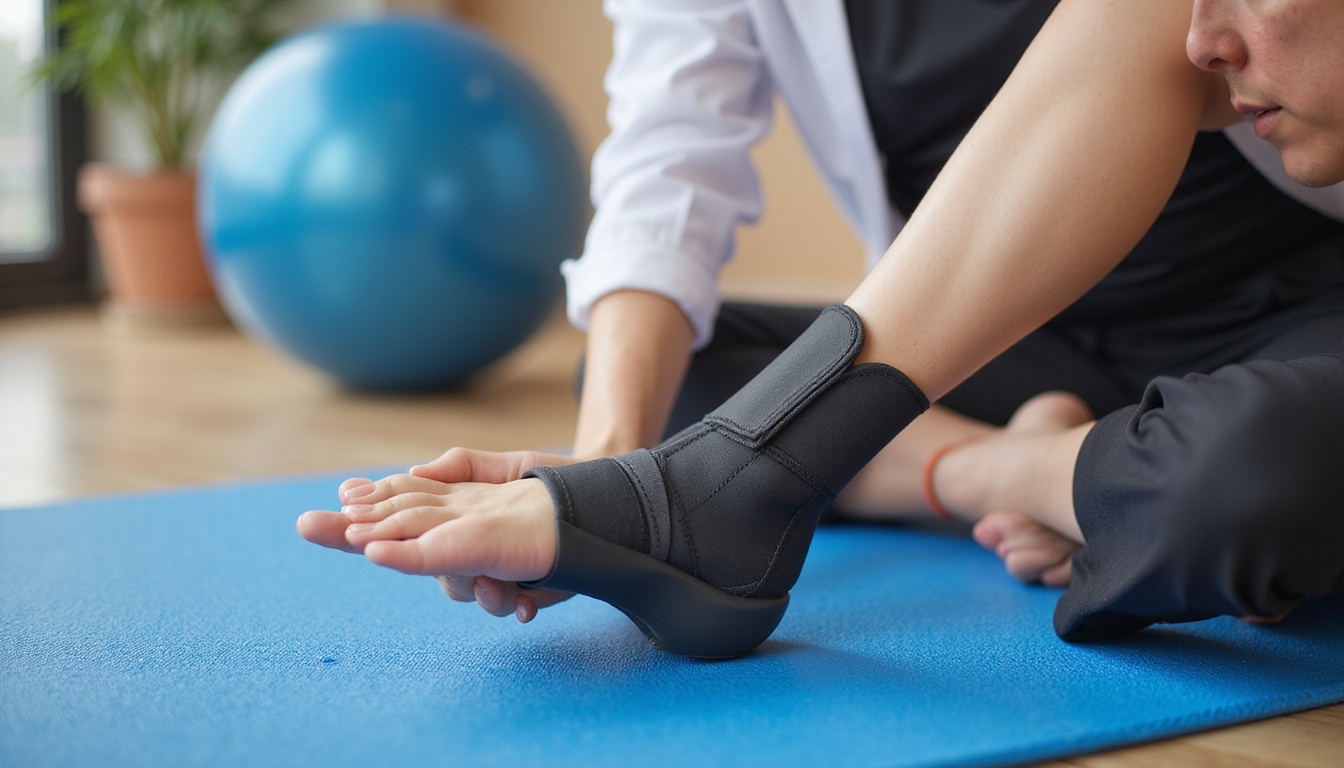
5. Smart Recovery: Ice, Compression, and Activity Pacing
Recovery is often where club players lose the fight against Achilles tendinitis.
After play, do these recovery steps:
• Apply ice or a cold pack to your Achilles for 10–15 minutes if it feels sore.
• Stretch lightly after play, with a focus on calf and hamstring flexibility. Avoid forced stretches that cause sharp pain.
• Use compression socks or sleeves to boost circulation and ease soreness.
• Choose active recovery days: swap a hitting session for light cycling, swimming, or rowing with controlled foot pressure.
This routine keeps your cardio in check without stressing your tendon further.
6. Technique Tweaks and Strategy Changes
Some small changes in tennis techniques can reduce the strain on your Achilles.
• Shorten your points – Step in early, take balls quickly, and come to the net to avoid long rallies.
• Serve efficiently – If you rely on a big kick serve, try adding more slice or flat serves to reduce deep knee and ankle bending.
• Control your split step – Use a low, efficient split step rather than big jumps for every shot.
• Improve positioning – Reading your opponent better means fewer desperate sprints.
A coach or video analysis can help you adjust your style to protect your tendon.
7. Cross-Training for Musculoskeletal Balance
Your Achilles does not work alone. Court longevity depends on your hips, glutes, core, and feet.
Train these areas 2–3 days per week:
• Hip and glute strength: Bridges, hip thrusts, lateral band walks, and one‑leg deadlifts.
• Core stability: Planks, side planks, Pallof presses, and anti‑rotation cable work.
• Foot strength: Towel curls with your toes, short‑foot exercises, and barefoot balance drills on a soft surface when safe.
Balanced strength eases the load on your Achilles by sharing it with other muscles.
8. Nutritional Support: Building Blocks for Tendon and Muscle Health
Along with training, proper nutrition supports strong tendons, muscles, and joints. Within FDA and U.S. guidelines, these are support tips:
• Get enough protein to help your muscles repair during training and long matches.
• Stay hydrated and keep your electrolyte levels balanced to reduce cramps.
• Include micronutrients like vitamin C and trace minerals for connective‑tissue health.
Some athletes add a joint and musculoskeletal support supplement. These supplements do not treat diseases. They instead support normal structure and function when paired with a smart training plan.
If you use a supplement:
• Ensure it is made in facilities that meet cGMP guidelines.
• Look for clear labeling on all ingredients.
• If you’re on medications or under medical supervision, talk to your healthcare provider first.
9. When to See a Professional Sports Provider
Self‑management has its limits. You should consult a professional if:
• The pain is sharp, sudden, or you felt a “pop.”
• You struggle with pushing off, walking, or climbing stairs.
• The pain persists for several weeks despite rest and basic care.
• The tendon feels swollen, thickened, and very tender on touch.
A sports doctor or physical therapist who knows racquet sports can help. They can rule out serious damage, design a specific loading and strengthening plan, adjust your mechanics up the chain, and work with your coach for a safe return to play.
Regenerix Gold
FAQs About Achilles Tendinitis for Tennis Players
-
How can tennis players prevent Achilles tendon pain from returning?
Focus on gradual training, steady calf and hip strength work, the right tennis shoes, and a disciplined warm‑up. A smart annual schedule that alternates heavy and light phases also helps your tendon adapt. -
Is it OK to play tennis with mild Achilles symptoms?
Many players can play if their discomfort is mild and does not spike during play. However, if pain increases, affects your push-off, or causes a limp, you should ease off and see a sports professional. Do not ignore worsening morning stiffness. -
What stretches are best for tight Achilles tendons in tennis players?
Gentle calf stretches are best. Stretch both with the knee straight (to target the gastrocnemius) and with it bent (for the soleus) for 20–30 seconds. Controlled ankle mobilizations help too. Avoid deep stretches that cause sharp pain. Combine stretching with strength work.
Play Longer, Move Better: Why Savvy Tennis Players Choose Regenerix Gold
Competitive tennis in America has high costs: league fees, racquets, stringing, travel, coaching, and lost work time if injury strikes. When Achilles tendinitis and other aches appear, the hidden cost rises with missed play, expensive consultations, and worries over performance.
That is why many serious tennis players look beyond short-term fixes. They invest in a structured routine plus targeted nutritional support. Regenerix Gold is a premium supplement for adults who want healthy joints and muscles. It helps you keep moving with confidence. It is made for those who protect their active lifestyle by planning ahead. It is not a treatment for Achilles tendinitis or a substitute for professional care. When combined with smart training, recovery, and coaching, it supports joint and muscle health so you can play better and for longer.
Talk with your healthcare provider to see if a supplement like Regenerix Gold fits into your plan. For tennis players who plan ahead—both on and off the court—it is one more tool to keep you in the game and avoid costly setbacks.
Health Note
Always consult a licensed medical doctor for your health issues.
Special Discount
If you prefer preventive nutrition to minimize expensive knee surgery and potentially addictive pharmaceuticals, Regenerix Gold is your savvy solution.
You qualify for a special discount.
Simply use the link below and a discount will automatically be applied during checkout.
Get Regenerix Gold => HERE


