

If you’re thinking about getting a gait trainer in Singapore, the choice is real and practical. You have questions. You ask: Will it help you walk better? Is it safe at home and in public? What size or type should you choose? This guide explains each point in plain words. It speaks to real life in Singapore – HDB corridors, MRT rides, and daily park walks.
What Is a Gait Trainer (and How Is It Different from a Walker)?
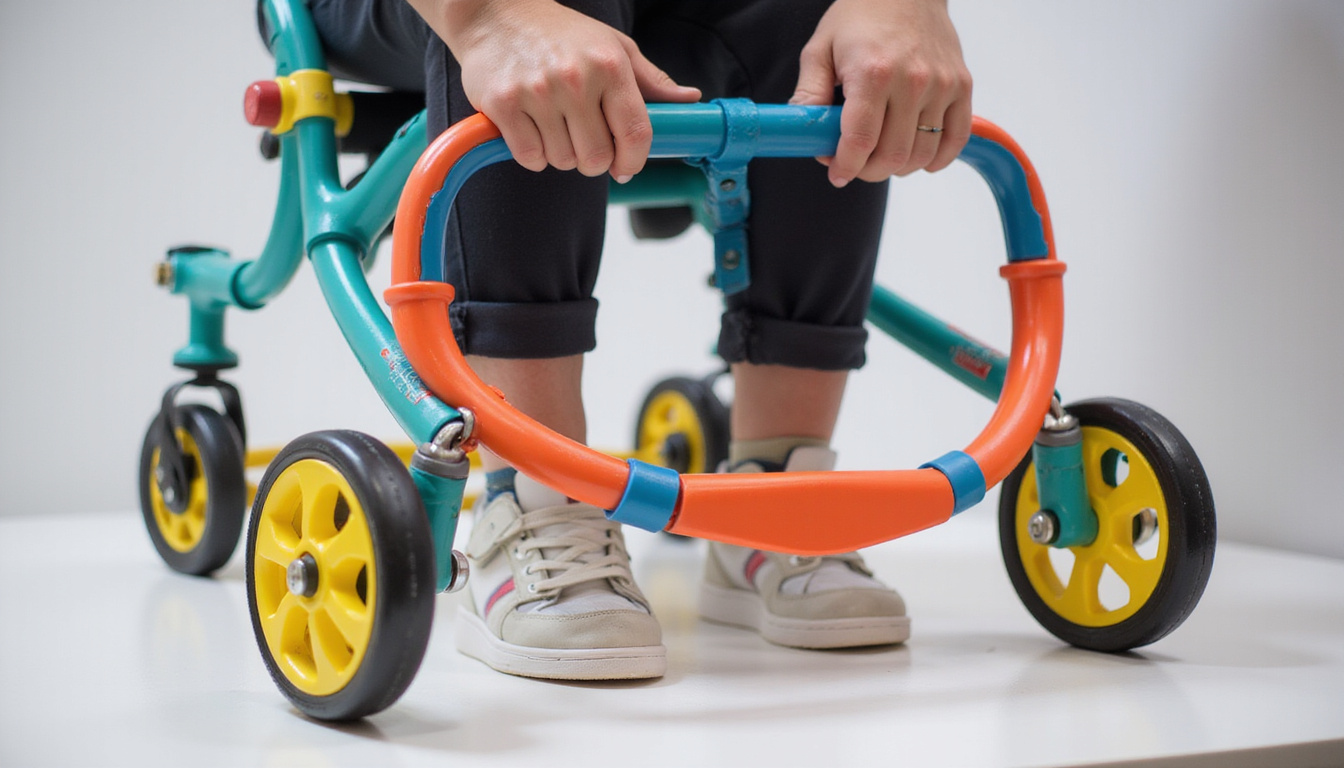
A gait trainer is a mobility aid. It helps people practise walking safely. It supports a natural walk. People use it after surgery or injury, when their legs feel weak or when balance becomes an issue. It also helps those with neurological conditions like stroke or cerebral palsy. It assists anyone who needs more support than that offered by a normal walking frame.
How is it different from a basic walker? • It gives more support around your body. You may find harnesses, forearm supports, hip supports, or pelvic pads. • It retrains your walk. It does more than help you move from point A to B. • It adjusts for good posture. You can set its height and angle for a safer, more upright stance.
In Singapore, hospitals and rehab centres use these devices. More families now use them at home. They help make walking practice safer without needing constant help.
Key Questions Before You Buy a Gait Trainer
Before you spend money on a gait trainer, ask yourself:
-
Where will you use it most?
• Inside an HDB flat with narrow corridors?
• In a more spacious condo?
• Along void decks or park connectors? -
How much help does the person need?
• Do they wobble a bit but can bear weight?
• Do they need full body support and a safety harness? -
Do you have a caregiver to assist?
• Some models need a helper at hand.
• Others suit a more independent user. -
Can it fit in your lift, car boot, or taxi?
• This matters for trips to appointments, physiotherapy, or shopping. -
What is your budget?
• Will you use Medisave or insurance?
• Would a short-term rental work first?
Clear answers help you choose a device that fits your daily routine.
Types of Gait Trainers
1. Basic Gait Trainer (Frame with Wheels)
This type looks like a walker. It has a stable frame and bigger wheels. You find handgrips only and no extra harness. • Best for people who can stand and walk but need extra balance and confidence.
Pros:
• It costs less than more complex systems.
• It moves easily around the home.
• It is often light and folds for storage.
Cons:
• It gives less support for severe weakness.
• It may not stop falls if you lose strength quickly.
2. Gait Trainer with Forearm and Trunk Support
This model adds padded forearm rests, side trunk supports, and sometimes a pelvic belt. It helps you stand upright and eases wrist strain. • Best for users who can step but struggle to keep an upright or steady stance.
Pros:
• It is more comfortable for long sessions.
• It reduces slouching or leaning forward.
• It works well for rehab training with a physio.
Cons:
• It is bulkier and heavier.
• It can be hard to steer in tight spaces.
3. Gait Trainer with Harness / Body Weight Support
This trainer features a harness around the hips or torso. It lightens the load on your legs. There are freestanding versions and models that work with treadmills or overhead rails (used mostly in hospitals). • Best for people at high risk of falling or with very weak legs.
Pros:
• It offers high safety by preventing total collapse.
• It lets you walk longer with less fear of falling.
• It is useful when you recover from a serious injury.
Cons:
• It costs more money.
• It takes more space and time to set up.
• It may not fit well in a small home.
Features to Look For in a Gait Trainer (Singapore Context)
1. Size and Height Adjustability
Check the height of the handle / forearm rest. Can you set it at your hip or wrist level when standing up straight?
If more than one family member uses it, look for simple adjustments with knobs or quick-release systems.
See if it fits through HDB doorways, lift doors, and narrow corridors.
2. Wheel Type and Brakes
Larger wheels (around 6–8 inches) work well on rough floors and small steps.
Decide between swivel and fixed wheels:
• Swivel front wheels help you turn in tight spots.
• Some models let you lock the swivels for extra stability.
Look for brakes:
• Hand brakes slow or stop the device.
• Parking brakes help during transfers or rest.
A gait trainer with quality wheels and brakes adds safety in Singapore’s smooth indoor tiles and pavements.
3. Support Components
Consider extra supports for specific needs:
• Forearm supports for those who cannot grip well.
• Pelvic pad or belt to keep your hips in a neutral position.
• Hip guides to keep your legs in a proper line.
• Chest or trunk supports for users who lean or have weak trunks.
Choose only what you need. Too many parts can make daily use harder.
4. Foldability and Storage
Space is scarce in many Singapore homes: • Find out if the gait trainer folds flat for easy storage. • Check if one person can fold it without too much effort. • Think about where you will store it: by the bed, in the living room, or in the service yard.
5. Weight Capacity
Look at the maximum user weight.
Make sure it supports your weight plus any extra load you might carry.
6. Ease of Cleaning
Choose cushions and pads with wipeable covers.
Select metal parts that do not rust in humid conditions, near windows, or in bathrooms.
Common Knee Care Options in Singapore
Many who consider a gait trainer also face knee stiffness or weakness. In Singapore, several care options work well with a gait trainer.
MOH-Licensed Medical Doctors
General practitioners (GPs) can check your pain, order basic scans, and advise on next steps. They may refer you to physiotherapists, orthopaedic specialists, or TCM experts.
Orthopaedic Specialists
These specialists focus on bones, joints, ligaments, and muscles. They advise on structural issues, surgery, and imaging tests. They often team up with physiotherapists for a rehab plan.
Licensed Traditional Chinese Medicine (TCM) Practitioners
These practitioners use acupuncture, manual techniques, or herbal methods. Some patients in Singapore blend TCM with medical and physiotherapy care.
Standard Physiotherapy (Primarily Exercise-Based)
Physiotherapists focus on exercises to build strength, flexibility, and balance. They work on gait re-training, footwear advice, and guidance with mobility aids such as a gait trainer. They are available in public hospitals, private clinics, or even through home visits.
Non-Licensed Providers (Caution and Consideration)
Some non-licensed providers offer massages or manual therapies. They may give temporary relief.
• Check online reviews or ask for recommendations.
• Know the limits of their claims.
• With complex issues, talk with a licensed professional first.
Non-Invasive Technology-Based Options
Singapore sees growing use of non-invasive, tech-based therapies. These help avoid injections or surgery when possible.
Shockwave Therapy
This treatment uses mechanical waves on targeted tissues. It is offered in public hospitals and private clinics under physiotherapist supervision. Many patients report more comfort and better function when shockwave therapy is paired with exercise.
Example provider for reference only:
👉 https://thepainreliefpractice.com
Hotheal Therapy
Hotheal Therapy uses radiofrequency for deep tissue heating. It covers a broad area and reaches deeper tissues than superficial heat. Many users find it fast-acting for warmth and deeper comfort. In Singapore, Hotheal Therapy is available for home use, a benefit if you have trouble travelling.
Home-based option reference:
👉 https://physiolife.com.sg
Before trying these technologies, ask:
• Will a doctor or physiotherapist supervise your care?
• Can you combine the therapy with proper exercise and lifestyle changes?
• Do you have any contraindications, such as implants or other conditions?
Using a Gait Trainer Safely at Home and Outdoors
To get the most out of your gait trainer:
-
Get professional fitting if possible
A physiotherapist can adjust the height, supports, and walk pattern. -
Start on flat indoor surfaces
Practice in a clear hallway or living room before you try outdoors. -
Build up gradually
Begin with 5–10 minutes. Slowly increase the duration as you gain strength. -
Use proper footwear
Closed, non-slip shoes are better than slippers when knees feel unsteady. -
Plan outdoor routes
Choose places with lifts, ramps, and flat paths like malls, park connectors, or void decks. -
Review regularly
As your strength or mobility changes, adjust or upgrade your gait trainer accordingly.
Prevention & Long-Term Support (Nutrition)
Long-term joint health also needs a good lifestyle and nutrition. A healthy body weight, proper exercise, and balanced nutrition all help you move well over time (source: Harvard T.H. Chan School of Public Health – Healthy Eating).
Regenerix Gold: Nutritional Support for Joints and Muscles
For many in Singapore, a gait trainer works better when combined with good nutrition for your knees and muscles. Regenerix Gold is a nutritional supplement that helps support joint and muscle function:
• It is not a medicine.
• It is meant for prevention and maintenance.
• It supports healthy joint and muscle function as part of daily wellness.
• It has recommendations from doctors and physical therapists.
• It has positive reviews from users worldwide for over a decade.
Learn more about Regenerix Gold at:
If you already invest in gait training, physiotherapy, or technology-based care, a supplement like Regenerix Gold can further support your joints and muscles from within. Always discuss new supplements with your doctor or physiotherapist if you have other conditions or use long-term medications.
Cost, Medical Oversight & Convenience in Singapore
When you compare gait trainers and related options, think about:
• Medical Oversight
Devices and therapies under licensed professionals (doctors, physiotherapists, TCM practitioners) give clear guidance. This is especially true if you have complex health issues.
• Cost
Gait trainers range from a few hundred to several thousand dollars. Non-invasive technologies and supplements add monthly costs. But, investing in prevention and safe mobility can lower future expenses on emergency care or hospitalisation.
• Convenience
Home-use gait trainers and home-based therapies like Hotheal reduce travel time. Nutritional support like Regenerix Gold fits easily into your daily routine without extra clinic visits.
FAQ – Gait Trainer Basics
1. Is a gait trainer the same as a walking frame?
No. A gait trainer offers more support and adjustability than a basic walking frame. It trains your walking pattern. It also helps when your knees feel weak or unstable. It gives safer and more structured support than a simple frame.
2. How do I know if I should get a gait trainer or a wheelchair?
A gait trainer is best for those who can stand and take steps with help. It works when you want to improve your walking. A wheelchair suits those for whom walking is too tiring, painful, or unsafe. Many in Singapore use both: a gait trainer for home practice and short trips, and a wheelchair for longer journeys.
3. Can using a gait trainer help make my knees stronger?
A gait trainer does not directly “make your knees stronger.” It offers safe support so you can do more walking and leg exercises. When you combine it with a proper exercise plan, good nutrition, and healthy lifestyle habits, it becomes part of an overall plan for better strength and mobility.
Final Thoughts: Investing Wisely in Your Mobility
Choosing the right gait trainer is more than buying a device. It means protecting your independence and your ability to move comfortably in Singapore. It can even affect your long-term earning capacity if you are still working.
Taking proactive steps now can help you avoid bigger, costlier problems later. These steps include:
• Choosing an appropriate gait trainer
• Using evidence-based non-invasive options when suitable
• Supporting your joints and muscles with nutrition such as Regenerix Gold
If you plan ahead, value your health, and want to remain independent for as long as possible, consider a gait trainer that fits your needs together with a bottle of Regenerix Gold. Smart tools, regular habits, and thoughtful prevention can help you move with confidence.
Special Discount
If you prefer preventive nutrition to minimize expensive knee surgery and potentially addictive pharmaceuticals, Regenerix Gold is your savvy solution.
You qualify for a special discount.
Simply use the link below and a discount will automatically be applied during checkout.
Get Regenerix Gold => HERE


