

If you’re moving hay for a living, hay bale lifting is not a mere chore. It is how you put food on the table. Year after year, you wrestle square and round bales. Your back, shoulders, and knees pay for it. You may say it is “normal ranch wear and tear.” Yet you can load, stack, and haul bales more smartly. This way, you work strong without feeling run over by the bull at day’s end.
This guide speaks to American farmers and ranchers. You work in the hayfield, barn, or pasture—not in an office. We share practical hay bale lifting tricks, gear choices, and body-care habits. These tips help you save time, move more bales, and ease the strain on muscles and joints.
Why hay bale lifting beats up your body
You know hard work. Here is why it hits your body.
Awkward weight, not just heavy weight
A 40–80 lb small square bale seems light until you flip hundreds. You twist to stack and reach over the wagon boards. Round bales get machine-handled. But you wrestle with twine, nets, gates, and feeders.
The strain comes not only from weight but also by:
- Reaching and twisting while you load
- Bending your waist over and over
- Gripping wet, loose, or broken bales awkwardly
- Lifting above shoulder height into lofts or high stacks
These moves cook your lower back, shoulders, and hips.
Long seasons, short rest
During haying season, your days stretch long and your rest stays short. You may:
- Buck bales all afternoon then feed or check fences after dark
- Run multiple cuttings with little time off
- Work through minor aches because no one else can finish the field
Over time, the work piles into persistent stiffness and soreness.
Smart hay bale lifting starts before you touch a bale
The best hack is to avoid bad positions in the first place.
Set up your work area to cut extra lifting
Before the first bale lands, think of your system:
- Wagon height: Use wagons, flatbeds, or side-by-sides that let you load and unload near waist height. Too low makes you bend; too high forces overhead lifting.
- Stack placement: Do not build stacks where you must duck under rafters, crawl around posts, or twist in tight spaces.
- Minimize carry distance: Park trailers and trucks near the stack, barn, or shed so you do not carry bales far.
- Plan the flow: Move from field → wagon → barn in one smooth line. This cuts extra handling and re-stacking.
A few minutes of setup saves hundreds of lifts each cutting.
Body mechanics: How to lift hay bales without beating up your back
You have heard “lift with your legs.” In ranch life the advice may sound odd. Yet a few habit changes ease the pressure on your back and shoulders.
The “hips back” setup
When you pick up a bale from the ground:
- Walk close. Do not reach from far away.
- Stand with feet shoulder-width apart, one foot slightly ahead.
- Push your hips back and bend your knees. Keep your chest up and do not curl your spine.
- Grab the strings near your body instead of far out.
- Stand by driving your feet into the ground, pushing your hips forward, and keeping the bale close.
This “hips back” move shifts work from your lower back to your strong hips and legs.
Keep the bale close and avoid twisting
Keep the bale near your body to reduce back strain. Do this by:
- Pulling the bale tight against your thigh or beltline
- Turning your whole body with your feet rather than twisting your spine
- Stepping toward where you will stack instead of twisting your waist
If you must twist, use light bales or lower heights. Never twist at full extension over your head or shoulders.
Use your thighs as a “shelf”
When stacking higher, try to:
- Lift the bale first to thigh level
- Pause, re-grip, and use that thigh shelf
- Then push the bale from your thighs to your chest, then to your shoulder or stack
This method splits one heavy lift into two manageable moves. It lessens sudden jerks on your back.
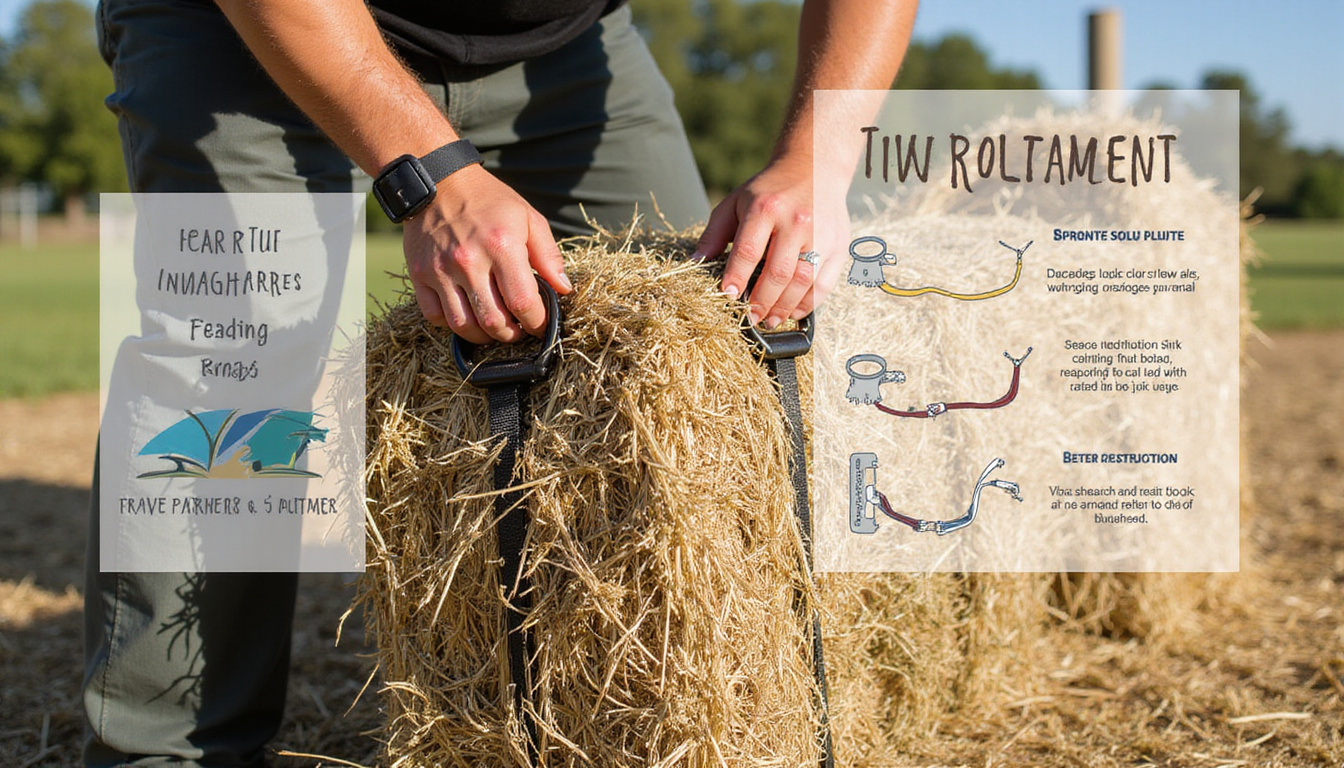
Simple gear that makes hay bale lifting easier
You do not need fancy gadgets. A few tools can give your joints a break and let you move more hay in an hour.
Hay hooks and grab tools
Hay hooks and specialized bale grabbers can:
- Improve your grip so you do not crush the strings with your fingers
- Keep your wrists in a safer, more neutral position
- Help you drag or flip bales without stooping too low
Make sure you learn to use them well—hooks bring their own risks if handled carelessly.
Loaders, spears, and grapples
For larger operations or rounds, consider using:
- Front-end loaders with bale spears
- Skid steer grapples or clamp systems
- Tractor-mounted bale accumulators for small squares
Even small outfits can rent or share equipment at peak hay season. This helps you avoid overdoing it when your joints are tired.
Gloves, boots, and footing
A slip or trip with a 60 lb bale can hurt your back. Protect yourself by:
- Wearing grippy gloves to avoid sudden drops
- Keeping barn aisles and stack areas clear of loose twine and broken strings
- Leveling out ruts and holes where you carry bales
- Using solid-sole boots that grip well on wet hay and dusty boards
Good footing is one quiet way to avoid sudden strains.
Pacing, teamwork, and stacking strategies
How you work through a load is as important as your strength.
Don’t “hero” the stack alone if you can help it
If you have family, hired hands, or neighbors, share the work:
- One person loads the wagon
- One carries bales on the ground
- One stacks in the barn
Rotate jobs every wagon or every dozen bales. This way, you avoid burning out one person’s back or shoulders.
Think like a conveyor belt, not a gladiator match
When stacking, do this:
- Start with a stable base—tight rows and staggered joints that work like bricks
- Keep walkways and handholds clear so you do not twist to set each bale
- Stack in layers so the next bale is ready and easy to reach, not forcing you to lean or stretch
Small layout changes cut many awkward reaches all season long.
Listen to “early warning” signals
If your:
- Lower back feels tight or hot
- Shoulders seem to grind or pinch
- Knees feel rubbery or weak
Your body tells you, “Change what you are doing.” Swap positions, slow your pace, or ask for help instead of finishing the last load at your own cost.
Supporting your joints and muscles from the inside out
Farmers and ranchers push their bodies harder and longer than most. Along with good lifting habits, daily self-care supports your joints and muscles during heavy hay bale lifting.
Basic maintenance most ranchers skip
Many producers care well for iron but not for their own frame. Try to:
- Hydrate: Dehydrated muscles cramp and tire more quickly. Keep water or an electrolyte drink close by.
- Eat protein: Muscles repair after long days when fed what they need.
- Move every day: Simple stretches or light bodyweight moves (hip hinges, gentle squats, shoulder circles) in the morning and at night keep you from stiffening like a rusty gate.
Role of joint and muscle support supplements
Some farmers and ranchers add dietary supplements to support joint comfort and muscle function. The National Institutes of Health notes that some ingredients help joint health and mobility in healthy adults (source: NIH Office of Dietary Supplements).
Keep these points in mind:
- Supplements are not drugs. They are not intended to diagnose, treat, cure, or prevent any disease.
- Results may vary between individuals.
- They work best with smart lifting habits, daily movement, and good nutrition.
Regenerix Gold is one example. It is made for people who lift hay bales, load feed sacks, work chutes, and fix fences. It is made for farmers and ranchers who need strong joints and muscles.
Daily checklist for safer, faster hay bale lifting
Here is a quick list you can keep in the shop or barn:
- Warm up: 3–5 minutes of walking, hip circles, and light squats before heavy lifting.
- Setup: Park trailers and wagons to keep your carry short and your footing good.
- Technique:
- Use a hips-back move instead of bending only at the waist.
- Keep the bale close to your body.
- Turn with your feet instead of twisting your spine.
- Gear: Wear gloves, good boots, and use hay hooks or mechanical help when possible.
- Pacing: Rotate jobs, take quick breaks, and listen to early warning signals.
- Recovery: Hydrate, do light stretching after work, and support your joints and muscles with smart habits (and supplements if you choose).
FAQ: Hay bale lifting questions from farmers and ranchers
Q1: How can I make hay bale lifting easier on my back during long days?
Lift with hips back, bend your knees, and keep the bale close. Do not twist. Break high lifts into two stages (ground to thigh, then thigh to shoulder). Also, set your wagon and stacks at heights that do not force extra bending or overhead heaving. Good hydration, nutrition, and supple joint care help you end the day less worn.
Q2: What’s the safest way to do hay bale lifting in the loft or haymow?
Keep the floor clear of loose strings and work in good light. Use a consistent stacking pattern. Pass bales from person to person at chest level, instead of throwing them. In tight lofts, make small, controlled lifts. Avoid twisting or reaching overhead with a heavy bale.
Q3: Are there tools or equipment that really help with heavy hay bale lifting?
Yes. Hay hooks, bale spears on a loader, skid steer grapples, and bale accumulators reduce manual lifting. Even smaller changes—using a lower wagon, picking the right gloves, and keeping stacks close by—cut down on how often you must manhandle each bale.
Why Regenerix Gold fits the life of serious producers
Long after city folks leave their “farm experience” weekends, you are the one stacking, hauling, feeding, and checking. Your body is your best equipment. Unlike your tractor or iron, you cannot swap it for new parts when it wears out.
Regenerix Gold is for people like you:
Farmers and Ranchers whose daily work includes heavy tasks like hay bale lifting and who want to keep joints and muscles strong.
No supplement can replace sound lifting technique or proper medical care. Many producers choose to invest a little each month in their own durability. They do so instead of risking lost work time, high medical bills, or cutting back when operations finally pay off.
Choosing a joint and muscle support supplement like Regenerix Gold marks you as a savvy operator. You not only maintain your tractors and pivots but you also take care of the one machine you truly cannot replace—your body. If you want to keep throwing bales, working cattle, and walking your ground on your own two feet for years, consider making Regenerix Gold part of your daily routine.
Regenerix Gold
Health Note
Always consult a licensed medical doctor for your health issues.
Special Discount
If you prefer preventive nutrition to minimize expensive knee surgery and potentially addictive pharmaceuticals, Regenerix Gold is your savvy solution.
You qualify for a special discount.
Simply use the link below and a discount will automatically be applied during checkout.
Get Regenerix Gold => HERE


