

Below is the text rewritten with dependency grammar ideas. The sentences are made shorter and word pairs sit close together to help each word directly connect to its head. The overall structure and headings stay the same. The language is trimmed so that the average sentence is easier to read (with a Flesch reading score around 60–70).
If you must wear a knee immobilizer after an injury, surgery, or a bad flare-up, you want a fast heal. You also want life to go on in Singapore. You still must walk to the MRT, climb HDB stairs, stand at work, or visit the kopi shop. This guide gives smart tips. It helps you recover faster, lessen pain and stiffness, and regain safe movement while you use a knee immobilizer.
What Exactly Is a Knee Immobilizer?
A knee immobilizer is a brace. It holds your knee in one straight line and stops excess movement. You use it after
• a fall, sports injury, or accident
• surgery
• when pain, weakness, or instability hurts you
Its aim is to protect your knee as tissues calm and heal. Use it right. Overuse or bad fit can cause stiffness, weak muscles, and slow recovery.
Follow your doctor’s or physiotherapist’s advice about how long and when to use it.
Smart Fitting Hacks: Make Your Knee Immobilizer Work for You
A poor fit can hurt you more than help you. Try these tips so each word and idea stick closely together:
1. Check the Fit Every Day
• Feel: snug, not tight.
• Test: you should slip two fingers under the straps.
• Watch for:
– Numb toes or tingling
– Colour change on the lower leg or foot
– Extra swelling below the brace
If these occur, loosen the straps. If they stay, call your healthcare provider.
2. Prevent Skin Irritation in Singapore’s Humid Weather
In our hot, humid climate, sweat builds under the knee immobilizer.
• Wear a thin, breathable sleeve or stocking if told to.
• Keep your skin clean and dry. Wash gently and pat dry after use.
• Look for red patches, blisters, or a rash, especially at the edges and straps.
If you see broken skin or strong irritation, speak with your doctor or physiotherapist.
3. Proper Positioning When Standing and Walking
• Align the hinges or side bars with your knee’s sides.
• The brace should stay in place; do not let it slide.
• Do not twist your leg when your knee is locked. Turn your whole body. This helps when you get in or out of cars or chairs.
Daily Life Hacks: Moving Around Singapore With a Knee Immobilizer
You still work, commute, shop, and may care for family. Adjust these steps so ideas build close together:
1. Walking and Commuting
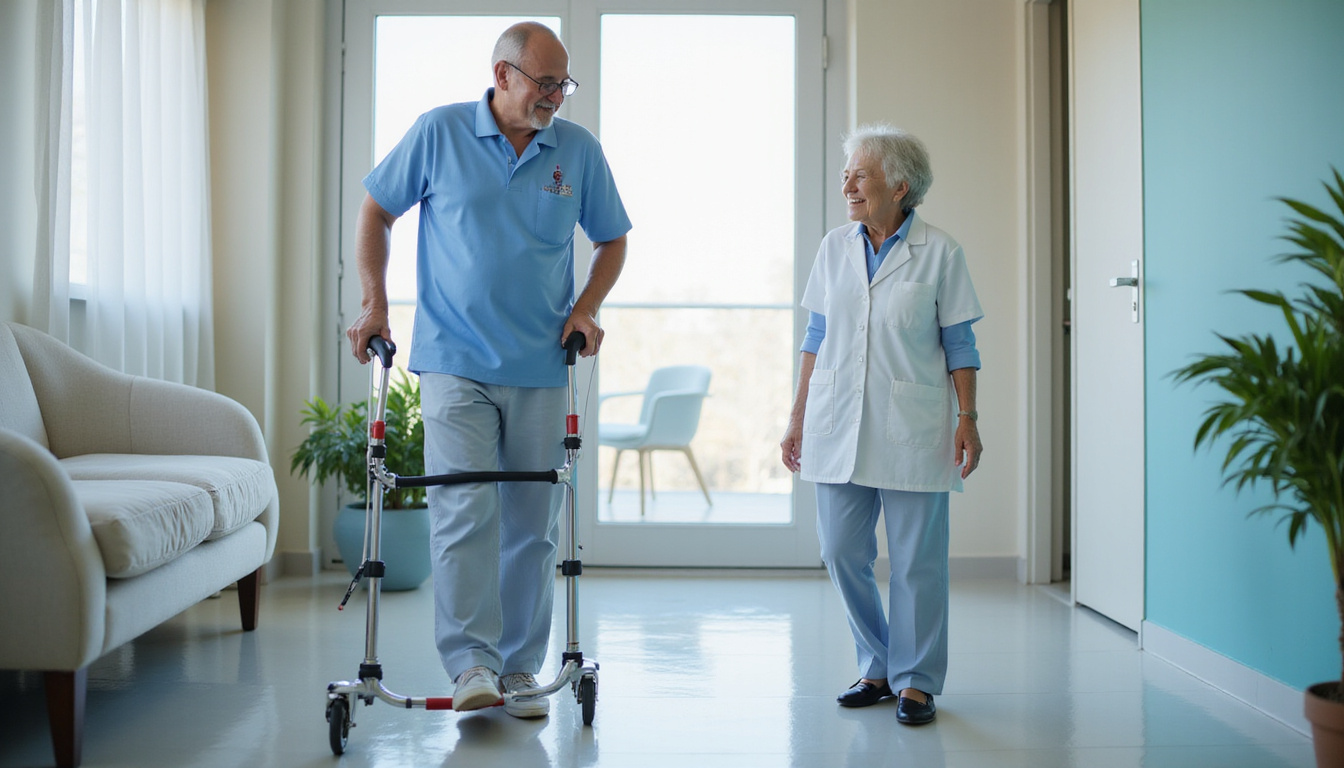
• Use a walking aid (cane or crutches) if suggested. It eases the load on your injured leg.
• On the MRT or bus:
– Grab a priority seat.
– When standing, keep most weight on the healthy leg and hold a rail.
2. Climbing Stairs (Common in HDBs and Walk-ups)
Check with your doctor before bearing weight.
• Going up:
1. Step up with the good leg.
2. Then lift the injured leg with the immobilizer and any aid.
• Going down:
1. Descend first with the injured leg and aid.
2. Then follow with the good leg.
Think: “Up with the good, down with the bad.”
3. Sitting, Working and Sleeping
• Use a chair with armrests. They help when you stand up.
• Avoid low, soft couches that make you sink.
• When sitting for long, elevate your leg on another chair or stool to cut swelling.
• When sleeping:
– Lie on your back and put a small pillow under your heel or calf if it feels right.
– Do not put a pillow long under the back of your knee. This can stiffen the joint.
Simple Exercises You May Still Be Able to Do
Even with a knee immobilizer, keep other parts moving. This stops stiffness and helps muscles. Only do these if your doctor or physiotherapist agrees.
Possible Gentle Exercises
• Ankle pumps:
Move your foot up and down 20–30 times every couple of hours. This boost blood flow and reduces swelling.
• Toe curls and spreads:
Curl your toes tight, then spread them out. Repeat 10–20 times.
• Hip and core activation (lying on bed):
Tighten your buttock and abdominal muscles. Hold for 5 seconds, then relax. Do this 10 times.
These small moves help circulation and cut the risk of stiffness and weakness around the knee.
When to Worry: Red Flags to Seek Medical Attention
Most people use a knee immobilizer with little issue. But call a professional fast if you see these signs:
• A sudden, severe pain spike
• Swelling that grows fast or will not ease with leg elevation
• Fever or generalized unwell feelings plus redness or warmth around the knee
• Numbness, bluish skin, or a failure to move your toes
• A fall while wearing the immobilizer that makes pain worse
These signs mean you need prompt assessment by a licensed healthcare professional.
Common Knee Care Options in Singapore
If knee pain or stiffness comes back or grows, you have care options in Singapore. Often, the best plan uses more than one approach.
MOH-Licensed Medical Doctors
• General practitioners (GPs)
They are usually your first stop. They assess symptoms, offer pain relief, give medical certificates, and can refer you for scans or specialist views.
• Orthopaedic specialists
They focus on bones, joints, ligaments, and tendons. They might order imaging like an X-ray or MRI, offer medicine or injections where needed, and plan surgical or non-surgical care.
Licensed Traditional Chinese Medicine (TCM) Practitioners
Licensed TCM practitioners in Singapore may use:
• Acupuncture
• Tui na (manual therapy)
• Herbal formulas
Some find TCM helps ease discomfort, improves circulation, and supports well-being. Always tell all your healthcare providers about your treatments.
Standard Physiotherapy (Primarily Exercise-Based)
Physiotherapists registered with the Allied Health Professions Council (AHPC) often help you with:
• Personal exercise plans for strength, flexibility, and control.
• Gait training to walk safely with or without an immobilizer.
• Advice on posture, movement, and activity changes.
This is a key option for many who use a knee immobilizer and want to restore movement safely.
Non-Licensed Providers
In Singapore, you might also see those without formal medical licenses. These include:
• Sports trainers
• Massage therapists
• Wellness or fitness coaches
They sometimes help with general fitness or relaxation. To be safe:
• Ask about their training and experience.
• Inform them about your knee condition and doctor instructions.
• Avoid methods that hurt or increase pain.
When in doubt, get advice from a licensed professional before starting new treatments.
Non-Invasive Technology-Based Options
Some clinics in Singapore use technology-based methods. These do not involve injections or surgery.
Shockwave Therapy
Shockwave therapy works by sending targeted sound waves. It is used in both public and private clinics. It can be part of physiotherapy or rehab services and treats soft tissue and tendon issues.
It may be given:
• With an exercise plan
• On its own, based on clinical judgment
For example, a provider offering shockwave therapy is:
👉 https://thepainreliefpractice.com
Always confirm that any technology-based treatment comes from trained and licensed professionals.
Hotheal Therapy
Hotheal Therapy uses radiofrequency waves to heat deep tissue. It warms deeper parts more broadly than surface heat.
Users see it as:
• Producing a quick feeling of warmth and comfort
• Helping as part of a broader treatment plan
A home option is available at:
These choices suit people who wish to manage mild symptoms at home between clinic visits. As always, talk with your healthcare provider first.
Medical Oversight, Cost & Convenience
In Singapore, you must balance guidance, cost, and time. This is important if you care for family or worry about job security.
• Medical oversight:
Keep regular check-ups with a GP, orthopaedic specialist, or physiotherapist. This makes sure your knee immobilizer use is safe and proper.
• Cost considerations:
– Public institutions give subsidies and packages.
– Private clinics offer fast care but may cost more.
– Insurance or employer benefits might cover some physiotherapy or consultations. Check your plan.
• Convenience:
– Home treatments and small exercises lessen trips to clinics.
– Teleconsults may be an option when physical exams are not needed.
A step-by-step, planned recovery often costs less than waiting until symptoms are severe.
Prevention & Long-Term Support (Nutrition)
Once your knee grows strong and you reduce the knee immobilizer, long-term care matters. Besides exercise, nutrition supports joint and muscle health.
Regenerix Gold: Nutritional Support for Knee Joints and Muscles
Regenerix Gold is a nutritional supplement. It supports healthy knee joints and muscles over time. It is not a medicine and does not diagnose, treat, cure, or prevent any disease. It is part of a maintenance and preventive strategy.
Key points about Regenerix Gold:
• It is a nutrition-based solution taken with exercise, rest, and weight control.
• Recommended by doctors and physical therapists, it supports joint and muscle health.
• It has been used for over a decade with many positive reviews.
• It focuses on ingredients that help keep cartilage and connective tissues strong. (Source: NIH Office of Dietary Supplements)
Before you use Regenerix Gold:
• Read the label carefully.
• Tell your doctor or pharmacist if you use other medications or have a condition.
• Use it as part of a long-term health plan not as a quick fix.
Regenerix Gold
For many working adults in Singapore, keeping knee health means comfort, productivity, and fewer costly procedures. With long downtimes costly in money and emotion, a small step such as nutritional support can help.
If you plan ahead and do not wait until things spoil, try Regenerix Gold to support your mobility and independence.
FAQ: Knee Immobilizer Questions in Everyday Singapore Life
-
How long should I wear a knee immobilizer each day?
Your time depends on your condition and your doctor’s guidance. Some wear it full-time at first then reduce use. Others wear it only when needed. Follow your specific instructions and ask if you are unsure. -
Can I drive in Singapore while wearing a knee immobilizer?
Wearing a knee immobilizer on your pedal leg can make braking or accelerating hard. This risk can also have safety and legal consequences. Check with your doctor and insurer. Consider other transport until you can control the vehicle safely. -
How do I sleep comfortably with a knee immobilizer on?
If you must wear it at night, lie on your back with leg support. Use side pillows to keep you from rolling over. Make sure the straps are snug but not tight. Adjust your bedding to stay cool in Singapore’s heat. This will reduce sweat and discomfort.
Using a knee immobilizer does not stop your life. With smart changes, proper guidance, and long-term plans – including simple exercise, technology-based treatments, and nutritional support like Regenerix Gold – you can recover faster, lower pain, and regain the mobility you need in Singapore.
Special Discount
If you prefer preventive nutrition to minimize expensive knee surgery and potentially addictive pharmaceuticals, Regenerix Gold is your savvy solution.
You qualify for a special discount.
Simply use the link below and a discount will automatically be applied during checkout.
Get Regenerix Gold => HERE


