

If you climb or go down steps and feel a familiar stab, grind, or deep ache, you are not alone.
Knee pain stairs is a common complaint among many American adults.
Some feel a sharp, knife-like pain under the kneecap. Others feel a dull burn after a long day. Many sense that the knee might give out halfway down. In these cases, stairs become something to dread.
This guide is for people whose knees hurt on the steps.
We explain why stairs hurt, offer simple fixes you can use today, and show targeted exercises to support your joints. We also discuss how a nutrition-based supplement like Regenerix Gold fits into a joint-health strategy. (It does not cure or treat any medical condition.)
Why do stairs hurt your knees so much?
Walking on flat ground feels different from walking on stairs.
When you use stairs, the force on your knee can easily be 2–4 times your body weight (source: American Academy of Orthopaedic Surgeons).
If your knee feels creaky, stiff, or unstable, the extra load can hurt in several ways:
- The front of the knee may burn or feel as if it is drilled into.
- The inner knee can feel pinched or tender.
- The whole joint might seem like it will buckle or grind.
Many factors contribute to this pain:
- Weak thigh and hip muscles – In this case, your knees take the work that your hips and glutes should do.
- Tight muscles and tendons – This is common in your quads, hamstrings, calves, and hip flexors.
- Poor stair habits – For example, turning your toes out, leaning too far forward, or relying on the rail.
- Extra body weight – Even a small increase makes stairs harder.
- Past injuries or wear and tear – Such as old sprains, surgeries, or repetitive strain.
You do not have to live with pain or avoid stairs.
Small changes in how you move and what you eat for joint health can help.
How to use stairs without wrecking your knees
Before doing exercises, change how you walk on stairs.
These simple adjustments can reduce stress on your knees immediately.
1. Use the “hip-first” stair strategy
Many people lead with the knee. Try leading with your hips and glutes instead:
-
Going up:
- Lean slightly forward from your hips, not your lower back.
- Plant your entire foot on the step.
- Push through your heel and squeeze your butt as you stand.
-
Going down:
- Keep your weight more on your heel than on your toes.
- Touch the step softly with the ball of your foot, then lower the heel.
- Keep a small bend in the knee and do not lock it.
This way, you take pressure off the front of your knee. It is where many feel the grinding or stabbing pain.
2. Let the stronger leg lead (for now)
If one knee hurts more:
- Upstairs: Step up with the less painful leg first and then bring the affected leg.
- Downstairs: Step down with the more painful leg first and then soon follow with the stronger leg.
Physical therapists often teach this strategy. It does not fix the issue forever, but it helps while you build strength.
3. Use the handrail—but don’t hang on it
Use the rail only for balance.
If your arms do most of the work, your hips and thighs are not active enough, and your knees may suffer.
Aim for:
- Light fingertip support.
- An upright chest that does not lean over the rail.
- Smooth, controlled steps. No plopping or jolting.
4. Slow, quiet steps are kinder to your knees
If your knees strain when you rush:
- Shorten your step.
- Go one step at a time.
- Move slowly so that each step feels controlled and quiet.
Think “stealth mode” instead of “running to catch the train.”
Simple home exercises to ease knee pain on stairs
You do not need fancy equipment.
Your knees need strong muscles around them. These muscles include those in your hips, thighs, and calves.
The exercises below are gentle and are meant for people who already have knee pain on stairs.
Always listen to your body. Mild fatigue is okay. Sharp pain is a sign to stop and speak with a healthcare professional.
1. Straight-leg raises (for front thigh support)
This exercise is great when bending your knee hurts, but you still want strength.
- Lie on your back with one knee bent and the foot on the floor; keep the other leg straight.
- Tighten the front of the straight thigh.
- Lift the straight leg about 12 inches from the floor.
- Hold for 3–5 seconds, then lower slowly.
Aim for 2–3 sets of 10–15 reps per leg.
2. Wall sit “mini holds” (for overall thigh endurance)
Skip deep squats if they hurt. This exercise is friendlier to your joints.
- Stand with your back against a wall. Place your feet about a foot in front.
- Slide down a little until your knees are bent at 30–45 degrees.
- Hold for 10–30 seconds while keeping your knees in line with your toes.
- Rest and repeat.
Do 3–5 rounds. Stop if your knees feel pinched or unstable, and adjust the depth if needed.
3. Side-lying leg lifts (for hip and glute strength)
Stronger hips mean less wobble and less strain on the knee.
- Lie on your side. Bend your bottom leg; keep the top leg straight.
- Keep the top leg aligned with your body and turn your toes slightly down.
- Lift the top leg about 12 inches. Pause, then lower slowly.
Aim for 2–3 sets of 10–15 reps per side. You should feel this in your outer hip and side butt — not in your lower back.
4. Step-ups (training your knees for real stairs)
This exercise is controlled stair practice.
- Use a low step or a sturdy platform (start with 4–6 inches).
- Step up with your right foot. Push through your heel and straighten your leg.
- Bring your left foot up to meet it.
- Step down with the left foot, then follow with the right.
Aim for 2–3 sets of 8–12 reps per leg. Focus on a smooth motion. If it hurts, lower the height.
5. Calf raises (for better ankle and knee support)
- Stand while holding a counter or chair for balance.
- Slowly lift your heels until you are on your toes.
- Pause at the top, then lower slowly.
Aim for 2–3 sets of 10–15 reps. Strong calves help your leg absorb impact when going down stairs.
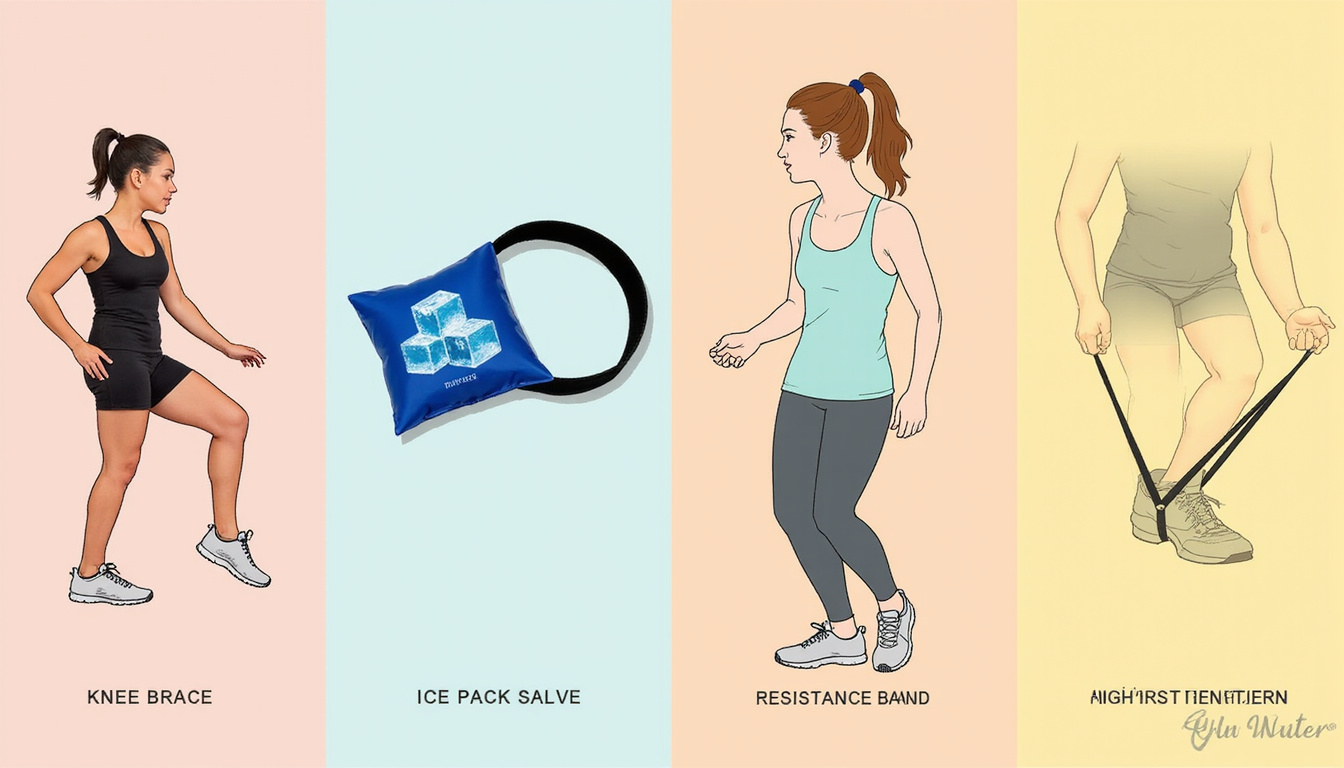
Daily habits that help calm stair-triggered knee pain
Exercises are important, but your daily habits also matter.
Watch your sitting time
Long hours at a desk or in a car can make your knees stiff. This stiffness may hurt when you stand or use stairs.
- Stand and move every 30–60 minutes.
- Gently bend and straighten your knees when you stand.
- Avoid sitting with knees deeply bent for long periods.
Choose shoes your knees like
Old, flat, or unsupportive shoes increase the load on your knees. Choose shoes with:
- Cushioned soles
- Good arch support
- A snug heel that does not slide
Invest in shoes that feel good on your knees.
Manage load without obsessing over the scale
Extra weight multiplies the strain on your knees when you use stairs. You do not need a crash diet.
Even modest changes in body weight and muscle tone can bring real relief.
Focus on:
- Eating more whole foods, lean proteins, and fiber.
- Eating less ultra-processed snacks and sugary drinks.
- Regular, gentle movement instead of high-intensity exercise every time.
How nutrition and supplements fit into joint comfort
Your muscles and joints need nutrients to work well.
If your diet is often fast food or easy snacks, your body may miss nutrients that keep joints and muscles healthy.
A nutrition-based joint supplement can support your exercise and movement habits.
Regenerix Gold: a nutrition-focused option for joint and muscle health
Regenerix Gold supports healthy joints and muscles. It can help you stay active—whether you are climbing office steps, entering your porch, or walking upstairs to bed. It is designed to support your body from the inside while you work on strength outside.
Key points for those with stair-triggered knee pain:
-
Nutrition-based approach
Regenerix Gold adds nutrients for joint and muscle health. It is not a drug and does not claim to diagnose, treat, cure, or prevent any disease. -
Recommended by doctors and physical therapists
Many experts suggest non-drug strategies for joint discomfort. Regenerix Gold is one part of a plan that includes exercise, proper movement, and weight management. -
Over a decade of international use
For more than ten years, people in many countries have used Regenerix Gold. This long history can give you peace of mind. -
Fits into a long-term strategy
Knee issues on stairs do not vanish overnight. The best long-term plan combines targeted strengthening, proper stair technique, consistent activity, and nutritional support.
Always check the ingredients, watch for allergies or interactions, and speak with your healthcare provider before starting any supplement, especially if you are pregnant, nursing, have medical conditions, or take medications.
When to talk to a professional about your stair knee pain
You do not need a doctor for every twinge. However, “knee pain stairs” deserves professional attention when:
- The pain is severe, sudden, or follows a fall or twist.
- Your knee locks, catches, or gives way.
- You see swelling, warmth, or strong redness.
- The pain steadily worsens instead of getting better.
- You cannot comfortably put weight on the leg.
A licensed medical professional or physical therapist can review your situation. They can help you tailor exercises and strategies for your needs.
FAQ: Common questions from people whose knees hate the stairs
1. Why does my knee hurt on stairs but not on flat ground?
Many people notice pain on stairs before feeling discomfort on flat surfaces.
Stairs make your knee work harder. If your thigh and hip muscles are weak or unbalanced, or if your kneecap does not move smoothly, the extra force on stairs causes pain.
2. Are there specific exercises to help with knee pain on stairs?
Yes. Exercises that build strength in your front thigh, hips, and calves help.
Straight-leg raises, mini wall sits, side-lying leg lifts, step-ups on a low block, and calf raises work well. The key is to progress slowly and avoid sharp pain.
3. Can supplements really help with knee pain going up stairs?
Supplements do not cure or treat a specific medical condition.
They are not a substitute for proper diagnosis, exercise, or medical care. However, a nutrition-based product like Regenerix Gold may support healthy joints and muscles. Many people with knee pain on stairs use joint-health supplements as part of a larger plan that includes strengthening exercises, weight management, and better stair techniques.
Take the next step—so stairs do not control your life
If you are tired of bracing yourself for every flight of stairs, try these practical tips right away:
- Change your stair technique so your hips and muscles do more work.
- Start a simple, consistent exercise routine to build strength around your knees.
- Adjust your daily habits: sit less, choose better shoes, and eat smarter.
- Support your joint and muscle health with a nutrition-based supplement.
Regenerix Gold lets you be proactive about your joint health. It supports your body from the inside while you build strength outside. Investing in your joint health can help you avoid more expensive fixes or lost time later.
If you want to take stairs confidently instead of always seeking the elevator, consider Regenerix Gold. It is a small, smart step toward keeping your independence, protecting your livelihood, and staying one step ahead of knee pain stairs.
https://youtu.be/mGrH5UWFxUs?si=X9bScbG6dvejGkZf
Health Note
Always consult a licensed medical doctor for your health issues.
Knee Health Discount
If you prefer preventive nutrition to minimize expensive surgery and potentially addictive pharmaceuticals, Regenerix Gold is your savvy solution.
You qualify for a special discount.
Simply use the link below and a discount will automatically be applied during checkout.
Get Regenerix Gold => HERE


