

If you’re a line dancer in America, you know this dance is more than cute moves. Each step drives calories, boosts your heart work, and readies your joints for long nights of shuffles and spins. Whether you dance at a tavern, teach in a studio, or prep for a show, off‐floor training helps you move and feel better.
This guide helps line dancers who see early signs like sore knees, tight hips, or a low back that aches.
Why Line Dance Exercises Hit Different
Line dancing works in its own way. It does not mimic running, weight lifting, or ballroom. Your body bears specific loads and moves with clear word links:
• Repeated pivots and turns on one leg
• Lateral shuffles and grapevines
• Heel digs, toe taps, stomps, and cross-steps
• Mini-squats during sit-backs and body rolls
• Sharp direction changes on counts &½ and &4
Thus, each exercise must:
- Support your weight-bearing joints (knees, hips, ankles).
- Build endurance so you last full playlists.
- Sharpen control so spins, kicks, and syncopations stay clear.
Warm-Up: Prepping Your Body Before You Hit the Floor
Many dancers warm up by dancing a slow song first. That warm-up may be too short when your body shows warning signs.
Spend 5–10 minutes warming up before classes, socials, or rehearsals:
1. March + Step-Touch Combo
• March on the spot for 30 seconds while swinging your arms.
• Change to step-touches from side to side.
• Keep it light and focus on your blood flow.
2. Dynamic Leg Swings for Kicks and Flicks
Hold onto a wall or chair and swing each leg:
• Front-to-back swings: 10 each leg.
• Side-to-side swings like a pendulum: 10 each leg.
This move works your hips and hamstrings for high kicks and back flicks.
3. Hip Circles + Pelvic Rolls
• Place your hands on your hips.
• Draw big circles one way then the other.
• Add pelvic rolls that match your smooth body rolls.
These moves mirror the motions you use for sit-backs and funky grooves.
Fat-Burning Line Dance Conditioning You Can Do On and Off the Floor
Keep the dance language while you work out. Try this four-move circuit for fat burning and cardio.
The 4-Move Line Dance Fat-Burner
Do each move for 40 seconds, rest for 20 seconds, and then repeat 3–4 rounds.
-
Grapevine with Heel Digs
• Step right, cross left behind, then step right again, and tap left.
• When you tap, use a heel dig forward.
• Repeat on the left.
• Stay low and bouncy to lift your heart rate. -
Shuffle Runs with Quarter-Turns
• Shuffle forward for three counts, stomp on count 4.
• On the stomp, turn a quarter to the left.
• Continue fast for 40 seconds. -
Kick-Ball-Change Series
• Kick right, then change weight on the ball of the foot, kick left, and change again.
• Add side steps to mimic a short dance pattern.
• Land softly to protect your joints. -
Modified “Sit-Back” Squats
• Stand with feet hip-width apart and toes slightly out.
• Sit back as if you plan to drop into a deep line dance move, then stand up.
• Keep your chest up and place weight on your heels.
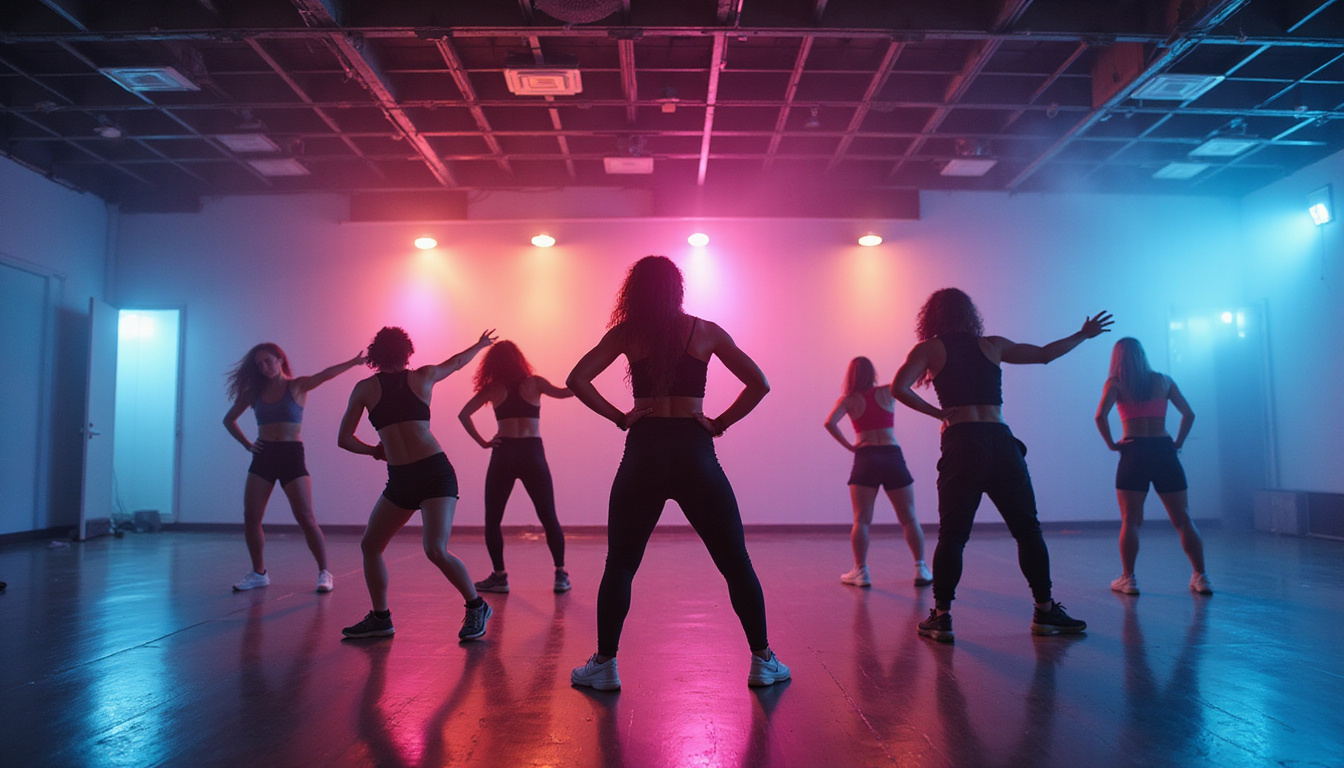
Each move speaks the language of line dance. The cardio you build feeds back into your performance.
Strength Training for Line Dancers: Protecting Knees, Hips, and Ankles
When your knees or ankles protest during fast moves, targeted strength builds support. These exercises help muscles you count on most.
1. Glute Bridges for Strong Hip Drive
• Lie on your back with bent knees and flat feet.
• Press through your heels and lift your hips. Squeeze your glutes as you raise and lower slowly.
• Do 2–3 sets of 12–15 reps.
Strong glutes help control your turns, boost stability in grapevines, and ease knee strain.
2. Lateral Band Walks for Side-to-Side Stability
• Loop a mini band above your knees or ankles.
• With bent knees, step sideways as if you shuffle slowly.
• Take 10–15 steps each way and complete 2–3 rounds.
Feel this move in the muscles that stop your legs from collapsing during side steps.
3. Calf Raises for Shock Absorption
• Stand on a step or flat ground with feet hip-width apart.
• Slowly lift up on your toes and lower down with control.
• Do 2–3 sets of 15–20 reps.
Stronger calves make each stomp, heel dig, and jump easier on your body.
Core and Balance: Clean Turns and Strong Posture
A strong core gives sharp turns and stable posture, which is key when the dance floor gets crowded.
Single-Leg Stance with Turn Prep
• Stand on one leg, bend your knee slightly.
• Hold for 20–30 seconds and then switch.
• To mimic turns, add a gentle arm rotation as you prepare to spin.
Dead Bug for Deep Core Control
• Lie on your back with arms up and hips and knees at 90 degrees.
• Slowly lower the opposite arm and leg toward the floor while you keep your low back firm.
• Do 2–3 sets of 8–10 reps for each side.
This move boosts core control for quick changes and lasting posture.
Recovery: When Your Body Talks Back After a Long Night
After a fire playlist, your hips, knees, or back might speak up. Recovery is not extra—it is key for more dance nights.
Post-Dance Cool-Down (5–10 Minutes)
• March slowly to lower your pulse.
• Do a calf stretch: one foot back, heel down, hold 20–30 seconds each side.
• Do a quad stretch: while standing, pull one heel toward your glutes for 20–30 seconds each side.
• Add a hip flexor lunge stretch.
Listen for signs like ongoing stiffness or soreness. These cues mean you need more care, exercise adjustments, or a health pro’s advice.
Nutrition and Supplements to Support an Active Line Dancer’s Body
Your joints and muscles face hours of movement and weight each week. A good diet is the base, yet some add supplements for extra daily joint and muscle aid.
In the U.S., the FDA sees supplements as food, not drugs. They are not meant to treat or cure disease. Read labels and speak with a healthcare provider before you begin any supplement, especially if you are pregnant, nursing, on medicine, or managing a condition.
Many dancers search for support that:
• Keeps joints comfortable for repeated moves.
• Aids muscle work and recovery after long sessions.
• Fits into busy lives of work, family, and dance.
Regenerix Gold is one choice for people who want extra joint and muscle support so they can keep performing.
Sample Weekly Plan: Blending Practice and Line Dance Exercises
Many active dancers follow a simple plan to stay sharp and steady:
• 2–3 days/week: Strength and core training for 20–30 minutes.
• 2–4 days/week: Dance classes, socials, or home practice.
• Daily: 5–10 minutes of mobility or stretching for hips, calves, and low back.
Keep it simple:
- Choose 3–4 strength moves (like bridges, squats, lateral band walks, and calf raises).
- Add 1–2 moves for core (such as dead bugs or planks).
- End with 5 minutes of stretching.
Small, steady practice beats one-off intensity. Regular care helps you dance longer and feel better.
Regenerix Gold – Video Overview
Regenerix Gold
FAQs About Line Dance Exercises and Staying Comfortable
1. Are line dance exercises enough for cardio, or do I need separate workouts?
For many dancers, a night of dancing plus focused line dance moves (like the fat-burner circuit above) gives a good cardio boost. If you dance several times a week and recover well, you may not need separate cardio. If you dance less, a couple of extra dance-based cardio sessions help.
2. What’s the best line dance workout for joints?
A joint-friendly routine mixes gentle, dynamic warm-ups, low-impact dance drills (grapevines, step-touches, gentle walk-throughs), strength for hips and legs, and a cool-down with stretches. Use soft landings, good shoes, and avoid locking your knees.
3. Can line dance fitness boost overall muscle tone?
Yes. Line dance fitness uses moves that challenge your legs, glutes, and core. Pair your dance with 2–3 short strength sessions per week (like bridges, squats, band work, and core moves) to support a toned, strong, and functional body that feels the difference with each step.
Why Savvy Line Dancers Choose Extra Support Like Regenerix Gold
If line dancing is more than a hobby for you—if it is your social life, stress relief, or even income—then your body is an important asset. Long rehearsals, hard floors, and back-to-back shows take a toll, especially when stiffness or slower recovery begin to show.
Many seasoned dancers invest quietly in daily habits. They use smart line dance exercises, choose proper shoes, follow good nutrition, and sometimes add a daily supplement to support joints and muscles. That is when Regenerix Gold helps.
Regenerix Gold supports dancers who want to:
• Keep joints and muscles healthy through everyday wear and tear.
• Stay active and mobile so they can dance, teach, or perform.
• Act before problems grow.
Support from a good supplement can also save money in the long run. Staying comfortable lets you dance, teach, and perform without missing opportunities or risking long-term injury. Care for your body is smart self-care and smart strategy.
If you plan ahead, protect your talent, and refuse to be sidelined, add Regenerix Gold alongside your line dance exercises and smart training. It is a choice for dancers who move well, live well, and always stay one step ahead.
Health Note
Always consult a licensed medical doctor for your health issues.
Special Discount
If you prefer preventive nutrition to minimize expensive knee surgery and potentially addictive pharmaceuticals, Regenerix Gold is your savvy solution.
You qualify for a special discount.
Simply use the link below and a discount will automatically be applied during checkout.
Get Regenerix Gold => HERE

