

If you work at a desk and lean over your laptop most of the day, your lower back can feel stiff. Sitting this way can build up tension. Long meetings, close deadlines, and endless Zoom calls add to the strain. Over time, this dull pain can change how you sit and sleep.
This guide is for American desk workers who want simple, doctor-approved stretches and sound nutrition ideas. These help keep your back, joints, and muscles strong and moving. You do not need to spend hours at the gym.
Why desk workers tend to have stiff lower backs
Stiff lower backs do not come from one sudden event. They grow slowly as you stay in the same positions for many hours:
- You slump toward your monitor.
- You sit on a sagging office chair or couch.
- You lean to one side to reach your mouse.
- You work from your bed, kitchen stool, or car.
When you sit too long:
- Your hip flexors get tight and pull your pelvis.
- Your glutes slow down, so your lower back takes extra work.
- The muscles along your spine hold a low-grade contraction.
Slowly, your body replies with tightness, stiffness, and a feeling that your back no longer moves as it once did.
The good news is that short, clear stretching breaks can improve your stiffness. Pair these breaks with smart food choices to help your joints and muscles stay healthy.
Ground rules before you start stretching
Before you try these stretches at your desk or floor, remember to:
- Move slowly and do not bounce.
- Go for a stretch that feels “comfortably challenging” and not sharp or burning.
- Breathe smoothly and do not hold your breath.
- Stop and change or skip a move if it causes pain.
These stretches promote general wellness. They do not diagnose or treat a medical issue. If you have back problems, a new injury, or are under treatment, check with your doctor first.
1. Seated pelvic tilts (for feeling frozen in your chair)
This stretch works well during meetings when your camera is off.
- Sit tall at the edge of your chair. Keep your feet flat and shoulder-width apart.
- Gently roll your pelvis forward to increase the curve in your lower back.
- Roll your pelvis backward. Tuck your tailbone under and flatten your back.
- Slow the movement between these two positions for 10–15 repetitions.
Why it helps: Pelvic tilts wake up your deep core. They also loosen the joints around your lower spine. This relieves the stiffness that builds up when you do not move.
2. Chair-assisted cat–cow (for desk-friendly spine mobility)
You do not need a yoga mat here; your chair works fine.
- Sit with your feet flat and your hands on your knees.
- Inhale and gently arch your back as you lift your chest and look up a bit.
- Exhale and round your spine. Tuck your chin in and pull your belly slightly inward.
- Repeat for 8–10 slow cycles.
Why it helps: This familiar move lets each segment of your spine move. It eases the compression that builds up after long periods of sitting.
3. Standing hip flexor stretch (undo hours of sitting)
When your hips stay bent for long periods, they pull on your lower back.
- Stand and take a short step forward with your right foot.
- Slightly bend the front knee and tuck your tailbone under.
- Shift your weight forward until you feel stretch in the front of your left hip.
- Hold for 20–30 seconds, then switch sides.
Desk-worker tip: Hold your desk or a cubicle wall to keep your balance.
Why it helps: This stretch lengthens tight hip flexors. A looser hip flexor takes pressure off your lower back.
4. Seated figure‑4 stretch (for tight glutes and piriformis)
If you feel tightness in your butt when you stand up, try this stretch.
- Sit tall with your feet flat.
- Cross your right ankle over your left knee to form a “4.”
- Flex your right foot gently and sit up tall.
- Lean your upper body forward until you feel a stretch in your right glute.
- Hold for 20–30 seconds, then switch sides.
Why it helps: Tight glute and deep hip muscles can pull on your lower back. Loosening these muscles often lessens that locked feeling.
5. Child’s pose at the wall or desk (if you cannot get on the floor)
If your office does not allow floor stretches, use this modified version.
- Stand about an arm’s length from your desk or wall.
- Place your hands on the surface and walk your feet backward.
- Hinge from your hips. Let your chest drop toward the floor while keeping your arms straight.
- Let your head relax between your arms.
- Hold for 20–30 seconds while you breathe deeply.
Why it helps: This move lengthens the muscles along your spine. It also gently opens your shoulders and hips to ease back tension.
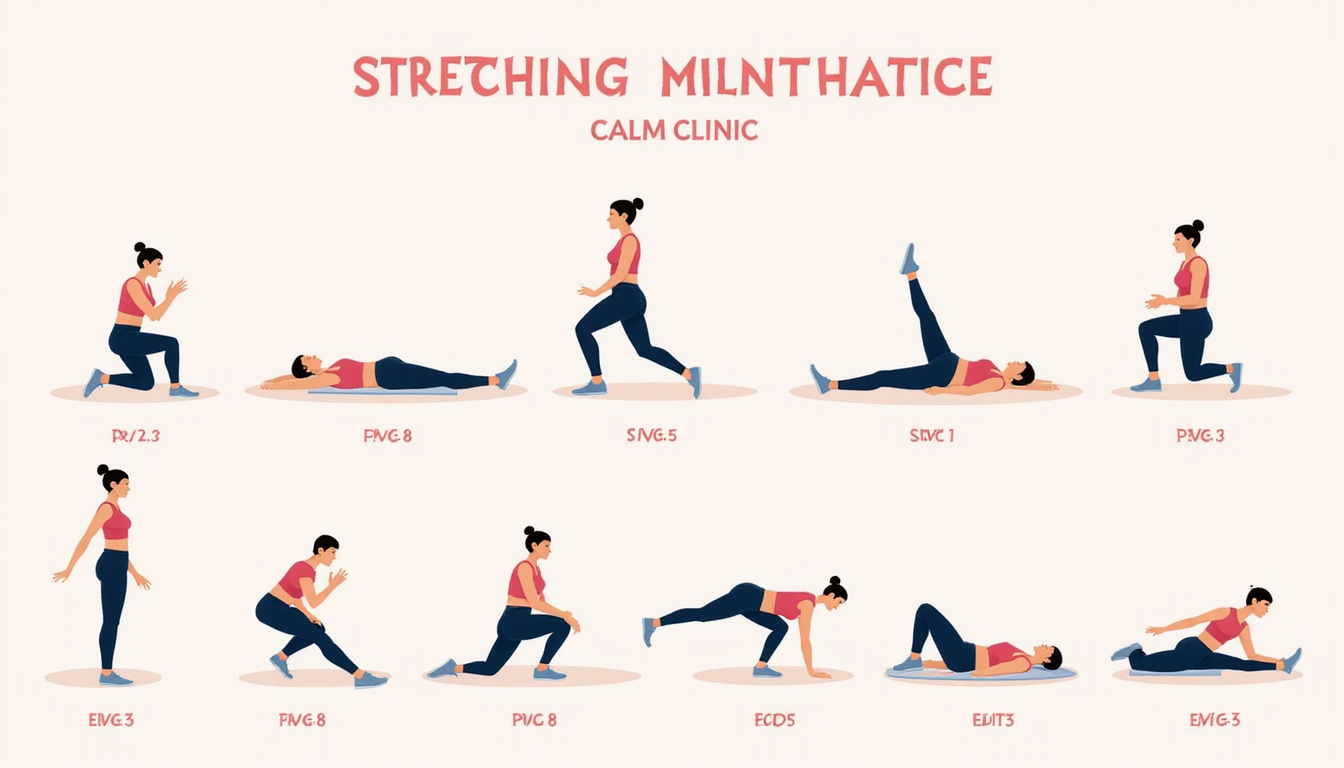
6. Supine knee‑to‑chest (great for after-work decompression)
Best done at home on a rug or mat.
- Lie on your back with your knees bent and feet flat.
- Bring one knee gently toward your chest. Hold just below the knee.
- Relax your shoulders and keep your lower back on the floor.
- Hold for 20–30 seconds, then switch legs.
- For variety, gently rock side to side.
Why it helps: This stretch opens up the hip and lower back. It eases stiffness from long hours of sitting or driving.
7. Lower trunk rotations (for rotational mobility)
This is a good stretch before you go to bed to "unwind" your spine.
- Lie on your back with both knees bent. Keep your feet flat and your knees together.
- Extend your arms straight to the sides, forming a “T.”
- Slowly let both knees drop to one side, keeping your shoulders on the floor.
- Drop only as far as your comfort zone allows. You should feel a gentle stretch in your lower back and outer hip.
- Hold for 10–20 seconds, then switch to the other side.
- Repeat 5–8 times on each side.
Why it helps: It restores slight rotation to your lower spine. This movement is rarely used when you sit for long hours.
8. Hamstring stretch with a strap or towel
Tight hamstrings can pull on your pelvis, which hurts your lower back.
- Lie on your back and extend both legs.
- Loop a towel or strap around the ball of your right foot.
- Keep your knee slightly bent if needed. Gently raise your leg until you feel a stretch along the back of your thigh.
- Hold for 20–30 seconds, then switch legs.
Why it helps: Looser hamstrings help your pelvis align well. This can reduce strain on your lower spine when sitting or standing.
9. Glute bridge (a move that also strengthens)
This exercise gently activates your muscles. It is one of the best moves for desk workers.
- Lie on your back with your knees bent and feet hip‑width apart.
- Press your feet into the floor and squeeze your glutes hard.
- Slowly lift your hips until your shoulders, hips, and knees line up straight.
- Hold for 3–5 seconds, then lower your hips slowly.
- Repeat 8–12 times.
Why it helps: Strong glutes lessen the work your lower back must do. Physical therapists often call this move important for those who sit most of the day.
How often should you stretch for lower back stiffness?
For desk workers, regular movement is better than hard, rare workouts. Try this plan:
- Micro-breaks: Do 1–2 stretches every 60–90 minutes. Even 30–60 seconds helps.
- Daily routine: Spend 5–10 minutes on a few moves. Do this once during work and once in the evening.
- Weekends: Try a longer session for 10–15 minutes to “reset” after a busy week.
Even brief, tidy movements often ease stiffness and boost comfort for those in sedentary jobs.
(Source: CDC – Worksite Health Promotion)
Why nutrition matters for stiff lower backs and desk bodies
Stretches work on your muscles and joints outside. Nutrition helps them from within.
Desk workers often:
- Skip meals or eat quick, heavy food.
- Drink coffee and eat snacks over balanced meals.
- Miss the nutrients needed for muscles, joints, and connective tissue.
These habits can affect how fast your body recovers from long sitting hours. A balanced diet is key. Some also choose supplements that focus on joint and muscle health.
Regenerix Gold: a nutrition-based option for joint and muscle support
For desk workers who want to be proactive, Regenerix Gold is a nutrition-based supplement. It is made for people who want their joints and muscles to stay healthy.
Regenerix Gold is described as:
- A supplement that aids joint and muscle health
- A product that doctors and physical therapists recommend
- A long-used option with international praise for over ten years
Remember, Regenerix Gold is not a cure or treatment for any disease. It is meant to support the body’s own joint and muscle function—especially when long office hours work against you.
<iframe width="560" height="315" src="https://www.youtube.com/embed/mGrH5UWFxUs?si=enLOx67aeklAOHfA" title="Regenerix Gold for Joint and Muscle Health" frameborder="0" allow="accelerometer; autoplay; clipboard-write; encrypted-media; gyroscope; picture-in-picture" allowfullscreen></iframe>
Many desk workers use a mix of approaches:
- Daily stretching and movement “snacks”
- Ergonomic changes like the right chair height and monitor position
- Drinking enough water and eating balanced meals
- Adding a joint and muscle support supplement like Regenerix Gold after talking to their doctor
Supplements work differently for everyone. Always read the labels carefully. Speak with a doctor or pharmacist if you are pregnant, nursing, have a medical condition, or take medications.
A simple “anti-stiffness” routine you can start this week
This routine fits into a busy day. Try these moves:
-
Morning (5 minutes before work):
- Glute bridge – 2 sets of 8–12 repetitions
- Supine knee-to-chest – Hold each leg for 20–30 seconds
-
Mid-morning micro-break (2 minutes):
- Seated pelvic tilts – Do 10–15 repetitions
- Chair-assisted cat–cow – Do 8–10 cycles
-
Afternoon slump reset (3–4 minutes):
- Standing hip flexor stretch – Hold each side for 20–30 seconds
- Seated figure‑4 stretch – Hold each side for 20–30 seconds
-
Evening (5–7 minutes):
- Lower trunk rotations – Do 5–8 rotations on each side
- Hamstring stretch – Hold each leg for 20–30 seconds
- Child’s pose at the wall/desk – Hold for 20–30 seconds
Add these stretches to your daily nutrition habits. Drink water, eat balanced meals, and if advised, take a joint and muscle support supplement like Regenerix Gold. This way, you can fight back against stiffness from multiple angles.
FAQ: lower back stiffness for desk workers
Q1: What helps lower back stiffness during long workdays?
A: Regular movement breaks, basic stretches (like pelvic tilts and hip flexor stretches), and a good ergonomic setup are key. Many also focus on proper nutrition and, if advised by their provider, supplements like Regenerix Gold to support joint and muscle health.
Q2: Can stretching reduce chronic lower back tightness from sitting?
A: Yes. Stretching often eases ongoing lower back tightness from poor posture, muscle tension, and long sitting hours. Moves that stretch your hips, hamstrings, glutes, and core—like the nine stretches above—can help. Always seek medical advice if the pain is severe or worsening.
Q3: Are supplements useful for ongoing lower back stiffness and joint comfort?
A: Supplements are not a substitute for movement or professional care. However, some find that nutrition-based supplements work well with stretching and ergonomic improvements. Regenerix Gold is one option that many doctors and physical therapists recommend for maintaining joint and muscle health.
Take control of your lower back before it controls your work
Lower back stiffness does not have to be a part of office life. With short, clear stretches during your day, a smarter desk setup, and a nutrition plan that cares for your joints and muscles, you can manage stiffness actively.
If you care about health costs, long-term career strength, and staying productive without burning out, this plan is for you. Consider a bottle of Regenerix Gold along with the nine stretches above. This doctor- and physical therapist–recommended supplement has helped many people keep their joints and muscles strong.
In offices where many power through discomfort, you can be proactive. With simple daily habits, you protect your body and your long-term earning power. Now is a good time to begin.
Health Note
Always consult a licensed medical doctor for your health issues.
Special Discount
If you prefer preventive nutrition to minimize expensive knee surgery and potentially addictive pharmaceuticals, Regenerix Gold is your savvy solution.
You qualify for a special discount.
Simply use the link below and a discount will automatically be applied during checkout.
Get Regenerix Gold => HERE


