

If you drive all day, your lower back bears the load.
You sit for long hours, bounce over potholes, and load or unload freight.
All these actions add stress.
Adjusting your lumbar support can help.
It eases aches, restores some mobility, and keeps you moving.
This guide gives easy tips that truckers have tried.
You can start using them on your next run.
Why lumbar support matters so much for truckers
Your lumbar area is the curve in your lower back.
When you support it, your spine aligns as it should.
Without support, you slouch, twist, or brace against the wheel.
For truck drivers, poor lumbar support may cause:
- Constant tightness after a long haul
- Stiffness when you climb in or out
- Trouble bending to check tires or crank dollies
- A "locked up" feeling after sleeper-berth sleep
You sit like you run a weekly marathon.
Without good support, the muscles work too hard to keep you upright.
This extra work can lead to soreness, fatigue, and lower mobility off the clock.
Step 1: Set your seat up like a pro
Many drivers do not set up their seat for proper support.
They adjust until they reach the pedals and roll.
Spend 5–10 minutes at your next fuel stop.
Spend a little time to tune it properly.
Seat position basics
-
Distance from pedals
- You should press the pedals fully with a slight knee bend.
- If your leg must fully straighten, move the seat closer.
-
Seat height
- It is best when your hips are slightly higher than your knees.
- This position opens your hip angle and eases your lumbar area.
-
Seat tilt
- Tilt forward a little so your thighs are supported and there is no pressure behind the knees.
- This position keeps your pelvis neutral and supports the lumbar curve.
-
Backrest angle
- A slight recline of about 100–110 degrees works best.
- If the seat is too upright, you will slump.
- If it is too far back, you will lean and twist to reach the wheel.
Dial in your lumbar support
If your seat has built-in lumbar support, use it.
Pump it until you feel a gentle fill in your lower back curve.
Do not make it so hard that it pokes you.
If there is no built-in support or it is worn out, then use a small, firm cushion, a rolled towel, or a hoodie:
- Place it at belt-line height, not mid-back.
- It should support the natural curve, not create a new one.
- If you feel better for 10 minutes but worse after 2 hours, it is too big or too high.
Step 2: Steering wheel, mirrors, and controls – the hidden lumbar support hacks
Your lumbar support depends on your overall posture.
Steering wheel position
- Bring the wheel closer so your shoulders press gently against the seat.
- Keep a slight bend in your elbows so you do not have to reach or hunch forward.
- If you perch on the seat edge, move closer and adjust again.
Mirror setup
Set your mirrors so that:
- You see clearly without twisting your torso.
- Small head turns are fine; big twists hurt your back.
If you lean often to see a blind spot, you face both a visibility issue and a lumbar support problem.
Step 3: Simple in-cab moves to reset your lumbar area
You do not need a gym membership to help your lower back.
Try these quick moves to reset your spine.
They act like a reset button.
When you start a trip, at fuel stops, or when waiting, try:
-
Truck-side lean
- Stand beside the truck.
- Place one hand on its side.
- Gently lean your hips toward the truck, then lean away.
- Keep your feet firmly planted.
- This move helps ease back and side stiffness.
-
Hip circles
- Stand with your hands on your hips.
- Make slow circles as if you are hula-hooping.
- The small range of motion helps loosen the muscles.
-
Heel drops off the step
- Hold the grab handle and let your heels drop off the step.
- You will feel a light stretch along the backs of your legs.
- Tight hamstrings can pull your pelvis and reduce lumbar support.
Take 60–90 seconds every time you get out of the cab.
It is a quick break that helps over a long week.
Step 4: Lumbar support outside the driver’s seat
What you do off duty also affects your lumbar support.
Sleep setup in the sleeper
- Do not sleep in a twisted position with one leg raised all night.
- If you sleep on your back, place a small pillow or rolled towel under your knees.
- If you sleep on your side, place a small pillow between your knees.
- This helps keep your spine aligned.
Wallet, phone, and gear
Truckers sometimes sit on thick wallets.
This habit harms lumbar support:
- Do not sit on your wallet, phone, or other items in your back pockets.
- Over time, uneven pressure can misalign your hips and lower back.
Step 5: Lumbar support tools truckers actually use
Not all gear is needed, but some tools can help your support.
Consider these:
- Adjustable lumbar cushions made for vehicle seats
- Seat wedges that slightly raise the back or front to set your hip position right
- Vibration-dampening seat pads that lessen the impact of rough roads
When trying any tool, remember:
- It should feel comfortable after 2 hours, not just in the first 10 minutes.
- If it forces an awkward posture, it works against your support.
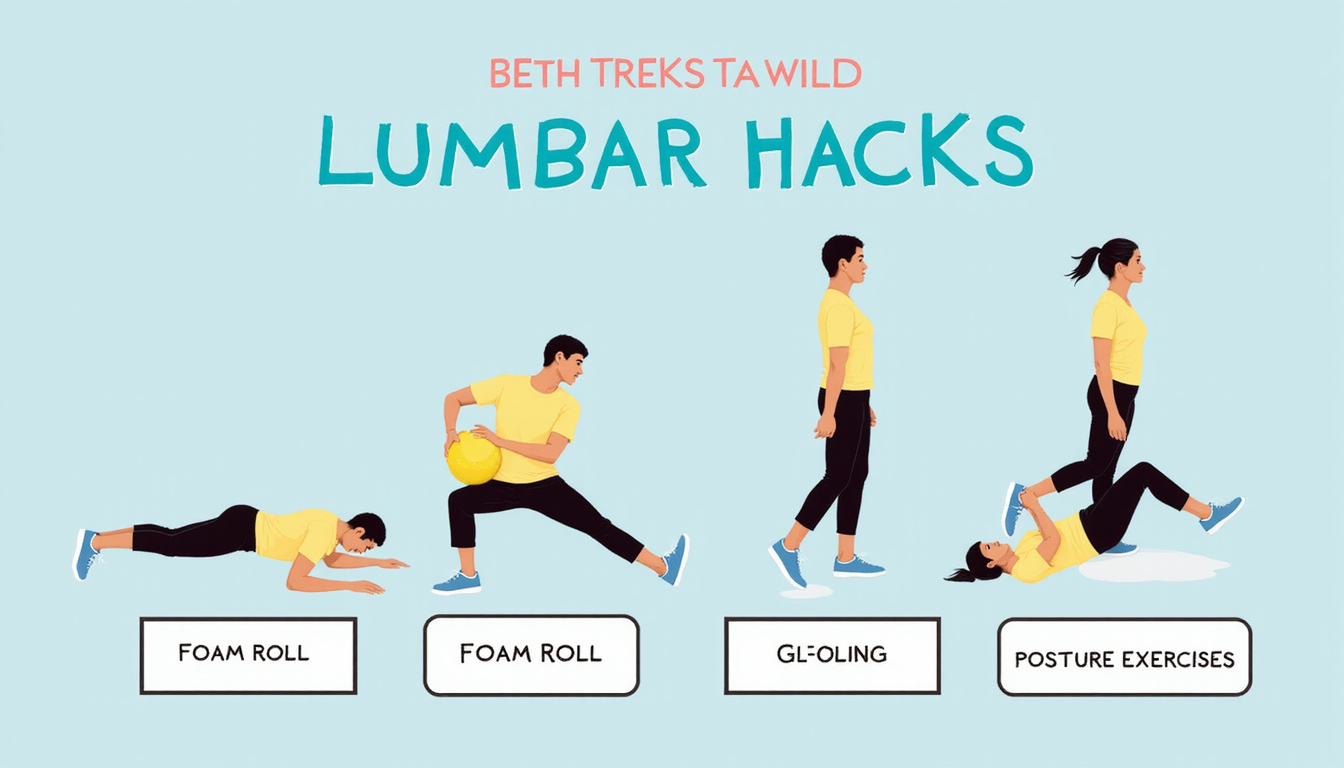
Step 6: Movement breaks – your best “mobile” lumbar support
Even the best support cannot fix 10+ hours of sitting without breaks.
You are a professional driver, but your back needs pauses too.
Take a short break every time you fuel, go to the bathroom, or park.
During a break:
- Stand tall and walk around your truck.
- Do a few hip circles and truck-side leans.
- Relax your shoulders and let your arms swing freely.
This break acts as maintenance for the machine that is your body.
Step 7: Supporting your lumbar area from the inside out
While seat setup and movement are key, many truckers also support their body nutrition-wise.
This approach does not treat a condition. It instead builds a strong base for your muscles and joints.
A balanced plan can include:
- Drinking enough water (skip sodas and energy drinks)
- Eating meals with enough protein for muscle support
- Considering a supplement for joint and muscle health
For many drivers, that is when Regenerix Gold comes in.
It supports joints and muscles.
It helps your lumbar area and body face long hours and hard work.
Regenerix Gold is a daily supplement for those who want to be ready for the road, not just wait until discomfort appears.
Regenerix Gold
Remember to talk to a health professional before you begin any new supplement, especially if you use medications or have ongoing health issues.
Quick lumbar support checklist for your next run
Use this list as a pre-trip check for your back:
- Seat distance: slight knee bend with the pedals fully pressed
- Seat height: hips slightly higher than the knees
- Seat tilt: thighs supported, no pressure behind the knees
- Backrest: slight recline, not completely upright
- Lumbar support: gentle support at belt-line; no hard pushing
- Wheel: close so that shoulders remain relaxed
- Mirrors: clear view with minimal twisting
- Wallet/phone: not in back pockets when sitting
- Plan: take a quick movement break at every fuel or restroom stop
FAQs on lumbar support for truckers
1. What is the best lumbar support position for a semi-truck seat?
The best position fills the natural curve of your lower back at belt-line height.
You should not feel pushed forward or poked.
Pair this with a slightly reclined backrest, hips a bit higher than your knees, and a steering wheel that is close, so your shoulders can relax against the seat.
2. Are lumbar support pillows worth it for long-haul drivers?
A properly sized lumbar support pillow can help many truckers.
It is especially useful if the built-in support is weak or worn out.
Choose one that is adjustable or low-profile so it does not force an exaggerated curve.
Try it on a short run first and see how your body feels over a full shift.
3. How can I improve my lower back support without buying new gear?
You can support your lower back with what you have:
- Use a rolled-up towel or hoodie at your lower back.
- Take 1–2 minutes at each stop to walk and move your hips.
- Adjust your seat, wheel, and mirrors so you can relax into your seat instead of reaching or twisting.
These small changes can make your support more effective without extra gear.
Drive smarter, not sorer – why savvy truckers think ahead
You spend money on better tires, tools, and gear because you know that breakdowns cost time and money.
Your body is your original equipment.
Your lumbar support keeps it running.
Truckers who plan ahead will:
- Set up their seat with care instead of guesswork
- Perform quick in-cab and roadside moves to reset their spine
- Pay attention to sleep, sitting, and lifting
- Support their muscles and joints with smart nutrition and quality supplements
If you aim to stay in the game, protect your income, and avoid time off the road from simple aches, then a proactive plan matters.
That is why many drivers choose Regenerix Gold in their daily routine.
They prefer to act as the owner of their own health instead of waiting for pain to force them off the road.
For truckers who want healthy joints and muscles and for anyone aiming at a high-performing life, Regenerix Gold offers a smart choice.
In a world where health costs and job security weigh heavy, investing in your body’s support system can be a wise move.
Health Note
Always consult a licensed medical doctor for your health issues.
Special Discount
If you prefer preventive nutrition to minimize expensive knee surgery and potentially addictive pharmaceuticals, Regenerix Gold is your savvy solution.
You qualify for a special discount.
Simply use the link below and a discount will automatically be applied during checkout.
Get Regenerix Gold => HERE


