

If you lie awake at 2 a.m. your legs buzz as if they had three espressos. You are not mistaken. Perimenopause restless legs disturb your sleep, mood, and next-day energy. Many women in their 40s and early 50s blame “stress” or “bad sleep.” They do not see that shifting hormones often trigger leg discomfort at night.
Below we unpack why this happens, what helps, how to support your joints and muscles, and how to feel like yourself again—without pacing your bedroom floor each night.
What exactly are “perimenopause restless legs”?
You may feel:
- A creepy-crawly, tingling, or “ants under the skin” sensation in your legs
- A strong need to move your legs when you try to rest
- Sensations that grow stronger in the evening or at night
- Temporary relief when you stretch, walk, or move your legs
Many women explain it as a mix of agitation and fatigue. Your brain is tired. Your body is tired. Yet your legs do not get the message.
Perimenopause does not cause restless legs alone. Hormone and metabolic changes can make symptoms more common or make long-standing mild issues worse.
Why does perimenopause trigger restless legs and body discomfort?
In perimenopause, estrogen and progesterone do not drop slowly. They fluctuate. One month you feel almost whole; the next month your body seems to rebel.
These hormone shifts affect your brain and body in several ways:
-
Hormone swings affect sleep-regulating brain chemistry
Estrogen and progesterone work closely with dopamine and GABA. These brain chemicals help you feel calm and support smooth movement. When hormone levels swing, your nervous system grows edgy, especially at night. -
Night sweats and hot flashes fragment sleep
Broken sleep triggers leg restlessness and twitching, and it leaves you feeling wound up as you try to settle down. -
Nutrient changes during midlife
Many women juggle busy jobs, aging parents, and kids. Meals become rushed. Iron or magnesium levels fall. Low iron and magnesium link strongly with restless leg sensations (source: National Institute of Neurological Disorders and Stroke). -
Muscles and joints under new kinds of stress
Shifting hormones influence collagen and the recovery of connective tissue. A simple workout or a long day on your feet can later leave your legs overworked and tense. -
Midlife stress and cortisol
Chronic stress forces your nervous system to remain on high alert. By bedtime your mind may feel done, yet your body stays in fight‐or‐flight mode. Your legs show that nervous energy most clearly.
Musculoskeletal changes in perimenopause: it’s not just your hormones
You may notice achy joints, stiff hips, or tight calves alongside restless legs. Many perimenopausal women speak of:
- Knees that protest after stairs or squats
- Hips that feel tight after a day at the desk
- Calves that cramp at night
- A body that seems “older” than the years show
These changes come from:
- Slower muscle recovery
- Shifts in collagen and connective tissue
- Changes in body composition and weight distribution
- More time sitting for work or commuting
All these forces combine to create restless legs, joints, and muscles that do not bounce back as they once did.
Proven lifestyle fixes for perimenopause restless legs
Start here. These changes are gentle, fit busy lives, and often work well.
1. Reset your evening routine (without adding an extra hour of “self-care” you do not have)
Use a consistent wind‑down pattern that tells your nervous system, “It is time to relax.”
• Dim screens and bright lights 60–90 minutes before bed.
• Avoid heavy emails and stressful news late in the evening.
• Follow a short routine: wash your face → do a light stretch → write three journal lines → go to bed.
Your brain learns the pattern: “After these steps, sleep comes next.” A calm brain leads to calmer legs.
2. Clean up your caffeine and alcohol timing
You once enjoyed coffee at 4 p.m. and wine at 9 p.m. now, perimenopause changes the rules.
• Use caffeine only before noon if you struggle with night restlessness.
• Alcohol near bedtime fragments sleep and worsens leg sensations. If you drink, stop 3–4 hours before bed to see better leg comfort.
3. Gentle, consistent daily movement
Keep the balance: Move enough to ease leg restlessness, but avoid overworking delicate muscles and joints.
Consider:
• A 20–30 minute walk on most days
• Light strength work 2–3 times per week (use bodyweight, bands, or light weights)
• Yoga or mild stretching on days spent sitting
If high‑intensity workouts make your legs buzz at night, swap some sessions for lower‑intensity movement. Then track if your sleep improves.
Targeted habits for calmer legs at night
4. Stretch and release before bed
Spend 5–10 minutes on stretches for your hips, hamstrings, and calves. Try:
• A gentle forward fold that stretches the back of your legs
• A calf stretch using a wall for support
• A figure‑4 stretch for your hips while lying on your back
• Ankle circles plus pointing and flexing your toes in bed
Tell your legs: “Your work is done. Now relax.”
5. Warmth, massage, and compression
Many perimenopausal women use a mix of simple actions:
• Enjoy a warm shower or bath in the evening.
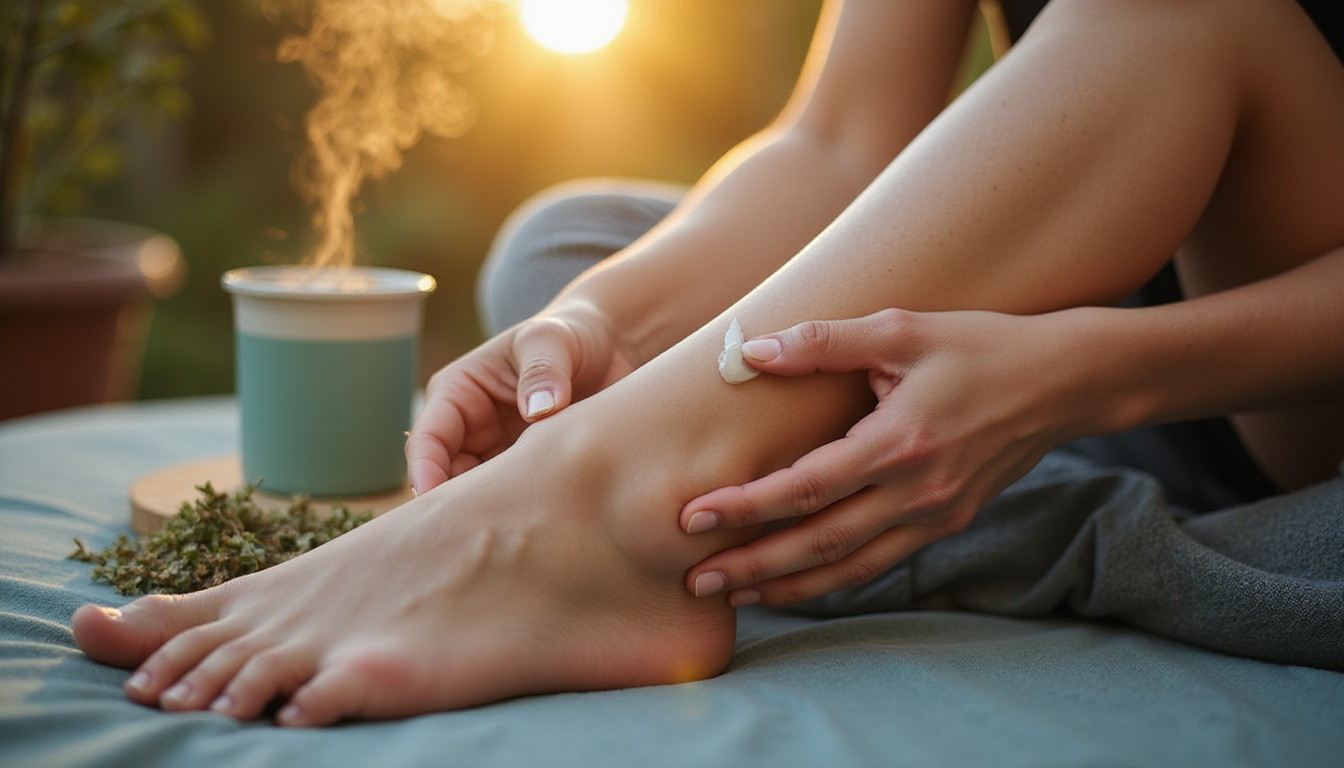
• Use a gentle self‑massage with a body oil or lotion.
• Optionally, wear soft, light‑compression socks if your legs feel jumpy at night.
These acts signal to your muscles and nerves that it is safe to relax.
6. Support your nervous system with breath, not with force
When your legs act up as soon as you lie down, resisting can worsen the feeling.
Instead, try these strategies:
• Take slow, deep breaths. Inhale for 4 counts; exhale for 6–8 counts.
• Practice box breathing: inhale 4 counts, hold 4 counts, exhale 4 counts, hold 4 counts.
• Do a body scan: relax your toes, then your feet, moving slowly upward.
You do not force sleep. Instead, you shift your body from “fight or flight” to “rest and digest.” This is where calm legs live.
Nutrients that may help perimenopause restless legs
Always consult your healthcare provider before changing supplements or diet, especially during midlife.
7. Iron and ferritin
Women often have low iron because of menstruation over the years. In perimenopause, heavier or longer cycles can worsen iron loss. Low ferritin links strongly with restless leg sensations.
Ask your provider to check:
• Ferritin, iron, and total iron‑binding capacity with a blood test
• Whether you need to boost iron through foods or supplements
Do not self‑prescribe high‑dose iron; more is not always better.
8. Magnesium
Magnesium aids muscle relaxation and helps balance your nervous system. Many women do not get enough magnesium from food.
Good sources include:
• Leafy greens like spinach or Swiss chard
• Nuts and seeds such as almonds or pumpkin seeds
• Legumes like black beans and chickpeas
• Whole grains like oats or brown rice
Some women find that a mild magnesium supplement in the evening adds extra comfort. Always discuss the dose and type with a professional.
9. Overall joint and muscle support
Many women look for complete support when:
• Climbing stairs or standing makes joints feel unsupportive
• Workouts or long days leave muscles aching
• They want to stay active without feeling “wrecked” at night
A well‑formulated joint and muscle health supplement can be a good part of a broader plan.
When to talk to a healthcare provider
Perimenopause does not force you to “live with it.” Talk to a licensed professional if:
• Nighttime leg sensations occur often and disrupt sleep greatly
• Poor sleep leaves you exhausted, foggy, or unsafe to drive or work
• You notice other changes like unexpected weakness, leg pain during the day, or altered walking
• You wonder about new supplements while on regular medications
A provider can check other issues, test your nutrient levels, and suggest safe, individual options.
Simple daily checklist for calmer legs and better sleep
Use this quick reference on busy days:
- Move: Walk 20–30 minutes or do gentle exercise.
- Hydrate: Drink water steadily and limit caffeine to the morning.
- Fuel: Eat meals that include protein and magnesium‑rich foods.
- Unwind: Stretch your legs and give a light massage for 5–10 minutes before bed.
- Calm: Practice slow breathing for 3–5 minutes once you are in bed.
- Support: With guidance, consider supplements that boost joint and muscle health.
You do not need to hit every item. Doing 3–4 of these steps most days can help reduce leg agitation at night.
FAQ: perimenopause, restless legs, and midlife body changes
Q1: Is restless leg syndrome common in perimenopause?
Many women notice restless leg symptoms during perimenopause. Hormones fluctuate, sleep changes, stress rises, and nutrients shift. This mix makes perimenopause restless legs a common complaint. Even women without earlier issues can feel them.
Q2: How can I calm my restless legs quickly at night?
For quick relief, many women get out of bed and walk for a few minutes. They gently stretch calves and hamstrings, use warmth (a warm shower or heating pad), massage lightly, and practice slow breathing. Over time, adjusting sleep habits, reducing stress, and maintaining a balanced diet usually help more.
Q3: Can joint supplements help with perimenopausal restless legs symptoms?
No supplement “cures” restless legs. Avoid products that promise disease treatment. Some women find that supporting joint and muscle health makes their legs feel better. A well‑formulated supplement can work with exercise, stretching, and good sleep habits to keep your body resilient during perimenopause.
Why savvy perimenopausal women are turning to Regenerix Gold
If you are a perimenopausal woman balancing work deadlines, family duties, and body changes, you know: poor sleep and achy, restless legs can erode your life. They challenge your patience at work, affect your mood at home, and sap your energy and focus for the future.
You do not have time or money to be slowed by discomfort. Missed work days, extra doctor visits, and trial‑and‑error treatments add up. That is why many women choose a proactive, prevention‑minded approach for their joints and muscles.
Regenerix Gold
Regenerix Gold is built for women like you—women who want their joints and muscles to feel supported. This support helps you stay active, productive, and in charge during perimenopause and beyond. It is not about chasing youth. It is about protecting your ability to live, work, and move on your own terms.
If you read labels, plan ahead, and know the true cost of feeling “out of commission,” see Regenerix Gold as part of your long‑game strategy. Pair it with better sleep habits, daily movement, and nutrition tweaks. You give your body every reasonable chance to stay strong, mobile, and ready—at home, at work, and in every season.
You do not have to settle for restless nights and an uncomfortable body as your “new normal.” Take the next step now. Support your joints and muscles with Regenerix Gold—because the most expensive plan is to pretend that your health can wait.
Health Note
Always consult a licensed medical doctor for your health issues.
Special Discount
If you prefer preventive nutrition to minimize expensive knee surgery and potentially addictive pharmaceuticals, Regenerix Gold is your savvy solution.
You qualify for a special discount.
Simply use the link below and a discount will automatically be applied during checkout.
Get Regenerix Gold => HERE


