

Pickleball hip mobility gives you a hidden edge on the court.
Your hands are quick at the kitchen, and your third-shot drop is sharp. Yet, if your hips feel tight and creaky, you lose time. You may be a half-step slow to reach dinks and overheads, and struggle with balance during last-minute pickups. The good news is clear. With the right hip drills and smart nutrition—like Regenerix Gold for joint and muscle support—you can move as the player you know you are.
This guide speaks to everyday American Picklers.
Rec players, league warriors, and tournament junkies alike feel stiff or sore after a few games. They want to stay on the court longer and feel stronger.
────────────────────────
Why pickleball hip mobility matters so much
Hip mobility means you can move your hips with ease. In pickleball, this shows in:
• Your split step before a volley
• How low you get for a dink or reset
• How quickly you pivot for lobs and passing shots
• How powerful your drives and serves feel
When you have tight hips, you may notice:
• Feeling stuck or tight when you change direction
• Struggling to stay low at the kitchen for many points
• Needing extra shuffle steps to reach a ball
• Extra strain in your lower back, knees, or groin
New research shows that targeted mobility work supports joint health over time (source: American Council on Exercise).
The right hip routine can keep you nimble and reduce soreness when paired with smart on- and off-court habits.
────────────────────────
How better hip mobility boosts speed, power, and balance
Better hip mobility connects directly to winning points and pain-free games.
Speed: Getting to the ball on time
Loose and strong hips help you to:
• Push explosively from your split step
• Shuffle fast along the kitchen line
• Turn quickly for lobs without feeling weighed down
If you feel slow when you see a short ball or sharp angle, it is likely a hip mobility issue and not just a matter of fitness.
Power: Driving through the ball
Your hips power your groundstrokes, serves, and overheads. They let you:
• Load and unload like a spring with good rotation
• Transfer power smoothly using your legs and core
• Rely on full-body mechanics instead of just your arms
Players with tight hips often overuse their arms for drives and serves. When your hips open up, your shots gain power and consistency with less effort.
Balance: Owning the kitchen line
The kitchen is where you win or lose matches. Hip mobility helps you to:
• Stay low and steady during long dink rallies
• Adjust quickly when you face a mis-hit ball
• Lunge and recover without losing balance
Better balance not only prevents stumbles but also boosts your confidence in attacking shots.
────────────────────────
Warm-up: 5-minute pre-game hip mobility flow for Picklers
Do this quick sequence before you pick up your paddle.
It wakes up your hips without tiring you out.
Perform each drill for 30–45 seconds per side unless stated otherwise.
-
Dynamic hip circles (standing)
– Hold the fence or net post with one hand.
– Lift one knee to hip height and draw small circles.
– Switch direction from clockwise to counterclockwise.
– Keep your core firm and your chest lifted. -
Lateral lunges to the kitchen
– Stand near the baseline with wide feet.
– Lunge to your right. Sit back into your hip.
– Lunge to your left next.
– Think of loading up like you do before a wide dink. -
Walking knee hugs
– Step forward and pull one knee to your chest briefly.
– Alternate sides as you walk toward the net.
– Keep the movement smooth and controlled. -
Leg swings (front-to-back and side-to-side)
– Hold the fence for balance.
– Swing one leg forward and backward.
– Then swing it side to side.
– Keep the swing rhythmic and controlled. -
Hip-opening “gate” steps
– March forward.
– Lift one knee and swing it out to the side.
– Place your foot down and switch legs.
– Imagine opening a gate with each step.
This pre-game circuit sets your tone so that your first game feels like more than just a warm-up.
────────────────────────
Core pickleball hip mobility drills to do off-court
Do these drills after play or on off-court days when you are already warmed up.
Aim for 3–4 sessions per week.
1. 90/90 Hip Rotations
This drill works on both internal and external rotation.
• Sit on the floor with your knees bent at 90 degrees. One leg is in front, one behind.
• Sit tall with your chest up.
• Slowly rotate your knees to one side without using your hands.
• Do 10–15 reps on each side.
Focus on clean and controlled movements.
2. Elevated Pigeon Stretch (Pickleball-friendly Version)
This supports the outer hip which you need for lateral shuffles at the kitchen.
• Use a bench, step, or sturdy chair.
• Place your shin across the bench with the knee bent.
• Extend the other leg back so that your toes touch the ground.
• Slowly hinge forward until you feel a stretch in your outer hip.
• Hold for 20–30 seconds and repeat 2–3 rounds per side.
Breathe slowly and keep your back straight.
3. Hip Flexor Lunge with Reach
This targets the front of the hip, which often tightens from sitting and court play.
• Step into a lunge with one knee resting on a pad or towel.
• Tuck your tailbone slightly upward.
• Slowly shift forward until you feel a stretch in the front of your hip.
• Reach the arm on the same side overhead and slightly across your body.
• Hold 20–30 seconds and repeat 2–3 times per side.
4. Deep Squat Hold with Hip Prying
This drill helps you stay low for dinks and resets.
• Stand with your feet wider than shoulder-width, toes pointed slightly outward.
• Squat down as far as you can without pain, holding onto a post or fence if needed.
• Gently push your knees outward with your elbows.
• Shift your weight from side to side to explore the range.
• Hold for 30–45 seconds and repeat 2–3 times.
5. Standing Figure-4 Stretch (Court-side Option)
This stretch is easy to do between games.
• Stand tall and hold a fence for balance.
• Cross one ankle over the opposite knee as if forming a figure 4.
• Sit your hips back as though you are in a chair until you feel a stretch in the glutes and outer hip.
• Hold for 20–30 seconds for each side.
────────────────────────
Power-focused hip mobility: Linking strength and range
When you have basic mobility, strengthen it to boost speed and power.
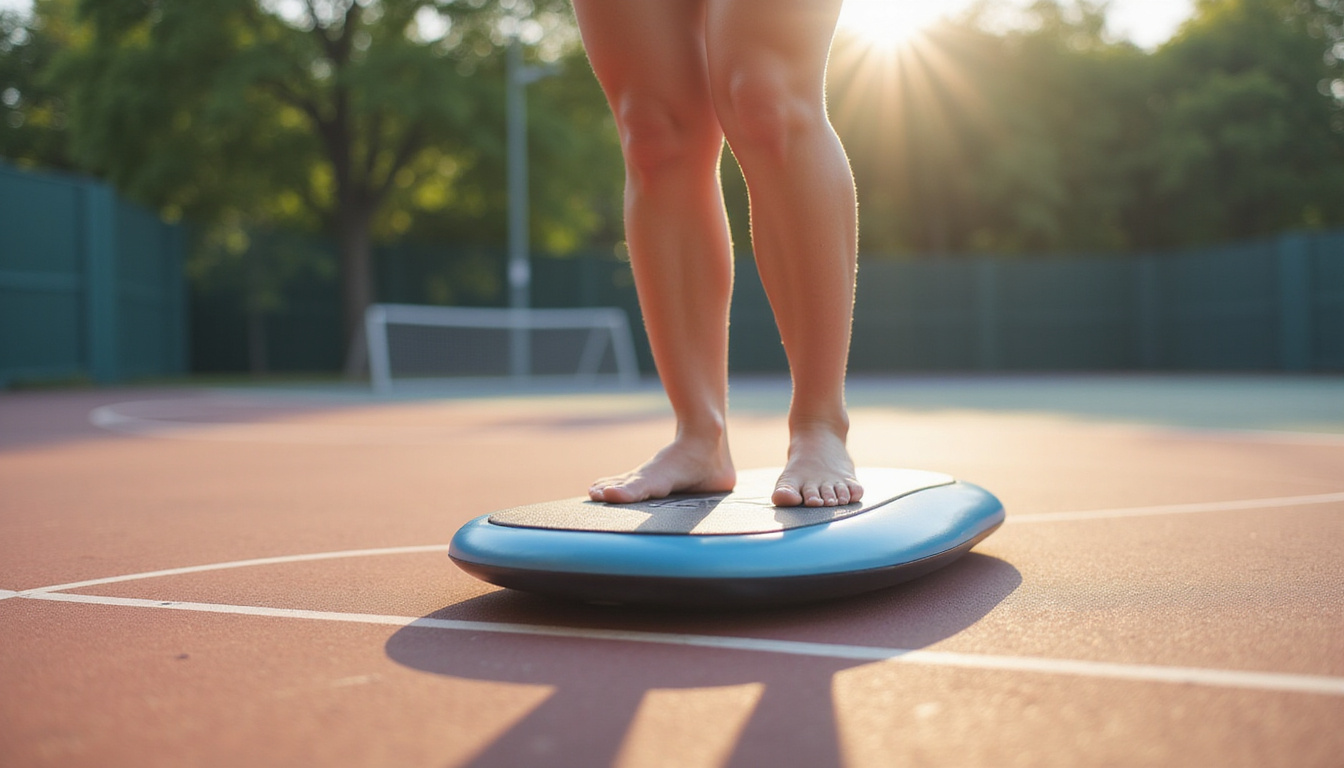
1. Lateral Band Walks
• Place a mini band around your ankles or just above your knees.
• Get into a partial squat in your ready stance.
• Take small, controlled steps to the side while keeping the band tense.
• Do 10–15 steps in each direction for 2–3 sets.
This drill builds muscles that keep your hips steady during fast exchanges.
2. Hip Hinge to Loaded Step
• Stand with your feet hip-width apart.
• Push your hips back (hinge) while bending your knees slightly.
• Then, step forward into a short lunge with power.
• Push back to your starting position and switch legs.
• Do 8–10 reps per side for 2–3 sets.
Think of this drill as training your first explosive move from your ready stance.
3. Rotational Lunge
• Step forward into a lunge.
• As you lunge, rotate your torso over the front leg.
• Imagine swinging a forehand or backhand in your rotation.
• Return to the start and switch legs.
• Do 8–10 reps per side.
Train both types of rotation to balance your game.
────────────────────────
Simple Weekly Routine for Better Pickleball Hip Mobility
This routine fits into a busy Pickler’s life:
• Before every session (5 minutes):
Dynamic hip circles, lateral lunges, walking knee hugs, leg swings, and hip-opening gate steps.
• 2–3 times per week after play or in the evenings (10–15 minutes):
90/90 hip rotations, elevated pigeon stretch, hip flexor lunge with reach, deep squat hold with hip prying, and standing figure-4 stretch.
• 2 times per week on off-court days (10–15 minutes):
Lateral band walks, hip hinge to loaded step, and rotational lunges.
Being consistent over weeks is more important than perfection in one session.
────────────────────────
Supporting Hip Mobility with Smart Recovery and Nutrition
Mobility work is one part of a strong game.
The other parts are recovery habits and nutrition.
• Hydration: Dehydrated muscles and connective tissues feel tighter. Drink water before, during, and after play.
• Sleep: Your body repairs itself at night. Lack of sleep can worsen aches and stiffness.
• Gradual Load: Do not jump from zero to a marathon rec session. Increase your play gradually so your body adapts.
Where Regenerix Gold Fits in for Picklers
Pickleball players often seek extra nutrition support for their joints and muscles. Regenerix Gold is a supplement that helps support healthy joints, cartilage, and muscles. It helps your body manage the demands of split steps, lunges, and long dink rallies.
Key points for Picklers:
• Nutrition: Regenerix Gold offers targeted support for joints and muscles and helps you keep up with the game.
• Trusted Advice: It is recommended by doctors and physical therapists for active adults, including Picklers.
• Proven Track Record: It has been used for over a decade by users around the world.
• Complements Your Mobility Routine: These drills improve movement while Regenerix Gold supports your joint and muscle health for smoother motion.
Note that supplements are not magic. They are not meant to diagnose or treat diseases. But many Picklers find that combining mobility drills, proper sleep, and Regenerix Gold supports long-term play and health.
────────────────────────
Regenerix Gold
────────────────────────
FAQ: Common Questions about Pickleball Hip Mobility
Q1: How often should I train pickleball hip mobility if I play 3–4 times per week?
A1: Use a 5-minute dynamic routine before every session. Then do 10–15 minutes of deeper mobility 2–3 times per week, either after play or on off days. Think of it as essential gear, just like your paddle.
Q2: Can hip mobility exercises really improve my pickleball movement and balance?
A2: Yes. Better hip mobility lets you lower your stance at the kitchen, change direction in a flash, and rotate more smoothly for drives and serves. Many players notice less stiffness the next day and gain confidence when lunging or stretching for balls.
Q3: Where do supplements fit into a pickleball hip and joint mobility plan?
A3: Mobility drills, strength work, and smart practice form the base of a good routine. Nutrition-based supplements like Regenerix Gold add support for your joints and muscles. Always discuss any supplement with your healthcare provider, especially if you have other health concerns.
────────────────────────
Your Next Step: Move Like the Player You Want to Be
Many Picklers accept tight hips, slow starts, and next-day soreness as a fact of getting older. You do not have to.
Spend 10–15 minutes a few times a week on focused hip mobility work. Pair that with a supplement like Regenerix Gold, recommended by doctors and physical therapists. With this plan, you give your body a better chance to keep pace with your competitive spirit.
If you invest in paddles, shoes, and court time, invest in the joints and muscles that power your game. Consider a bottle of Regenerix Gold and test these drills for 30–60 days. You will be the player with spring in your step even late in the day. You will also be the smart Pickler who plans ahead for health, work, and long-term play.
Give your hips—and your game—that extra edge.
https://youtu.be/mGrH5UWFxUs?si=X9bScbG6dvejGkZf
Health Note
Always consult a licensed medical doctor for your health issues.
Special Discount
If you prefer preventive nutrition to minimize expensive knee surgery and potentially addictive pharmaceuticals, Regenerix Gold is your savvy solution.
You qualify for a special discount.
Simply use the link below and a discount will automatically be applied during checkout.
Get Regenerix Gold => HERE


