

If your dinks work well but your overheads feel tight, your pickleball shoulder mobility may hold you back more than your paddle.
Many Picklers play through stiffness, pinching, or post-game soreness in the shoulders, especially after hard drives, serves, and overhead put-aways.
The good news is this: targeted mobility and stability work can smooth your strokes, protect your joints and muscles from wear, and even add free power to your game.
Below are 7 simple exercises for Pickleball players in America who feel musculoskeletal discomfort or early warning signs in the shoulder—whether tightness, fatigue, or difficulty reaching overhead.
Why pickleball shoulder mobility matters for your game
On court, your shoulders never rest.
They serve with spin and pace; they roll topspin drives and drop shots; they smash overhead and hit high volleys; they exchange fast at the kitchen.
If your shoulder feels stiff or loses control, you may compensate with your elbow or wrist, swing with poor mechanics, fatigue fast, and lose paddle speed. You may wake with achy pain.
Better pickleball shoulder mobility does not mean just raising your arm overhead. It means adding flexibility, stability, and strength so the joint moves smooth and handles the sport’s demands.
Before you start: smart warm-up for Picklers
Always warm up for 5–8 minutes before these exercises or heading on court.
Try light jogging or brisk walking.
Do arm swings (front/back and across your chest).
Rotate your torso gently.
Do a few air “shadow swings” with your paddle.
If any move brings sharp pain, stop and talk with a healthcare professional.
1. Wall slides: open up overhead motion
Wall slides help unlock your front shoulder and upper back so overhead moves feel less jammed.
How to do it:
- Stand with your back, head, and hips against a wall. Place your feet 6–12 inches forward.
- Put your forearms and the backs of your hands on the wall in a “goalpost” shape. (Keep elbows at 90°.)
- Slide your arms up as high as you can while keeping contact with the wall and keeping your ribs down.
- Slowly slide back to start.
Dose: 2 sets of 8–12 reps, 3–5 days per week.
On-court benefit: Smoother overhead reach for serves and put-aways, less hitch at the top of your swing.
2. Cross-body stretch: ease the back of the shoulder
If your shoulder feels tight when you reach across your body, the back capsule and muscles may be stiff.
How to do it:
- Stand or sit tall.
- Bring your right arm straight across your chest.
- Use your left hand to pull the right arm closer to your body. Keep the shoulder down.
- Hold for 20–30 seconds, feeling a gentle stretch.
- Switch sides.
Dose: 2–3 holds per side, best after play or workouts.
On-court benefit: More comfort when you hit cross-court backhands and reach wide balls.
3. Sleeper stretch (modified): for rotational mobility
Picklers use much internal and external rotation in serves, drives, and volleys. A gentle sleeper stretch can help.
How to do it:
- Lie on your side on a mat. Bend the bottom shoulder and elbow to about 90° (like an “L”).
- Keep the bottom shoulder slightly in front of your body.
- With your top hand, press the bottom forearm down toward the floor until you feel a mild stretch.
- Hold 15–20 seconds, then relax and repeat.
Dose: 2–3 holds per side, 3–4 days per week.
On-court benefit: Smoother racket path on serves and topspin shots and less post-game tightness.
4. Scapular retractions: build your “shoulder base”
Your shoulder blade is the foundation for every stroke. When it is weak or unstable, the joint works harder.
How to do it:
- Stand tall with your arms at your sides or lean slightly forward holding light dumbbells (or water bottles).
- Without shrugging, squeeze your shoulder blades together and slightly down, as if tucking them into your back pockets.
- Hold for 2–3 seconds, then relax.
Dose: 2–3 sets of 10–15 reps, 3–5 days per week.
On-court benefit: A stronger, more controlled shoulder base for blocking drives, punching volleys, and adding power.
5. Band external rotations: protect the front of the shoulder
External rotators are small but key muscles that help slow the arm after you hit. When they are weak, your shoulder can feel sore.
How to do it:
- Attach a light resistance band to a doorknob or fence at elbow height.
- Stand sideways to the band with the working arm farthest from the anchor. Keep the elbow bent at 90° and tight to your side.
- Start with your forearm across your belly. Rotate your forearm outward, keeping the elbow still, until your hand points mostly forward.
- Slowly return to the start.
Dose: 2–3 sets of 10–15 reps per side, 3 times per week.
On-court benefit: Better shoulder endurance in long serving sessions and aggressive overhead games.
6. Y-T-W raises: total shoulder and upper-back control
This move builds endurance in the muscles that keep your shoulder in the right position.
How to do it:
- Lie face down on a bench or incline (or stand and bend at the hips).
- Use light weights or no weight. Do three shapes:
• Y: Hold your arms up and out in a “Y” with thumbs up.
• T: Hold your arms straight out to the side forming a “T” with thumbs up.
• W: Bend your elbows and pull them down and back to make a “W.” - For each shape, lift your arms slightly, hold for 1–2 seconds, then lower.
Dose: 2 sets of 6–8 reps in each position, 2–3 times per week.
On-court benefit: Better posture, less mid- and upper-back fatigue, and more control in your paddle swing.
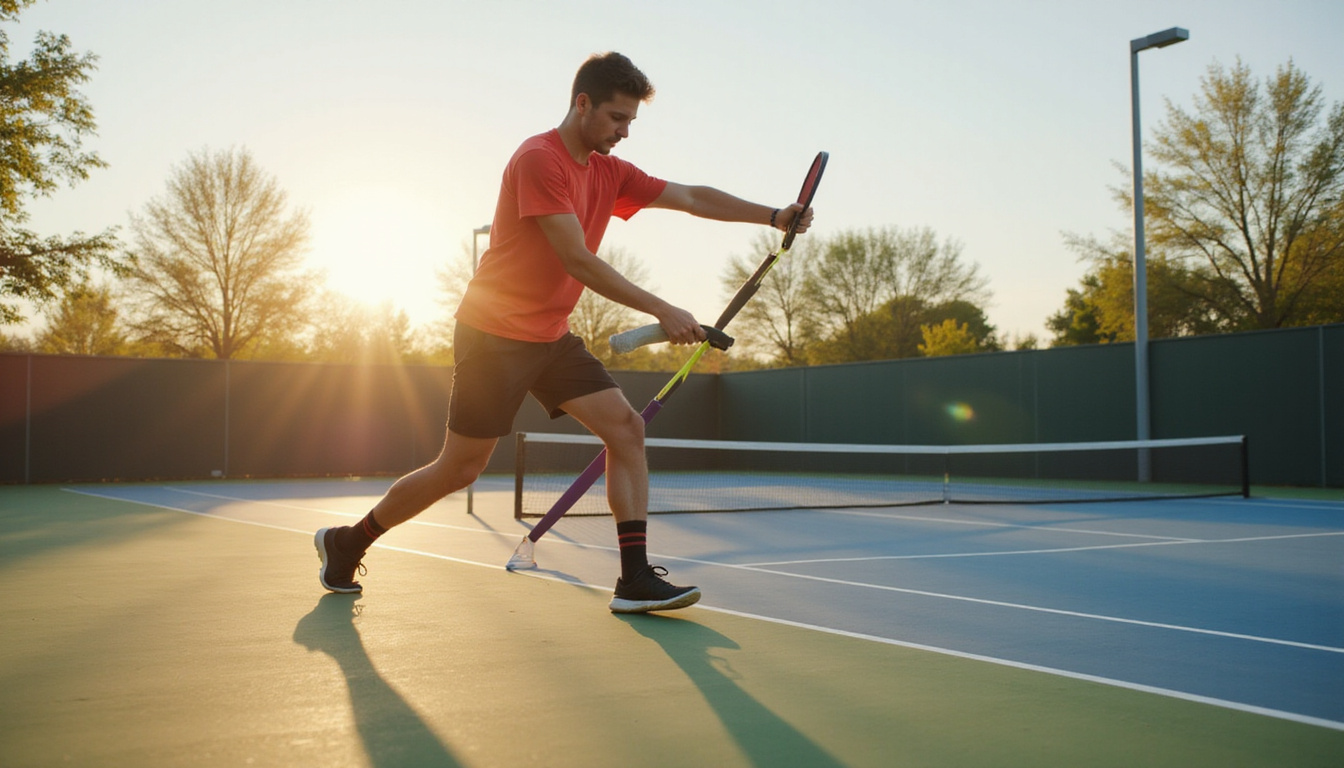
7. Thoracic spine rotations: free up your torso for power
Pickleball power starts from the ground and flows through your hips and torso. If your mid-back is stiff, your shoulder may work too hard.
How to do it (open books):
- Lie on your side and bend your hips and knees to 90°. Stretch your arms straight in front with your palms together.
- Keep your knees together and slowly reach your top arm up and towards the other side. Rotate your chest as far as feels good.
- Let your eyes follow your hand and keep your knees on the floor.
- Return slowly and repeat.
Dose: 2 sets of 8–10 reps per side, 3–5 days per week.
On-court benefit: More trunk rotation for serves and drives and less strain on your shoulders.
Weekly shoulder routine for Picklers
Here is a simple schedule to add these moves without living in the gym:
Before Playing (2–3 times per week):
• Wall slides
• Scapular retractions
• Band external rotations
After Playing or on Off-Days (2–4 times per week):
• Cross-body stretch
• Modified sleeper stretch
• Y-T-W raises
• Thoracic spine rotations
Aim for 10–15 minutes total. Consistency over weeks and months will boost your pickleball shoulder mobility and durability.
Supporting shoulder and muscle health from the inside: Regenerix Gold
Mobility work is one side of the goal. The other side is what you put in your body to support your joints and muscles after rec nights, ladder matches, and weekend tournaments.
Regenerix Gold is a nutrition-based supplement for Pickleball players who want to keep their joints and muscles healthy so they can play longer and feel better after games.
Key points for Picklers:
• It is a nutrition solution, not a drug or painkiller.
• Doctors and physical therapists recommend it to help maintain smooth movement with an active life.
• It has been used for over a decade and receives positive feedback from athletes and active adults worldwide.
For Picklers who notice:
• Muscle fatigue or achiness after play
• Stiffness when you wake up after long days
• Shoulders that “talk back” after many overhead moves
A joint and muscle-support supplement like Regenerix Gold can be a smart, proactive tool—alongside sleep, hydration, smart training, and mobility work.
Regenerix Gold is not meant to diagnose, treat, cure, or prevent disease. If you are under medical care, pregnant, nursing, or taking other medicines, talk with your healthcare provider before adding a new supplement.
Regenerix Gold
Lifestyle tips to protect your Pickleball shoulders
Beyond mobility drills and nutrition, small habits can help over a long season:
• Mind your volume. Add playing days and games slowly, especially if you are new or returning after a break.
• Mix your shots. Hitting max-effort drives and overheads all the time can overload your shoulders. Add dinks, drops, and lobs.
• Check your paddle. A paddle that is too head-heavy or too stiff may stress your arm and shoulder over time.
• Strength train. Even two days per week of full-body strength work supports better joint mechanics and resilience.
• Respect early warning signs. If pain persists or gets worse, get a professional evaluation from a licensed provider or sports physical therapist.
FAQ: Pickleball shoulder mobility and power
Q1: How does better shoulder mobility help my pickleball power?
Better shoulder mobility gives you efficient serving, driving, and smashing positions. A smooth joint and strong muscles help you rotate more fully, transfer energy from your legs and trunk, and slow your arm safely. This means smoother and more powerful shots with less strain.
Q2: What are the best pickleball shoulder exercises if I’m already stiff?
Begin with low-intensity, controlled moves such as wall slides, cross-body stretches, thoracic rotations, and light band external rotations. These moves target common limits without overloading the joint. Keep the reps low, avoid sharp pain, and progress slowly. If stiffness is severe, see a healthcare professional or physical therapist who understands Pickleball.
Q3: Can Regenerix Gold help with shoulder support for Pickleball players?
Regenerix Gold is a nutrition-based supplement to support healthy joints and muscles for active people. It is recommended by some doctors and physical therapists and has been used worldwide for over a decade. It is not a treatment for medical conditions. Always check with your healthcare provider before trying any new supplement, especially if you have health concerns.
Take action: protect your shoulders and your future on court
Pickleball is more than a hobby; it is a community and a way to relieve stress. Letting avoidable shoulder issues sideline you can mean missed leagues, less social time, and even worries about work or healthcare costs if the problem grows.
Do not wait until your shoulder “blows up” to act.
• Adopt a 10–15 minute shoulder routine each week.
• Support your joints from the inside with a doctor- and PT-recommended supplement like Regenerix Gold.
• Play the long game so you can keep owning the kitchen and punishing floaters for years.
If you care about your health and want to avoid big medical bills while staying in the game, think about trying Regenerix Gold. Use it along with the 7 mobility exercises above, and give your shoulders the same care you give your paddle choice and strategy.
Your future self—still ripping drives and winning rec nights—will thank you.
https://youtu.be/mGrH5UWFxUs?si=X9bScbG6dvejGkZf
Health Note
Always consult a licensed medical doctor for your health issues.
Special Discount
If you prefer preventive nutrition to minimize expensive knee surgery and potentially addictive pharmaceuticals, Regenerix Gold is your savvy solution.
You qualify for a special discount.
Simply use the link below and a discount will automatically be applied during checkout.
Get Regenerix Gold => HERE


