

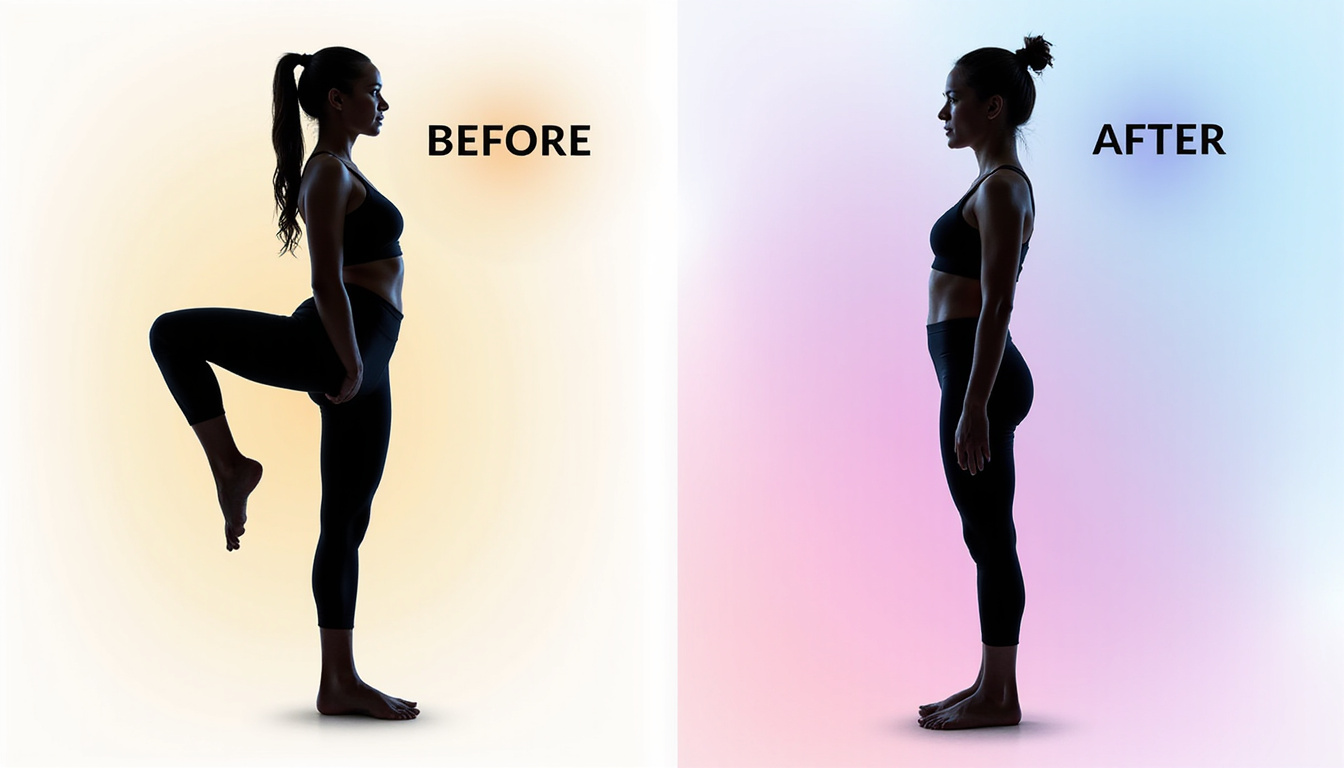
If you finish a reformer session feeling taller, you know Pilates works for your posture. When you return to your desk, car, or phone, you may bend forward and lose that hard-won length. The good news is that a few daily Pilates routines help you reset to a neutral alignment, support your spine, and keep a lifted, organized posture—even outside the studio.
Why Pilates for Posture Works So Well
Pilates builds its practice on key ideas. Each idea connects closely to the next:
- Axial elongation (from head crown to tailbone)
- Deep core and pelvic floor engagement
- Scapular stability and mobility
- Balanced strength between flexors and extensors
- Breath that supports spine decompression
When you practice consistently, Pilates changes both your muscles and your nervous system. You do not simply "strengthen your core." You reset your body settings so that a neutral spine, open collarbones, and an active center feel natural.
If you are a Pilates practitioner, take these principles from the mat, reformer, chair, or Cadillac and use them in your day. Whether you teach back-to-back classes, cue clients, or have a desk job, you can bring these ideas into every moment.
The Posture Problem: How Real Life Undoes Your Alignment
Even experienced Pilates practitioners can feel misaligned. Look for these signs:
- Tension between the shoulder blades after a long day of clients
- A low-hanging back when you stand at the front of the studio for hours
- Tight hip flexors from driving to and from the studio
- Forward head posture from using a laptop or phone
Our modern life creates these challenges. Too much sitting, tech use, and repetitive patterns lead to:
- Shortened hip flexors and chest muscles
- Weak or underused glutes and deep abdominals
- Overworked upper traps and lower back muscles
- A collapsed front body and rounded shoulders
Pilates for posture works by lengthening short muscles, awakening inactive ones, and teaching better load-sharing through the kinetic chain.
Foundational Alignment: Your Daily “Pilates Reset”
Before adding exercises or props, set your body in neutral alignment. Use this quick standing “reset” several times a day. It works well between classes, in the locker room, or while waiting for your coffee.
1. Standing Neutral Check-In (2 minutes)
• Feet: Place them hip-width apart, parallel. Keep your weight centered on three points: your big toe mound, little toe mound, and center of your heel.
• Knees: Let them remain soft and avoid locking; your patella must track with your second toe.
• Pelvis: Visualize your front pelvic bones (ASIS) and your pubic bone in one vertical line. Do not tuck or arch.
• Ribcage: Set it atop your pelvis. Keep your front ribs heavy instead of flaring.
• Shoulders: Align them wide across your collarbones. Let your scapulae settle down and slightly back.
• Head/Neck: Align your ears over your shoulders and keep your chin parallel to the floor. Imagine gentle traction pulling from the crown.
Take 5–8 calm breaths. With each exhale, lift from your pelvic floor through your low belly. Visualize your spine stretching like a telescopic antenna. This position is your baseline before any routine below.
Simple Daily Mat Routine for Better Posture (10–12 Minutes)
You do not require a reformer to benefit from Pilates. This short sequence uses classical moves, with tweaks to support upright alignment.
1. Imprinted to Neutral Pelvic Rocks
• Setup: Lie on your back with bent knees and your feet in line with your sit bones. Rest your arms long by your sides.
• Action: Gently rock your pelvis. First, imprint your lower back. Then, return to neutral as you move with your breath.
• Reps: 8–10
Keep your focus on moving your lumbar spine without gripping your glutes. This move builds awareness of your pelvic position. Standing tall without tucking follows from this awareness.
2. Bridging with Glute Focus
• Setup: Remain in the supine position as above.
• Action: Exhale to lift your spine off the mat into a bridge. Inhale at the top, then exhale while rolling down, vertebra by vertebra.
• Reps: 8–12
Cue yourself with: “Knees reach forward, chest stays soft.” Strong glutes help with hip extension and keep your lower back from sagging.
3. Chest Lift with Axial Length
• Setup: Lie on your back with your hands behind your head. Keep your elbows out. Use either tabletop leg position or have your feet down.
• Action: Exhale to nod and gently curl the upper ribs, head, and neck upward. Inhale to lower with control.
• Reps: 8–10
Think of sliding your ribs down toward your pelvis while keeping the spine long. This move strengthens deep abdominals that support your lower back.
4. Swan Prep for Upper-Back Extension
• Setup: Lie face down with your legs long and your hands placed under your shoulders (or slightly wider). Rest your forehead on the mat.
• Action: Inhale to fetch length through the crown. Exhale to lift the head, sternum, and upper ribs into a gentle swan (upper-back extension). Keep your ribs heavy and glutes soft. Inhale to hold; exhale to lower.
• Reps: 6–8
Focus on extending through the thoracic spine. This helps counter rounded shoulders and opens up the front of your body.
5. Breaststroke Prep with Scapular Stability
• Setup: Lie prone with your arms set in a cactus pose or by your sides.
• Action: Inhale to lightly hover your arms and chest off the mat. Exhale to draw your shoulder blades down and in. Inhale to lengthen; exhale to lower.
• Reps: 8–10
This exercise trains your scapular muscles. It helps maintain shoulder stability without overworking the upper traps.
6. Quadruped Opposite Arm/Leg Reach
• Setup: Get on your hands and knees. Keep your wrists under your shoulders and your knees under your hips with a neutral spine.
• Action: Slowly reach your opposite arm and leg. Keep your pelvis stable, and hold for 2 breaths. Then switch sides.
• Reps: 5–8 each side
This move builds cross-body coordination and trains the stabilizers that keep you upright when you move.
7. Mermaid Side Stretch
• Setup: Sit in a mermaid position, or cross your legs if needed.
• Action: Inhale to lift your arm overhead. Exhale to bend to the side, anchoring the opposite sit bone. Alternate sides.
• Reps: 3–4 each side
This stretch elongates your side body. It teaches you to grow tall through both sides of your waist instead of leaning to one side.
A “Desk Pilates” Mini-Sequence to Combat Slouching
Many Pilates pros spend long hours with screens—whether programming, scheduling, or teaching remotely. Use this 5-minute sequence to restore your posture without leaving your chair.
-
Seated Axial Length with Breath
• Sit near the front edge of your chair, keeping your feet on the ground.
• Inhale to grow tall and exhale to gently lift your low belly.
• Take 5–8 breaths. -
Scapular Slides
• Hold your arms at shoulder height.
• Slowly slide your shoulders forward (protraction) then pull them back (retraction). Keep your ribs stable.
• Do 8–10 reps. -
Seated Cat–Cow
• Place your hands on your thighs.
• Exhale to round your spine (cat) and inhale to gently arch (cow).
• Keep the motion segment by segment, not just from your lower back.
• Do 6–8 reps. -
Seated Chin Nod and Head Glide
• Nod your chin slightly, as if saying “yes.”
• Then gently glide your head back so your ears align over your shoulders.
• Do 10 slow reps. -
Wall Angel (if you have a wall nearby)
• Stand with your back and head against the wall, keeping your arms in a cactus shape.
• Slide your arms up and down along the wall. Keep your ribs and lower back from flaring forward.
• Do 8–10 reps.
These moves keep your postural muscles alert during the day. Over time, you will not feel like you have to start from scratch when you get back on the mat or reformer.
Standing Taller in Everyday Life: Pilates Cues You Already Know
Bring your favorite studio cues into daily life. Try these short phrases when you catch yourself slouching:
• “Find my sit bones and stack my ribs straight above them.” This simple cue reduces swayback even when standing.
• “Float the back of my skull away from my tail.” This encourages length without forcing your chest forward.
• “Hug my outer hips in.” This gently activates the glute med and supports better alignment when moving.
• “Widen across my collarbones.” This opens your chest without causing rib flare.
• “Grow tall on the inhale; let my spine stabilize on the exhale.” This links breath and posture perfectly.
Use these cues while driving, standing in line, or even when demonstrating exercises. Your body can quickly adopt better alignment with low-intensity, consistent reminders.
Supporting Your Pilates for Posture Practice from the Inside
Your posture depends on more than muscles and fascia. The health of your joints and tissues also matters. Many Pilates practitioners add lifestyle habits to support their work:
• Stay well-hydrated.
• Eat a protein-rich, balanced diet.
• Enjoy movement “snacks” throughout the day.
• Maintain sleep routines that help tissue recovery.
Some even consider dietary supplements for joint and muscle health. Supplements do not treat or cure disease. Instead, they support joint comfort and mobility when paired with regular movement and a balanced lifestyle (source: National Institutes of Health Office of Dietary Supplements, https://ods.od.nih.gov/).
If you think about using a supplement, remember to:
• Read labels carefully.
• Avoid unrealistic “miracle” claims.
• Consult with a healthcare provider, especially if you are pregnant, nursing, on medication, or have health concerns.
For Pilates pros and enthusiasts who challenge their joints daily—whether by demoing hundreds of repetitions, adjusting clients, or carrying equipment—supporting joint and muscle health is part of smart, proactive care.
Regenerix Gold
For those who live and breathe Pilates for posture, your body is your business card and your livelihood. Long hours on your feet, constant demonstrations, and showing up with clear, aligned posture day after day can strain your joints and muscles.
Regenerix Gold is a dietary supplement for adults who want to support healthy joints and muscles. It is not a drug and does not diagnose, treat, cure, or prevent any disease. Instead, it works as a smart part of a bigger picture that includes your Pilates practice, balanced eating, and restorative sleep.
Many serious Pilates practitioners choose smart, science-based strategies to prevent problems before they grow expensive. Proactive self-care, including proper joint support, can protect your health and your finances.
If you are committed to standing tall—whether on the reformer, at the front of the studio, or in everyday life—and want to guard against issues that might stop you from moving or working, consider if a joint- and muscle-support supplement like Regenerix Gold is right for you. Talk with your healthcare professional before starting, and give yourself the informed, long-term care you would advise your best client.
FAQ: Pilates for Posture
Q1: How often should I do Pilates exercises for posture to see a difference?
Most people notice changes in awareness and alignment with just 10–15 minutes of Pilates for posture, 4–5 days a week. Consistent, low-load work resets your nervous system so better posture feels natural.
Q2: Can Pilates improve posture if I sit at a desk all day?
Yes. A regular mat or reformer practice mixed with short, daily posture resets—such as the desk sequence above—can greatly improve how you sit and stand.
Q3: Is Pilates good for back strength and posture at the same time?
Absolutely. Pilates targets deep core stabilizers, back extensors, and hip muscles needed for upright alignment. At the same time, it builds strength, coordination, and body awareness that benefit every movement you make.
Health Note
Always consult a licensed medical doctor for your health issues.
Special Discount
If you prefer preventive nutrition to minimize expensive knee surgery and potentially addictive pharmaceuticals, Regenerix Gold is your savvy solution.
You qualify for a special discount.
Simply use the link below and a discount will automatically be applied during checkout.
Get Regenerix Gold => HERE


