

Pilates Trigger Points: Simple Moves to Unlock Tight Muscles
You train on the Reformer, Cadillac, or mat. You feel stubborn hot spots. These spots resist lengthening even with roll downs or swan preps. They are Pilates trigger points. They are small knots in your muscles and fascia. They steal your alignment, drain your power, and turn flow into a grind.
This guide explains trigger points. It shows how they appear in Pilates bodies. It gives you simple moves to add to your warm‑up or cool‑down. Use these moves to unlock tight muscles without stopping your practice.
What Are Pilates Trigger Points, Really?
Trigger points are tiny stress spots in muscle tissue. They form tight knots, bands, or small “BB pellets” when you press. They hurt locally. They may also send a dull, achy, or burning pain to another area.
Pilates bodies show trigger points in three ways:
• In muscles that hold a neutral base (deep abdominals, multifidi, hip stabilizers).
• In main movers that work too hard when precision slips (upper traps, quads, hip flexors).
• In areas that store tension when you push turnout, imprint, or flexion too far.
Remember, trigger points are not a disease. They do not mean permanent damage. They ask for better load management, smarter sequencing, and some release.
Why Pilates Practitioners Develop Trigger Points
Pilates may relieve overuse. Still, many practitioners get Pilates trigger points. The way you train can cause them.
-
Over‑Cueing “Hold” Instead of “Move”
You say “ribs knit,” “navel to spine,” “glutes on.” You grip rather than move. Static bracing in hundreds, teaser, or long stretch builds trigger points in:
• Upper traps and levator scapula (over‑helping the shoulder girdle).
• Hip flexors (especially in tabletop and teaser variations).
• Glute med and deep rotators (from over‑clenching during turnout). -
Repeater Exercises Without Tissue Recovery
You run advanced Reformer routines days in a row. Short spine, long spine, tendon stretch, snake/twist work the same muscles. They never reset fully. -
Life Off the Reformer
Desk work. Long commutes. Phone posture. High‑stress living keeps you in forward flexion. Then you ask your body to do swan, rowing, or breast stroke. This misalignment makes trigger points form in:
• Pecs and anterior deltoids.
• Neck flexors and suboccipitals.
• Hip flexors and hamstrings.
Common Trigger Point Zones in Pilates Bodies
Pilates trigger points hide in many spots. They show in your sessions in distinct ways:
Neck and Upper Shoulders
Hot spots exist in:
• Upper trapezius.
• Levator scapulae.
• Suboccipitals.
You feel:
• Neck tension in hundreds, swan prep, or chest lift.
• Shoulder hiking during arm work on the Reformer or tower.
• Headaches after curl‑ups or rollover drills.
Thoracic Spine and Rib Cage
Hot spots form in:
• Mid traps and rhomboids.
• Latissimus dorsi.
• Intercostal muscles.
You feel:
• Trouble keeping a wide collarbone during rowing.
• A blocked feeling in thoracic extension (swan, breast stroke).
• Ribs popping during bridging or arm arcs.
Hips and Glutes
Hot spots hide in:
• Gluteus medius and minimus.
• Piriformis and deep rotators.
• Hip flexors (psoas, TFL, rectus femoris).
You feel:
• One hip hiking in footwork or short spine.
• Tension instead of length in side‑lying leg series.
• A pinching at the front of the hip in leg circles or bicycle.
Feet and Calves
Hot spots show in:
• Calves and soleus.
• Plantar fascia.
• Peroneals.
You feel:
• Cramping during footwork or tendon stretch.
• A wobbly foot on the Reformer bar.
• Difficulty keeping equal pressure across the foot tripod.
Self‑Release: Simple Moves to Unlock Tight Muscles
Use these self‑release moves right in your practice. They work as a warm‑up, cool‑down, or reset. Stay within a comfortable pressure. Ease off if you feel sharp pain. Ask a healthcare professional if you are unsure.
1. Upper Trap and Neck Reset for Cleaner Shoulder Work
When to use it: Before arm springs, long stretch, plank series, or heavy shoulder work.
How to do it:
- Sit tall on the mat or Reformer. Keep a neutral spine. Firmly plant your feet.
- Place a small, soft ball between your upper trap and the wall.
- Lean gently into the ball. Move in tiny nods and side‑to‑side shifts.
- Breathe slowly three to five times. Let each exhale melt the tension.
- Switch sides.
Pilates cue: “Let the collarbones widen as the back of the neck lengthens.”
2. Thoracic Extension Release for Better Swan and Rowing
When to use it: Before any extension work or after a long day at a desk.
How to do it:
- Lie on your back with knees bent and feet flat.
- Place a foam roller horizontally under your mid‑back, below your shoulder blades.
- Support your head with your hands. Let your elbows stay soft.
- Inhale and gently extend over the roller. Keep your ribs heavy. Exhale to return.
- Roll one level up or down. Repeat for three to five segments.
Pilates cue: “Breathe into the back and sides of the ribs; let the sternum float without flaring the front ribs.”
3. Glute Med and Piriformis Release for Stronger Hip Stability
When to use it: Before side‑lying series, standing leg work, jumps, or after long drives and sitting.
How to do it:
- Sit on the mat with knees bent and feet flat.
- Place a small ball under one glute, toward the outer hip.
- Cross the same ankle over the opposite knee. This exposes the deep rotators.
- Shift your weight slowly in tiny circles. Find a tender spot.
- Hold and breathe for 30–60 seconds. Then move to another spot.
Pilates cue: “Think wide, wrapping hips—not clenching.”
4. Hip Flexor Release for Easier Tabletop and Teaser
When to use it: Before supine work in tabletop or teaser variations.
How to do it:
- Lie face‑down. Place a soft ball high on the front of one hip. Avoid direct pressure on pelvic bones.
- Prop yourself on your forearms like in sphinx pose. Let some weight rest on the ball.
- Slowly bend and straighten the same‑side knee to floss the tissue.
- Hold for 30–45 seconds. Then change sides.
Pilates cue: “Legs float from a deep, supported center—not from the front of the hip.”
5. Foot and Calf Release for Better Footwork and Balance
When to use it: Before footwork, tendon stretch, standing splits, or jumpboard.
How to do it:
- Stand with a small ball under the arch of one foot.
- Roll slowly from heel to ball and side to side. Explore the inner and outer arch.
- Spend extra time under the big toe mound and the heel.
- Roll for 1–2 minutes per foot.
Pilates cue: “Find the tripod of the foot: big toe, little toe, and center heel grounded and alive.”
A Simple Routine to Work Through Pilates Trigger Points
Try this short routine on days when your body feels sticky before class:
- Upper trap release – 2–3 minutes
- Thoracic extension on roller – 2–3 minutes
- Glute/piriformis release – 3–4 minutes
- Hip flexor ball release – 2–3 minutes
- Foot and calf release – 3–4 minutes
Watch your hundreds, bridging, and footwork change. They become more connected, symmetrical, and easier.
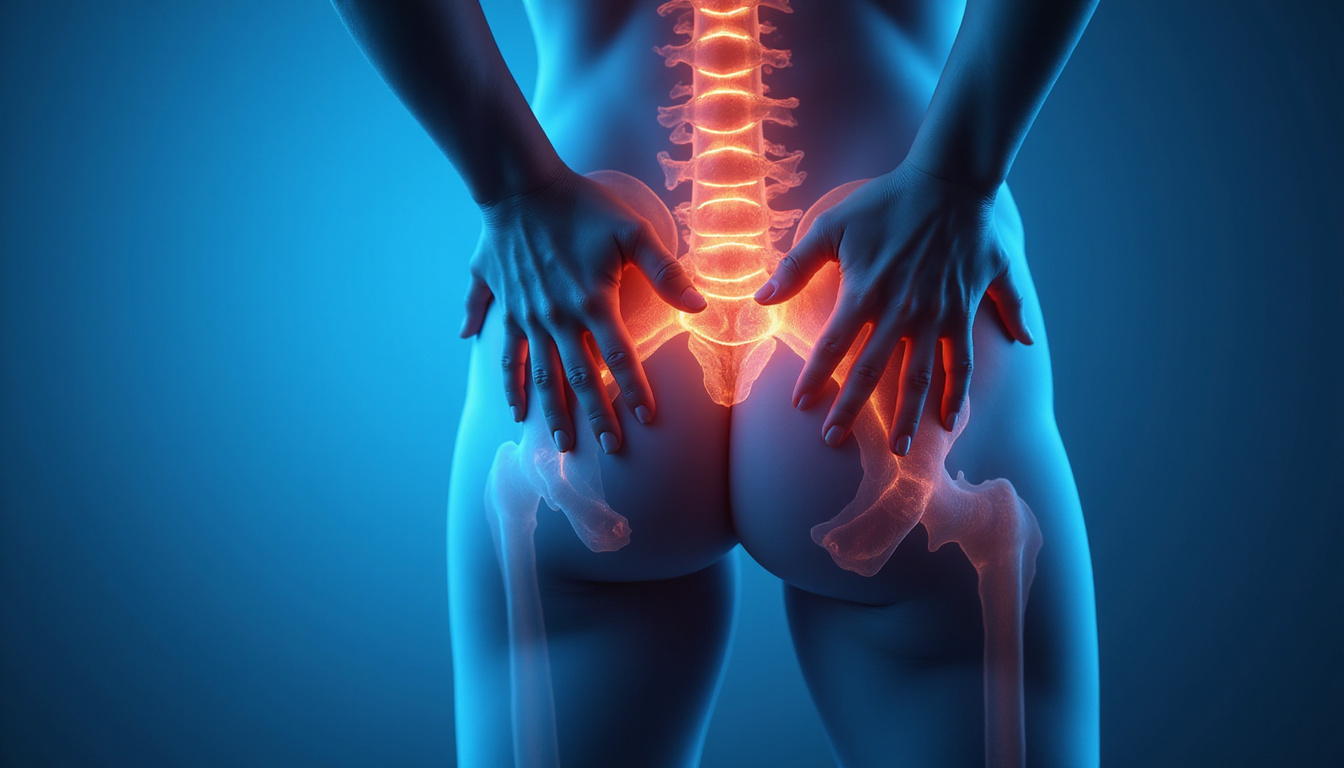
Supporting Healthy Muscles and Joints From the Inside
Your work on trigger points does not end with props and cues. Smart Pilates bodies care for recovery, sleep, hydration, and nutrition.
Many practitioners now use joint and muscle support supplements. They help maintain:
• Smooth joint movement during flexion and extension.
• Resilient connective tissue for springs and bodyweight work.
• Normal muscle function for repetitive sequences and advanced moves.
Use any supplement only as part of a healthy lifestyle. Do not use it to diagnose, treat, cure, or prevent any condition. If you have concerns, are pregnant, nursing, or taking medication, speak with a healthcare provider.
For more on muscles, connective tissue, and safe exercise, check trusted sources like the American Council on Exercise (https://www.acefitness.org).
FAQs About Pilates Trigger Points and Muscle Tightness
1. How do I know if my tightness is from Pilates trigger points or normal post‑session soreness?
Normal soreness feels diffuse and even. It shows in both legs after heavy footwork and eases in a couple of days. Trigger points feel like small, distinct knots. They hurt when pressed and may cause a radiating sensation. If discomfort lasts, worsens, or affects daily life, see a healthcare professional.
2. Can Pilates help prevent trigger points from forming?
Yes. Mindful load management, a varied routine, and solid alignment help. Pilates supports balanced muscle work and circulation. Rest days, cross‑training, and gentle self‑release add extra support for your tissues.
3. Are there supplements that support joints and muscles for recurring trigger points?
Some practitioners use joint and muscle support formulas. These contain ingredients for joint comfort, cartilage health, and muscle function. They aim to support overall wellness. They are not meant to treat or cure any condition. Choose reputable brands and speak with your healthcare provider before use.
Why Savvy Pilates Practitioners Choose Regenerix Gold
Your body is your instrument—in the studio, on the mat, and every day. Trigger points, stiffness, and joint discomfort not only lessen the fun in short spine; they affect your work, your costs on bodywork, and the length of your teaching or training career.
That is why many thoughtful movers invest in premium support. Regenerix Gold is a supplement made for Pilates practitioners and active people. It helps maintain healthy joints and muscles so you can move freely, train consistently, and live well. It keeps you prepared for long-term success instead of short breaks for bodywork.
If you are the one in the studio who “gets it”—planning for strength and resilience beyond just reps—ask your healthcare provider if Regenerix Gold fits your routine. Move as someone who plans to do teaser and long stretch moves for years.
Regenerix Gold
Health Note
Always consult a licensed medical doctor for your health issues.
Special Discount
If you prefer preventive nutrition to minimize expensive knee surgery and potentially addictive pharmaceuticals, Regenerix Gold is your savvy solution.
You qualify for a special discount.
Simply use the link below and a discount will automatically be applied during checkout.
Get Regenerix Gold => HERE
