

If your knees ache when you walk, climb stairs, or stand long, it may show that your posterior chain is weak. Sitting long hours at an office, driving, or working from home can “switch off” the back muscles. This causes your knees and the front of your legs to work harder.
This article explains the posterior chain, how it affects your knees, strength, and posture in daily life, and how to work it safely. It also discusses common knee care in Singapore, tech-based non‑invasive options, and long‑term nutritional support.
What is the posterior chain and why does it matter for your knees?
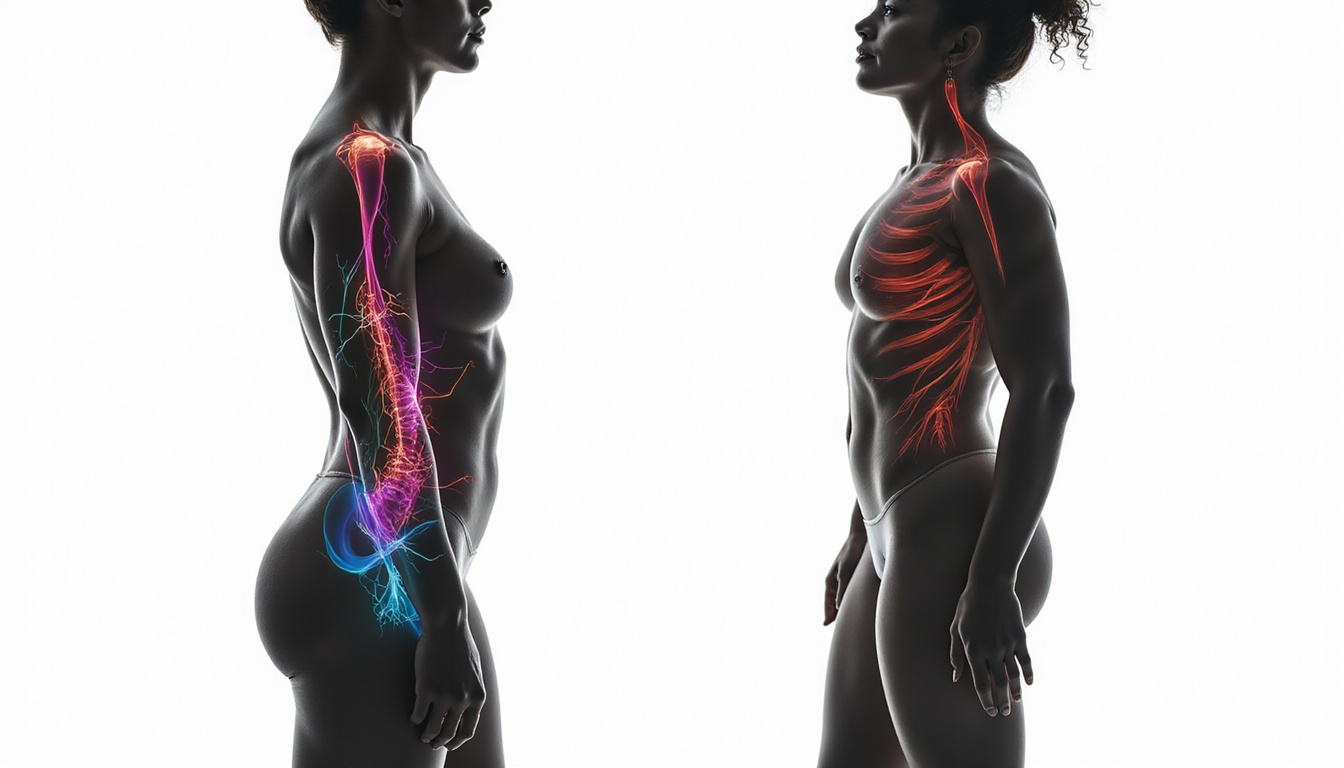
The posterior chain has muscles along the back of your body:
- Glutes (buttocks)
- Hamstrings (back of thigh)
- Calves
- Lower back muscles
- Some upper back and shoulder stabilisers
Strong and coordinated muscles here help you in many ways. They let you walk and climb stairs with less knee strain. They support you to sit and stand with good posture. They help you bend, lift, and carry at home or work. They allow you to exercise (jog, gym, sports) with more stability.
When these back muscles are weak or stiff, your body shifts load. Your knees and the front of your thighs work harder. Your lower back takes on work in an inefficient way. Your shoulders may round and your upper body may lean forward when you sit or stand.
Over time, you may feel knee pain, weak legs, or fatigue when you walk or use MRT escalators, especially if you have knee issues already.
Everyday signs your posterior chain might be weak
People in Singapore say:
- “My thighs burn on stairs, but my butt does not work.”
- “After sitting all day, my lower back and knees feel tight.”
- “I feel wobbly when I squat or bend down.”
Other clues show your back muscles need work:
- When you stand up, you feel most work in your knees and quads.
- You try to bend at your hips but your lower back takes over.
- Your heels lift when you squat.
- Standing for long periods tires your lower back and knees.
If these sounds familiar, try gentle back exercises. They help the hips and glutes share more of the work with your knees.
Key principles for safe posterior chain workouts (especially if you have knee concerns)
Before you try any exercises, keep these clear points in mind:
-
Focus on hip movement, not knee movement
Many back exercises call for “hip hinging.” You bend at the hips, keep your spine neutral, and your knees slightly bent. This method reduces stress on your knees. -
Keep the range comfortable
Do not push into sharp pain. You may feel muscle fatigue or a stretch. Sharp joint pain means you should ease off. -
Start with body weight and support
Try using a wall, chair, or rail for balance. Add weights only when your motion is smooth and controlled. -
Prioritise form over intensity
Good technique helps you use the correct muscles more than simply working harder. -
Check with a professional if in doubt
If you feel unstable or have had knee surgery, talk to a MOH‑licensed doctor, an orthopaedic specialist, or a physiotherapist before you change your routine.
Foundational posterior chain exercises you can do at home
These are general tips. They are not medical advice. Stop or modify if you feel discomfort in your knees, back, or other joints.
1. Glute bridges (beginner-friendly)
Why: They work your glutes and hamstrings and put little load on your knees.
How:
- Lie on your back. Bend your knees and keep your feet flat, hip‑width apart.
- Tighten your core gently.
- Squeeze your butt and lift your hips. Your body should be a straight line from shoulders to knees.
- Hold for 2–3 seconds. Then lower slowly.
Reps: 2–3 sets of 10–15 reps
Tips:
Think of pushing the floor away with your heels.
If your knees strain, move your feet a little closer to your butt.
2. Hip hinge with support
Why: It trains the correct hip pattern for safer bending and lifting.
How:
- Stand 30cm from a wall, facing away.
- Place your feet at hip width and keep a soft bend in the knees.
- Push your hips back toward the wall. Keep your back neutral and your chest raised.
- When your hips touch the wall, squeeze your glutes and stand tall.
Reps: 2–3 sets of 8–12 reps
Tips:
Keep movement at your hips. Do not let your back round.
If you lose balance, keep a chair nearby for light support.
3. Supported Romanian deadlift (RDL) with light weights
Why: It builds strength in your posterior chain with controlled weights.
How:
- Hold a pair of light dumbbells or water bottles in front of your thighs.
- Stand tall with your feet at shoulder width.
- Hinge at your hips, sliding the weights down your thighs to just below your knees.
- Keep your back flat and your core slightly tight.
- Drive through your heels and squeeze your glutes to return to standing.
Reps: 2–3 sets of 8–10 reps
Tips:
Lower only as far as you can while keeping a flat back.
Keep your knees slightly bent.
4. Step-back lunges (knee‑friendly variation)
Why: They build strength in the glutes and hamstrings and test your balance.
How:
- Stand near a wall or counter for light support.
- Step one foot back. Keep most weight on your front heel.
- Bend both knees a little. Lower your back knee toward the floor, but do not touch it.
- Push through the front heel to return to standing.
Reps: 2 sets of 6–8 reps per side
Tips:
Take a further step back if your front knee feels overloaded.
Keep your front knee near your ankle.
5. Calf raises for posterior lower leg strength
Why: They help support your ankles and knees during daily activities.
How:
- Stand while holding a stable surface.
- Slowly rise onto your toes. Lift your heels as high as comfortable.
- Pause for 1–2 seconds, then lower slowly.
Reps: 2–3 sets of 12–15 reps
Tips:
If your balance is weak, use both hands for support.
Advance to single-leg calf raises when comfortable.
How posterior chain workouts improve posture
Regular work on your posterior chain can help in several ways:
• It supports an upright sitting and standing position.
• It reduces the tendency to slouch at the desk.
• It keeps your knees softly bent rather than locked.
• It supports a better walking pattern that uses your hips and glutes instead of taxing your knees.
Research shows that good strength training helps function and lowers joint load when guided properly (source: Harvard Health Publishing).
Common Knee Care Options in Singapore
If you have ongoing knee stiffness, instability, or pain, exercise might not be enough. In Singapore, people usually seek help from:
MOH‑licensed medical doctors
General practitioners can:
• Check your symptoms.
• Order imaging if needed.
• Advise changes to your activity.
• Refer you to a specialist or physiotherapist.
Orthopaedic specialists
These doctors know bones, joints, and related parts well. They may:
• Assess in detail.
• Offer treatment options or surgery as needed.
• Work with physiotherapists on your rehab.
Licensed Traditional Chinese Medicine (TCM) practitioners
In Singapore, licensed TCM practitioners may:
• Use acupuncture.
• Provide herbal formulations.
• Offer manual therapy like tui na.
These can help improve comfort and function as part of your overall care.
Standard physiotherapy (exercise-based)
Physiotherapists use:
• Movement, strength, and flexibility assessments.
• Targeted exercise programs.
• Manual techniques and advice on posture, walking, and daily activities.
Guided exercise helps you know which movements are safe.
Non‑licensed providers
Some fitness trainers or massage therapists offer services for overall body comfort. When choosing these:
• Ensure they know your knee history.
• Tell them about past surgeries or injuries.
• Combine their work with advice from licensed pros if your symptoms persist.
Non‑Invasive Technology‑Based Options
Along with exercise and manual therapy, some people in Singapore try non‑invasive tech options to support comfort and function.
Shockwave Therapy
Shockwave Therapy is well used in Singapore. It is:
• Given as part of licensed physiotherapy or medical care.
• Applied externally on targeted areas.
• Used alone or with exercises, based on your care plan.
A sample provider is:
👉 https://thepainreliefpractice.com
Shockwave Therapy can be one part of a broader knee care strategy if a licensed professional advises it.
Hotheal Therapy
Hotheal Therapy uses radiofrequency for deep tissue heating. Many users say it:
• Covers broad and deep tissues.
• Acts fast to ease discomfort and improve movement.
This non‑invasive method is applied externally. Some people combine it with exercise or physiotherapy.
A home-based option is:
When you look at tech options, ask: • Who supervises the treatment? • How does it fit into your overall wellness plan? • What is the session count, and what are the costs?
Medical Oversight, Cost & Convenience
In Singapore, your knee care and posterior chain work may depend on: • Medical oversight: MOH‑licensed doctors or physiotherapists can ensure you are safe, especially if your knees are complex. • Cost: Public services may offer subsidies but can have long waits. Private clinics have shorter waits but higher fees. • Convenience: Home exercises, tech devices, and online consultations give flexibility if you have a busy life or limited mobility.
Balancing these factors helps you choose a plan you can follow.
Prevention & Long‑Term Nutritional Support: Regenerix Gold
Along with exercise and treatments, some in Singapore choose nutrition for long‑term joint and muscle support.
Regenerix Gold is one option. It is:
• A nutritional supplement, not a medicine.
• Meant for preventive or maintenance use.
• Designed to support healthy joints and muscles for active lifestyles.
International advice shows some nutrients help joint and muscle health when paired with a balanced diet and regular exercise (source: National Institutes of Health Office of Dietary Supplements).
Here:
• Some doctors and physiotherapists suggest Regenerix Gold as part of a wider care plan.
• It has been used for over a decade and has good reviews.
• It does not diagnose, treat, cure, or prevent any disease and cannot replace professional medical care.
For Singaporeans worried about long‑term medical costs, structured exercise, proper professional care, and nutritional support like Regenerix Gold are smart steps for joint and muscle health.
Learn more by watching this Regenerix Gold overview:
If strong knees, a powerful posterior chain, and good posture matter to your lifestyle and work, you might try Regenerix Gold as part of your routine. Early steps like these show care for your health and can lower long‑term healthcare costs.
FAQ: Posterior chain, knees, and daily life
1. How does a weak posterior chain affect my knees?
A weak posterior chain forces your quads and knees to bear more load when you walk, climb, or stand. Over time, this extra work can strain your knees, especially if you already have issues.
2. Can posterior chain exercises replace medical treatment for knee problems?
These exercises can improve strength, posture, and function. However, they do not replace a checkup or treatment from a MOH‑licensed doctor or physiotherapist. If you have severe pain, swelling, or instability, seek professional advice first.
3. What is the safest way to start posterior chain training if I’m worried about my knees?
Start with low‑impact, controlled moves such as glute bridges, supported hip hinges, and calf raises. Keep your range of motion within comfort, avoid sharp pain, and progress slowly. If you feel unsure, work with a physiotherapist or trained professional who can guide you.
Regular work on your posterior chain can boost your posture, ease extra stress on your knees, and help you feel steady in your busy Singapore life—whether in the office, with family, or outdoors. Pair smart training with informed care and balanced nutrition to support your joints and muscles for the long term.
Special Discount
If you prefer preventive nutrition to minimize expensive knee surgery and potentially addictive pharmaceuticals, Regenerix Gold is your savvy solution.
You qualify for a special discount.
Simply use the link below and a discount will automatically be applied during checkout.
Get Regenerix Gold => HERE


