

Prenatal yoga can help you during pregnancy. It supports your changing body, eases muscle aches, and helps you feel close to your baby and your breath. If you love leggings, value your mat time, and note even small shifts in your joints and fascia, prenatal yoga is a friendly guide for you.
Below is a practical, people-first guide for U.S.-based yoga practitioners who want to practice safely and mindfully during pregnancy—while listening to twinges in your hips, sacrum, or wrists.
How Prenatal Yoga Differs from Your Usual Vinyasa
If you do strong vinyasa, Ashtanga, or power flows, prenatal yoga is not just a gentler form of your practice. It creates a new link between your body, breath, and your limits.
Key shifts you notice:
-
From depth to spaciousness
Instead of chasing a deep hanumanasana, you seek stable, supported shapes. You use props and micro-adjustments to keep connections tight. -
From heating to nurturing
Instead of long plank holds that heat your body, you focus on circulation and lymphatic support. You ease tight hips, IT bands, and upper back. -
From performance to presence
Your goal is not to hit a flying crow, but to keep your joints supported, your breath smooth, and create space for baby.
Your body works with shifting ligaments (hello, relaxin), posture changes, and a growing belly. These changes can stress your muscles if you do not adjust carefully.
First Trimester: Establishing a Safe Foundation
At first, you still feel much like yourself on the mat. Now is the time to reset your practice. Build habits that serve you later.
Key considerations
-
Honor fatigue
When you are tired, choose 20–30 minutes of slow or restorative flow instead of 90 minutes of heat. -
Dial back deep work
Make hip openers, backbends, and extreme stretches gentler. Your tissues grow more mobile now. -
Protect your core
Skip aggressive abdominal work. Instead of full boat, sit-ups, or leg lifts, build gentle, functional stability.
Gentle pose ideas (trimester one)
- Cat–Cow with wide knees for easier sacral movement
- Low lunge with the back knee down, hands on blocks, and the front knee stacked
- Supported bridge using a block placed low
- Side-lying savasana with a pillow between your knees
These poses help your spine stay mobile and your hips stay comfortable. They keep stresses near each word pair short.
Second Trimester: Space-Making and Joint-Friendly Strength
In the second trimester, you usually feel better. Energy returns and your bump becomes more visible. Your body shifts, and you feel this change on the mat.
Alignment tips for the yoga practitioner
-
Feet and knees
In lunges and squats, keep your knees over your toes. This link avoids strain on knees and ankles. -
Pelvis position
Aim for a neutral pelvis. Do not constantly tuck or drop into swayback. -
Shoulder and neck care
As your center of gravity moves forward, your chest tightens. Open your pecs and strengthen your mid-back.
Gentle second-trimester pose sequence
You can include these poses in a simple prenatal yoga flow:
-
Supported Goddess Pose (Utkata Konasana)
- Stand near a wall or chair for extra support.
- On exhale, micro-engage your inner thighs and pelvic floor; on inhale, allow them to relax.
- This pose boosts hip circulation without stressing your sacroiliac joints.
-
Wide-Legged Forward Fold with Chair
- Place your hands on a chair or blocks and keep your spine long.
- Bend your knees slightly. This eases low back tightness and respects your belly.
-
Supported Warrior II
- Shorten your stance for a grounded connection.
- Let your hands rest on your hips or on a chair.
- Focus on grounding through the outer edges of your feet to help your knees and ankles.
-
Side-Lying Hip Release
- Lie on your side with a bolster between your knees.
- Gently externally rotate your top leg in a small range, like a clamshell.
- This pose works on hip and glute tension without aggressive stretching.
Third Trimester: Labor Prep, Pelvic Intelligence, and Rest
Now your practice shifts. It is less about shaping up and more about staying comfortable, mobile, and calm as you near labor.
Priorities now
-
Support circulation
Keep your movements gentle. This cuts swelling in your feet and legs and eases stiffness in your hips and lower back. -
Pelvic floor coordination
Learn to contract and relax your pelvic floor. This coordination is a vital link. -
Labor-specific positions
Practice positions that you may use during labor. Think of supported squats or positions on hands and knees.
Third-trimester-friendly postures
-
Hands-and-Knees Rocking
Rocking soothes your lower back and lets the baby find a comfortable spot. -
Supported Malasana (Squat)
Gather props like stacked blocks or a low bolster. With wide feet and supported heels, relax into the squat without forcing depth. -
Side-Lying Restorative
Use many props: a bolster for the top leg and pillows under your belly and head. This pose helps your nervous system slow down.
Avoid long holds in supine positions or any posture that makes you feel breathless, compressed, or dizzy.
Musculoskeletal Comfort: Working with Your Body, Not Against It
You notice small shifts in your joints and fascia. Knee twinges in lunges, wrist fatigue in cat–cow, or sacral tightness in gentle backbends become clear signals. In prenatal yoga, you listen early and adjust quickly.
Common areas of discomfort and supportive tweaks
-
Hips and Sacrum
Avoid heavy, one-sided poses held long. Use extra support under the front thigh in lunges. Choose balanced shapes (like a bridge or a supported supine cobbler) when your sacroiliac region is sensitive. -
Knees
Always pad your knees on the mat. Skip deep knee bends if they cause discomfort. Replace hero pose or child’s pose with side-lying rest or a supported squat. -
Wrists and Shoulders
Reduce time with your hands flat on the mat. Use your fists, forearms, or even a chair. Avoid chaturanga and full plank if they stress you.
These steps keep joints and tissues safe. In each short phrase, words join closely to build a clear meaning.
Breathwork: Building a Calm, Reliable Anchor for Labor
Your breath links tightly to your practice. It is also a key support during labor. Instead of complex pranayama, use simple techniques that relax and focus you.
Gentle breath practices for pregnancy
-
Three-Part Breath (Dirga)
Inhale to fill your belly, then your ribs, then your upper chest; exhale to release them in reverse. Think of it as linking breath parts with softness and space. -
Extended Exhale
Breathe in naturally and exhale a bit longer (for example, 4 counts in, 6 counts out). This rhythm calms your nervous system and grounds you. -
Low-Sound Exhale
Use a gentle sound, like “haaa” or “mmmm” on the exhale. This vocal release helps you relax instead of bracing yourself.
Avoid forceful breaths, long retentions, or any method that causes pressure or lightheadedness.
Labor Prep: Functional Shapes You Can Practice Now
Think of labor prep as linking positions of strength and surrender. These positions help you stay grounded and ready for labor.
Try rotating through these poses:
-
Hands and knees with hip circles
Circle your hips while on hands and knees to boost pelvic mobility and ease low back tightness. -
Supported forward leaning
Lean over a chair, birth ball, or stacks of pillows. Your upper body rests while your pelvis hangs heavy. -
Side-lying positions with props
These positions mimic rest and help you learn full relaxation between contractions. -
Supported malasana or wide-knee kneeling
Only go as deep as your joints can hold. Keep the shape stable and spacious.
Always check with your prenatal care provider before trying new poses. Modify or stop anything that feels off.
Safety Guidelines for Prenatal Yoga Practitioners in America
Here are points to keep your practice safe and supportive during pregnancy:
- Get clear approval from your prenatal care provider.
- Avoid hot yoga and overheated spaces.
- Do not use strong twists that compress your belly. Instead, twist from the upper back with ample props.
- Approach backbends gently. Favor a heart-opening stretch over deep lumbar extension.
- Roll to your side before getting up from lying down. This small change avoids sudden blood pressure shifts.
- Drink water before and after practice. Take breaks as soon as you feel you need them.
The American College of Obstetricians and Gynecologists supports modified physical activity, including yoga, when there are no risks involved (source: ACOG on Physical Activity and Exercise During Pregnancy).
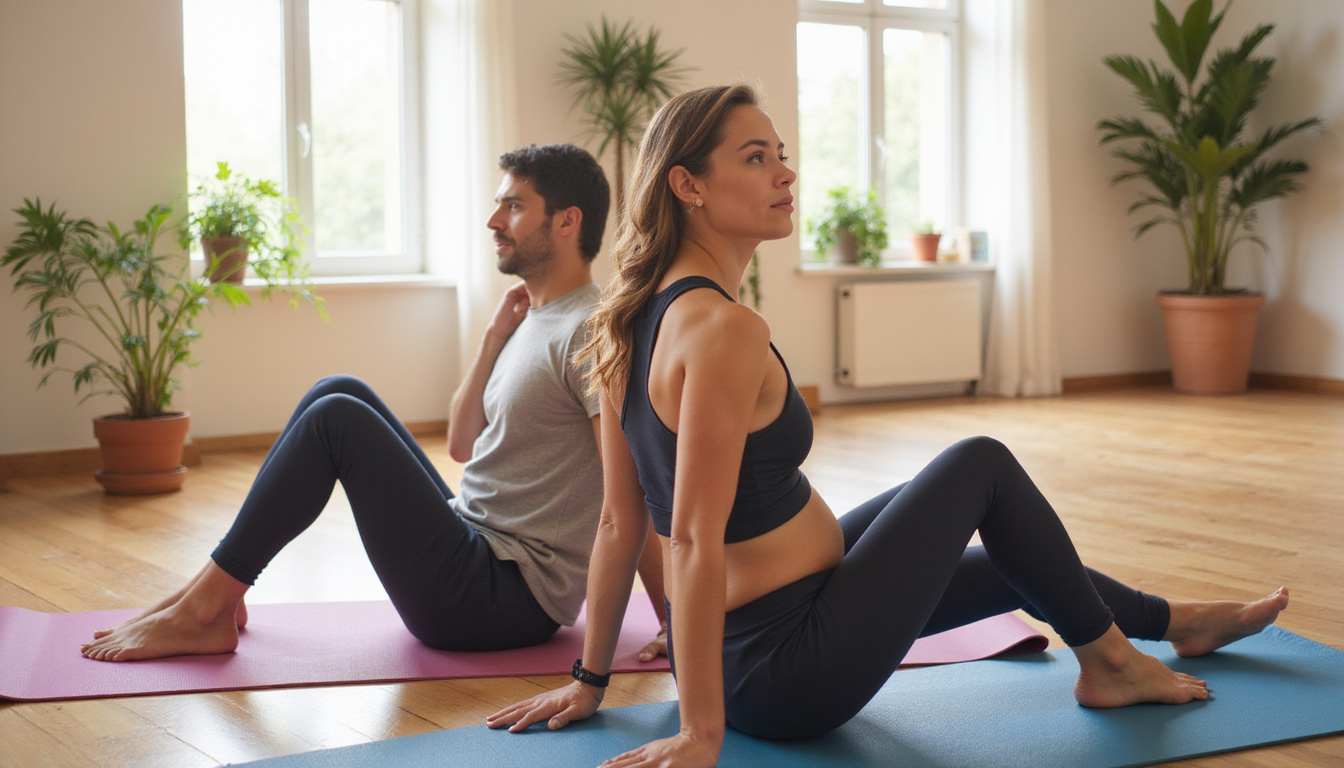
Remember, this guide is educational and not a substitute for personal medical advice.
Simple Home Prenatal Yoga Flow (15–20 Minutes)
Try this gentle sequence on days when you need simple movement and care for your joints.
-
Seated Arrival (2–3 minutes)
Sit on a bolster or folded blanket with legs apart.
Do 10–15 cycles of three-part breath. -
Cat–Cow with Wide Knees (3 minutes)
Place your hands under your shoulders.
Keep your knees wide and padded.
Move slowly, letting your tailbone lead the shift. -
Supported Low Lunge (3 minutes)
Step your front foot between blocks.
Pad your back knee and keep your torso upright.
Then switch sides. -
Chair-Supported Forward Fold (3 minutes)
Rest your hands or forearms on a chair’s seat.
Keep a slight bend in your knees and a broad back. -
Side-Lying Restorative (5–8 minutes)
Lie on your side with a bolster between your knees and a pillow for your head.
Practice an extended exhale or gentle, low-sound breathing.
Adapt the flow for your trimester and your body today.
Supporting Your Joints and Muscles Beyond the Mat
As your body changes, you may notice shifts in joint alignment and overall comfort. Many practitioners look beyond asana to care for joint health. They combine mindful movement, rest, balanced food, and—when needed—dietary supplements.
In the U.S., supplements count as foods. They are not meant to diagnose, treat, cure, or prevent disease. When thinking about any product during pregnancy:
- Consult your healthcare provider first.
- Read labels closely and follow the directions.
- Choose brands known for quality and clear information.
This mindful approach—combining prenatal yoga, daily body awareness, and well-chosen support—helps you move through pregnancy with ease.
FAQ: Common Questions About Prenatal Yoga
Q1: Is prenatal yoga safe if I already do strong vinyasa?
A: If your pregnancy is uncomplicated and your provider agrees, you can continue. Shift from intense flows and deep stretches to slow, joint-supportive prenatal yoga with breath and props.
Q2: How often should I do prenatal yoga for joint comfort?
A: Many practitioners find 3–5 shorter sessions each week (even 10–20 minutes) work better than a long, occasional class. Constant practice boosts circulation, mobility, and calms the nerves without overtaxing energy.
Q3: Can prenatal yoga prepare me physically for labor?
A: Yes. Prenatal yoga can work on mobility, breath awareness, and useful positions for labor. It might not control labor but helps you feel ready by linking functional postures with mindful breathing.
Regenerix Gold: For Yoga Practitioners Who Want to Move Smart, Not Just Hard
You do more than stretch. You build a lifestyle that lets you move with grace now and in the future. You keep an eye on alignment, core stability, and breath. The same care can extend to supporting your body from within.
Regenerix Gold is a dietary supplement made for those who care about healthy joints and muscles. It is useful for anyone who practices asana, walks, or moves mindfully. Though it does not diagnose or treat disease, many practitioners add it to their wellness routine. It supports staying active, agile, and strong.
In a world where healthcare can be costly and taking time off work adds stress, investing in self-care can help both physically and financially. If you plan ahead and care about long-term joint and muscle health, discuss Regenerix Gold with your healthcare provider. It is an option for those who see themselves as proactive, smart caretakers of their musculoskeletal health and future vitality.
Regenerix Gold
If you are ready to treat your practice—and your body—with respect, talk with your prenatal or general healthcare provider about if Regenerix Gold fits your needs.
Health Note
Always consult a licensed medical doctor for your health issues.
Special Discount
If you prefer preventive nutrition to minimize expensive knee surgery and potentially addictive pharmaceuticals, Regenerix Gold is your savvy solution.
You qualify for a special discount.
Simply use the link below and a discount will automatically be applied during checkout.
Get Regenerix Gold => HERE


