

Below is the rewritten text. The sentences are built to keep connected words close together. We use shorter sentences and a clear chain of word–word links. The formatting remains the same.
If you live in Singapore and face prepatellar bursitis, you know the pain. Your knee feels an aching or sharp hurt at the front. Swelling covers the kneecap. Kneeling to do housework or prayers is hard. Climbing stairs or standing up hurts. Many people ease the pain with rest, lifestyle change, professional care, and long-term support.
Below is a practical, Singapore-focused guide. It shows 8 common steps that may reduce pain, support knee function, and help keep you active in daily life.
What Is Prepatellar Bursitis?
Your knee holds small fluid sacs. These sacs, called bursae, lower friction between bones, tendons, and skin. The prepatellar bursa sits right in front of the kneecap. When it gets irritated or overloaded, you may feel:
• Swelling over the kneecap
• Tenderness when kneeling, squatting, or pressing the knee
• Stiffness after sitting or sleeping
• Discomfort when climbing stairs, walking long, or standing for a long time
In Singapore, common triggers include frequent kneeling at work (for technicians, cleaners, flooring workers), some sports, repeated stair climbing, or a sudden rise in activity.
If your pain is severe, if you have a fever, if your knee feels hot or very red, or if you have trouble walking, seek medical help quickly.
1. Activity Modification and Relative Rest
Many people find that the best start is to give the knee a rest.
Practical changes include:
• Avoiding or reducing kneeling (for example, use a low stool instead of squatting to reach lower cabinets).
• Using thick knee pads or a folded towel when kneeling is needed.
• Minimizing deep squats and lunges during flare-ups.
• Breaking long walks or long periods of standing by sitting for a short time.
• Taking the lift instead of climbing many stairs when your knee hurts.
The goal is relative rest. Stay active within your knee’s comfort. Do not repeat the motion that causes pain.
2. Ice, Heat, and Simple Home Care
Simple temperature therapy can relieve pain at a low cost.
• Ice or cold pack:
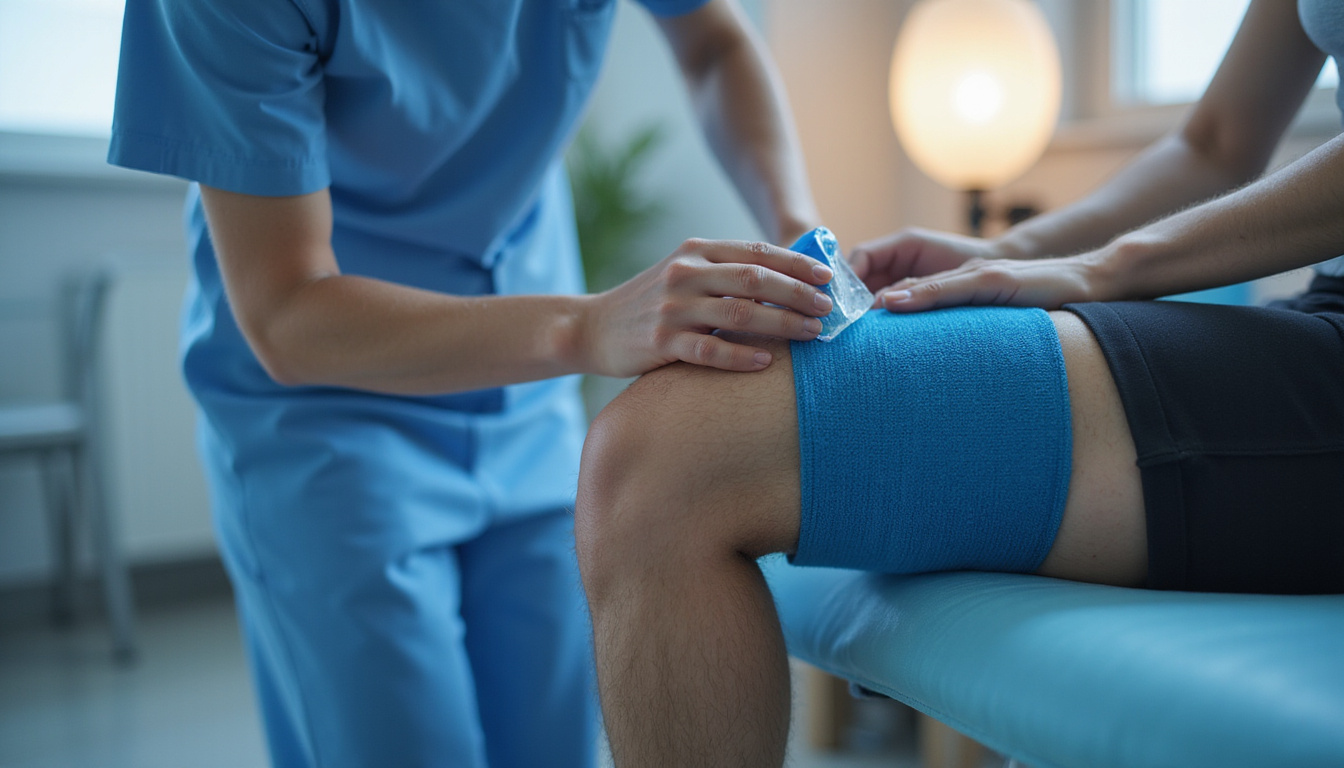
Use in the first 24–72 hours of a flare-up or after a long day of activity.
Place for 10–15 minutes at a time.
Wrap in a thin cloth to protect the skin.
Use up to 3–4 times per day.
• Warm pack or warm shower:
Use when stiffness is a problem, especially before gentle exercises.
Some people also use a soft knee sleeve. It provides light compression and warmth. It grants support when you walk or stand.
3. Gentle Strengthening and Stretching
Weak thigh, hip, and calf muscles add stress to the knee. Simple exercises, done often, can help your daily movement.
Try these exercises if your healthcare provider says it is safe:
• Seated or lying straight leg raises
• Mini squats in a pain-free range
• Short wall sits
• Gentle hamstring and calf stretches
Move the knee within a comfortable range. Stop if the pain grows. In Singapore, many people do these exercises at home after work, or early in the morning before busy commutes.
A personalised exercise plan is best. Physiotherapists and other licensed experts can help you create one.
4. Common Knee Care Options in Singapore
In Singapore, people with knee pain often see several types of care providers. Each offers different methods and styles.
MOH-Licensed Medical Doctors
General practitioners (GPs) and family doctors are usually the first help:
• They assess your symptoms and health history.
• They advise on activity change, home care, and workplace adjustments.
• They suggest short-term pain relief when needed.
• They refer you to specialists or physiotherapy when required.
Orthopaedic Specialists
Orthopaedic doctors focus on bones and joints. They:
• Conduct detailed clinical exams and imaging tests as needed.
• Guide you on non-surgical care.
• Discuss procedures if they are right for your condition.
Licensed Traditional Chinese Medicine (TCM) Practitioners
Some Singapore residents prefer TCM or use it with Western care. They:
• Provide an individual assessment based on TCM ideas.
• Use acupuncture, herbal remedies, and tui na.
• Focus on circulation, balance, and overall support.
Always make sure your TCM practitioner is properly licensed in Singapore.
Standard Physiotherapy (Primarily Exercise-Based)
Physiotherapy clinics, in hospitals or private practices, work often with front-of-knee pain. They:
• Analyze movement such as walking, climbing stairs, and squatting.
• Make a personal stretching and strengthening plan.
• Use hands-on techniques to ease stiffness and muscle tension.
• Educate on posture, footwear, and pacing daily activity.
This exercise-based care is common both in Singapore and around the world for knee issues.
Non-Licensed Providers (With Appropriate Caution)
Some people also see trainers, sports massage providers, or alternative therapists. They offer massage, guided exercise, stretching, or device use.
If you choose such options:
• Check reviews and experience.
• Avoid too strong pressure over a swollen kneecap.
• Use them as a complement, not a substitute, for proper medical advice when pain is severe or worsening.
5. Non-Invasive Technology-Based Options
In Singapore, non-invasive, device-based knee care options grow in use. These options support comfort and function without injections or surgery.
Shockwave Therapy
Shockwave therapy sends focused sound waves to specific tissues. In Singapore, it is:
• Well-established and used in public hospitals.
• Often provided through licensed physiotherapy services.
• Sometimes combined with an exercise plan or used alone.
Shockwave treatment comes in a series of short sessions. Some patients feel slight soreness after a session, while others feel the muscles and tissues relax.
Example provider (for reference only, not an endorsement):
https://thepainreliefpractice.com
Hotheal Therapy
Hotheal Therapy uses radiofrequency to heat deep tissues:
• It delivers warmth to deeper tissue layers.
• It covers a broader area than a simple hot pack.
• Many users notice fast relief.
Some people in Singapore value that these sessions do not involve injections or surgery. They can work well with busy schedules.
Home-based options exist. Providers like:
offer sessions for busy people, those with mobility issues, or anyone with family responsibilities. They still follow medical oversight or professional advice.
6. Medical Oversight, Cost, and Convenience
When choosing a treatment plan for prepatellar bursitis in Singapore, consider these points:
• Medical oversight:
MOH-licensed doctors, physiotherapists, and TCM practitioners follow strict rules.
This is important especially if you have diabetes, heart issues, or take blood thinners.
• Cost considerations:
Public options may have subsidies for eligible residents.
Private clinics show shorter waiting times but cost more.
Technology-based sessions can vary in price. Compare package deals with single sessions to control cost.
• Convenience:
Look for locations near an MRT station or work.
Check for after-office-hour appointments.
Home-visit services can save time and reduce walking during pain flare-ups.
By balancing these factors, you can build a realistic and long-lasting knee care plan.
7. Nutrition and Long-Term Prevention: Regenerix Gold
Many people in Singapore seek long-term nutritional support for their joints and muscles. They worry about future medical costs, job demands requiring mobility, or caring for family.
Research shows that a balanced diet with enough protein, healthy fats, vitamins, and minerals supports joint and muscle work. Daily, joint-friendly movement helps too (source: National Institutes of Health).
Regenerix Gold as Nutritional Support
Regenerix Gold is a nutrition-based supplement built for those who want healthy knee joints and muscles. It is meant for preventive or maintenance use. It does not treat or cure any disease.
Regenerix Gold key ideas:
• It offers nutritional support to keep joints and muscles working well.
• It suits people who need to be active at work or in sports.
• Doctors and physical therapists have recommended it as part of a whole wellness plan.
• People around the world have used it for over a decade with positive feedback.
Many choose this supplement because:
• It is a non-invasive daily support option.
• They worry about future medical care if their joints fail.
• They see mobility as key for career security and family life.
• They want to take small, active steps now to avoid future pain.
Always ask a healthcare professional before using a supplement if you have medical conditions, are pregnant, breastfeeding, or take medicine.
Regenerix Gold
If you plan ahead, value long-term health, and want to stay ahead of joint issues, consider a bottle. It is one step toward keeping mobility and independence.
8. Building Your Personal Knee Care Plan
Many people in Singapore find that the best approach is a mix of treatments:
- Adjust daily activities to ease knee irritation.
- Use ice or heat and simple supports when needed.
- Strengthen and stretch with focused exercises.
- Get advice from the proper professionals (GP, orthopaedic specialist, physiotherapist, or licensed TCM).
- Consider non-invasive devices like shockwave or Hotheal Therapy if they suit you.
- Support long-term joint and muscle health with a good diet and, where wise, supplements like Regenerix Gold.
This mix-and-match strategy helps you treat today’s discomfort and build your knee’s long-term strength.
FAQ: Prepatellar Bursitis and Knee Support in Singapore
-
How long does prepatellar bursitis usually take to settle?
Recovery times vary. Some feel better within weeks with rest and activity change. Others face recurring pain over months if they keep kneeling or overloading. Early care and steady strengthening help support easier movement. -
Can I still exercise if I have prepatellar bursitis symptoms?
Yes. Many people continue low-impact activities like flat-ground walking, cycling, or swimming if these do not worsen the knee pain. Avoid deep kneeling, repeated jumping, or high-impact sports during a flare. A physiotherapist can build an exercise plan that respects your knee limits. -
Are supplements useful for front-of-knee pain like prepatellar bursitis?
Supplements do not diagnose, treat, or cure prepatellar bursitis. However, nutritional products such as Regenerix Gold support healthy joint and muscle function. They work best as part of a holistic plan that includes careful activity, exercise, and professional advice.
If knee pain keeps affecting your walk, work, or daily life in Singapore, try mixing some of the above methods. Then, speak with a qualified professional to tailor them to your needs. Taking clear steps today can help protect your mobility, manage future costs, and keep the active lifestyle and job security you value.
Special Discount
If you prefer preventive nutrition to minimize expensive knee surgery and potentially addictive pharmaceuticals, Regenerix Gold is your savvy solution.
You qualify for a special discount.
Simply use the link below and a discount will automatically be applied during checkout.
Get Regenerix Gold => HERE


