

Long shifts stress a chef’s body. Shifts on the line include long hours, double services, constant prep, and endless ticket times. Add discomfort in your back, knee, hip, shoulder, or hand, and mere mise feels punishing. Seated cooking helps you save your shift. Seated work does not make you soft or slow. It makes you smarter, safer, and more efficient on the line.
This guide gives you real, practical seated cooking tips for American chefs. It helps those who deal with musculoskeletal signs, symptoms, or discomfort. You keep your high standards while you save your joints and muscles.
Why seated cooking belongs in a pro kitchen
Many American kitchens treat non‑stop standing as a badge of honor. Yet the truth is clear:
- You stand 8–14 hours a day.
- You lift, bend, twist, and reach continuously.
- You perform tens of thousands of repetitive motions every week.
These repeated motions stress your joints and muscles. Seated cooking during prep or slow service times can help you:
- Reduce strain on knees, ankles, hips, and lower back
- Minimize stress on shoulders, elbows, and wrists
- Maintain sharp knife skills for longer
- Build a longer career on the line
You are not getting old. You are using your body smarter in the kitchen.
Station setup: build a seated cooking “command center”
Seated cooking works only if your station is set up correctly. You build a cockpit for work, not a picnic spot.
1. Choose the right stool or chef’s chair
Do not use random barstools or milk crates. Look for:
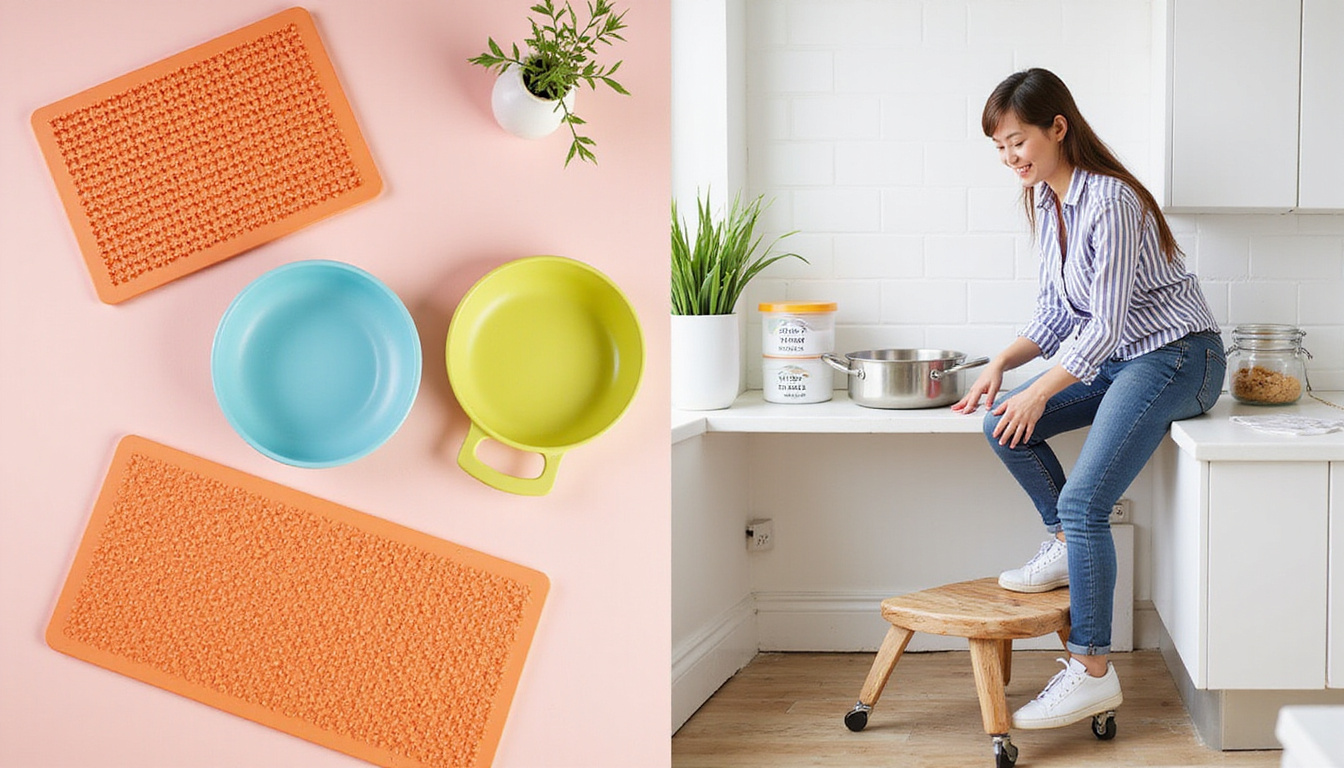
- Height adjustability: Make your forearms stay parallel to the cutting surface.
- Back support: Even low, firm support helps your core and lower spine.
- Stable base: Non‑slip feet or locking casters keep you in place.
- Small footprint: Tuck the stool under a table and stay out of the pass or expo lane.
If possible, give your main prep table a dedicated “chef’s stool.”
2. Dial in table and cutting board height
For seated cooking, remember this rule:
Your cutting surface stays just below elbow height when you relax your shoulders.
If the table is too low:
- Stack a heavy, stable board on risers or another board.
- Use a non‑slip mat so nothing shifts during a hard chiffonade.
If the table is too high:
- Raise your chair.
- Keep your feet planted or supported on a footrest box or low crate so that your legs do not dangle.
3. Keep your mise within a “no‑twist” zone
When you sit, you lose safe twisting and pivoting. Set up your station so you do not have to twist.
Place the items as follows:
- Ingredients: Place them within arm’s reach, forming a semicircle in front of you.
- Knives and tools: Put them at the top edge of the board. Do not reach across hot pans.
- Trash and compost: Add a low, rolling bin or bus tub next to your dominant side.
- Hotel pans / deli cups: Keep them directly in front or slightly to the side, not far in a corner.
Visualize an invisible arc from one shoulder to the other. Keep most of your work inside this arc.
What tasks are best for seated cooking?
You do not need to sit for every task. Use seated cooking for high‑repetition tasks that stress your joints.
Ideal tasks for sitting include:
- Bulk knife work: brunoise, julienne, chiffonade, fine dice
- Trimming proteins: chicken breakdown, beef trimming, fish deboning
- Cleaning and prepping vegetables: beans, artichokes, asparagus, herbs
- Portioning proteins, doughs, and pastry components
- En papillote and roulades: any fussy handwork
- Delicate garnishes: microgreens, citrus segments, fine plating elements
- Pastry work: piping, glazing, and intricate decoration away from hot decks
Stand for these tasks instead:
- Heavy lifting or carrying
- Deep pot work on the range or tilt skillet
- Moving sheet pans in and out of hot ovens
- Expo work during peak service
Think of seated cooking as your “precision mode” instead of your only mode.
Body mechanics: seated cooking form that protects your joints
You handle knife angles well. Now focus on your body angles.
Neutral spine and shoulder position
When you sit:
- Sit on the front half of the stool with both feet planted.
- Keep your chest open. Lower your shoulders and pull them slightly back.
- Use your hips to hinge instead of your upper back.
- Bring the work to you. Raise the board if you lean too far forward.
Elbows, wrists, and fingers
For cutting and repeated handwork:
- Keep your elbows close to your sides.
- Hold your wrists in a neutral position.
- Use your whole arm for long cuts; do not saw with your wrist.
- Relax your grip between cuts. Tight gripping strains your forearms.
Foot placement and leg support
Even when sitting, mind your lower body mechanics:
- Keep both feet flat or on a stable footrest.
- Do not cross your legs for long periods; this twists your pelvis and lower spine.
- Shift your weight every so often to prevent pressure points.
Taking a few seconds for micro‑adjustments every 15–20 minutes saves you hours of discomfort later.
Tools and gear that make seated cooking more efficient
Choose the right tools to support your body. This is not an indulgence but a professional need.
- Lighter, well‑balanced chef’s knife: A sharp, balanced 8–10 inch knife reduces strain.
- Grippy, dense cutting board: A damp cloth or anti‑slip mat underneath keeps it rock‑solid.
- Benches and speed racks on wheels: These bring heavy cambros and hotel pans to you.
- Portion scoops and mandolines: They cut down the number of repetitive cuts.
- Squeeze bottles and ladles with ergonomic grips: They help with repetitive sauce work or dressing salads.
OSHA supports ergonomic design to reduce work‑related musculoskeletal stress in foodservice (see OSHA Food Service Guidelines).
Pacing your shift: when to use seated cooking
You know your tickets and covers. Build seated blocks into your day:
Early prep
In morning mise, use 30–60 minute chunks for seated tasks:
- Pick herbs
- Prepare alliums and aromatics
- Do long vegetable prep (roots, brassicas, nightshades)
Between services
During a late lunch lull or pre‑dinner downtime, use seated cooking for:
- Garnish prep
- Cold station items
- Pastry finishing work
These periods let you sit and still keep your momentum.
Late night breakdown
If your kitchen flow allows, sit for:
- Labeling and dating
- Portioning for the next day
- Packaging and wrapping
You still work but you do not tax your already tired joints and muscles.
Simple micro‑breaks that keep you going
Even when you use seated cooking, long hours strain your body. Micro‑breaks help keep your body moving.
Every 45–60 minutes, if you can, do the following:
- Stand if you have been sitting; sit if you have been standing.
- Roll your shoulders forward and back 5–10 times.
- Open your hands into a fist 10 times, then shake them gently.
- Tilt your head from side to side. Keep your shoulders relaxed.
- Flex and point your ankles if you have been on your feet all day.
These small resets protect the person running the line without slowing the work.
How nutrition and supplementation fit into a chef’s routine
You understand mise en place, timing, and balance for your dishes. Your body needs the same balance.
For joint and muscle care, do the following:
- Stay hydrated. Remember that coffee and energy drinks do not count.
- Eat real food during service. Skip fries and scraps.
- Prioritize proteins, healthy fats, and a variety of micronutrients.
Some chefs add dietary supplements to support joint and muscle health. In the United States, supplements support a healthy structure and function. They do not diagnose, treat, cure, or prevent any disease. Always check labels, follow directions, and speak with a healthcare professional if you have concerns or take medications.
Regenerix Gold: a smart addition for chefs who push their bodies
Each day on the line is a physical grind. You already work smarter with seated cooking, hydration, and ergonomics. The next step is targeted nutritional support for your joints and muscles.
Regenerix Gold is a dietary supplement made for adults who want to support healthy joints and muscles. It helps you perform at a high level, whether on the line or in the office.
In line with FDA guidelines:
- Regenerix Gold does not diagnose, treat, cure, or prevent any disease.
- It supports normal, healthy joint and muscle function as part of an overall wellness routine.
- Chefs should discuss its use with a healthcare professional if they have concerns, are pregnant or nursing, or take other medications.
For American chefs who stand long hours, pull doubles, and now add seated cooking to their routine, Regenerix Gold fits into a broader strategy. This strategy uses smarter body mechanics, better pacing, and nutrition that respects the hard work you put in.
Quick checklist: implementing seated cooking in your kitchen
Use this checklist to start right away:
- Claim a stool or chair that is adjustable and stable.
- Test your board height while seated; adjust with risers or mats.
- Map out a seated mise zone within a comfortable reach arc.
- Assign tasks that suit seated work, such as bulk knife work, trimming, garnish, or portioning.
- Schedule seated blocks during morning prep and between services.
- Add micro‑breaks for your neck, shoulders, hands, and ankles.
- Tell your team so they respect your seated space and workflow.
- Review your nutrition and supplements, and consider supports like Regenerix Gold (after talking with a healthcare professional).
FAQ: seated cooking and kitchen performance
Q1: Is seated cooking practical in a tiny American restaurant kitchen?
Yes. Even in small galley kitchens, one dedicated seated prep spot works well. Use a narrow, sturdy table against a wall, a slim adjustable stool that tucks neatly under it, and rolling racks to move items. Keep the busy hot line standing and reserve the seated zone for focused prep or pastry work.
Q2: Does seated cooking slow down mise en place?
If your station is set up well, seated cooking often speeds up repetitive prep. You stay more stable, your arms have support, and you maintain consistent quality in your cuts. Everything stays close at hand, and you do not twist excessively to fetch items.
Q3: How does seated cooking help chefs with joint or muscle discomfort?
Seated cooking reduces the continuous load on knees, hips, feet, and lower back. By alternating standing and sitting and using proper body mechanics while seated, you share the workload more evenly. When combined with good hydration, smart nutrition, and, if needed, joint support supplements (after consultation with a healthcare professional), seated cooking is a practical way to keep a long, strong career in the kitchen.
A closing word for chefs who take their craft—and their bodies—seriously
You have paid your dues on the line. You know the burn of service, the aches after 14‑hour days, and the pride of perfect menus. Now, smart chefs do not try to suffer more. They work sharper and last longer.
Seated cooking is not a sign of weakness. It is a professional upgrade. It shows you value efficiency, proper ergonomics, and long‑term performance. Pair seated cooking with smart nutrition and the right supplementation. You are not just surviving service—you are building a career and a life that runs at an optimal level.
Consider adding Regenerix Gold to your routine as a joint and muscle support supplement along with your new seated cooking strategies. It is a choice for chefs who value their craft, their time, and long‑term health.
Regenerix Gold
Health Note
Always consult a licensed medical doctor for your health issues.
Special Discount
If you prefer preventive nutrition to minimize expensive knee surgery and potentially addictive pharmaceuticals, Regenerix Gold is your savvy solution.
You qualify for a special discount.
Simply use the link below and a discount will automatically be applied during checkout.
Get Regenerix Gold => HERE


