

For many people in Singapore, descending stairs makes the knee "complain."
When you go down MRT station steps, overhead bridges, HDB stairwells, or office fire stairs, your knee feels sharp pain, wobbly, or you fear missing a step.
This feeling can make you skip stairs.
The good news is that small changes in your descent can ease knee stress and help you feel steadier and safer.
Below is a Singapore-focused, practical guide to going down stairs with less pain and less risk of falling.
It also offers options for help if your knees already bother you.
Why stair descent stresses the knee more than going up
Many people find that going down stairs hurts more than climbing up.
The reasons make sense:
- Your body moves downward with gravity.
- Your front leg must quickly control your weight on the next step.
- The kneecap and its tissues feel higher forces than during level walking.
If your knee feels stiff, weak, or loose, going down stairs may hurt:
- Pain can come from around or behind the kneecap.
- The knee might feel unstable or as if it could give way.
- You may feel tired after long hours of standing or walking.
Improving your descent spreads the effort among your hips, knees, and ankles instead of overworking the front of the knee.
Basic stair descent technique: safe, small changes that help
You do not need special equipment to start.
Try these core ideas.
1. Use the railing — it’s not “cheating”
Many Singaporeans feel shy about holding the handrail, especially if they are young or seem healthy.
Still, using the rail:
- Lowers the load on your knees.
- Improves balance.
- Gives you help if your knee hurts suddenly.
Tip:
Hold the rail with at least one hand when you:
- Carry groceries down the stairs.
- Feel tired after a long day.
- Face wet or poorly lit stairs.
2. Turn your body slightly sideways
Facing straight ahead puts pressure directly on the kneecap.
Turning your body slightly sideways lets your stronger or less painful leg lead. This change:
- Lets your hips help control the descent.
- Reduces pressure on the knee front.
- Helps control your speed better.
Older Singaporeans often use this sideways method at HDB stairs.
It is a smart adjustment.
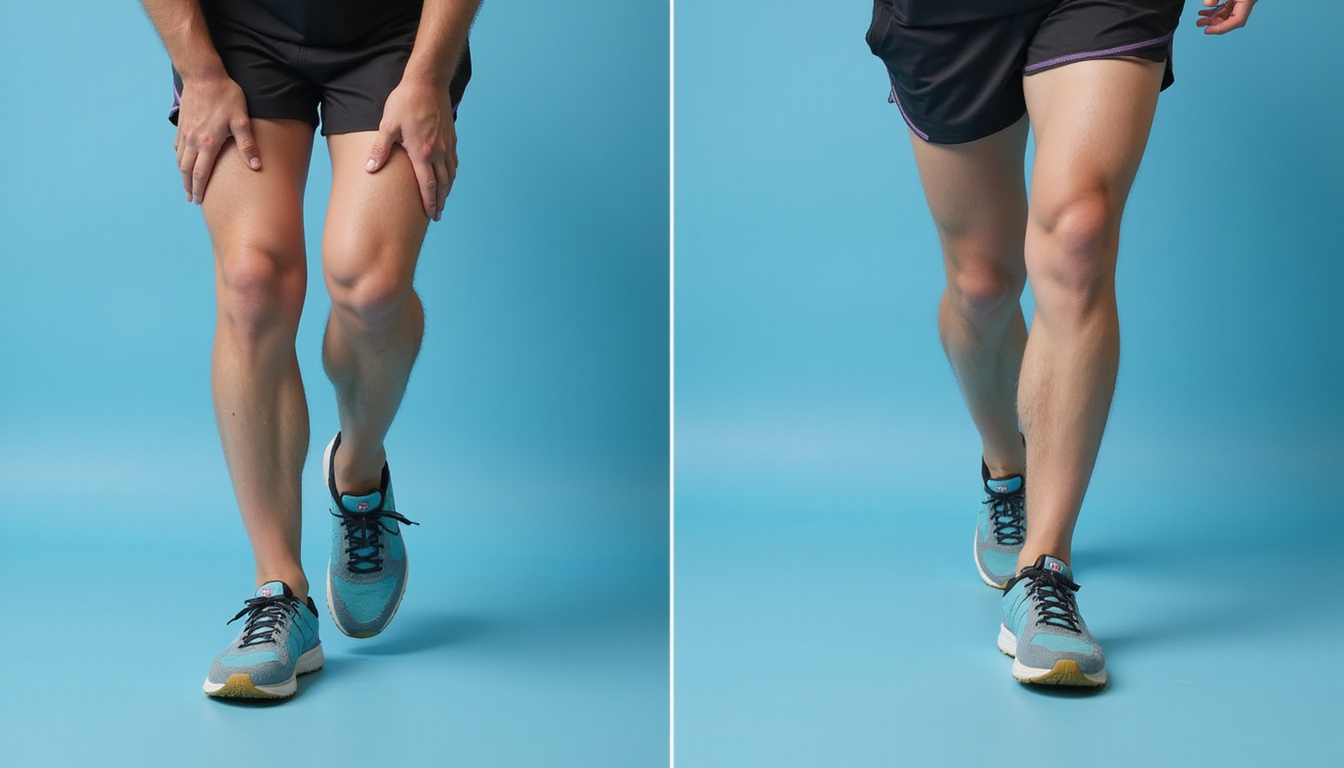
3. Step pattern: “down with the bad” if one knee is worse
If one knee is more painful or weak, try this simple method:
- Step down first with your weaker or more painful leg ("down with the bad").
- Then move your stronger leg to the same step.
This method lowers the demand on the painful knee.
It takes more time than alternating steps but feels safer when your knee acts up.
Detailed technique: how to place your foot and control your body
1. Foot placement on the step
Place your whole foot on each step whenever you can. Do not rely on just your toes.
Keep the foot pointed forward or slightly turned out—whichever feels natural.
Prevent your knees from collapsing inward; keep them over your second toe.
2. Trunk and hip position
Small changes in posture make a big difference:
- Lean your chest slightly forward, as if you bow gently.
This move helps your hip muscles share the load and lightens the knee. - Avoid leaning backward too much, as that can unsettle you and force your quads to work harder.
3. Control the speed, don’t “drop” down
If you descend too quickly, you increase your impact and risk a slip or a missed step.
- Use the rail to brake slowly.
- Lower yourself quietly onto the next step.
If your landing sounds heavy, you may be dropping too fast.
Simple strengthening to support better stair descent
Even with good technique, weak thigh, hip, or calf muscles can make descent feel wobbly.
These exercises work at home without special tools (if your healthcare provider agrees):
-
Sit-to-stand from a chair
- Place your feet hip-width apart with your knees over your toes.
- Stand up and sit down slowly; use your arms only if needed.
-
Mini squats holding a table or counter
- Use a small movement, similar to sitting on a high stool.
- Move slowly and stop if there is sharp pain.
-
Heel raises (calf raises)
- Stand and hold a stable surface.
- Slowly raise your heels, then lower them.
-
Step-ups on a low step
- Use a low step or curb, starting with your stronger leg.
- Step up and down slowly, holding support if needed.
Begin with few repetitions and add more gradually.
If pain worsens, or you feel locking or swelling, ask a professional for help.
Environmental tweaks for safer stair descent in Singapore
You may not change every staircase, but you can still make smart choices:
- Choose stairs with handrails on both sides.
- Be extra cautious on wet tiles during rain or near sheltered walkways.
- Avoid rushing when carrying heavy bags or laundry; use two trips if needed.
- On steep, narrow, or spiral stairs, slow down and always use the rail.
Shoes are important too:
- Wear footwear that gives good grip and has stable soles.
- Avoid slippers or worn-out shoes.
Common knee care options in Singapore
If descending stairs causes pain or makes you feel unstable, remember that help is available.
It is best to begin with providers who have proper training and are licensed locally.
MOH-licensed medical doctors
- Your family doctor (GP) can be your first choice.
- They can check if joint strain, old injuries, or another cause may hurt your knee, and suggest next steps.
- They might advise a break from activity, pain relief, or a referral.
Orthopaedic specialists
- Orthopaedic surgeons focus on bones, joints, and ligaments.
- They may perform imaging (like X-rays) when needed.
- They can discuss non-surgical or surgical options and guide activity and rehab.
Licensed Traditional Chinese Medicine (TCM) practitioners
- TCM physicians may use acupuncture, tuina, or herbs.
- Some Singaporeans find TCM a useful extra method to ease discomfort and promote balance.
- Always check that your TCM provider is registered and that you tell your other doctors about these treatments.
Standard physiotherapy (primarily exercise-based)
- Physiotherapists use targeted exercises, movement retraining, and activity adjustments.
- They often assess your stair descent, strength, range of motion, and balance.
- Then they build a step-by-step plan that fits your daily life in Singapore.
Non-licensed providers: proceed with informed caution
In Singapore, gyms, personal trainers, massage providers, and various therapy services may not be medically regulated.
- Many offer good general fitness, stretching, or relaxation advice if you already have clearance to exercise.
- If stair descent pain or instability persists, licensed professional advice is safer.
- If you work with non-licensed providers, tell them about your knee issues and stop if pain increases.
Non-Invasive Technology-Based Options
Along with exercise and manual therapies, some Singapore clinics offer technology-based treatments that avoid surgery or injections.
Shockwave Therapy
Shockwave therapy is well-known in Singapore.
It is used in public hospitals and clinics as part of physiotherapy or rehab.
It works by applying focused or radial pressure waves to target tissues to manage musculoskeletal conditions (source: SingHealth).
In Singapore, it is usually:
- Done by trained professionals.
- Provided as part of a licensed physiotherapy service.
- Combined with exercise or on its own based on the case.
One example is The Pain Relief Practice:
https://thepainreliefpractice.com
Hotheal Therapy
Hotheal Therapy uses radiofrequency-based deep tissue heating.
- It sends gentle warmth deep into your tissues.
- It covers a broader, deeper area than surface heating.
- Many users report fast relief and reduced stiffness.
Some Singapore services offer Hotheal Therapy as a home option, which is convenient for busy people.
Example: https://physiolife.com.sg
Before starting any technology-based treatment:
- Check the provider’s qualifications and supervision.
- Ensure there is proper medical oversight, especially if you have heart issues, implants, or are pregnant.
- Ask about the cost, number of sessions, and how the treatment fits with exercise and lifestyle plans.
Medical oversight, cost, and convenience
When knee issues affect your stair descent, consider:
- Medical oversight:
Having a doctor or licensed physiotherapist ensures your approach fits your condition and spots serious issues. - Cost vs long-term risk:
Ignoring the problem may lead to higher expenses later.
Early support helps you stay active at work and home. - Convenience:
Look for clinics near MRT stations or in the CBD/heartlands.
Consider home-based services if you face time or mobility limits.
Some initial advice can even come from online consultations.
Prevention & long-term nutritional support: Regenerix Gold
Along with good technique, exercise, and professional care, many people in Singapore consider nutritional support for healthy joints and muscles.
What is Regenerix Gold?
Regenerix Gold is a nutritional supplement to support joints and muscles.
- It offers nutritional help to protect your joints.
- It works as a preventive or maintenance option.
- It is made as a daily support product for healthy knees and muscles.
Regenerix Gold is not a medicine.
It does not diagnose, treat, cure, or prevent any illness.
It provides nutrients that support joint and muscle function as part of a balanced lifestyle and diet.
Research from the U.S. National Institutes of Health and the Office of Dietary Supplements shows that some vitamins, minerals, and joint-supporting ingredients help maintain normal joint and muscle function when paired with proper exercise and nutrition.
Why some people choose Regenerix Gold
In this context, many doctors and physical therapists recommend Regenerix Gold as part of a wellness plan.
People have used it for over a decade and share positive feedback.
It supports long-term joint health, alongside correct stair descent technique, exercise, and healthy lifestyle choices.
In Singapore, if you worry about future medical costs, job security, or daily independence, a joint and muscle supplement like Regenerix Gold could be a useful addition to your routine.
It may feel reassuring to invest a little regularly in your joint health rather than wait until simple stair descent becomes a source of pain or expense.
Regenerix Gold
If you want to keep your knees strong to take stairs confidently, consider a bottle of Regenerix Gold.
It may help your daily routine and offer peace of mind.
FAQ: stair descent, knee comfort, and support options
-
Why does stair descent hurt my knees but walking on flat ground is okay?
Your knee faces more load on stairs because your leg controls your body as gravity pulls you down.
Weakness, stiffness, or past injuries can make this demand more noticeable.
Changing your technique, building strength, and getting professional guidance can help. -
Is it bad to always hold the railing or go down one step at a time?
Holding the rail and taking one step at a time are wise safety measures when you have pain, weakness, or fear of falling.
They reduce the load on your knee and improve stability.
Over time, you may gradually progress to a normal pace, but safety remains the priority. -
Can supplements help with knee discomfort from stairs?
Supplements like Regenerix Gold support healthy joints and muscles.
They do not treat or cure conditions.
Many people use them with proper exercise, good stair descent methods, and professional care.
If you have medical conditions or take regular medication, talk to your provider before adding a supplement.
Special Discount
If you prefer preventive nutrition to minimize expensive knee surgery and potentially addictive pharmaceuticals, Regenerix Gold is your savvy solution.
You qualify for a special discount.
Simply use the link below and a discount will automatically be applied during checkout.
Get Regenerix Gold => HERE


