

If you’re grading essays while standing, hurrying between rooms, or crouching to help a student with a Chromebook, your knees take the strain. Teacher knee pain can change a normal day into a difficult grind. Many assume that pain is “part of the job” or just a sign of aging. In truth, there are classroom-friendly tweaks and habits that ease movement, support joints and muscles, and let you feel like yourself again.
This guide speaks directly to American teachers—those who manage bus duty, hallway transitions, IEP meetings, and cafeteria duty in one day—who notice warning signs of musculoskeletal stress, especially around the knees.
Why teacher knee pain is so common
Teaching does not involve sitting at a desk. Instead, you move like a tour guide, coach, and traffic controller. Your knees work hard:
- They support you when you stand during lectures and labs.
- They carry you when you walk around the room to watch group work.
- They help you climb stairs between classrooms and parking lots.
- They assist when you pivot and squat to engage with students at “kid level.”
Over time, repeated stress causes joint and tissue discomfort. This happens if you:
- Stand on hard floors (tile, concrete, wood) all day.
- Wear shoes that look “professional” but lack support.
- Carry heavy bags, laptops, and stacks of papers.
- Miss regular opportunities to move or stretch.
None of this means something is “wrong” with you. Your knees are simply sending feedback. Heed this feedback and try small, lasting changes.
Step one: audit your school day “movement schedule”
Teachers follow bell schedules, pacing guides, and lesson plans. Yet you rarely plan for your body’s movement. A simple movement audit shows patterns that fuel knee pain.
Ask yourself:
- How long do I stand in one spot while teaching?
- When do I sit, and is that posture comfortable?
- How many times do I go to the copier, office, restroom, or other building areas?
- Do I climb stairs multiple times each day?
- When I help students one-on-one, do I bend from the waist, or do I bend my knees and hips?
Track one typical day in a notebook or on your lesson plan template. Circle the times when your knees start to hurt (for example, after third-period lab or during afternoon bus duty). These are the moments where quick fixes can help.
Classroom-friendly fixes: small tweaks with big payoff
1. Upgrade your standing setup
Standing all day need not cause knee pain. The way you stand matters.
Practical tips:
- Alternate standing with sitting. Use a tall stool or adjustable desk. Plan segments: lecture while standing, work while sitting.
- Use an anti-fatigue mat at your podium or teaching zone to soften the impact on your joints.
- Shift your weight often. When you move to a new slide or change activities, step forward or sideways rather than locking your knees.
If your district offers a wellness program, use that language to request a mat or flexible seating—just as you would request new classroom technology.
2. Footwear: treat it like classroom technology
You would not enter a lab without proper equipment. Your shoes are your daily hardware for joint comfort.
Choose shoes with:
- Good arch support
- Cushioning in the heel and forefoot
- A wide toe box
- A low, stable heel (avoid high heels and unsupportive flats)
If the dress code is strict, look for brands that offer professional looks with supportive insoles, or add over-the-counter insoles. Think of your shoes as a reliable projector: a good investment for daily use.
3. Build “micro-breaks” into your lesson plans
You already plan learning breaks; now plan movement breaks. Short, two- or three-minute micro-breaks ease knee strain and wake up stiff muscles.
Ideas that fit your daily schedule:
- Stand-and-stretch transitions: When students shift from group work to pair work, have everyone stand and stretch before settling down. Join them in a stretch.
- Walk-and-talk: Allow students, as well as yourself, to walk slowly around the room during discussions. Use gentle strides rather than standing still.
- Use a timer for posture checks: Let the timer remind you to shift position, bend the knees slightly, or stretch your calves.
These short breaks boost circulation, reduce stiffness, and set a healthy example for your students.
Simple strength moves for happier teacher knees
Stronger muscles around the knees can boost comfort. You do not need an hour-long gym session; a few minutes of daily exercise can help.
Work within your comfort zone and stop if you hurt. If you have questions, please talk with a healthcare provider before starting.
Try these low-impact moves:
-
Chair sit-to-stands (for quads and glutes)
- Sit in a chair, feet flat under your knees.
- Lean forward slightly and stand without using your hands, if possible.
- Sit down with control.
- Do 2–3 sets of 8–10 reps before or after school, or during planning.
-
Wall sits (for endurance)
- Slide down a wall into a partial sitting pose, keeping your knees comfortable and not pushed past your toes.
- Hold for 10–20 seconds, rest, then repeat 3–5 times.
- This is a great option between grading sessions or in an empty classroom.
-
Calf raises (to support circulation)
- Hold onto a desk for balance.
- Rise onto your toes, pause, then lower slowly.
- Do 2–3 sets of 10–15 reps.
-
Gentle hamstring stretch
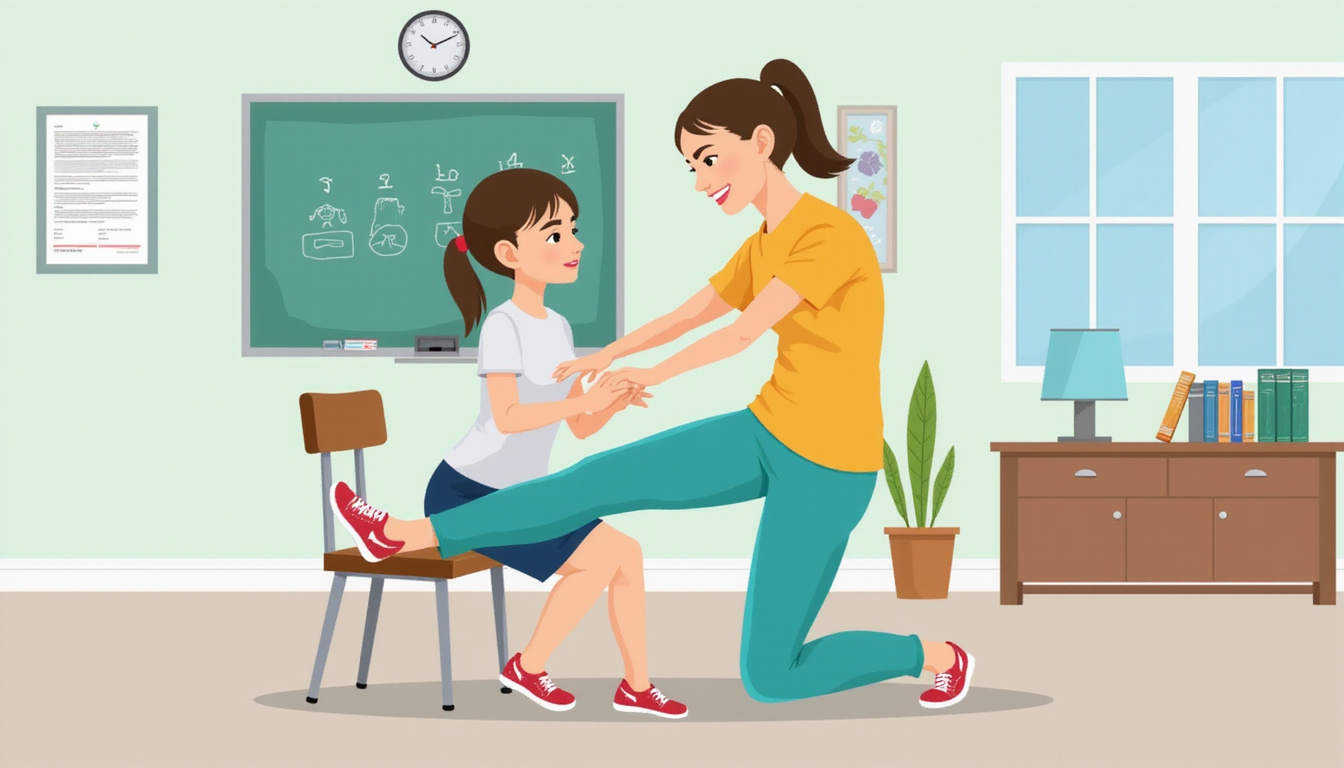
- Place one heel on a low chair or step.
- Keep your back straight and hinge forward until you feel a gentle stretch behind your thigh.
- Hold for 15–20 seconds on each side.
These moves strengthen key muscles that support your knees, making long school days easier.
Pain-smart classroom habits: what to avoid
Some habits worsen knee pain without you knowing it. Learning to change these habits is like revising a lesson plan that isn’t quite right.
Minimize these habits:
- Locking your knees when you lecture
- Deep, rushed squats to pick up supplies or meet students at desk level
- Carrying heavy loads—like tote bags or stacks of books—on one side
- Sitting still too long during meetings or professional development
Instead, try to:
- Keep a slight bend in your knees when standing
- Use your hips to hinge, keeping your back straight
- Split heavy loads between both arms or use a rolling cart
- Stand up and gently move during long meetings when possible
Nutrition, hydration, and joint-supporting supplements
Just as learning is more than class time, joint comfort is influenced by choices outside the classroom. What you eat, drink, and supplement with can support your joints and muscles.
Everyday choices for healthy joints:
- Stay hydrated. Dehydration can worsen stiffness and fatigue. Keep a water bottle at your desk and sip often.
- Eat colorful fruits and vegetables. They provide nutrients and compounds that support general wellness.
- Choose protein throughout the day. Protein helps build muscles that support joints. Think of yogurt, nuts, beans, lean meats, or protein-rich snacks during prep.
Considering joint and muscle supplements:
Some teachers add supplements as one part of a self-care routine. In the U.S., supplements are not meant to diagnose or cure a disease, nor replace medical care or a balanced diet. Still, certain ingredients may help support joint and muscle health.
When looking at a supplement, check if it:
- Clearly lists all ingredients and serving sizes
- Offers transparent quality control and testing
- Combines ingredients chosen to support joints and muscles
- Fits your wellness routine, budget, and daily schedule
Always talk to a healthcare professional before adding any new supplement, especially if you are pregnant, nursing, have health concerns, or take medication. The National Institutes of Health offers general guidance on dietary supplements for joint health (source: https://ods.od.nih.gov/).
When to loop in a healthcare professional
Teachers often tough out discomfort, but persistent knee pain can lead to more serious problems. It is smart to seek professional advice if:
- Discomfort lasts more than a few weeks despite rest and small changes
- Pain affects your sleep, driving, or daily activities
- One knee appears noticeably different—swollen, red, or very stiff—compared to the other
- You’ve had a fall or injury, even if symptoms start later
A healthcare professional can assess your situation, guide safe movements, and help design an individual plan. Sharing a snapshot of your typical school day can help them understand what you face.
Regenerix Gold: a joint and muscle support option for teachers
Many educators want to stay active and comfortable without giving up their classroom passion. If you are exploring nutritional support for healthy joints and muscles, Regenerix Gold is a premium dietary supplement. It is made for adults who want joint and muscle support while keeping active.
Regenerix Gold is not a medication. It does not diagnose, treat, cure, or prevent disease. Instead, it is designed to complement a balanced diet, regular movement, and sensible self-care. For busy teachers, it can be one more intentional step in a wellness routine—like preparing your lessons the night before instead of scrambling in the morning.
Regenerix Gold may suit teachers who:
- Spend long hours on their feet and need extra joint support
- Value premium, thoughtfully made products as part of a wellness toolkit
- See health investments as vital for long-term quality of life and earning potential
As always, discuss any supplement with a qualified healthcare professional, and follow label directions carefully.
Regenerix Gold
FAQ: teacher knee pain and classroom life
Q1: What causes teacher knee pain after standing all day?
Standing on hard floors places continuous stress on your joints and soft tissues. Unsupportive shoes, locking your knees, and staying in one spot too long all add to the discomfort. Supportive footwear, anti-fatigue mats, and movement breaks can help.
Q2: Can simple stretches help with knee discomfort for teachers?
Yes. Gentle stretching and basic strength moves support the muscles around your knees. Short “movement snacks”—like a calf stretch at the board or a few sit-to-stands during planning—can help your knees feel better over time.
Q3: Are joint supplements helpful for teachers with knee issues?
Some teachers find that joint and muscle supplements add to their overall wellness plan. While supplements do not replace medical care or a healthy lifestyle, teachers on their feet all day sometimes choose a quality supplement like Regenerix Gold after consulting a healthcare provider.
Your next step: protect your “teacher tools”
Your voice, patience, creativity, and body are your teaching tools. Teacher knee pain does not need to be the background noise every day. By adjusting classroom habits, upgrading your gear (like shoes and mats), and considering targeted nutritional support, you can ease knee stress and build a more energized, lasting career.
If you see yourself as a forward-thinking educator—one who invests in reliable tech, classroom systems, and continuous learning—it makes sense to care for your joint and muscle health with the same foresight. Explore how a premium supplement like Regenerix Gold may join your wellness routine alongside smarter movement and daily self-care. Protecting your knees today means you can teach, lead, and live at your best for many years to come.
Health Note
Always consult a licensed medical doctor for your health issues.
Special Discount
If you prefer preventive nutrition to minimize expensive knee surgery and potentially addictive pharmaceuticals, Regenerix Gold is your savvy solution.
You qualify for a special discount.
Simply use the link below and a discount will automatically be applied during checkout.
Get Regenerix Gold => HERE


