

Long days on the tractor form the job. Tractor vibration does more than annoy. It can wear out your machine sooner and leave your body sore by day’s end. Farmers and ranchers already face sore backs, stiff knees, and aching shoulders. Extra vibration from the tractor makes these aches worse. The good news is that simple checks, basic maintenance, and a bit of know‑how can reduce the vibration.
Below you find practical tips for the shop floor. Use these tips to track down vibration, protect your joints and muscles, and keep working strong all season.
Why tractor vibration matters for your body
A rough-riding tractor shows its effect after long hours in the field. Its constant shaking transfers energy:
• From the seat and floorboard to your hips, spine, and neck
• From the steering wheel to your hands, wrists, and shoulders
• Adding stress from long hours, heavy lifting, and awkward work positions
Over weeks and months, this pounding makes everyday chores—feeding animals, fixing fences, checking cattle, loading hay—harder on your joints and muscles. Studies find that long-term exposure to whole-body vibration increases strain and discomfort (source: NIOSH/CDC).
You cannot change that farming is physical work. You can, however, reduce unnecessary tractor vibration that damages both your machine and your body.
First step: Listen and feel for where the vibration comes from
Before you start wrenching on anything, pay close attention to the vibration. Note its pattern while running the tractor. Ask yourself:
• Does the vibration occur only at certain engine RPMs?
• Does it get worse as ground speed increases?
• Is it worse when PTO equipment is on (mower, baler, auger, tiller)?
• Do you feel it more through the seat, steering wheel, or floorboard?
This quick, gut check helps narrow the cause. For example:
• Steering wheel shaking points to front tires, steering components, or the engine.
• Seat and floorboard buzzing points to the driveline, transmission, rear tires, or cab mounts.
• Worse with PTO on indicates an issue with the PTO shaft, implement driveline, gearbox, or PTO clutch.
Write down when it happens—high or low gear, 540 PTO or 1,000 PTO, heavy drawbar load, etc. This is the same sort of information a good mechanic would ask for while inspecting the tractor.
Simple fixes first: Tires and wheels
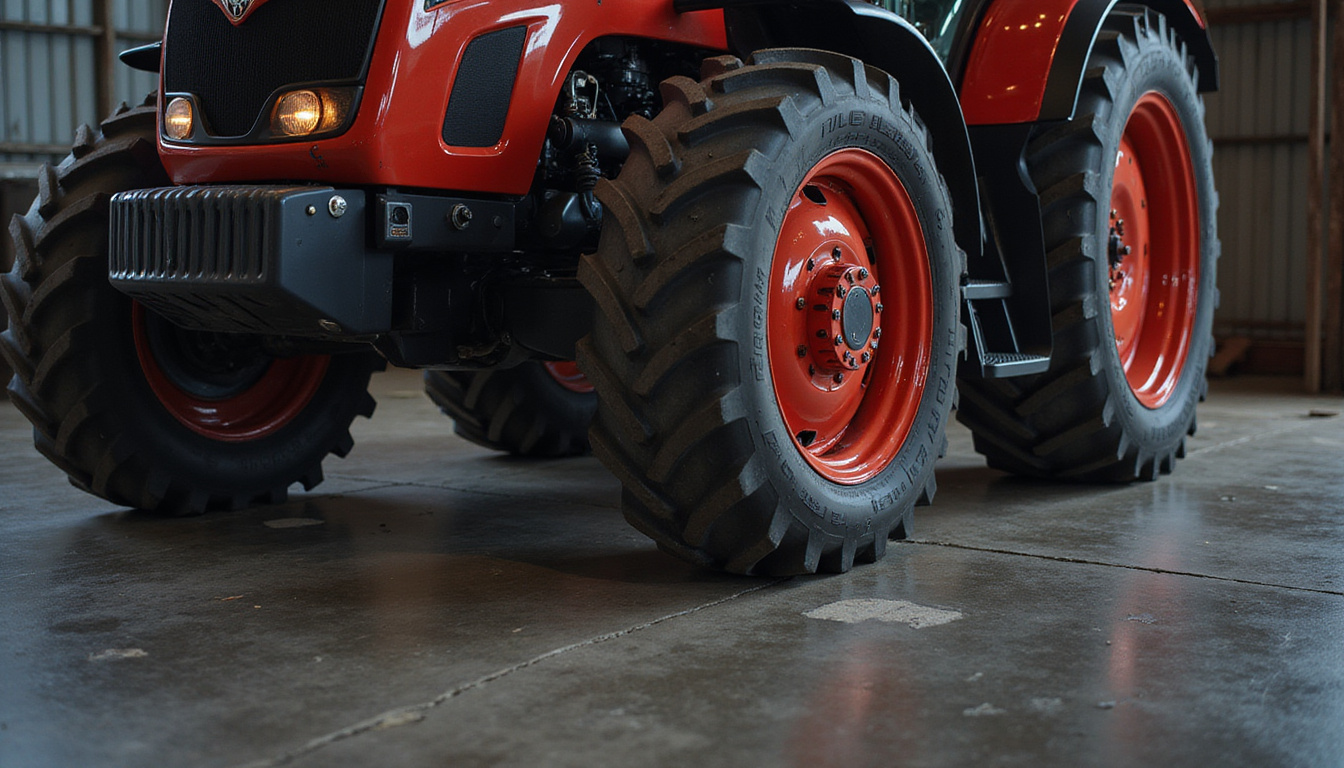
Tires are common culprits and simple to check when you hunt down vibration.
1. Check tire pressure—front and rear
Uneven or wrong pressure can cause the tractor to hop, shake, or feel bouncy.
• Use a reliable gauge—not one that has been loose in the truck for ten years.
• Check all four corners, and also duals if you have them.
• Use the pressure recommended in your manual for your load and speed.
Better tire pressure also gives you better traction, fuel efficiency, and compaction. These are things every farmer needs.
2. Inspect for tire damage and wear
Walk around your tractor and inspect each tire:
• Look for lugs that are badly worn, cupped, or missing pieces.
• Check for sidewall bulges, cuts, or exposed cords.
• Look for dry rot or deep cracks from weathering.
• Remove any rocks, wire, or debris stuck between dual tires.
Any of these issues can cause vibration and create a safety hazard at road speed. A tire that is out of round will often make the tractor “thump” at a certain speed.
3. Check wheel weights, lug nuts, and rims
A loose or damaged rim can cause wild shaking.
• Verify that wheel weights are tight and do not shift.
• Use a torque wrench to check lug nuts (especially after changing tires).
• Inspect rims for any bends, cracks, or rusted areas.
If you hit a deep chuckhole or bounced over frozen ruts while hauling bales, a bent rim is possible.
Don’t overlook the driveline and PTO
If the vibration appears or worsens when the PTO is engaged or when pulling heavy loads, check the driveline.
1. PTO shaft and U‑joints
Problems in this area can shake both the tractor and the implement.
• Ensure the PTO shaft is straight and not bent.
• Feel for any excess play in the U‑joints.
• Look for missing or broken guards.
• Check that the PTO shaft length is correct. Do not let it bottom out or pull apart at full lift.
A dry or worn U‑joint can cause clunking and vibration. If it fails completely under load, it may become dangerous.
2. Implement balance and setup
Sometimes the source of feeling is not under the tractor.
• Check that the baler pickup teeth are even and none are missing.
• Make sure mower blades are sharp, free of chips, and balanced.
• Look at rotary cutters for bent blades or uneven grass buildup.
• Verify that heavy loads on the 3‑point hitch are not hanging too far back.
Follow the implement manual for balancing and blade replacement intervals. A ten‑minute blade change may save hours of vibration issues and reduce strain on you and your tractor.
Engine and powertrain: When the shake is under the hood
If the vibration follows engine RPMs rather than ground speed, inspect the engine and powertrain.
1. Engine mounts and brackets
Rubber engine mounts absorb vibration before it reaches you.
• Check rubber mounts for cracks, splits, or oil soaks.
• Look for any missing or loose bolts on engine brackets.
• Ensure that no part of the engine or exhaust touches the frame or cab.
Worn mounts convert normal diesel rumbles into a harsh, tiring buzz in the cab.
2. Fan, pulleys, and belts
Front-of-engine issues can upset the tractor’s balance.
• Confirm that fan blades are intact and not bent.
• Check pulleys for any wobble with the engine off.
• Look at belts for signs of wear, glazing, or missing chunks.
A failing bearing in an idler pulley or alternator may cause noise and vibration. Catch these issues before they seize completely.
3. Transmission and rear end
If the tractor is smooth at idle but shakes more as you drive faster, especially under load, then:
• Look for worn or misaligned driveline components.
• Inspect the input shaft.
• Check for internal wear in the transmission or differential.
If you do not find the problem in basic checks, have a trusted dealership or independent mechanic inspect the tractor. Do this especially before a major season like planting or harvest.
The tractor cab: Small details, big comfort
Small details around the cab affect how much vibration you feel.
1. Seat suspension and adjustment
Many farmers set the seat once and never adjust it again. That can lead to back and hip pain.
• Make sure the seat suspension (mechanical or air) works properly and does not bottom out.
• Adjust your seat to match your body weight, as described in the owner’s manual.
• Set the fore‑and‑aft position and backrest angle so your feet, knees, and hips have room.
A tired shock or broken suspension linkage can turn your tractor into a buckboard wagon.
2. Cab mounts and floor
Cab mounts help cushion you from hard vibrations.
• Inspect rubber cab bushings for cracks, missing pieces, or oil damage.
• Check for any broken or missing cab mount bolts.
Loose or worn cab mounts can create a rattling noise that seems to come from everywhere.
Operator habits that reduce strain and vibration impact
You cannot craddle a tractor, but you can work smarter. These habits help protect both your machine and your body:
• Slow down over washboards, terraces, and headlands instead of forcing the pace.
• Avoid long periods at the exact RPM that triggers the worst vibration. Shift up or down slightly if you can.
• Choose headlands and lanes that are as smooth as possible.
• Rotate tasks when you can. Mix cab time with ground work.
Also, take care of your body. Stretch before a long day, drink water, and use good posture. These habits help your joints and muscles handle rough patches better.
Supporting your joints and muscles from the inside out
Even on a smooth-running tractor, the work on a farm or ranch is hard. Tasks like sorting cattle, tossing bales, wrestling mineral tubs, climbing bins, and turning wrenches are demanding. Many farmers and ranchers experience:
• Stiffness after a long day in the tractor.
• Sore knees from walking over rutted or hilly ground.
• Achy shoulders from working with loaders or throwing heavy sacks.
Along with good mechanics, ergonomics, and pacing, some choose to support joint and muscle health with dietary supplements. These supplements help maintain:
• Comfortable joint movement,
• Healthy cartilage and connective tissues, and
• Overall physical resilience for active, outdoor work.
One example is Regenerix Gold. It is a joint and muscle health supplement designed for farmers and ranchers who work long hours in the seat and on their feet. As with any supplement, keep in mind that:
• It is not meant to diagnose, treat, cure, or prevent any disease.
• Individual results differ.
• You should consult a healthcare professional before starting any new supplement, especially if you take medications or have health concerns.
Taking care of your body from the inside while reducing tractor vibration can be a smart one‑two punch to help you stay in the game longer.
Quick tractor vibration inspection checklist
Use this checklist in the shop or yard if your tractor feels rough:
-
Tires & wheels
• Check tire pressure and match it to load and speed
• Inspect tread, sidewalls, and rims
• Tighten lug nuts and wheel weights -
Driveline & PTO
• Inspect the PTO shaft and U‑joints
• Check that implement blades are sharp and balanced
• Verify PTO speed and shaft length -
Engine area
• Examine engine mounts and brackets
• Check fan, belts, and pulleys
• Listen for unusual noises at various RPMs -
Cab & seat
• Test the seat suspension and adjust for your weight
• Inspect cab mounts and the cab floor
• Remove any loose tools or parts that may rattle -
Operating habits
• Slow down over rough spots
• Avoid running at vibration “hot spot” RPMs if possible
• Take short breaks to stretch during long runs
Keeping this checklist handy can turn a nagging shake into a quick fix. That way, you avoid downtime during the busy season.
FAQ: Common questions about tractor vibration
Why is my tractor vibrating so much at certain speeds?
Many operators notice tractor vibration at specific speeds or RPMs. This often points to:
• Tires that are out of balance or out of round
• A driveline or PTO component that resonates at that speed
• A gear/RPM combination that makes a small problem worse
Start by checking the tires and other simple fixes. Then move to driveline and engine mounts if needed.
Is it safe to keep running a tractor with vibration?
Using a tractor with excessive vibration is not only uncomfortable. Over time, it can:
• Accelerate wear on bearings, shafts, and mounts
• Increase fatigue and physical strain for the operator
• Hide a small issue that might become a major failure
If the vibration worsens or becomes severe, slow down and inspect before you continue.
How can I reduce vibration in my tractor cab?
To reduce tractor shaking and vibration in the cab, focus on:
• Keeping tires at proper pressure and in good condition
• Maintaining a healthy seat suspension and secure cab mounts
• Keeping the PTO and implements well maintained
• Using proper operating habits—like choosing the right speed and RPM
Also, regular stretching and nutritional support for your joints and muscles will help if your work is very physically demanding.
A smart edge for the men and women who keep the country fed
One breakdown at the wrong time can wipe out a year’s profit. The same goes for your body. If tractor vibration harms your joints and muscles every day, you risk the one piece of equipment you cannot replace.
Smoothing your tractor’s ride is part of the solution. The other part is taking care of yourself. That way you can continue to serve neighbors, family, and livestock. This is where Regenerix Gold comes in. It is a premium supplement for joint and muscle health for farmers, ranchers, and other hard‑charging people.
Choosing a targeted supplement like Regenerix Gold shows that you plan ahead. A small expense now can help prevent bigger bills later—from doctor visits, missed work, or having to hire help. If you pride yourself on staying a step ahead with equipment maintenance, herd health, and finances, treat your own joints and muscles with the same care.
Regenerix Gold
Health Note
Always consult a licensed medical doctor for your health issues.
Special Discount
If you prefer preventive nutrition to minimize expensive knee surgery and potentially addictive pharmaceuticals, Regenerix Gold is your savvy solution.
You qualify for a special discount.
Simply use the link below and a discount will automatically be applied during checkout.
Get Regenerix Gold => HERE


