

If you drive long miles, your hips can hurt.
When you sit in your truck for many hours, your hips stay in one spot.
This pain can feel stiff when you step out of the cab, pinch sharp when you hit the clutch, or ache deep after a long run.
You are not alone.
Long driving, rough roads, and climbing in and out of your rig add up to hip pain.
The good news is that smart seat choices, proper stretches, and good recovery moves can help your hips roll smooth.
This guide is for American truckers. It speaks in real driver language and gives you steps you can use at the next truck stop.
Why trucker hip pain hits drivers so hard
When you ride in your seat for 8–11 hours each day, your hips stay locked.
This position can cause:
• Tight hip flexors from sitting with bent legs
• Stiff glutes and low back muscles
• Uneven load if you lean on an armrest or wallet
• Joints and muscles stressed by constant vibration and bouncing
Extra work like pulling tandems, cranking dollies, and chaining in winter adds to the strain.
Your body sends a clear message when your hip pain does this.
It is time to change how you sit, move, and rest.
Cab setup: seat hacks that make or break your hips
Before you blame mileage or age, check your seat.
Small changes can ease hip pressure quickly.
1. Level up your seat position
At your next pre-trip, check these details:
• Your seat height should match or be slightly higher than your knees. If your knees are above your hips, your joints feel cramped.
• Your distance from the pedals should let you reach with a small bend. Do not stretch or cram.
• A slight tilt down at the front of the seat can lessen pressure on your thighs and hips.
2. Ditch the “wallet wedge”
If you keep a fat wallet, phone, or any bulky object in your back pocket, you lean on one side.
This causes extra twist and pain in your hips and low back.
• Empty your back pockets before you drive.
• Keep your wallet in a door pocket, overhead, or center console.
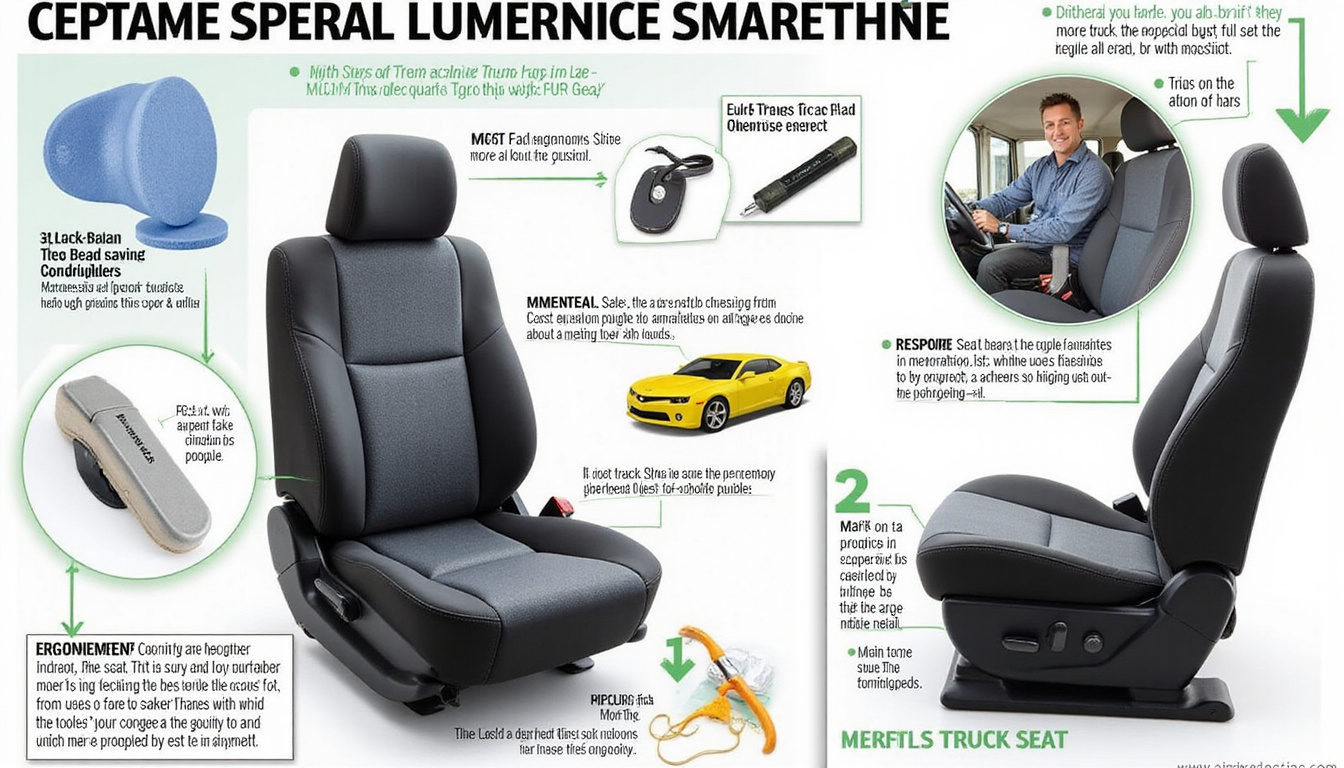
3. Support your hips and low back
Simple upgrades help:
• A seat cushion with a cutout can ease pressure.
• Lumbar support (or a rolled towel) helps keep your spine steady.
• Adjust your armrest so you do not lean on one side all day.
Even if your company does not supply a new cushion, it is worth buying one.
A good cushion costs less than a missed load or urgent care visit.
Road‑friendly stretches for tight trucker hips
You do not need a gym or yoga mat.
A few minutes at a fuel stop, rest area, or during your 30 break is enough.
Rule #1: Stretches must not cause sharp pain. The goal is “tight but tolerable.”
Rule #2: Breathe slowly, do not bounce, and ease into each move.
1. “Door frame” hip flexor stretch
This stretch fights the effects of long sitting.
- Stand next to your truck. Place one foot in front and one behind in a short lunge.
- Hold the grab handle for balance.
- Keep the front knee bent and the back leg straight with the heel down if you can.
- Shift your weight forward until you feel a stretch along the front of the back hip.
- Hold for 20–30 seconds. Switch sides.
Repeat 2–3 times per side.
2. Truck step glute stretch
This stretch uses your truck step as a prop.
- Face your truck and place one foot flat on a step (knee height is best).
- Let the knee drop slightly out to the side.
- Lean your chest toward that knee until you feel a stretch at the side and back of your hip.
- Hold for 20–30 seconds as you breathe slowly.
Do 2–3 rounds each side.
3. Seated figure‑4 stretch (in the cab, parked)
- Sit tall with your back against the seat and both feet flat.
- Cross your right ankle over your left knee, forming a “4.”
- Use your hand to press the right knee toward the floor.
- Lean your torso forward if you need a deeper stretch.
Hold 20–30 seconds. Switch sides.
Repeat 2–3 times.
4. Standing hamstring stretch on the bumper
- Place one heel on the bumper (or on a low step). Keep your leg straight, but do not lock it.
- Keep your back straight and your chest up.
- Hinge at your hips as you lean forward.
- Stop when you feel a pull in the back of your thigh.
Hold 20–30 seconds on each side.
Try to do at least two of these stretches at every fuel stop or break. By the end of your shift, you will feel a difference.
Simple movement habits that protect your hips
Stretching works, but how you move during the day matters equally.
Micro‑breaks: small moves, big payoff
Every 60–90 minutes, take 30–60 seconds to move:
• At a red light or in traffic (when safe): squeeze your glutes gently for 5 seconds, then relax. Do this 10 times.
• While parked: march in place beside the truck, swing your legs lightly, or walk a lap around your rig.
Getting in and out of the cab the right way
Jumping out like Superman hurts your hips, knees, and back.
• Use 3 points of contact when climbing in and out.
• Face the truck when stepping down. Do not twist.
• Avoid standing on one leg when you climb in.
Off‑duty: win the first 10 minutes
Before you crash after a long run:
• Walk a few laps around the parking lot or yard.
• Do 2–3 hip stretches from the list above.
• Try light body‑weight moves such as:
- 10–15 squats (as low as you feel comfortable)
- 10–20 gentle hip circles in each direction
- 10–15 light leg swings while holding onto the trailer
These moves are not a full workout. They tell your body that you are not stuck in a seat.
Supporting joints and muscles from the inside
Seat setup and stretching are important. Besides these, your nutrition matters.
Long hours, truck‑stop food, and uneven sleep can hurt your joints and muscles.
While no supplement can cure poor habits or a medical condition, some drivers choose supplements.
They support:
• Healthy joint function and flexibility
• Comfortable movement on long days
• Nutrients for muscles, tendons, and connective tissues
Many drivers choose Regenerix Gold for an extra boost in joint and muscle health.
<iframe width="560" height="315" src="https://youtu.be/mGrH5UWFxUs?si=enLOx67aeklAOHfA" title="Regenerix Gold Video" frameborder="0" allowfullscreen></iframe>
Regenerix Gold is a dietary supplement, not a drug.
It supports overall joint and muscle health when used with proper movement and nutrition.
It does not diagnose, treat, cure, or prevent any disease.
Talk with a doctor if you are on medications or have concerns.
When trucker hip pain means “go get checked”
Most hip pain from long driving improves with:
• A better seat setup
• Regular stretching and movement
• Good hydration and nutrition
• Smart off‑duty recovery
Watch for warning signs. See a doctor if you notice:
• Sudden, intense hip pain after a fall or twist
• Worsening hip pain over several weeks
• Hip pain that stops your sleep or walking
• Numbness, tingling, or weakness in your leg
• Visible swelling, redness, or heat around the hip
A professional can examine you, rule out serious issues, and create a plan that fits your driving needs.
Ignoring these signs can cause more problems—more costs, more miles lost, and missed time on the road.
One sample “hip‑smart” day on the road
Here is a sample day to care for your hips without wasting time:
-
Pre‑trip (5 minutes)
• Adjust your seat height, distance, and tilt.
• Do the door‑frame hip flexor stretch and the bumper hamstring stretch (2 rounds). -
Mid‑morning fuel stop (3–4 minutes)
• Walk one lap around your truck.
• Do the seated figure‑4 stretch in your cab when parked. -
30‑minute break
• Eat and hydrate.
• Do 2–3 hip stretches and 10 body‑weight squats. -
End of shift (5–10 minutes)
• Walk around the parking lot or yard.
• Do some light hip stretches before you rest.
These small habits add up, especially when you drive 2,500–3,000 miles each week.
FAQ: trucker hip pain and joint support
Q1: What causes hip pain on long hauls?
A: Long hours of sitting with bent knees, rough roads, and poor seat setup cause muscles to tighten and joints to ache.
Q2: What are the best hip stretches for driving?
A: Use moves that open the front and side of your hips. Try the door frame hip flexor stretch, seated figure‑4 stretch, and the glute stretch using your truck step. Do these at every break.
Q3: Can supplements help with hip and joint pain?
A: Supplements do not cure conditions. Still, some drivers choose joint‑support formulas to help maintain a comfortable range of motion and muscle support. Products like Regenerix Gold work best with good seat setup, stretching, and proper nutrition. Always check with a doctor before starting new supplements.
For more details on how long sitting affects your body, check the CDC’s guidance on physical activity and sedentary time (source).
Roll smarter, not just harder: why Regenerix Gold fits the driver mindset
On the road, no one cares for your body but you.
Dispatch needs the load. Shippers want fast turnarounds.
If you are an owner-operator or lease-op, every lost day is money lost.
Savvy drivers treat their body as key equipment. They maintain it now so they do not face big repair bills later.
Adjust your seat, add a few hip stretches, and move more around your rig.
A joint and muscle–support supplement like Regenerix Gold might add the extra care you need.
Drivers who invest in their health every month avoid big medical costs or missed work later.
Your truck earns your pay. Your hips keep you in the driver's seat.
Take care of them like the professional you are.
Health Note
Always consult a licensed medical doctor for your health issues.
Special Discount
If you prefer preventive nutrition to minimize expensive knee surgery and potentially addictive pharmaceuticals, Regenerix Gold is your savvy solution.
You qualify for a special discount.
Simply use the link below and a discount will automatically be applied during checkout.
Get Regenerix Gold => HERE


