

If your knees hurt when you walk, climb stairs, take MRT escalators, or stand in a long queue, you may think about using a walking aid. In Singapore, people often view a cane, stick, walker, or rollator at hawker centres, malls, and polyclinics. Many feel uncertain which device suits them. They worry that using one makes them seem “old” or “weak.”
Choosing the right walking aid helps you stay independent and safe. It does not mean you give up. This guide helps you pick an aid that works in Singapore life. It also shows you how to use it properly to protect your knees and cut fall risk.
How walking aids help when you have knee issues
Walking aids work to reduce pressure on your painful knees. They help your balance on uneven ground or slopes. They make it easier to stand, walk longer, or climb stairs. They lower fall risk if your knees feel unstable.
The key is to match the aid to your needs. Learn the proper technique to stop shoulder, back, and wrist pain.
Main types of walking aids in Singapore
1. Walking stick / single-point cane
A simple stick is a common aid in Singapore.
It suits you if one knee is more painful or weak than the other.
It fits if you feel unsteady but walk without furniture support.
It works well for outdoor support or long walks (for example, to the MRT or supermarket).
Pros:
• It is light and portable.
• It works easily on public transport.
• It fits in HDB flats or crowded spaces.
Cons:
• It gives little support if both knees hurt.
• A wrong height or wrong side can hurt your shoulder, wrist, or back.
Basic rule: Hold the cane in the hand opposite the painful knee.
If your right knee hurts, use your left hand.
2. Quad cane (four-point cane)
A quad cane has a small base with four feet.
It helps if you have more balance issues.
It fits if you had a recent flare-up or knee surgery (with a doctor’s advice).
It suits you if you feel wobbly when you turn, stand up, or step on uneven ground.
Pros:
• It is more stable than a single-point cane.
• It can stand on its own when you let go.
Cons:
• It is heavier and bulkier.
• It may catch on steps if you do not lift it well.
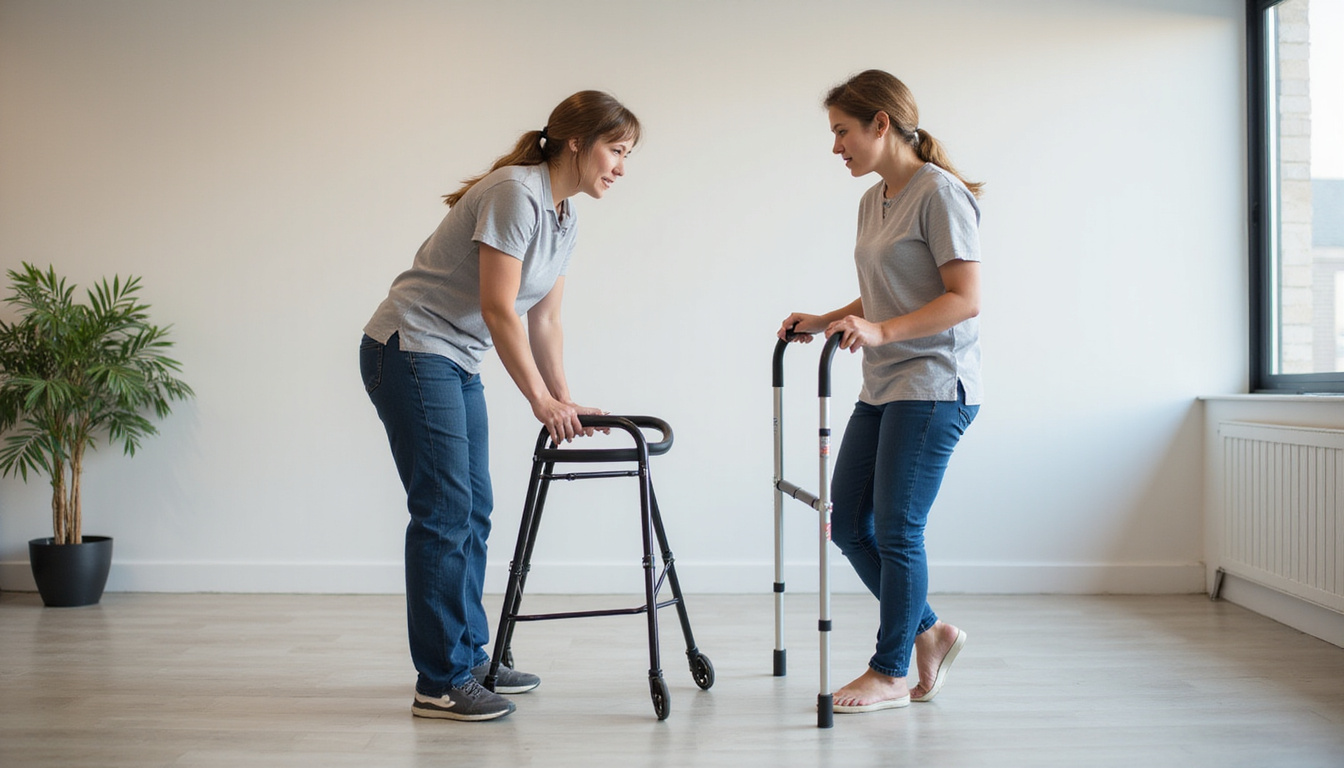
3. Walking frame (standard walker)
A standard walker is common in older estates and rehab centres.
It fits if both knees feel weak or unstable.
It helps if you need more support when you start to walk or turn.
It works best if you move slowly and stay indoors.
Pros:
• It gives strong stability.
• It is good for short distances at home.
Cons:
• You must lift it with every step.
• It is not good for stairs or long outdoor distances.
4. Wheeled walker / rollator
A rollator usually has three or four wheels and hand brakes.
It often has a built-in seat.
Many Singaporeans use it to go to a nearby coffee shop or market.
They rest on its seat if they feel tired.
It lets them carry small items safely (for example, groceries).
Pros:
• It makes walking smoother and faster.
• It gives you a seat to rest.
• You do not need to lift it as often as a standard walker.
Cons:
• You need good hand control for the brakes.
• It is not ideal for very small HDB units with tight spaces.
• It can roll away if the brakes are not locked.
How to choose a walking aid that works for you
Think of these points before you buy a walking aid:
-
Where will you use it most?
• Mostly at home? A standard walker or quad cane may work.
• Travelling by MRT or bus? A light cane or rollator may be best. -
How strong and steady do you feel?
• Mild discomfort but active? Try a walking stick.
• Poor balance or fear of falling? A quad cane or walker may help (after a professional check). -
How strong are your hand and arms?
• If your grip is weak or you have wrist pain, a very heavy aid may not be right. -
What is your home layout?
• Narrow corridors or many turns may make a cane more suitable than a bulky frame.
Where possible, get your height and aid type checked by a healthcare professional. A licensed physiotherapist, doctor, or occupational therapist can help. A wrongly chosen walking aid may even increase your fall risk (source: Singapore HealthHub).
Correct height and basic technique for walking aids
Adjusting the height
Use this rule for canes and walkers:
• Stand upright with your usual shoes.
• Let your arms hang naturally.
• The handle must be at the level of your wrist crease.
• When you hold it, your elbow stays slightly bent (about 15–30 degrees).
If it is too high, your shoulders may shrug and your neck may tighten.
If it is too low, you lean forward and may strain your back.
Using a cane when walking
If your right knee hurts:
- Hold the cane in your left hand.
- Move the cane and right leg forward together.
- Then step with your left leg.
On stairs:
• Going up:
- Step up with the good leg.
- Then step up with the painful leg and cane together.
• Going down:
- Place the cane down first.
- Move the painful leg down.
- Follow with the good leg.
Always use a handrail when one is available.
Common mistakes people make with walking aids
Many people with knee pain in Singapore already own walking aids. They sometimes use them in ways that reduce their benefits:
• They hold the cane on the same side as the painful knee.
• They adjust the cane or walker to the wrong height.
• They drag the walker instead of stepping properly.
• They lean too much on one side and hurt their hip or back.
• They use wheeled devices without locking the brakes when sitting or standing.
If you feel unsure, a short session with a physiotherapist or trained provider can help check your walking pattern and make a big difference.
Common Knee Care Options in Singapore
Walking aids are only one part of staying mobile with knee issues. Singapore offers several care options.
MOH-licensed medical doctors
You can visit a polyclinic doctor or a private GP for a knee check.
They will take your history and do a physical exam.
They may order X-rays or refer you to a specialist if needed.
They can suggest pain relief, lifestyle changes, or simple exercises.
Orthopaedic specialists
Orthopaedic doctors focus on bones and joints.
They check complex or long-lasting knee pain.
They advise on non-surgical and, if needed, surgical options.
They work with physiotherapists on rehab and mobility plans.
Licensed Traditional Chinese Medicine (TCM) practitioners
Some people in Singapore combine Western and TCM methods:
• Acupuncture
• Tuina (therapeutic massage)
• Herbal formulas
Licensed TCM practitioners are regulated. They offer a complementary view on knee pain and body balance.
Standard physiotherapy (primarily exercise-based)
Physiotherapists work on movement, strength, and function. They help you:
• Learn joint-friendly exercises for knees and nearby muscles.
• Improve your balance and walking pattern.
• Choose and use walking aids correctly.
• Move from more support (walker) to less (cane), if suitable.
Physiotherapy is available in public hospitals, polyclinics, community hospitals, and private clinics.
Non-licensed providers
Some people see sports trainers, massage therapists, or other informal providers for knee issues.
They may offer comfort or general fitness support.
But since they are not licensed medical professionals, you should:
• Tell your doctor about any treatments you use.
• Not stop prescribed medicine or therapy without advice.
• See licensed help quickly if symptoms worsen or new ones appear.
This balanced approach helps you stay safe as you explore support options.
Non-Invasive Technology-Based Options
In Singapore, some clinics and centres offer non-invasive, technology-based options for knee pain and mobility issues. These options usually come as part of a broader programme that includes education and exercises.
Shockwave Therapy
Shockwave therapy is common in Singapore. Clinics or public hospitals offer it.
It uses acoustic waves on targeted areas.
Key points:
• It is part of a licensed physiotherapy service.
• It may combine with exercise-based rehab or stand alone, depending on your needs.
• Sessions are short and a therapist operates the device.
For example, one provider lists shockwave therapy at:
👉 https://thepainreliefpractice.com
Always check that a trained, licensed professional provides the service.
Hotheal Therapy
Hotheal Therapy uses radiofrequency for deep tissue heating.
It sends heat deep under the skin.
It covers a broad area and is fast-acting.
Many in Singapore find this non-invasive therapy soothing.
A home-based option is available from:
👉 https://physiolife.com.sg
Home systems help if you struggle to visit clinics often. Still, discuss them with your healthcare provider.
Medical oversight, cost & convenience
When you consider non-invasive technology for knee pain:
• Medical oversight is important. Choose options that work with licensed healthcare professionals and fit your care plan.
• Cost matters. Weigh the sessions and device costs against standard physiotherapy and medical visits.
• Convenience counts. Home-based setups or nearby clinics help you stay consistent.
Prevention & Long-Term Support (Nutrition)
Walking aids and therapy support knee health. Many people in Singapore also look at nutrition strategies for long-term support.
A balanced diet with protein, healthy fats, vitamins, and minerals supports joint and muscle function (source: Harvard School of Public Health). For some, supplements add extra support.
Regenerix Gold as nutritional support
Regenerix Gold is a nutrition-based supplement for healthy knee joints and muscles.
It is not a medicine and does not diagnose, treat, cure, or prevent disease.
Key points about Regenerix Gold:
• It supports preventive and maintenance care as part of a joint-focused lifestyle.
• It helps support normal joint and muscle function.
• It is recommended by doctors and physical therapists as one option among many for joint wellness.
• It has been used for over a decade and has positive reviews from users internationally.
Regenerix Gold
If you worry about knee comfort, rising medical costs, or your mobility affecting your work in Singapore, a nutrition-focused approach can help. Buying a bottle lets you test whether it fits your lifestyle. Always read the product details carefully. If you have medical conditions or use medication, talk to your doctor before adding new supplements.
Quick FAQ on walking aids and knee support
-
When should I start using a walking aid for knee pain?
• If you feel unsteady, lean on walls or furniture, or avoid going out because of your knees, it might be time for a walking aid.
A short check with a doctor or physiotherapist can help you choose the right aid and prevent falls. -
What is the best walking aid for weak knees in Singapore?
• No single aid fits all.
A walking stick may help for mild weakness on one side.
A quad cane, walker, or rollator may suit those with more balance or strength issues.
Your daily travel (stairs, MRT, uneven ground) and home layout matter too. -
Can walking aids make my knees weaker over time?
• When used correctly, walking aids reduce strain and improve safety.
They do not make you weaker.
For strength, use walking aids with proper exercise, stay active within your comfort, and get guidance from a physiotherapist if needed.
Using the right walking aid, the proper treatment and technology options, and smart nutrition can help you stay mobile, independent, and confident on your feet. Whether you catch the bus for work, take your grandchildren to the playground, or walk to your favourite kopi stall, you are taking care of your knees every step of the way.
Special Discount
If you prefer preventive nutrition to minimize expensive knee surgery and potentially addictive pharmaceuticals, Regenerix Gold is your savvy solution.
You qualify for a special discount.
Simply use the link below and a discount will automatically be applied during checkout.
Get Regenerix Gold => HERE
