

If you lean into deep lunges, steady warriors, or strong standing balances, your knees soon speak up. Trying yoga for knee pain does not show that you are fragile or that you are "doing it wrong." It shows that your alignment, load, or recovery needs an update. A few mindful tweaks and low-impact poses then protect your joints, keep you on the mat, and help you evolve your practice for the long term.
This guide speaks to yoga practitioners in America—people who know a vinyasa, care about lasting movement, and want happy knees without long medical breaks.
Why knees complain in an active yoga practice
In a flow, your knees bear extra load. They face transitions, deep bends, torque from misaligned feet, and sometimes more ambition than a warm-up can take. Practice makes your knees work harder when you:
- Collapse your arches in standing poses and pull the knee inward
- Force lotus, half-lotus, or deep hip openers before your hips are ready
- Hyperextend in Triangle or Pyramid, locking the joint
- Sink into the joint instead of engaging quads and glutes
- Skip props due to ego or habit
None of these steps bring pain for everyone. Yet they make your knees carry extra work that your hips, core, and ankles should share.
When you turn to yoga for knee pain, your goal is not to coddle the joint. Instead, you distribute the load, build stronger muscles, and restore a movement pattern that works on and off the mat.
Principles of safe yoga for knee pain
Before you try the poses, use these principles. They change the way every asana feels in your body:
-
Keep your knee over the second toe
In standing poses and squats, let your knee align with your second or third toe. This keeps extra twist away from the joint. -
Build strength before seeking deep bends
Do not max your range of motion. Build engaged muscles—quads, hamstrings, glutes, and outer hips—before you chase deep shapes. -
Use props without shame
Bolsters, blankets, blocks, straps, and chairs all help. Using them shows smart practice, not weakness. -
Stop at “tweaky” feelings
A dull, steady muscle effort feels right. But if you feel sharp, pinchy, or unstable in your knee, back out or change the pose. -
Move slowly between each pose
Most knee issues come in transitions between poses. Treat each move as its own asana.
Warm-up flow: tuning hips and ankles to spare your knees
Spend 5–10 minutes here before you move into standing sequences for knee pain.
1. Reclined Knee-to-Chest (Apanasana) with mindful tracking
- Lie on your back.
- Bend both knees and keep your feet hip-width apart.
- Hug one knee close.
- Keep that knee in line with your hip joint, not letting it drift outward.
- Gently circle the ankle to wake it up, and then switch sides.
Notice how the femur glides in the hip socket. Let that glide occur without dragging the knee side to side.
2. Supine Hand-to-Big-Toe Pose (Supta Padangusthasana) with strap
- Loop a strap around the ball of one foot.
- Extend the leg upward while keeping the knee slightly bent.
- Press the thigh bone down in the socket.
- Open the leg a little to the side only if the opposite hip stays planted.
This pose stretches your hamstring without straining the knee. It builds the pose at the hip, not at the knee.
3. Dynamic Bridge (Setu Bandha) for glute activation
- Place your feet hip-width apart and bend your knees.
- Keep your arms by your sides.
- Press through all four corners of both feet.
- Lift your hips slowly and watch as your knees move forward in line—not inward or outward.
- Lower slowly and repeat 8–10 times.
This move trains your posterior chain so your knees do not work alone.
Low-impact standing poses for happier knees
These standing shapes help your muscles work well and keep the knee’s load low.
Chair Pose at the Wall (supported Utkatasana)
- Stand with your back against a wall.
- Place your feet slightly in front, hip-width apart.
- Slide down as if you are sitting in a chair.
- Ensure your knees stay directly above your ankles.
- Keep your weight in your heels and mid-foot, not on the toes.
- Hold for 5–8 breaths and repeat 2–3 times.
This pose builds quad and glute strength with straight tracking. Less twist means more stable joints.
Defensive Warrior II (soft, supported Virabhadrasana II)
- Take a short stance.
- Bend your front knee to about 45–60 degrees so that it stays above the ankle and center toes.
- Set your back foot at a gentle 45-degree angle.
- You may rest your hands on your hips or on a chair.
This shape re-aligns your front knee. It helps you learn to share weight equally between both legs.
Mini-High Lunge with blocks (low-load Crescent variation)
- Begin on all fours.
- Step one foot between your hands and rest the hands on blocks.
- Tuck your back toes and lift the back knee only a few inches.
- Keep your front knee over the ankle and slightly bent.
- Press down through your back heel.
This lunge builds quads and hip flexors with a very controlled angle. It is excellent for easing discomfort.
Floor poses that support knee-friendly mobility
These poses open the hips and stretch tissues around the knee without compressing or twisting the joint.
Supported Low Lunge (Anjaneyasana) with padding
- Start on all fours.
- Step one foot forward.
- Place a folded blanket on the back knee.
- Keep a tiny bend in the front knee and do not let it pass the toes.
- Remain upright with your hands on blocks or on your thigh.
This pose lengthens hip flexors and quads while keeping the knee cushioned.
Reclined Figure 4 instead of full Pigeon
Many push into Pigeon even when their knees disagree. Try this instead:
- Lie on your back.
- Bend both knees and keep the feet on the floor.
- Cross your right ankle over your left thigh just above the knee. Keep your right foot flexed.
- Optionally, thread your hands behind your left thigh and gently draw the legs closer.
This swap works the outer hip deeply while making almost no load on the knee.
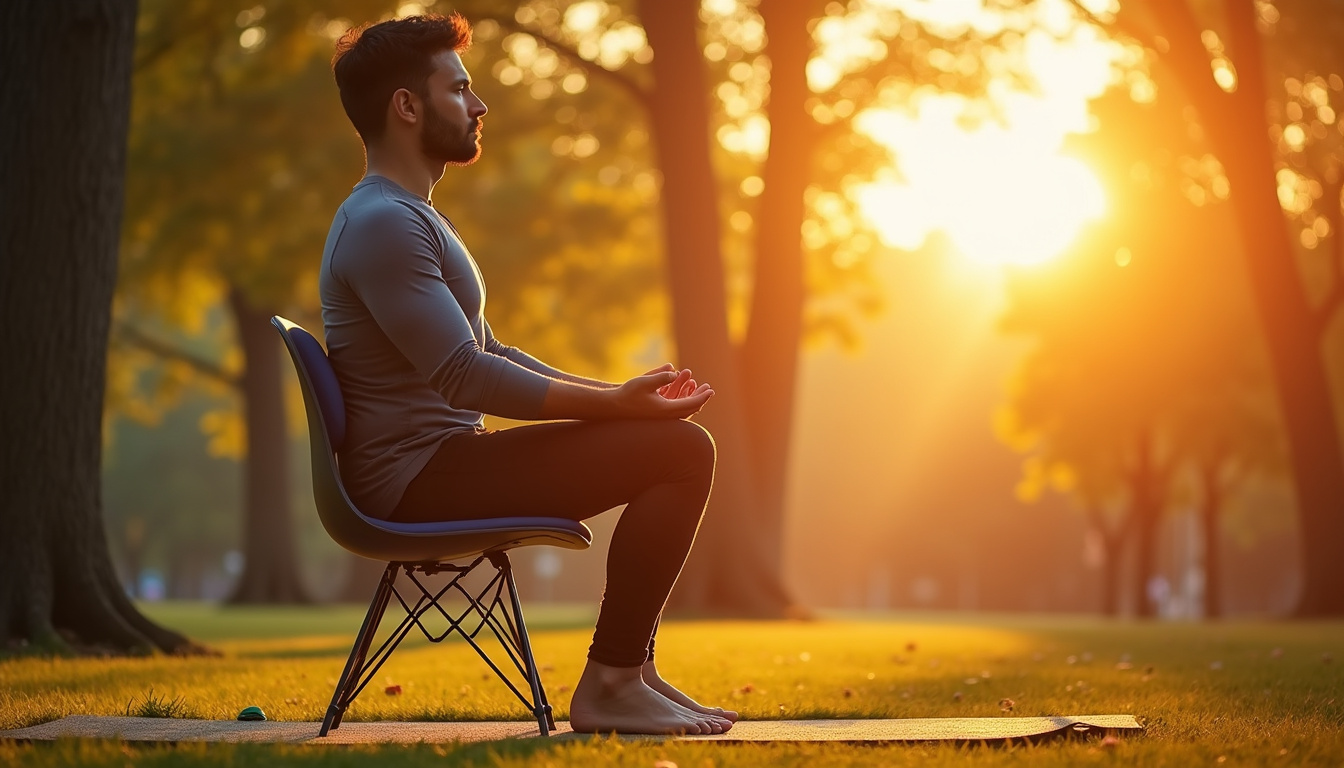
Supported Hero Pose (Virasana) with blocks or bolsters
- Kneel with your knees together.
- Place your feet slightly apart behind you.
- Sit on a block or bolster between your heels.
- The higher the support, the kinder it is for your knees.
- If you feel pinching, increase the height or skip the pose.
This pose gently stretches your quads and tissues at the front of the knee when you use good support.
Smart transitions and micro-adjustments that protect your knees
You may not control the whole class sequence, but you control your moves between poses. Try these when you practice yoga for knee pain:
- Step back from the mat instead of jumping back.
- Drop your knees when moving from Plank to Chaturanga.
- Come to all fours before stepping forward into a lunge. Avoid swinging the leg if it feels awkward.
- In standing balances like Tree, rest the foot on the ankle or calf instead of pressing it into the knee.
- When you sit in deep bends or malasana-style squats, sit on a block and widen your feet so your knees do not collapse inward.
Off-the-mat supports: habits, recovery, and smart supplementation
Yoga gives you power, but your knees feel the effects of your daily habits—desk posture, footwear, recovery habits, and nutrition.
Daily habits that matter
- Rotate your shoes and avoid long stands in unsupportive footwear.
- Take a break from sitting every hour. Walk, do gentle calf raises, or use hamstring curls for 2–3 minutes.
- Add strength moves like step-ups, wall sits, and side leg lifts two or three times a week.
- Cool down after strong practices with gentle hamstring and quad stretches instead of a fast Savasana.
Nutritional and supplement considerations
Healthy joints need enough protein, water, and nutrients like vitamin D and key minerals. These help connective tissue and muscle work well. Many look into joint-support supplements with research-backed ingredients to keep joint comfort and mobility with a balanced lifestyle (source: NIH Office of Dietary Supplements).
Remember, supplements do not diagnose, treat, cure, or prevent any disease. They do not replace medical care. Used correctly, they can be one part of a long-term joint-care strategy.
Regenerix Gold: a joint and muscle support option for serious practitioners
If you think long term, you care about joint and muscle strength. Regenerix Gold fits into your routine as a well-designed supplement.
It supports healthy joints and muscles for adults who follow their wellness habits. Combined with good alignment and low-impact asanas, it helps you stay comfortable and mobile. This lets you show up fully—in your practice, at work, and in life.
<iframe width="560" height="315" src="https://youtu.be/mGrH5UWFxUs?si=enLOx67aeklAOHfA" title="Regenerix Gold Video" frameborder="0" allowfullscreen></iframe>
Use supplements as directed. Always:
- Read and follow the label
- Use them within a balanced lifestyle
- Talk with your healthcare provider if you are pregnant, nursing, on medications, or have health concerns
Regenerix Gold does not diagnose, treat, cure, or prevent any disease. It supports everyday joint and muscle work for a hard practice.
Short knee-friendly sequence you can do daily
Try this compact yoga for knee pain flow in your day:
- Apanasana (Reclined Knee-to-Chest) – 5 breaths on each side
- Supta Padangusthasana with strap – 5–8 breaths on each side
- Bridge Pose (dynamic) – 8–10 repetitions
- Chair Pose at the Wall – 3 rounds of 5–8 breaths
- Supported Low Lunge – 5–8 breaths on each side
- Reclined Figure 4 – 8–10 breaths on each side
- Legs Up the Wall (Viparita Karani) – 3–5 minutes for good circulation and recovery
FAQ: yoga for knee pain and joint comfort
Q1: Is yoga good for knee joint pain or will it make things worse?
A1: Yoga works well for knee comfort when you use good alignment, build strength, and choose the right modifications. Deep bends, forced lotus, or fast moves can cause pain. A knee-conscious sequence like the one above is a better start than a fast, hard flow.
Q2: Which yoga poses help with knee pain relief and prevention?
A2: Many find low-impact poses such as Supported Chair, gentle Warrior II, Bridge, Reclined Figure 4, and well-supported Low Lunge send support to the hips and thighs so the knee does not take the entire load. The key is the way you do the pose: keep your knee over your toes, engage your muscles, and avoid sharp or unstable feelings.
Q3: How often should I practice yoga for my knee joints to see improvement?
A3: Consistency beats intensity. A focused yoga for knee pain sequence 3–5 times per week for 15–20 minutes works better than one long session. Adding strength work, recovery, and a joint-support supplement like Regenerix Gold creates a lasting foundation for your knees.
Claim your edge: practice smarter, not harder
Missing work because of joint issues or spending time on long-term medical care can drain you both financially and emotionally. The difference between those who stay resilient and those who cycle through pain is strategy.
When you choose low-impact yoga for knee pain sequences, improve your alignment, and invest in joint and muscle support like Regenerix Gold, you join the top tier of practitioners—the ones who do not simply push through, but plan with care and intelligence.
If you are ready to keep your knees strong for your practice, your work, and your long-term goals, consider making this knee-care routine—and Regenerix Gold—a daily habit. A small, smart investment now can keep you on the mat, in the studio, and in the game for years to come.
Health Note
Always consult a licensed medical doctor for your health issues.
Special Discount
If you prefer preventive nutrition to minimize expensive knee surgery and potentially addictive pharmaceuticals, Regenerix Gold is your savvy solution.
You qualify for a special discount.
Simply use the link below and a discount will automatically be applied during checkout.
Get Regenerix Gold => HERE


