

Below is your rewritten text. The sentences now use a dependency grammar style. Each key word connects closely to its modifier, and the sentences are shorter and easier to read (aiming for a Flesch reading score in the 60–70 range). All formatting remains as you requested.
––––––––––––––––––––––– If your practice feels hijacked by a nagging ache in your pelvis or outer hips, you are not alone. Many practitioners type “hip pain yoga” into search bars between classes. They try to decide whether to back off or lean in. Intelligent sequencing, joint-friendly alignment, and a bit of humility in edge-finding help yoga become a strong ally. Yoga soothes musculoskeletal discomfort around the hips.
This guide serves American practitioners who love mat time and also notice twinges in pigeon or crankiness after long sitting. You feel stiffness when you rise from the floor. We list seven gentle poses that calm your nervous system. We add an integrated approach to support healthy joints and muscles inside and out.
Before You Start: Safety, Scope & Mindset
Yoga supports overall comfort and function. It does not replace the advice, diagnosis, or treatment of a professional. If you feel sharp, sudden, or worsening pain, numbness, or weakness, or if you learn of a serious joint condition, talk with a qualified healthcare provider before you try new poses or supplements.
As you explore, keep these points in mind:
- You stay at a 3–4 out of 10 on the sensation scale; no white-knuckle stretching.
- Your breathing stays slow and nasal while your face and jaw relax.
- You stop any shape that feels unstable, pinching, or simply “wrong.”
You do not try to win a pose. You learn to listen with precision.
Why Hips Get Cranky in a Yoga Body
Even skilled practitioners sometimes adopt habits that irritate hip soft tissues and the muscles that support them:
- Over-chasing external rotation forces deep shapes (like full pigeon or lotus) before the body is ready.
- Under-using the glutes and deep core makes the body depend on passive flexibility without strength.
- Modern lifestyle tasks (sitting, driving, screen work) compress hip fronts and weaken back muscles.
- Repetitive movements such as stepping back with the same leg or twisting always to one side strain the hips.
It is more useful to think in terms of balance (strength, mobility, and nervous system tone) than to simply blame “tight hips.” The seven poses below bring your equilibrium back.
7 Gentle hip pain yoga Poses to Relieve Discomfort
1. Supported Figure Four (Reclined Pigeon at the Wall)
This move feels friendly to your nervous system. It acts as a gentle alternative to an intense front-of-mat pigeon.
How to:
- You lie on your back. Your feet press on the floor. Your knees stay bent, or you place your feet on a wall at a 90° angle.
- You cross your right ankle over your left thigh, just above the knee.
- Option 1: You remain here while flexing your right foot.
- Option 2: You gently draw your left knee toward you or walk the heel down the wall. Your hands will support the thigh.
- You hold for 60–90 seconds while breathing slowly and evenly. Then you switch sides.
Why it helps:
The pose opens your outer hip and deep rotators. Your spine stays supported while you reduce strain on your knees and sacrum. You micro-adjust the angle to find a sweet spot instead of a sharp edge.
2. Low Lunge on Padding (Anjaneyasana, Joint-Smart Version)
Instead of dropping hard into the joints, you build both support and space with this version.
How to:
- From tabletop, you step your right foot between your hands.
- You slide your left knee back onto a folded blanket.
- You stack your right knee directly over your ankle.
- You lightly draw your front heel toward the back knee; this keeps the muscles engaged.
- You lift your low belly, lengthening the tail gently downward. Your ribs remain stacked over the pelvis.
- You keep your hands on blocks rather than reaching overhead, especially if your hips feel sensitive.
Hold this pose for 5–8 breaths per side. You focus on a gentle opening of the front hip, not on deep stretching alone.
Why it helps:
The move mobilizes the hip flexors and the front thigh, which may shorten with long sitting. It strengthens your stabilizers rather than merely promoting flexibility.
3. 90/90 Hip Swivels (Active External/Internal Rotation)
This sequence works well as a warm-up or cool-down during your hip maintenance days.
How to:
- You sit with your knees bent and your feet set wider than your hips. Your hands support you from behind.
- You drop both knees to the right. They form two 90° angles. The front shin becomes parallel to the mat and the back thigh parallel to the mat’s side.
- You gently swivel through the center. Then you drop your knees to the left.
- You move slowly for 8–10 rounds. Your breath syncs to each movement.
Why it helps:
The exercise brings external and internal rotation into the hips in a controlled way. It benefits practitioners who usually train with big, static stretches.
4. Supported Bridge (Setu Bandha Sarvangasana on Blocks)
A restorative staple, this pose also nourishes the hip flexors and glutes.
How to:
- You lie on your back with your feet under your knees and spaced at hip-width.
- You press into your feet to lift the pelvis. You slide a yoga block under your sacrum, leaving your low back to relax.
- You choose a block height that feels stable.
- Your thighs remain heavy and your chest soft. Your arms settle by your sides with palms up.
- You stay in the pose for 1–3 minutes while you breathe into your front body.
Why it helps:
The move gently opens the front hips and supports circulation. It uses subtle muscle engagement in the legs without straining.
5. Sidelying Clamshells (Mat-Based Strength Drill)
Not a classic studio pose, this drill is a favorite of yoga therapists because strong hips tend to hurt less.
How to:
- You lie on your side with your knees bent. Your hips align with one another, and your heels align with your sit bones.
- You rest your head on your arm. Your top hand sits in front of your chest for balance.
- You let your feet touch. Then you slowly open the top knee like a clamshell. You lower it back down with control.
- You avoid rolling your pelvis backward. The move stays small.
- You do 10–15 repetitions per side for 1–2 sets.
Why it helps:
The drill strengthens the deep glute muscles that stabilize the hip. It also builds security for warriors and balance poses.
6. Wide Child’s Pose with Props (Balasana Variation)
A gentler, satisfying alternative to deep hip openers.
How to:
- From a kneeling position, you take your knees wide. Your big toes stay together (or you keep them slightly apart if needed).
- You place a bolster or folded blankets between your thighs.
- You fold forward onto the prop. You turn your head to one side and let your arms rest.
- You adjust the prop’s height to avoid any pressure on the front hips or knees.
- You rest for 2–3 minutes. You change head direction halfway through.
Why it helps:
The pose offers spacious, supported flexion for the hips and spine. It also down-regulates your nervous system, which is key when discomfort makes you feel edgy.
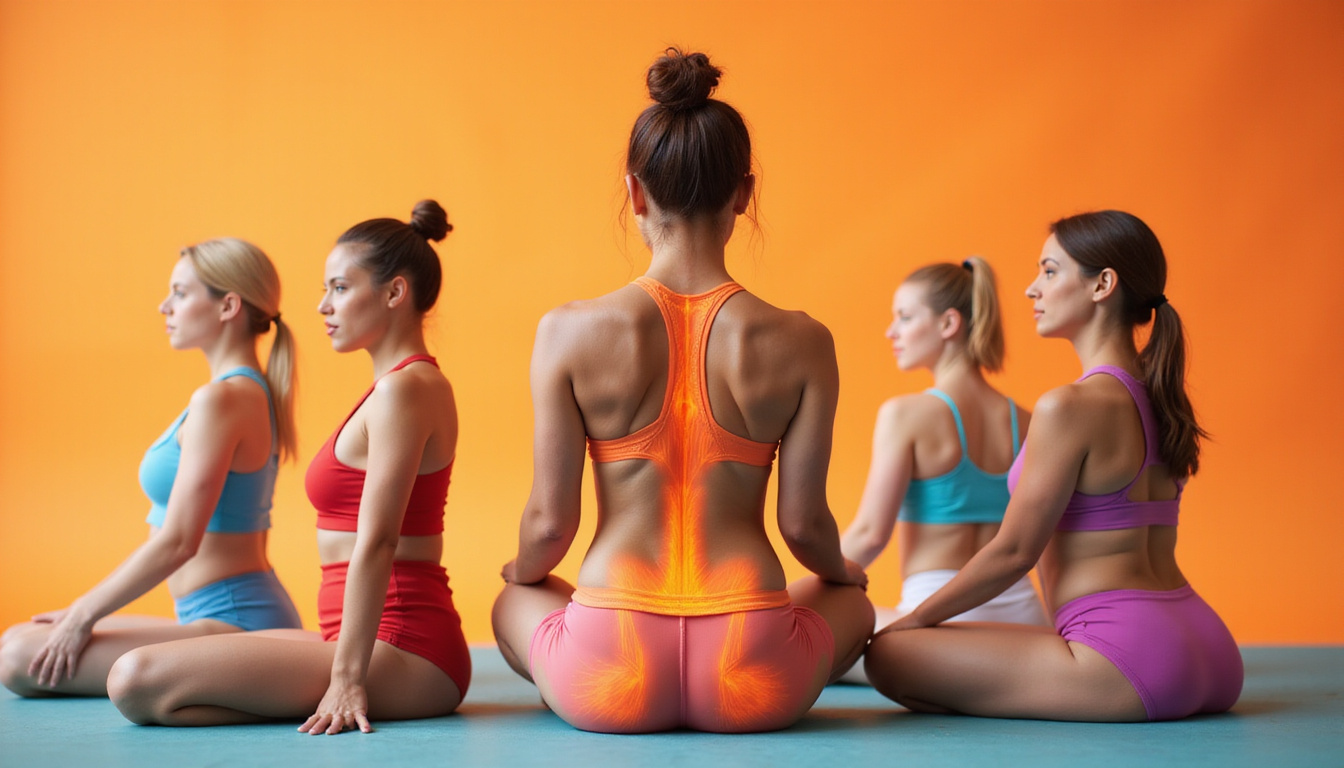
7. Supine Hamstring Release with Strap (Supta Padangusthasana, Gentle)
Tight or overworked hamstrings pull on the pelvis and affect hip sensations.
How to:
- You lie on your back with your knees bent.
- You loop a strap around the ball of your right foot. Then you extend that leg toward the ceiling.
- You keep a small bend in the knee and avoid locking it out.
- You keep your left knee bent with the foot on the floor for added ease.
- You hold for 60–90 seconds per side. You focus on an even, calm sensation.
Why it helps:
The move lengthens the back of the leg and supports balanced pelvis mechanics. It avoids stressing (rather than locking) the low back or hip joint.
Bringing It Together: A 10–15 Minute hip pain yoga Mini-Sequence
This mini-sequence can warm you up before a full practice or serve as a standalone flow:
- 90/90 Hip Swivels – 8–10 rounds
- Sidelying Clamshells – 10–15 repetitions per side
- Low Lunge on Padding – 5–8 breaths per side
- Supported Figure Four – 60–90 seconds per side
- Supine Hamstring Release – 60–90 seconds per side
- Supported Bridge – 1–3 minutes
- Wide Child’s Pose with Props – 2–3 minutes
Finish with a short savasana. You simply notice hip sensations with no judgment.
Beyond the Mat: Supporting Your Hips from the Inside Out
As your practice grows, you learn that joint comfort depends on more than better stretches. Healthy hips rely on:
- Consistent movement throughout the day, not only in class
- Strength work that complements asana (especially for glutes and deep core)
- Sleep, stress management, and balanced nutrition that support muscles, cartilage, and tissues
Many American practitioners add a high-quality joint and muscle support supplement to their routine. Supplements cannot treat or cure a condition. Yet, they contain nutrients that research studies show may support joint structure and the body’s antioxidant defenses (source: NIH Office of Dietary Supplements).
Introducing Regenerix Gold for Yoga Practitioners
For practitioners who wish their bodies to feel as resilient as their mind, Regenerix Gold supports healthy joints, muscles, and overall movement comfort. It is made for those who care deeply about what they put in their bodies – on their plate and in their supplement cabinet.
<iframe width="560" height="315" src="https://youtu.be/mGrH5UWFxUs?si=enLOx67aeklAOHfA" title="Regenerix Gold Video" frameborder="0" allowfullscreen></iframe>
Used with smart, hip-friendly sequencing, like the poses above, Regenerix Gold becomes one more tool. It helps you stay consistent with the movement you love. It does not replace mindful practice. It simply supports your joints and muscles as you flow, hold, and explore.
As with any supplement, check with your healthcare provider, especially if you are pregnant, nursing, on medication, or managing any medical conditions.
FAQ: hip pain yoga & Joint-Friendly Practice
1. Is yoga good for hip joint discomfort, or can it make it worse?
Yoga supports hip comfort when you respect your current range of motion and strength. Gentle, well-aligned poses such as supported figure four, low lunge on padding, and wide child’s pose let you explore mobility without forcing a stretch. Pushing into a sharp or “pinchy” sensation – especially in deep external-rotation poses – might aggravate the tissues. If you are unsure, work with a skilled teacher or therapist and get medical clearance if needed.
2. What are the best yoga poses for tight hips and lower back tension?
Many practitioners find that simple, supported shapes work best for “hip pain yoga.” Try reclined figure four, supported bridge, 90/90 hip swivels, and gentle supine hamstring stretches. These moves balance openness with stability and calm your nervous system. Adding strengthening drills like clamshells helps address muscle imbalances rather than simply chasing more stretch.
3. Can supplements really help with hip and joint comfort for yoga practitioners?
Supplements do not guarantee specific results or replace medical care. However, certain ingredients are used to support joint health, muscle comfort, and recovery as part of a full wellness routine. Many American practitioners add a product like Regenerix Gold to their regimen. They combine it with good hydration, smart sequencing, and proper rest to maintain comfortable movement and long-term practice. Always consult a healthcare professional before you start any supplement.
Step Into Your Practice Like It’s a Long-Term Investment
Your practice is more than a workout. It is a powerful asset for your mental clarity, emotional steadiness, and physical capacity. Ongoing hip discomfort can quietly chip away at these assets. You might miss classes, hesitate when opportunities come, and worry about costly medical interventions later.
Practitioners who stay on the mat for decades do not force Instagram poses. They do the smart, unsexy work: gentle variations, strength drills, rest days, supportive nutrition, and well-chosen supplements.
If you see your body as your primary tool for work, creativity, and independence, upgrade the way you support it. Integrate the seven gentle hip pain yoga poses into your weekly routine. Pair them with a joint- and muscle-support supplement like Regenerix Gold. It is a choice for practitioners who would rather invest in staying well than pay later for injuries.
This approach plays the long game. You keep your practice, livelihood, and freedom of movement intact. You know that cutting corners on your body’s upkeep is a false economy. Choose to move, breathe, and support yourself like someone who plans to stay strong, mobile, and grounded for many years to come.
Health Note
Always consult a licensed medical doctor for your health issues.
Special Discount
If you prefer preventive nutrition to minimize expensive knee surgery and potentially addictive pharmaceuticals, Regenerix Gold is your savvy solution.
You qualify for a special discount.
Simply use the link below and a discount will automatically be applied during checkout.
Get Regenerix Gold => HERE


