

If you go straight from your car to the kitchen line, pause. Rethink your pickleball warm up routine. Whether you play rec five days a week or chase medals in tournaments, a smart warmup helps your joints move smoother, your footwork feel lighter, and your shots land where you aim.
This guide speaks to American Picklers. You feel the aches, stiffness, or twinges from all those dinks, lunges, and overheads. You want to play hard without feeling wrecked the next day.
Why a proper pickleball warm up matters more as we play more
Pickleball is full of quick moves. It makes you stop suddenly, lunge to catch a dink, split-step before a speed-up, and pivot when a drive comes at your backhand. These moves load your:
- Knees and hips (lunge and split-step)
- Shoulders and elbows (serves, overheads, punch volleys)
- Lower back and calves (bending for low balls, quick changes)
A good pickleball warm up does three things:
- It warms muscles and lubricates joints. Movements feel smoother and less creaky.
- It preps pickleball moves—split-steps, shuffles, lunges, rotations. It is not just generic exercise.
- It turns your brain on. Your timing, reaction, and paddle control start strong from the first rally.
If you already feel discomfort, warmup is a must. It is your daily insurance against cold, overworked tissue that hurts later.
Principles of an effective pickleball warm up
Before you see the drills, keep these ideas close:
- Dynamic, not static: Move through motions instead of holding long stretches. Save deep stretching for after you play.
- Progressive: Begin easy. Then, build speed and intensity.
- Pickleball-specific: Use moves you use on court. Think shuffles, lunges, rotations, overhead reaches, and quick steps.
- Short but consistent: 8–12 minutes is enough if you do it every time you play.
Phase 1: Court-side mobility to “turn on” the joints (3–4 minutes)
Do these as soon as you arrive. Do them before you pick up a paddle.
1. Ankle rolls and calf pumps
Picklers often feel tight calves and stiff ankles when they try a short drop shot. Spend 60–90 seconds here.
- Stand and hold the fence or net post.
- Roll each ankle slowly in circles. Do 10 circles each way.
- Do 15–20 small calf raises. Lift and lower your heels slowly.
2. Hip openers (“gate swings”)
These moves help when you lunge wide to keep the ball out of the alley.
- Stand tall. Place your hands on your hips or a fence for balance.
- Lift one knee. Gently swing it out to the side like a gate.
- Do 8–10 swings per leg. Then switch direction (swing from out to in).
3. Dynamic hamstring sweep
This helps if your legs feel tight when bending low to hit a dink.
- Step forward with one foot. Keep your heel down and toes up.
- Hinge at your hips. Sweep your hands down toward the ankle and back up as you step forward onto the other leg.
- Do 10–12 steps per leg along the back of the court.
Phase 2: Dynamic full-body movement (3–4 minutes)
Now raise your heart rate. Mimic the moves you make during points.
4. Lateral shuffles along the baseline
This drill builds the basic footwork needed at the kitchen.
- Stand at one sideline on the baseline.
- Shuffle to the opposite sideline. Stay low and light. Then shuffle back.
- Keep your toes forward. Do not cross your feet.
- Do 2–3 lengths at an easy pace, then 2 faster sets.
5. Walking lunges with rotation
This move links your hips and knees with a trunk twist like a wide dink or reach volley.
- Step forward into a lunge. Do not force the depth.
- As you lunge, rotate your torso toward your front leg, as if you follow through on a crosscourt dink.
- Step up and switch legs.
- Do 8–10 lunges total. Focus on control, not speed.
6. Arm circles and “paddle swings”
Your shoulders work hard in serves, overheads, and quick kitchen flicks.
- Do 10–15 small arm circles, then larger ones. Circle forward and back.
- Take your paddle. Do 10–12 light “shadow swings.” Try:
- A few serve motions
- A few overhead motions
- A few punch volleys
- A few soft dinks
Keep these swings at 50–60% of normal power. This is warmup, not your best serve.
Phase 3: Pickleball-specific dynamic drills (4–6 minutes)
Now start moves that copy game play. These drills help you play better from the first ball.
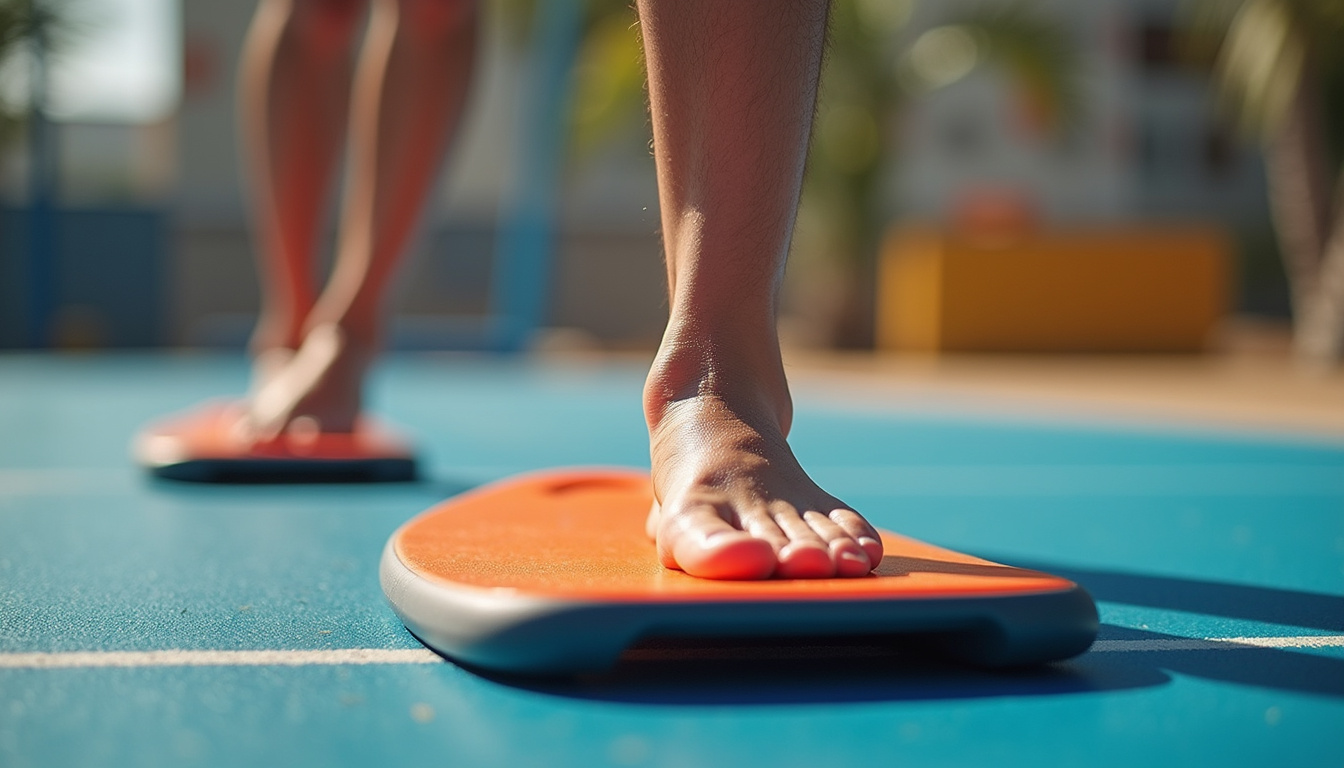
7. Split-step and react drill
The split-step is key to good pickleball footwork. It is often the first move that suffers when you feel stiff.
- Stand at the NVZ (kitchen) line facing the net.
- Ask a partner or coach to stand opposite with a ball (or point).
- When your partner points left or right (or tosses a ball lightly), do a split-step.
- Then, take one or two quick shuffle steps to that side.
- Reset and repeat 10–12 times.
If you are alone, imagine the cue. Say “left” or “right” to yourself and move accordingly.
8. Kitchen line dink-and-volley pattern
This drill wakes up your soft game and quick reactions.
With a partner:
- Stand at the kitchen line crosscourt.
- Exchange 10–12 soft dinks.
- Then, signal “speed up.” Each player hits 4–5 controlled punch volleys.
- Return to soft dinks for 6–8 shots.
- Switch sides and repeat.
If you are solo:
- Stand at the NVZ line and dink against a wall. Then hit a few harder volleys. Return to dinks.
9. Serve-and-return rhythm builder
Many Picklers feel shaky on their first few serves or returns. Pre-game practice helps.
- Hit 6–8 easy serves from each side. Focus on smooth motion and depth.
- Have your partner return them at 50% speed while you move from the baseline to the kitchen.
- Switch roles.
Make your movement realistic. Do not stand still and swing balls.
Layering in nutritional support for joints and muscles: Regenerix Gold
A smart pickleball warm up helps protect overworked joints and tight muscles. Still, many players also add daily support for:
- Smooth joint movement
- Muscle recovery after long rec sessions or tournaments
- Staying on the court without feeling beat
This is when a nutrition-based solution like Regenerix Gold comes in.
Why Picklers are turning to Regenerix Gold
Regenerix Gold supports active adults. Many serious Picklers want healthy joints and muscles as they play more. Key points include:
- It is a supplement, not a drug. It is part of an overall wellness plan.
- Doctors and physical therapists who work with active adults recommend it.
- It has been used for over a decade internationally. Users praise it for keeping them moving.
- It targets nutritional support—not for treating or curing any medical problem.
Before you start any new supplement, check with your healthcare provider. Many Picklers combine:
- A smart warmup and cool-down
- Sensible court time (rest days and not six-hour sessions every day)
- Attention to body weight, sleep, and hydration
- A targeted product like Regenerix Gold that supports joint and muscle health nutritionally
For more on benefits from regular movement and joint-friendly habits, the CDC shows that physical activity supports musculoskeletal health and overall function (source: Centers for Disease Control and Prevention, Physical Activity Basics).
Regenerix Gold
Simple pre-game checklist for Picklers
Before your next rec session or league match, run through this checklist:
- Arrive 10–15 minutes early – Give yourself time for a warmup, not just for taping lineups.
- Do 3–4 minutes of mobility – Focus on ankles, hips, and hamstrings.
- Spend 3–4 minutes on dynamic moves – Include lateral shuffles, lunges with rotation, and shoulder warmup.
- Finish with 4–6 minutes of pickleball-specific drills – Try split-steps, dinks, serves, and returns.
- Hydrate and fuel – Do not start your session on empty.
- Stick with joint-support habits – Follow any routine like Regenerix Gold if your doctor or PT agrees.
These habits can make the difference between leaving the court ready for more or limping to the car wishing you had stretched.
FAQ: Common questions about pickleball warm up routines
1. What is the best pickleball warm up for older players?
For older Picklers or those with more stiffness, the best pickleball warm up does this:
- It spends extra time on gentle joint mobility (ankles, hips, shoulders)
- It uses slower, controlled lunges instead of deep, aggressive moves
- It builds slowly from easy to harder drills
Focus on quality, not speed. If something hurts sharply, stop and change the move. Combine your warmup with daily habits that support joint comfort, like good nutrition, extra movement, and any supplements your doctor recommends.
2. How long should a pickleball warm up last before rec play?
Usually, a pickleball warm up routine of 8–12 minutes is enough. This means:
- 3–4 minutes of mobility work
- 3–4 minutes of dynamic movements
- 4–6 minutes of paddle-in-hand pickleball drills
On tournament days, you might need a slightly longer warmup before your first match. The harder you plan to play, the more time you should spend warming up.
3. Can a pickleball warm up help reduce post-game soreness?
A smart warm up for pickleball helps your body move better. This can mean less strain on cold muscles and joints, and less next-day stiffness. When you combine:
- A warmup before play
- A light cool-down and stretch after play
- Good hydration and nutrition
- A regular joint-support plan, such as using Regenerix Gold (with medical advice)
your body may feel better after long sessions.
Play like the savvy Pickler you are
Think about the player who shows up with a warmup routine. They often have an edge over someone who jumps straight into the game.
Your body works the same way.
A thoughtful pickleball warm up backed by good nutrition helps your joints and muscles. It makes you:
- Feel less tight and sluggish in the first game
- Move with more confidence for sharp dinks or overheads
- Enjoy longer court time instead of ending in a waiting room for treatment
If you care about your paddle, shoes, and paddle partner, you should care about your joints too.
Try a bottle of Regenerix Gold with the warmup routine in this guide for a month. See how your body feels when you treat it as the most important gear on the court.
https://youtu.be/mGrH5UWFxUs?si=X9bScbG6dvejGkZf
Health Note
Always consult a licensed medical doctor for your health issues.
Special Discount
If you prefer preventive nutrition to minimize expensive knee surgery and potentially addictive pharmaceuticals, Regenerix Gold is your savvy solution.
You qualify for a special discount.
Simply use the link below and a discount will automatically be applied during checkout.
Get Regenerix Gold => HERE


