
Functional bracing for Faster Recovery: How to Choose the Right Brace
by Zestora on Jul 01, 2026

If you live for third-shot drops, kitchen battles, and weekly rec games, you know functional bracing. You might use a knee sleeve after hard stops at the baseline, or an ankle brace after landing awkwardly from an overhead, or a wrist brace after too many backhand dinks. For Pickleball players, the right brace can mean the difference between playing on the court and sitting on the sidelines.
This guide explains what functional bracing is. It shows how a good brace can support your recovery while playing Pickleball and how to choose the best brace for your game. It also explains how nutrition-based support, such as Regenerix Gold, can help keep your joints and muscles ready for more court time.
What Is Functional Bracing (in Pickleball Terms)?
Functional bracing means using a brace that supports your move while still letting you move. It does not lock you in place like a cast or splint. Instead, a functional brace does three things:
- It supports your joint throughout normal moves like split steps, lunges, and quick pivots.
- It guides your motion so that you move in a safer way.
- It compresses the joint to reduce pain and swelling from routine play.
For Pickleball players, functional bracing is useful for many joints:
- Ankles (for cuts, stops, and side shuffles)
- Knees (for lunges, squats, and sudden direction changes)
- Elbows (to help with the stress of endless dinks and drives)
- Wrists (in volleys, resets, and overhead shots)
- Lower back (when serving, bending for balls, or twisting for lobs)
Functional bracing helps you stay active. It supports you while you keep playing, as long as pain levels are low and your clinician agrees you can play.
Why Pickleball Players Turn to Functional Bracing
Pickleball is fun but demanding. Fast rallies, stop-start footwork, and repetitive swings put pressure on your body. This is especially true when you:
- Play several times a week
- Skip proper warm-up or cool-down exercises
- Sit a lot at work
- Are over 40, 50, or 60 and still chase every dink
Functional bracing can help by:
- Supporting vulnerable areas during aggressive moves like Erne attempts or chasing cross-court dinks.
- Limiting the motions that irritate soft tissues while still allowing play.
- Improving body awareness (proprioception) so your brain understands your joint’s position.
- Boosting confidence so you worry less about re-injuring a spot.
It does not fix everything. It does not replace good technique, strength, or mobility work. Yet for many Picklers, the right brace is part of a smart, layered play strategy.
Types of Functional Bracing Picklers Commonly Use
Below are the common types of braces you will see on the court and what they do.
1. Ankle Braces
For players who roll their ankles on quick cuts or fear landing wrong after a smash.
- Lace-up braces look like a tight shoe without a sole. They support well and let you move.
- Figure-8 strap braces add stability around the joint.
- Sleeve-type supports are lighter. They provide compression and mild support.
2. Knee Braces
For players who feel wobbly with side steps, lunges, or repeated squats near the kitchen.
- Compression sleeves keep the joint warm. They give mild support and boost proprioception.
- Knee braces with side stays add more structure to guide your motion.
- Patellar straps target the area beneath the kneecap. They help with jumpy or achy knees.
3. Elbow Braces
For players who wake up with a sore hitting arm or feel pain with dinks and drives.
- Counterforce straps wrap around your forearm to ease tension from repeated swings.
- Compression sleeves warm and support the elbow and forearm.
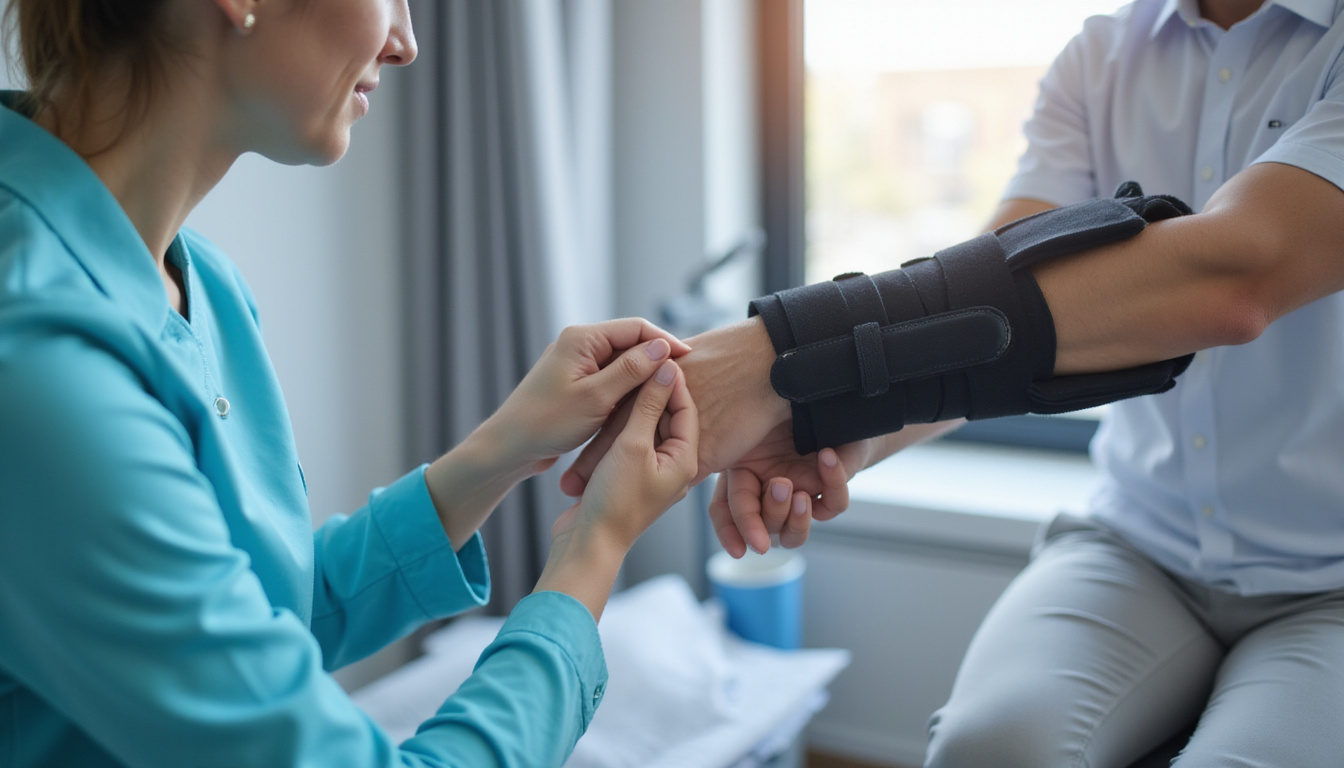
4. Wrist Braces
For players whose wrists feel sore from blocks, resets, and last-second flicks.
- Light support wraps allow near-full movement. They offer mild compression.
- Splint-style braces restrict extreme bending. They provide more support when needed.
5. Lumbar (Lower Back) Braces
For players whose lower back complains after long sessions or bending for low balls.
- Elastic support belts offer compression and help maintain posture.
- Structured back supports have extra stays for more control. They should be used with professional advice.
How Functional Bracing Can Support Faster Recovery
A brace does not heal tissues by itself. It makes a safer environment for recovery as you stay active:
- It controls stress on sensitive areas. By guiding your motion and limiting extremes, a brace lessens the strain on irritated tissues.
- It promotes gentle, safe movement. Staying active at a good intensity increases circulation. This, in turn, speeds up recovery.
- It helps you modify your game. Instead of stopping altogether, a brace lets you play shorter sessions and gradually build up intensity.
How to Choose the Right Functional Brace for Your Game
When browsing the pro shop, online, or sporting goods aisles, use these filters:
1. Match the Brace to the Movement Problem
Be specific. For example:
- Roll your ankles on pushes? Choose an ankle brace with lateral support.
- Feel unstable on side shuffles? Choose a knee brace with side stays.
- Experience elbow flare from hard drives or topspin? Choose a forearm strap or elbow sleeve.
- Suffer wrist pain from blocks? Choose a light wrist brace that allows some motion.
Ask yourself what move makes the pain worse, and choose a brace that targets that movement.
2. Balance Support with Mobility
Too much support may limit natural motion, causing other joints to work harder. The best brace gives enough support to ease discomfort while still allowing you to perform dinks, drives, overheads, and lateral moves with good mechanics.
3. Consider Fit, Comfort, and Breathability
A brace you dislike wearing won’t help. Look for:
- Correct sizing (measure rather than guess)
- Materials that are breathable, especially for hot outdoor play
- Smooth seams that do not rub during long rallies
- An easy on/off design so you do not fight with it between games
4. Think About Duration: Short-Term vs. Long-Term Use
- Short-term: Right after a tweak, for a few weeks while you heal and build strength.
- Medium-term: During high-intensity sessions like tournaments.
- Long-term/Regular: Only under professional guidance, with plans to maintain muscle strength.
A brace should work together with a routine of warm-ups, strength work, mobility, smart scheduling, and proper nutrition.
5. Get Guidance from Pros Who Know Pickleball
Consult a doctor, physical therapist, or athletic trainer who understands Pickleball moves. They can:
- Direct you to the right type of functional brace
- Show you how to wear it properly
- Build a strength and mobility routine that works with your brace
Beyond Bracing: Nutrition Support with Regenerix Gold
Functional bracing supports you from the outside. To play pain-free points and protect your body long term, support your joints and muscles from the inside too.
That is where a nutrition-based supplement like Regenerix Gold comes in.
Why Many Picklers Pair Bracing with Regenerix Gold
- Joint and muscle support: Regenerix Gold supports healthy joints and muscles. This is crucial for players who repeat lunges, squats, and overhead shots.
- Nutrition-based approach: You support your body externally with a brace and internally with the right nutrients.
- Professional recommendation: Doctors and physical therapists recommend Regenerix Gold for active adults who want to keep moving confidently.
- Proven track record: It has a long history of helping users stay active, mobile, and on their feet.
Keep in mind, Regenerix Gold is not a treatment or cure. But for serious Picklers who invest in paddles, shoes, and court fees, supporting your body from within is a smart long-term move.
Regenerix Gold
Building Your Own “Stay-in-the-Game” System
Functional bracing works best as part of an overall Pickleball routine. Follow this simple framework:
-
Warm-Up Like You Mean It
- Light jog or fast walk around the court
- Dynamic leg swings, arm circles, trunk rotations
- A few shadow swings and mini-splits at half speed
-
Use Functional Bracing Where Needed
- Use an ankle brace if you have rolled your ankle
- Use a knee brace if one side feels unstable
- Use an elbow strap if your hitting arm protests after games
-
Strength and Mobility (Off-Court)
- Do calf raises, side steps with bands, and single-leg balance drills
- Try hip bridges, bodyweight squats, and core exercises
- Stretch gently after sessions
-
Support from the Inside
- Drink plenty of water and eat quality protein
- Consider adding Regenerix Gold to support joint and muscle health as part of your daily routine
-
Smart Scheduling
- Rotate between intense days and lighter days (more dinks, fewer sprints)
- Include off-days for walking, biking, or gentle mobility
Quick Checklist: Are You Using Your Brace Wisely?
- [ ] I chose a brace specifically for the joint and move that bothers me.
- [ ] It fits snugly without cutting off circulation or causing numbness.
- [ ] I can perform my basic Pickleball moves with good form.
- [ ] I add strength and mobility work instead of relying only on the brace.
- [ ] I support my joints and muscles with good nutrition and consider supplements like Regenerix Gold.
- [ ] I scale back intensity when my body asks for a break.
FAQs About Functional Bracing for Pickleball Players
1. Is functional bracing good for Pickleball players with joint discomfort?
Functional bracing can help players who feel joint or muscle pain during some moves. A good brace supports the joint and may help you move more comfortably while you work on strength, mobility, and technique. Consult a healthcare professional if the pain is strong or lasts long.
2. What’s the best functional brace for Pickleball elbow?
For players with “Pickleball elbow,” many use a counterforce forearm strap or an elbow compression sleeve. These braces help spread out stress from repeated swings. The best brace depends on your symptoms, swing technique, and your clinician’s advice.
3. Do I still need a supplement if I use functional joint bracing?
The brace and the nutrition do different jobs. A brace supports your body from the outside, while nutrition — including supplements like Regenerix Gold — supports your joints and muscles from the inside. Many Picklers use both methods: a brace for targeted support during play and nutrition to maintain overall joint and muscle health.
Why Smart Picklers Act Now — Not After They’re Sidelined
Court time is precious. Medical bills, missed work, and time off play can cost you. The Picklers who keep playing year after year treat their body as an investment.
They combine:
- The right functional bracing for their needs
- A thoughtful warm-up and strength routine
- Nutrition that supports joint and muscle health, such as Regenerix Gold
This makes you a player who is prepared, informed, and serious about staying in the game.
If you already invest in premium paddles and league fees, protect the one asset you cannot replace: your body. Consider a bottle of Regenerix Gold and feel its benefits. Join many active, health-savvy Picklers and long-term players who invest in keeping their joints and muscles strong—not as a last-minute fix but as a smart long-term strategy.
https://youtu.be/mGrH5UWFxUs?si=X9bScbG6dvejGkZf
Health Note
Always consult a licensed medical doctor for your health issues.
Special Discount
If you prefer preventive nutrition to minimize expensive knee surgery and potentially addictive pharmaceuticals, Regenerix Gold is your savvy solution.
You qualify for a special discount.
Simply use the link below and a discount will automatically be applied during checkout.
Get Regenerix Gold => HERE


