

If your knees bother you after just a few games, try hip abductor work. It may be the piece your pickleball routine needs. Many players say “bad knees” or “old age” but weak hips can let your knees twist, collapse, and strain with every move on the court.
This guide shows why your hip abductors matter. It tells you how they guard your knees and gives you simple, pickleball-tailored moves you can do today. It also explains how a nutrition plan like Regenerix Gold may help your joints and muscles stay game-ready.
Why hip abductor strengthening matters for pickleball knees
Your hip abductors—gluteus medius, gluteus minimus, and other supporting muscles—sit on the side of your hips. They do three main things:
• They keep your pelvis level when you stand on one leg.
• They hold your thigh bone steady so it does not cave inward.
• They steady your knee during shuffles, lunges, and quick stops.
On the pickleball court, your hips work hard when you:
• Split-step before a return.
• Slide into the kitchen to cover a dink.
• Lunge for a wide volley.
• Push off for an overhead or quick run-up.
Weak hip abductors can let your knee collapse inward (a valgus position). Over time this can lead to:
• Soreness around the knee’s front or inner side.
• Achy stiffness after long sessions or tournaments.
• A sensation that the knee does not track smoothly.
Strength work for your hip abductors does not “treat” or “cure” problems. Still, it can help your joints handle pickleball loads better and ease everyday knee discomfort.
Signs your hips are letting your knees down
Pickleball is about paddles and spin, but your body’s motion matters too. You might need more hip abductor work if you see these signs:
• Your knees knock inward when you squat or lunge.
• You feel more steady on one leg than on the other.
• Your knee aches after many lateral shuffles.
• You collapse into your planted leg when you hit a wide dink.
• You lose balance during a one-leg stance.
Try this simple test at home:
Stand on one leg in front of a mirror. Keep a slight knee bend. Hold for 20–30 seconds. If your pelvis drops or your knee moves inward, your hip abductors need help.
Warm-up first: Prepare your joints for play
Before you work your hip abductors, do a short dynamic warm-up. This readies your muscles and joints for work:
• 1–2 minutes of easy marching or a light jog.
• 20 leg swings forward-back and side-to-side for each leg.
• 10–15 bodyweight squats while keeping your knees over your toes.
• 10 slow lateral steps each way.
This warm-up also helps you get moving quickly on the pickleball court.
Simple hip abductor strengthening exercises for picklers
These moves work directly on your hip muscles. They help with on-court balance and movement. Start with 2–3 sets, 2–3 times per week on different days. If you feel sharp pain, stop and talk to a healthcare professional.
1. Side-lying leg raises (baseline activator)
Use this move if you are new to focused hip work or if you are easing back in.
How to do it:
- Lie on your side. Bend the bottom leg; align the top leg straight.
- Point your toes forward (or slightly down) so you feel work on the side, not the front.
- Lift your top leg 12–18 inches, pause briefly, then lower it slowly.
Pickleball cue: Imagine lifting your leg to set up a wide lateral step for a dink.
Reps: 10–15 per side; 2–3 sets.
2. Clamshells with band (court-control muscles)
This move works on the deep rotators and side glutes that keep your knee steady.
How to do it:
- Lie on your side with your hips and knees bent at about 90°. Keep your heels together.
- Place a light mini-band just above your knees.
- Without rolling your pelvis, lift your top knee like opening a clamshell.
- Pause at the top, then lower slowly.
Reps: 12–20 per side; 2–3 sets.
Common mistake: Letting your body roll backward. Keep the movement small and precise.
3. Banded lateral walks (pickleball shuffle builder)
This drill builds strength that directly helps your on-court footwork.
How to do it:
- Place a resistance band around your ankles or just above your knees.
- Get into an athletic stance: knees soft, chest up, and hips back.
- Step sideways with your lead foot. Bring the trailing foot along without letting the band pull your legs together.
- Keep toes and knees pointing ahead, or turn them out very slightly.
Reps: 2–3 sets of 8–12 steps in each direction.
On-court tie-in: Think of this as a dry run for smooth kitchen coverage.
4. Single-leg hip hike (pelvic control for split-steps)
This move teaches your hips to stabilize when you rely on one leg.
How to do it:
- Stand sideways on a step. Place one foot on the step and let the other hang off.
- Keep both knees straight. Slowly let the hanging leg drop by lowering your hip.
- Use your standing hip muscle to lift the hanging hip until it is level or a bit higher than your body.
Reps: 10–15 per side; 2–3 sets. Hold the lifted position for 1–2 seconds.
5. Side step-downs (knee tracking control)
This move mimics the demands on your knee during wide stances.
How to do it:
- Stand sideways on a low step or stable platform (start with 4–6 inches).
- Put your outside leg on the step; let your inside leg hang off.
- Slowly bend your stance knee and let the hanging heel touch the floor lightly.
- Push up through your heel. Keep your knee tracking over the middle of your foot and do not let it cave in.
Reps: 8–12 per side; 2–3 sets.
Progress the move by increasing the step height or holding a light weight when your form is solid.
6. Lateral lunge to balance (game-like movement)
This exercise connects hip strength with movements you use in games.
How to do it:
- Stand tall with your feet hip-width apart.
- Step to the side. Sit your hips back into a lateral lunge, keeping one leg straight.
- Push off the lunging leg and return to center. As you do, briefly balance on the push-off leg.
- Hold the balance for 2–3 seconds before the next rep.
Reps: 8–10 per side; 2–3 sets.
On-court cue: Picture moving out for a wide dink and then recovering to center.
How to integrate hip abductor strengthening into your pickleball week
You do not need to be a gym regular. Use this sample schedule to help your knees:
• Before play (5–7 minutes):
– Do a quick dynamic warm-up.
– Do one set each of banded lateral walks and side-lying leg raises.
• On non-playing days (15–20 minutes):
– Do clamshells: 2–3 sets.
– Do banded lateral walks: 2–3 sets.
– Do side step-downs: 2–3 sets.
– Optionally, do lateral lunge to balance: 2 sets.
• After play (optional, 5 minutes):
– Do gentle stretching for hips, quads, hamstrings, and calves.
– Do a few easy clamshells or leg raises to keep the blood flowing.
This routine is light enough for league nights, open play, or tournaments. It steadily builds your hip strength.
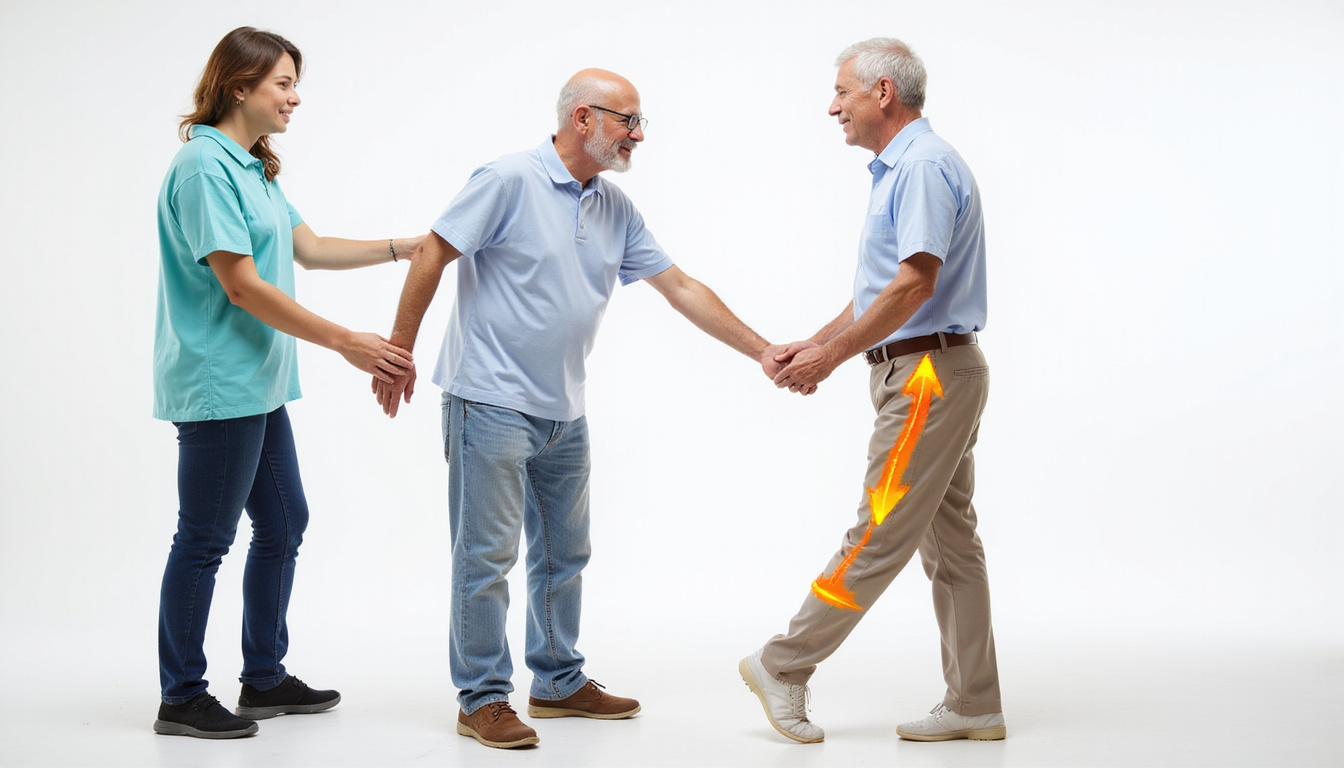
Supporting your joints and muscles from the inside: Regenerix Gold
Strength and good movement are part of a plan. Many American pickleball players use a nutrition plan to support their joints and muscles. They need to feel good during long rec sessions, ladder leagues, and tournaments.
Regenerix Gold is a supplement made for people who want to keep their joints and muscles healthy for an active lifestyle. It is not meant to diagnose, treat, cure, or prevent disease. It can work with:
• Hip abductor exercises
• Mobility and flexibility work
• Smart warm-ups and cool-downs
Why picklers are interested in Regenerix Gold
Players say Regenerix Gold:
• Focuses on nutrition rather than a quick-fix drug.
• Is recommended by doctors and physical therapists who work with active adults and masters-level athletes.
• Has a long history of use and many positive reviews.
• Fits a long-term plan to support players who compete several times a week.
Many users report that it helps them feel more comfortable during the repeated movements of drills, dinks, and long rallies. Always consult your healthcare provider if you have medical conditions, take medications, or if you are pregnant or nursing.
Making your knees “pickleball-proof”: A practical checklist
Here is a checklist to work on over the next few weeks:
[ ] Warm up before every session (not just tournaments).
[ ] Do hip abductor exercises 2–3 times each week.
[ ] Watch your knee tracking during squats, lunges, and step-downs.
[ ] Add short single-leg balance holds into your routine (for example, while brushing your teeth).
[ ] Consider a joint and muscle supplement such as Regenerix Gold.
Over time, many players notice they can last longer in points, handle more time on the court, and recover faster by combining smart training with supportive nutrition.
Quick FAQ about hip abductor strengthening and knee comfort
-
How does hip abductor strengthening ease knee discomfort in pickleball?
Your hip abductors control how your thigh moves. When strong, they help prevent your knee from collapsing inward during shuffles, lunges, and quick movements. This control makes your knee work more smoothly. -
How often should I do these exercises?
Most players do 2–3 focused sessions per week. They may also add light activation drills in their warm-up before games. Space out your sessions (for example, Monday–Wednesday–Friday) so your muscles can recover. -
Do I need special gym equipment?
No. Start with bodyweight moves such as side-lying leg raises, clamshells, and lateral lunges. A mini-band adds extra resistance and is easy to bring along to a match.
For more information on hip and knee alignment and joint loading, check the American Academy of Orthopaedic Surgeons. (Source: https://orthoinfo.aaos.org/)
Ready to play smarter and longer? Your next move.
When you play, you want to stay in the game. Whether you face hard hitters, join open play, or climb your local ladder, hip abductor work and smart nutritional support can set you apart from others.
Many players wait until the pain is strong before changing their routine. You can choose to be proactive instead.
By building your hip strength and supporting your joints with Regenerix Gold, you show that you plan for the future. You invest in your health, in your performance, and in reducing the risk of time lost due to joint pain.
If this feels right, consider trying a bottle of Regenerix Gold while you start the hip abductor routine above. Give it a fair trial for several weeks. See how your body feels during and after play. In a world where many complain about “getting older,” you will know that you are taking smart, solid steps for your game and your future.
Regenerix Gold
https://youtu.be/mGrH5UWFxUs?si=X9bScbG6dvejGkZf
Health Note
Always consult a licensed medical doctor for your health issues.
Special Discount
If you prefer preventive nutrition to minimize expensive knee surgery and potentially addictive pharmaceuticals, Regenerix Gold is your savvy solution.
You qualify for a special discount.
Simply use the link below and a discount will automatically be applied during checkout.
Get Regenerix Gold => HERE


