
joint friendly training: build strength without pain with these moves
by Zestora on Aug 14, 2026

If you’re grinding out rec play, drilling for your next ladder match, and waking up with cranky knees, stiff hips, or barking shoulders, joint friendly training can change the game.
Pickleball is fun and addictive. You love to dink, lunge, and drop that third shot. Yet these moves can stress your body over time. This is especially true when you are 40+ or play several times a week.
This guide serves Picklers. It shows you joint friendly training. The training boosts strength, protects your body, and keeps you on the court so you do not feel broken the next morning.
Why Pickleball Players Need Joint Friendly Training
Pickleball puts many demands on your joints:
- Quick starts and stops on hard courts
- Split steps and lunges into the kitchen
- Rotational swings on drives, serves, and overheads
- Repetitive bending for low balls and resets
Over time, these stresses can add up to:
- Morning stiffness in knees, hips, or back
- Soreness in shoulders or elbows after a long session
- Feeling “beat up” after open play or tournaments
- Worry that your body will not cooperate and you might miss court time
Joint friendly training is not “easy” or “light.” It means you choose smart, pickleball-specific moves that:
- Strengthen the muscles that stabilize your joints
- Improve balance and court movement
- Reduce extra pounding and twisting
- Support faster recovery between play sessions
The goal is to upgrade your body so you can keep upgrading your game.
Principles of Joint Friendly Training for Picklers
Before we list specific moves, keep these principles in mind:
1. Prioritize Control Over Ego
Do not chase big gym records. You need a steady, controlled base. This base lets you hold your ground, move into a poach, and meet that tricky cross-court dink. Use a controlled tempo, good form, and a range that feels comfortable.
2. Train in the Same Patterns You Play
Pickleball uses lateral shuffles, forward lunges into the kitchen, and rotational moves. Let your training copy these patterns. Keep your moves controlled and joint friendly.
3. Emphasize Stability First, Then Power
Build stability in your ankles, knees, hips, and core first. Once the foundation is solid, you can safely add power. Think: first build the base, and then enjoy the fireworks.
4. Respect Recovery and Volume
When you play 3–5 times a week, your joints already handle a lot of impact. Let your training add support without competing with your on-court load. Always respect recovery.
Warm-Up: Court-Ready, Joint-Friendly Prep (5–8 Minutes)
Use this warm-up before you play or before your strength session:
- Ankle circles & toe raises – 10–15 reps each side
- Leg swings (front-to-back and side-to-side) – 10 each leg
- Hip circles – 10 each direction
- Arm circles & shoulder rolls – 10 each direction
- Mini lateral shuffles – 3 sets of 10–15 seconds, low and controlled
- Gentle torso rotations – 10–15 each side
These moves warm your joints, wake up your stabilizers, and reduce that “rusty first game” feeling.
Lower Body: Strengthening Your “Pickleball Suspension System”
Your knees, hips, and ankles act like a suspension system on the court. Joint friendly training here helps you move smoothly without paying for it later.
1. Supported Split Squats (Knee-Friendly Lunges)
Picklers love these because they mimic a lunge into the kitchen without putting too much stress on your front knee.
• Stand in a split stance. Hold a wall, chair, or net post lightly for balance.
• Lower your back knee straight toward the floor.
• Keep your front knee over your ankle.
• Push through your front heel to stand back up.
Reps: 2–3 sets of 8–12 each leg
Tip: Keep your stride long so your front knee does not move past your toes.
2. Box Squats to a Chair or Bench
These squats are joint friendly. They limit your range to what feels comfortable while training your glutes and quads.
• Stand with your feet shoulder-width apart in front of a chair or bench.
• Sit back and gently touch your butt to the seat.
• Stand back up while keeping your chest up and weight on your heels.
Reps: 2–3 sets of 8–10
Tip: If your knees hurt, use a cushion on the chair to raise the seat height.
3. Lateral Band Walks
These walks strengthen your hips and glutes. They help with side-to-side dinks, defensive slides, and chasing tough angles.
• Place a light resistance band above your knees or around your ankles.
• Get into a mini squat position and step sideways, keeping constant tension on the band.
Reps: 2 sets of 10–15 steps each direction
Tip: Use quiet, controlled steps—no stomping.
Upper Body: Shoulder- and Elbow-Friendly Power
Your shoulders work hard in pickleball. They take soft touches and heavy drives. Joint friendly training builds their strength without excess strain.
4. Wall Angels
Wall Angels improve shoulder mobility and posture.
• Stand with your back against a wall.
• Position your feet slightly forward.
• Press your lower back, upper back, and head into the wall.
• Slide your arms up and down like making a snow angel.
• Keep elbows and wrists close to the wall.
Reps: 2 sets of 8–10
Tip: Lift your arms only as high as feels pain-free.
5. Incline Push-Ups (Wall or Bench)
These push-ups strengthen your chest, shoulders, and triceps with less joint strain than floor push-ups.
• Place your hands on a wall, kitchen counter, or sturdy bench.
• Step back until you have a straight-body plank.
• Lower your chest toward the surface.
• Push back to the start.
Reps: 2–3 sets of 8–12
Tip: The higher your hands, the easier it is on your joints.
6. Band Rows
Band Rows balance the forward swinging in your game by strengthening your upper back.
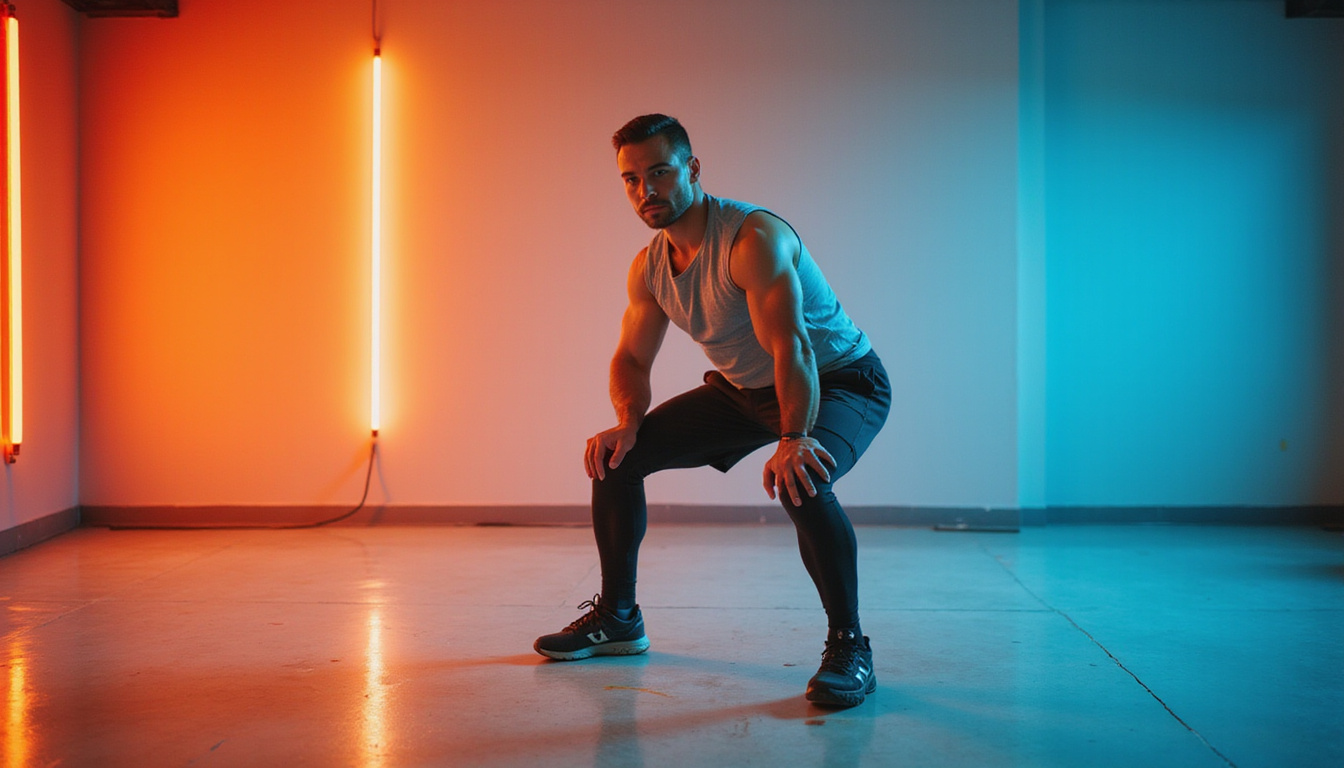
• Attach a light resistance band to a door handle or fence post.
• Hold the band in both hands with arms straight.
• Pull your elbows back as you squeeze your shoulder blades.
Reps: 2–3 sets of 10–15
Tip: Think of moving your shoulder blades into your “back pockets.”
Core and Balance: Your On-Court Stability Engine
A strong, stable core lets you reach for low dinks, recover quickly after lunges, and keep your balance during fast kitchen battles.
7. Dead Bugs
Dead Bugs train your core without stressing your back.
• Lie on your back with your arms raised and legs in a tabletop position.
• Slowly lower the opposite arm and leg toward the floor.
• Keep your lower back gently pressed down.
• Return to the start and switch sides.
Reps: 2–3 sets of 8–10 per side
8. Single-Leg Stance with Reach
This exercise builds balance similar to reaching for a wide ball.
• Stand on one foot and keep a slight bend in the knee.
• Reach forward with both hands as if to catch a low dink.
• Return to the upright position without putting down the other foot, if you can.
Reps: 2 sets of 6–8 reaches each leg
Progression: To challenge yourself, add a small weight or reach diagonally as if chasing a sharp cross-court.
Sample Joint Friendly Training Routine for Pickleball Players
Do this routine 2–3 times per week on non-tournament or lighter play days.
- Warm-Up (5–8 minutes)
- Supported Split Squats – 2–3 sets of 8–12 each leg
- Box Squats to Chair – 2–3 sets of 8–10
- Lateral Band Walks – 2 sets of 10–15 steps each way
- Incline Push-Ups – 2–3 sets of 8–12
- Band Rows – 2–3 sets of 10–15
- Dead Bugs – 2–3 sets of 8–10 each side
- Single-Leg Stance with Reach – 2 sets of 6–8 each leg
- Light stretch: calves, quads, hip flexors, chest (3–5 minutes)
General Guidelines:
• Rest 30–60 seconds between sets.
• Avoid sharp or severe pain. Mild muscle fatigue is okay.
• If a move feels sketchy for your joints, shorten the range or choose a different exercise.
Nutrition Support: Why Many Picklers Add Regenerix Gold
Even smart, joint friendly training works best when your body gets the right nutrition.
Many American Pickleball players add Regenerix Gold to support their joints and muscles. They do this because:
- It is a nutrition-based solution for healthy joints and muscles.
- Doctors and physical therapists recommend it for active adults and racquet-sport players.
- It has been used for over a decade around the world with positive feedback.
Regenerix Gold is not a magic fix or a treatment for any disease. It is a dietary supplement meant to work with your good habits—moving well, eating smart, hydrating, and training safely. For many Picklers, it is one more tool to keep joints comfortable and muscles working so they can stack more court time instead of sitting on the sidelines.
Always read labels, follow usage directions, and talk with your healthcare provider—especially if you take medications, have health issues, or are unsure what your body needs.
Regenerix Gold
Other Joint Friendly Habits for Avid Picklers
Joint friendly training goes beyond exercises. Small changes can make a big difference over a long season:
• Rotate courts or shoes. Hard courts are unforgiving. Choose quality court shoes with cushioning and lateral support.
• Cap your marathon days. Back-to-back leagues, open play, and drills stress your joints. Include lighter days.
• Hydrate and fuel well. Muscles and connective tissue perform better when hydrated and nourished.
• Do gentle post-game stretching. Five minutes of stretching beats months of regret.
The CDC says that regular, moderate physical activity supports joint health, mobility, and overall function as we age (source: CDC Physical Activity Guidelines).
FAQ: Joint Friendly Training for Pickleball Players
Q1: What is joint friendly training for pickleball players, exactly?
A1: It is strength, mobility, and balance work that supports your knees, hips, shoulders, and back. It avoids heavy impacts and extreme ranges. It relies on control, proper technique, and movements that mirror on-court play rather than max lifting.
Q2: How often should I do joint friendly strength training if I play pickleball 3–5 times a week?
A2: Most Picklers do joint friendly training 2–3 times per week. They add these sessions on lighter play days. This helps support muscles and joints without adding extra stress. Always adjust the volume based on how your body feels.
Q3: Can supplements help support joint friendly workouts and on-court performance?
A3: Supplements like Regenerix Gold can help support healthy joints and muscles when used with proper nutrition and training. They are not cures but may improve overall comfort and mobility. Many users report a positive difference when using them alongside smart training.
Make Your Body as Strong as Your Love for the Game
You already invest in paddles, shoes, and court fees. Now invest in the one thing you cannot replace: your body.
Add smart, pickleball-specific strength and stability work to your routine. Support your joints and muscles with nutrition choices like Regenerix Gold.
You are not just a weekend warrior—you are a savvy player. You stay ready for one more game long after others have slowed down.
Spend your money on more court time instead of on medical bills. Stay competitive, active, and confident. Now is the time to act. Pick up a bottle of Regenerix Gold and add it to your routine along with the joint friendly training plan above.
Give yourself the edge that comes from feeling strong, supported, and ready. Leave the court only when the lights go out—not because your body says no.
https://youtu.be/mGrH5UWFxUs?si=X9bScbG6dvejGkZf
Health Note
Always consult a licensed medical doctor for your health issues.
Special Discount
If you prefer preventive nutrition to minimize expensive knee surgery and potentially addictive pharmaceuticals, Regenerix Gold is your savvy solution.
You qualify for a special discount.
Simply use the link below and a discount will automatically be applied during checkout.
Get Regenerix Gold => HERE


