

If you play many rec games, open play sessions, or tournaments, you feel a tight, burning, or crampy sensation in your lower legs after a long pickleball session.
Smart pickleball calf strengthening works by keeping your Achilles safe, by improving your court movement, and by letting you play pain‑free games to 11. This guide speaks directly to American Picklers. It helps those whose legs feel worn and tired. It gives you a practical, joint‑friendly plan to build power and resilience. It also gives a nutrition strategy—including Regenerix Gold—to support healthy joints and muscles.
Why Your Calves Matter So Much in Pickleball
Every pickleball point grows from strong legs.
Your calves work hard for:
- Explosive first steps toward the kitchen
- Split-steps when your opponent hits the ball
- Quick lateral shuffles during dinks and volleys
- Fast deceleration after a run‑through ball
- Small hops and push‑offs for overheads and lobs
On hard courts, all the stopping, starting, and toe‑pushing take a toll. Without proper pickleball calf strengthening, you can face:
- Tight, crampy calves late in games
- Fatigue that harms your footwork and balance
- Extra stress on your ankles, knees, and lower back
- A higher risk of strains and overuse pain
The good news is that a focused calf program stays simple. Do a few smart moves, 2–3 times a week, and you will see more power, more stamina, and more confidence on court.
Warm-Up First: Get Your Calves “Court Ready”
Before you strengthen your calves, especially if you feel any twinges, spend 3–5 minutes waking your muscles and joints.
• March lightly in place.
• Turn your ankles in circles (10–15 each way).
• Do gentle heel raises while holding a fence or wall.
• Step one foot back and pulse gently into a dynamic calf stretch 10–15 times per side.
Then you are ready to work.
1. Straight-Leg Calf Raises (Gastrocnemius Power)
This move builds push‑off strength for drives, serves, and overheads.
How to do it:
- Stand tall and hold a wall, net post, or chair for balance.
- Place your feet hip‑width apart and keep your knees straight, not locked.
- Press through the balls of your feet to lift your heels as high as you can.
- Pause at the top, then lower slowly for 3–4 seconds.
Goal: Do 3 sets of 12–15 controlled reps. Aim for 2–3 sessions each week.
Pickleball benefit: A stronger push‑off gives you an explosive first step to the NVZ. It also improves your stability on the balls of your feet during fast hand battles.
2. Bent-Knee Calf Raises (Soleus Endurance)
Many players work the big outer calf (gastrocnemius) only. The soleus, deeper inside, absorbs shock and builds endurance.
How to do it:
- Stand and hold something for support while you bend your knees about 20–30°.
- With your knees still bent, raise your heels as high as you can.
- Pause briefly, then lower slowly.
Goal: Do 3 sets of 15–20 reps.
Pickleball benefit: This move keeps you springy and stable in long dink rallies and during those endless “side‑out, side‑out” plays.
3. Single-Leg Calf Raises (Court-Specific Stability)
Pickleball rarely stays symmetrical. You lunge for a crosscourt dink or recover from a wide angle. Single-leg work builds balance and one‑leg strength.
How to do it:
- Stand on one leg near a wall or fence.
- Keep your knee mostly straight.
- Press through the ball of your foot to lift your heel high.
- Lower your heel slowly in 3–4 seconds.
Goal: Do 2–3 sets of 8–12 reps per leg. If this feels too hard, begin with both legs up and then lower only one leg.
Pickleball benefit: Better control when you lag or move off‑balance. This helps in wide volleys, emergency saves, and transitions when one foot does most of the work.
4. Eccentric Heel Drops (For Resilient Tendons)
Eccentric training, which means lowering slowly, supports healthy tendons in your lower leg and ankle. It builds control and resilience for aggressive movement.
How to do it:
- Stand on a step so that the balls of both feet sit at the edge and your heels hang off.
- Rise up with both legs.
- Shift your weight onto one leg.
- Slowly lower the heel of that leg below the step for 4–5 seconds.
- Use both legs to lift back up.
Goal: Aim for 2–3 sets of 8–10 drops per leg.
Pickleball benefit: This exercise teaches your lower legs to handle sudden stops, lunges, and quick changes of direction during scrappy defense and fast rallies.
5. Seated Calf Raises (Endurance for Long Play Sessions)
Most rec players and tournament grinders need not only power but also endurance. Seated calf raises work the soleus, like when you spend long periods on your toes.
How to do it:
- Sit in a chair with your feet flat and knees bent at 90°.
- Place a moderate weight (for example, a heavy backpack) across your thighs.
- Raise your heels as high as possible. Pause briefly, then lower slowly.
Goal: Do 3 sets of 15–25 reps.
Pickleball benefit: You lower late‑game calf burnouts so that your footwork remains sharp in game three or later rounds.
6. Wall Tibialis Raises (Balancing Out the Lower Leg)
Having strong calves is good, but if your calves overpower weak shin muscles, your legs feel unbalanced and tight. Strengthening your tibialis can help with braking and deceleration.
How to do it:
- Stand with your back against a wall. Place your heels about 6–8 inches away from the wall.
- Keep your heels on the ground while you lift your toes toward your shins.
- Hold for 1 second, then lower.
Goal: Do 3 sets of 15–20 reps.
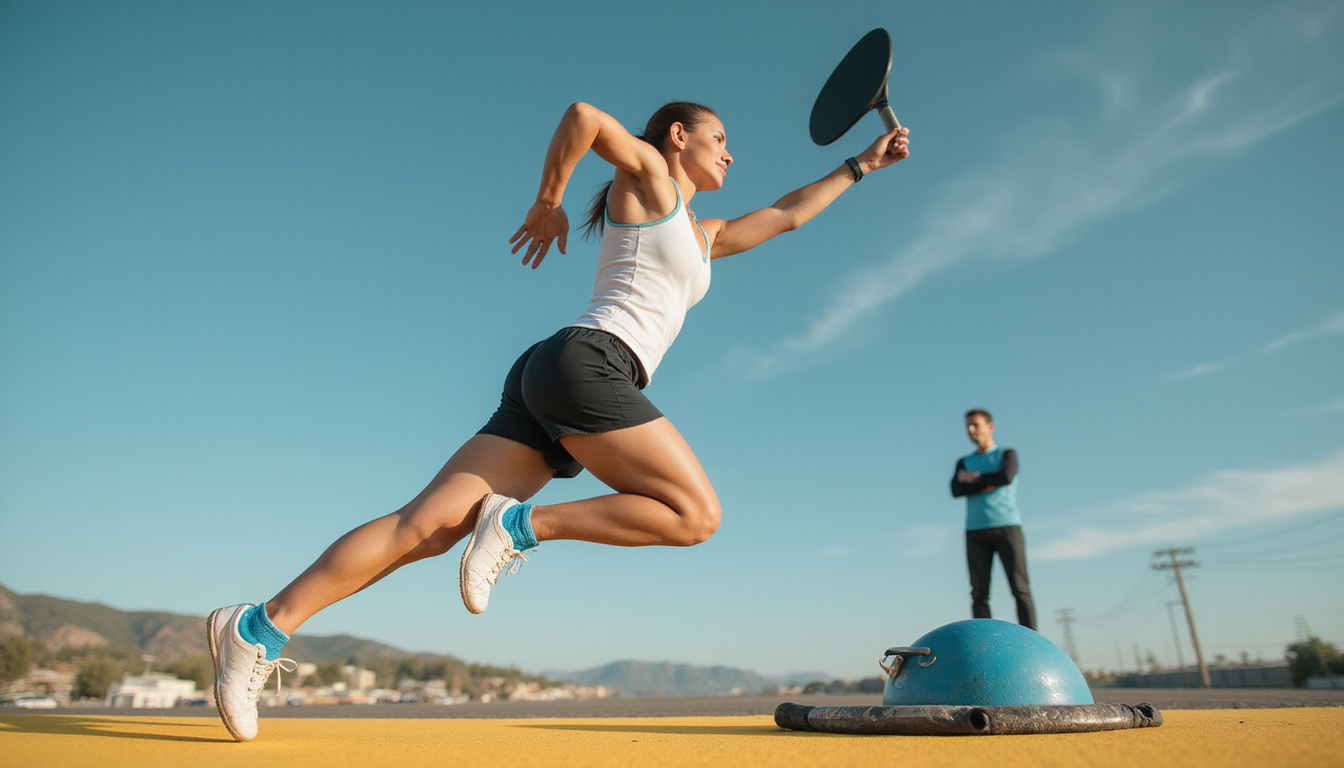
Pickleball benefit: This exercise helps you stop smoothly after chasing a drop shot and lessens the strain when you slam on the brakes after a hard push‑off.
7. Lateral Line Hops (Agility and Reactivity)
When you have built a basic strength foundation, add some light, sport‑specific spring to your movements.
How to do it:
- Stand next to a line on the court or on the floor.
- Hop side‑to‑side over the line on both feet. Stay light and quick.
- Start with small hops and focus on soft, controlled landings.
Goal: Do 3 rounds of 15–20 seconds. Rest for 45–60 seconds between rounds.
Progress to single‑leg hops when you feel strong and are symptom‑free.
Pickleball benefit: You get faster adjustments at the kitchen line and more reactive footwork for fast counterattacks.
8. Split-Step Calf Pops (Game-Like Movement)
You already use a version of this move in games. Training it deliberately makes it feel natural and eases pressure on your joints.
How to do it:
- Stand in a ready position as if you will return serve.
- Do small “pops” onto the balls of your feet. These mini split‑steps occur every second or so.
- Keep your knees slightly bent, and land softly while staying relaxed.
Goal: Do 3 rounds of 20–30 seconds.
Pickleball benefit: This move quickens your reaction time when your opponent makes contact. It also smooths your transitions in and out of the kitchen so that you do not feel heavy‑legged.
Weekly Pickleball Calf Strengthening Plan
Here is a simple plan to plug these moves into your week around open play, drills, and league nights:
2–3× per week (on non‑consecutive days)
• Straight‑leg calf raises – 3 × 12–15
• Bent‑knee calf raises – 3 × 15–20
• Single‑leg calf raises – 2–3 × 8–12 per leg
• Eccentric heel drops – 2–3 × 8–10 per leg
• Seated calf raises – 3 × 15–25
• Wall tibialis raises – 3 × 15–20
• Lateral line hops – 3 rounds of 15–20 seconds
• Split‑step calf pops – 3 rounds of 20–30 seconds
Adjust sets and reps based on your body’s signals. Ease off if you feel any sharp or worsening pain.
Supporting Joint and Muscle Health from the Inside
For many Picklers, pickleball is more than a hobby. It builds a social circle. It supplies exercise. It even shapes an identity. That makes it hard when your calves, ankles, knees, or hips limit your court time.
Beyond stretching and strengthening, many players add nutrition‑based strategies to support healthy joints and muscles. This helps them log more games without worrying about the next tweak.
Why Picklers Look at Supplements
Within FDA guidelines, supplements in the U.S. support structure and function. They aim to help with issues such as:
• Joint comfort and flexibility
• Healthy cartilage and connective tissue
• Normal muscle function and recovery
They do not diagnose, treat, cure, or prevent any disease. Always talk with your healthcare professional before starting any new supplement, especially if you take medications or have other health issues.
Regenerix Gold: A Nutrition‑Based Option Picklers Talk About
Many American Picklers—and players around the world—add Regenerix Gold to help with joint and muscle health.
Key points about Regenerix Gold for Picklers:
• It is a nutrition‑based solution that supports healthy joints and muscles. It is not a drug or a painkiller.
• It is recommended by doctors and physical therapists, including those who work with active adults, weekend warriors, and aging athletes.
• It has been used for over a decade and has positive reviews from users worldwide, including those who play high‑impact court sports.
• Many Picklers use it along with on‑court drills and off‑court work (like pickleball calf strengthening) to take a proactive, whole‑body approach.
If you already do proper warm‑ups, strength training, and load management, yet you desire extra nutritional support, consider talking with your doctor or PT about Regenerix Gold.
Regenerix Gold
Safe Use and Smart Expectations
Remember these points:
• Supplements like Regenerix Gold support normal joint and muscle health. They are not cures or treatments.
• Use them with good habits. Develop a progressive strength routine, get enough sleep, drink plenty of water, and plan your play smartly.
• Always check with your healthcare provider before you begin, especially if you have other health issues.
Think of this as upgrading your strings, paddle, and shoes. Your body is your ultimate equipment and deserves the same careful investment.
FAQs About Pickleball Calf Strengthening and Joint Support
Q1: How often should I do a pickleball calf routine if I play 3–4 times per week?
A1: Most players benefit when they do 2–3 calf sessions per week on non‑consecutive days. In a heavy tournament or ladder week, reduce the volume slightly. It is best to stay fresh than to overdo it and miss play.
Q2: Can supplements help with calf recovery for pickleball players?
A2: Within FDA guidelines, supplements help support normal muscle function and recovery. Many Picklers use nutrition‑based products such as Regenerix Gold along with enough protein, hydration, and sleep. They do not act as shortcuts or treatments but work well in a broader recovery plan.
Q3: What else, besides calf strengthening, can I do to keep my lower legs feeling good?
A3: In addition to a strong calf program, focus on:
• Wearing good court shoes with proper cushioning and support
• Gradually increasing your play time and intensity
• Stretching gently after sessions
• Using occasional soft‑tissue work (foam rolling, massage, or a lacrosse ball)
• Following a nutrition plan that supports overall joint and muscle health, which might include a supplement like Regenerix Gold after consulting with your doctor
Make Your Lower Legs an Asset, Not a Liability
Many players lose matches not because of dinks or thirds but because their legs tire. A smart pickleball calf strengthening routine paired with joint‑supporting nutrition can turn your calves and lower legs from a weak link into an advantage.
You can choose to wait until something sidelines you. Or, you can act like a savvy Pickler who treats the body like the pro they play like on league night.
If you choose to invest a little now rather than risk expensive medical care, missed work, or long play breaks later, this is your moment to upgrade your routine. Add these exercises to your week, consult your healthcare provider, and consider picking up a bottle of Regenerix Gold to feel its joint and muscle support.
Your future self—still playing full tournaments, still holding court at open play, and still chasing every lob—will thank you.
https://youtu.be/mGrH5UWFxUs?si=X9bScbG6dvejGkZf
Health Note
Always consult a licensed medical doctor for your health issues.
Special Discount
If you prefer preventive nutrition to minimize expensive knee surgery and potentially addictive pharmaceuticals, Regenerix Gold is your savvy solution.
You qualify for a special discount.
Simply use the link below and a discount will automatically be applied during checkout.
Get Regenerix Gold => HERE


