

If your knees bark after a few games, your shoulder feels cranky on overheads, or you need two games before you “finally feel loose,” your pickleball dynamic warmup needs an upgrade. A good on‐court routine gets your joints and muscles ready, supports smooth moves, and helps you tap into speed and pop from point one.
This guide shows you a court-tested, pickleball-specific warmup. It also explains how joint-friendly nutrition like Regenerix Gold helps your knees, hips, and shoulders over time.
Why a Pickleball Dynamic Warmup Matters (Especially for Adult Rec Players)
Most picklers do one of three things:
- They hop out of the car and start dinking cold.
- They hit a few lazy groundstrokes and call it a warmup.
- They skip warming up entirely because “I don’t have time.”
The problem is clear. As we get older, joints and muscles take more time to loosen up. Without a dynamic warmup, you move slower to the kitchen, your split-step comes late, you muscle the ball instead of letting your body rotate, and small tweaks and discomfort happen more often.
A dynamic warmup uses controlled, active moves. It raises your heart rate, gently moves joints through their range, and primes the patterns you use on the court. It is not about holding static stretches. It is about getting ready for pickleball.
How Long Should a Pickleball Warmup Be?
You do not need a 30‑minute routine. An 8–12 minute pickleball dynamic warmup will do the job. It boosts blood flow to key muscles, wakes up your balance and footwork, and preps your joints for sudden stops and starts.
Think of it as insurance. Ten minutes before play leads to hours of smoother, more confident movement and less post-game stiffness.
7 Pro-Style Dynamic Warmup Drills for Pickleball Speed and Power
You can do this routine on one court. Start at the baseline. Use the kitchen line as your target for each drill.
1. Athletic March & Arm Swings (Baseline to Kitchen)
Purpose: To wake up your hips, hamstrings, and shoulders and to start your heart rate.
• Stand at the baseline.
• March forward toward the kitchen, lift one knee to hip height.
• Swing your opposite arm forward like starting a serve.
• Keep your posture tall and your core lightly tight.
• When you reach the kitchen line, walk back and repeat once more.
Pickleball payoff: It makes you feel more “upright and stacked” instead of hunched when you serve and drive.
2. Lateral Shuffle to Split-Step
Purpose: To prime side-to-side moves and quick reactions at the kitchen.
• Start on the right sideline at the baseline. Face the net.
• Shuffle laterally without crossing your feet toward the center line, then go back.
• Every 3–4 shuffles, do a small split-step: a light hop and a soft landing on the balls of your feet.
• Keep your hips low, chest tall, and paddle held as if you were in position.
• Go from baseline to kitchen and back in each direction.
Pickleball payoff: It helps you react quickly and recover sharply after wide dinks.
3. Carioca (Grapevine) for Hip Rotation
Purpose: To loosen your hips and improve your rotation for drives and roll volleys.
• Stand sideways at the baseline. Face the right fence.
• Step your right foot over your left and bring your left foot to meet it.
• Next, cross your right foot behind your left and bring the left to meet it.
• Keep the “over-under” rhythm all the way to the kitchen line.
• Turn around and repeat facing the other way.
Move smooth and light; it should not feel like a sprint.
Pickleball payoff: You turn your torso more comfortably on third-shot drops and topspin drives without an awkward twist.
4. Walking Lunges with Torso Turn
Purpose: To warm up your knees, hips, ankles, and spine like you do when stepping into a groundstroke or overhead.
• From the baseline, step forward with your right foot into a lunge.
• Keep your front knee tracking over your middle toes.
• At the bottom of the lunge, rotate your torso toward your front leg like a forehand coil.
• Push through your heel to stand and then step forward into a left lunge, rotating the other way.
• Continue toward the kitchen line. If you feel good, do it twice down and back.
Keep the lunge shallow if your knees hurt. The goal is to activate, not to reach maximum depth.
Pickleball payoff: You get a stable plant leg when you drive the ball and a smoother push-off as you move between the baseline and kitchen.
5. Ankles, Calves, and Ready Hops
Purpose: To prepare your lower legs for quick stops and starts and to end that “cement feet” feeling.
A. Calf Rockers
• Stand facing the net at the baseline.
• Step one foot slightly ahead of the other.
• Rock forward onto the front foot as you lift the back heel.
• Rock back and lift your front toes.
• Do 8–10 reps each side, slowly.
B. Mini-Pogo Hops
• Stand with your feet under your hips and keep your knees soft.
• Do small, rhythmic hops in place.
• Focus on quiet and springy landings.
• Continue for 15–20 seconds.
Pickleball payoff: You get a quicker first step on lobs and feel less heaviness when you try to explode for an Erne or a poach.
6. Dynamic Shoulder and Paddle Prep
Purpose: To warm up your shoulders, elbows, and wrists for serves, overheads, and hand battles. You may hold your paddle for these moves.
• Arm Circles:
– Make 10 small circles forward and 10 backward with each arm.
– Then make 10 larger circles in each direction.
• Paddle Figure-8s:
– Hold your paddle in your dominant hand.
– Draw a smooth “figure 8” in front of your body with the paddle face.
– Do 10 reps in each direction.
• Wrist Flicks:
– Hold the paddle as if at the kitchen.
– Do 15–20 short “dink” flicks in front of you, then 15–20 quick flicks.
Pickleball payoff: Your serve rhythm becomes smoother, your hands more relaxed at the net, and you suffer less stiffness after overheads.
7. Game-Speed Shadow Rallies
With your machine warmed up, finish with pickleball-specific movements and strokes at about 70–80% intensity.
Do this sequence twice:
-
Baseline Shadow Rally (6–8 strokes)
– Alternate forehand and backhand strokes while taking a few side-to-side steps.
– Focus on your footwork, split-step, and smooth rotation. Speed is not the goal. -
Transition Shadow (Kitchen Crash)
– Start at the baseline and “hit” a third-shot drop.
– Move quickly yet with control toward the kitchen in 3–4 shuffle steps.
– End in a strong ready position at the non-volley zone (NVZ). -
Kitchen Battle Simulation (10–15 seconds)
– Stand on the kitchen line.
– Imitate fast volleys, dinks, and a few imaginary speed-ups.
– Keep your eyes forward, use a light split-step, and move with quiet feet.
Pickleball payoff: Your brain and body now say, “We are playing pickleball.” This makes your first real rally feel as smooth as later ones, not like a warmup.
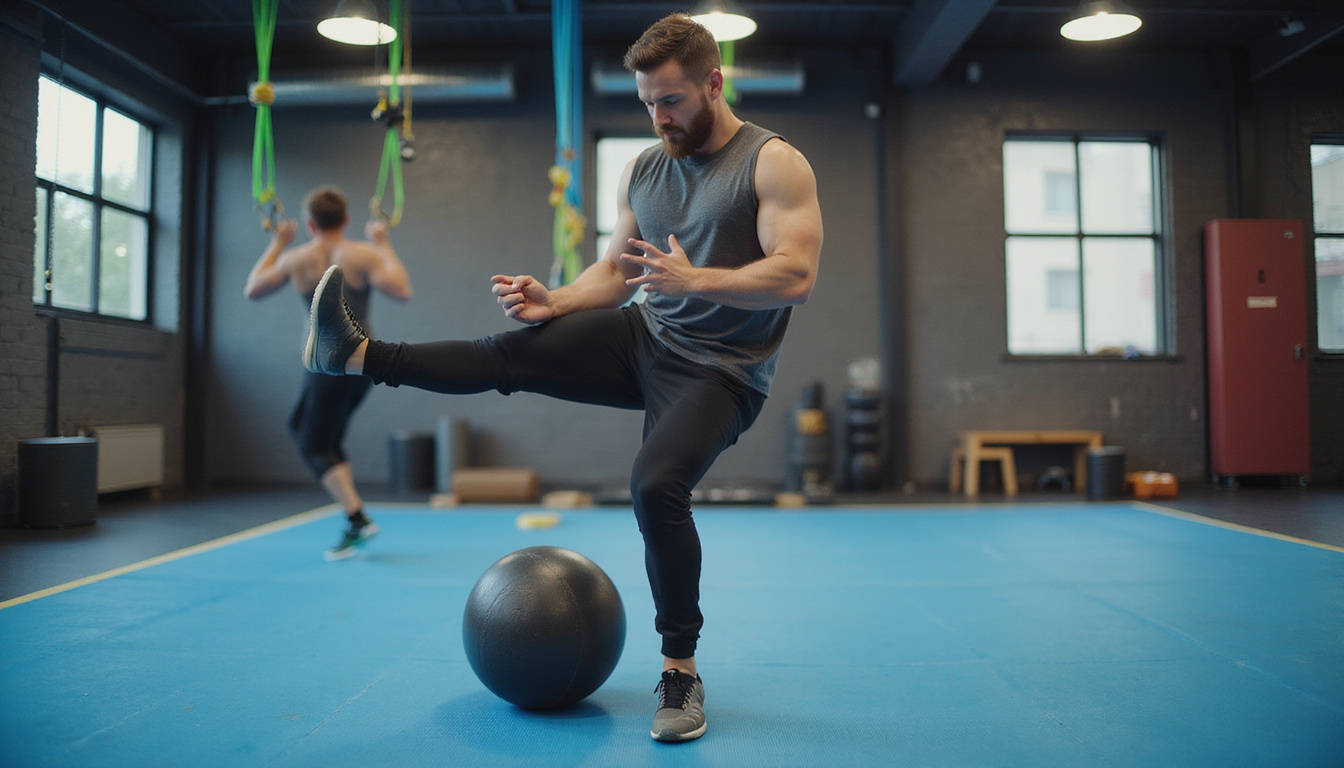
Simple Checklist: Your Pre-Game Pickleball Dynamic Warmup
Use this quick list when your group is rushing:
- [ ] March & arm swings (1–2 courts)
- [ ] Lateral shuffle + split-step (down & back)
- [ ] Carioca / grapevine (down & back)
- [ ] Walking lunges with torso turns (down & back)
- [ ] Calf rockers + mini-hops (about 1 minute)
- [ ] Shoulder + paddle warmup (about 2 minutes)
- [ ] Shadow rallies, transition, kitchen battles (about 2–3 minutes)
If you are pressed for time, do at least shuffles, lunges, paddle warmup, and a shadow kitchen battle.
Supporting Your Joints and Muscles from the Inside: Regenerix Gold
A good warmup on court is one half of the plan. The other half is joint and muscle nutrition. Regular pickleball means you make thousands of stops, starts, lunges, and overheads. These moves can wear out your knees, hips, shoulders, and low back.
This is where a supplement like Regenerix Gold comes in. It fits into a smart, long-term plan for your pickleball life.
What Is Regenerix Gold?
Regenerix Gold is a nutrition-based supplement. It is made to support healthy joints and connective tissues, promote smooth movement, and aid muscles in recovery from repeated play. It helps active adults, whether rec or competitive, who play many sessions each week.
Why Picklers Choose It
• Many doctors and physical therapists recommend it. They work with active adults and weekend warriors.
• It is nutrition-focused and not a quick fix. It works with a balanced diet and active lifestyle.
• It has a proven track record. For over a decade, people internationally have used Regenerix Gold and left positive reviews.
Within FDA rules, no supplement can say it treats, cures, or prevents diseases. Results will vary. Still, many picklers choose joint-and-muscle support supplements as part of a proactive routine. This goes hand in hand with dynamic warmups, good shoes, and smart court schedules.
How Regenerix Gold Fits Your Pickleball Routine
A serious rec player might have a week that looks like this:
• 3–5 days of play
• 1–2 days of drills
• Tournaments or round-robins on weekends
That is a lot of load on your knees, hips, shoulders, and elbows. A regular plan might include:
• Daily use of Regenerix Gold as directed
• 8–12 minutes of a pickleball dynamic warmup before every session
• Light cool-down walks and gentle mobility moves after play
• Adequate hydration, good protein intake, and enough sleep
These habits help you feel ready to play long rallies and still be fit for work, family, or another session the next day.
Regenerix Gold
FAQs About Your Pickleball Dynamic Warmup and Joint Support
Q1: What’s the best pickleball warmup routine if I only have 5 minutes?
Aim for a mini pickleball dynamic warmup. Do one minute of lateral shuffles and split-steps, one minute of walking lunges with torso turns, one minute of calf rockers and mini-hops, one minute of paddle/shoulder work, and one minute of shadow rallies at the kitchen.
Q2: Can a dynamic warmup for pickleball really help my joints feel better?
Yes. Dynamic warmups boost blood flow, gently move joints through their range, and wake up the stabilizing muscles. Many players feel more comfortable once they start playing. (Source: American College of Sports Medicine) It is not a medical treatment; it is a smart habit for active adults.
Q3: How does joint and muscle nutrition like Regenerix Gold work with a pickleball warmup?
They work in different but matching ways. A pickleball dynamic warmup prepares your body immediately before play. A supplement like Regenerix Gold works over the long term to support healthy joints and muscles. Many picklers use both as part of an overall plan to stay on court consistently.
Play Smarter, Not Just Harder: Your Next Step
You already spend on paddles, shoes, and court fees. Spending a few minutes on a proper pickleball dynamic warmup—and supporting your joints and muscles with the right nutrition—can pay off every time you step on the court.
If you see yourself as the savvy player in your group, the one who plays a lot, works hard, and still wants to move well for years, then treating your joints well is essential. Medical care, time off, and missed games are costly in every way.
That is why many serious picklers add a bottle of Regenerix Gold to their routine. It is a nutrition-based option recommended by doctors and physical therapists. With over a decade of positive reviews from active users worldwide, it is worth a try alongside the warmup drills above. Feel the difference in how your body handles the speed, power, and fun of today’s pickleball.
https://youtu.be/mGrH5UWFxUs?si=X9bScbG6dvejGkZf
Health Note
Always consult a licensed medical doctor for your health issues.
Special Discount
If you prefer preventive nutrition to minimize expensive knee surgery and potentially addictive pharmaceuticals, Regenerix Gold is your savvy solution.
You qualify for a special discount.
Simply use the link below and a discount will automatically be applied during checkout.
Get Regenerix Gold => HERE


