

If you play pickleball several times each week, you need to work on your knee strength.
Your knees bear the force when you split‐step, lunge, and change direction fast.
Pickleball knee strengthening is your secret weapon to play longer without pain.
Below is a practical guide for American Picklers.
These tips help if you feel joint or muscle pain and want to act early.
Why Pickleball Knees Take a Beating
Pickleball is less harsh than running, yet it has many repetitions and direction changes:
• You split step before each shot.
• You shuffle quickly at the kitchen line.
• You lunge deeply for low dinks and drop shots.
• You stop suddenly after chasing lobs or fast angles.
Over time, these moves overload:
• The muscles around your knee (quads, hamstrings, calves)
• The hip and ankle stabilizers
• The tissues that absorb force
If these muscles are weak or get tired, more stress goes to the joint.
Then, you might feel stiffness after a match, hesitate on low moves, or feel shaky when you plant for a drive.
A simple pickleball knee strengthening routine will help your legs share the stress.
This means your knees protect themselves better.
The Three Pillars of Strong Pickleball Knees
Think of your knee care as a three‑legged stool:
- Strength – Muscles around the knee and hips must be strong to control each move.
- Stability – Good balance helps your knee track properly.
- Recovery + Nutrition – Your joints and muscles need time and food to heal.
If one pillar is weak, your knees will feel it.
Court-Specific Warm-Up Before You Play
Many Picklers run from the parking lot to the court and start playing hard.
This is like jumping into a gold medal match without a warm-up.
Spend 5–7 minutes to warm up.
Your knees will thank you during and after play.
Quick pre‑match warm-up:
-
Court marches (1 minute)
Lift your knees high while marching along the sideline.
Swing your arms naturally. -
Dynamic quad and hamstring swings (1–2 minutes)
Stand on one leg near the fence.
Swing the other leg forward and back 10–15 times.
Then swing it side to side 10–15 times.
Switch legs and repeat. -
Mini lateral shuffles (2 minutes)
Shuffle quickly from the sideline to the center and back.
Stay low and light; do not go full speed. -
Bodyweight squats to split-step (1–2 minutes)
Perform a slow squat.
Stand up and hop lightly into a split-step stance.
Do 8–10 reps.
This warm-up fires up your quads, hamstrings, glutes, and calves.
They will protect your knees when real play starts.
Foundational Pickleball Knee Strengthening Exercises
Do this circuit 2–3 times a week on non‑consecutive days.
Most Picklers finish it in 15–20 minutes, at home or in the gym.
1. Chair or Box Squats (Quad + Glute Power)
Why Picklers need it:
It helps you lower for dinks, rise from lunges, and push off for wide balls.
How to do it:
• Sit back onto a chair or box with your feet shoulder‑width apart.
• Keep your knees aligned with your toes.
• Touch the chair lightly and then stand up, squeezing your glutes.
Reps: 2–3 sets of 8–12 reps
Tip: When you feel strong, try doing regular squats without the chair.
2. Step-Ups (Single-Leg Functional Strength)
Why Picklers need it:
It mimics the push-off used when driving toward the kitchen or recovering after a dink.
How to do it:
• Use a sturdy step or low bench.
• Place one foot on the step.
• Press through your heel as you lift your body.
• Slowly lower back down with control.
• Switch legs after your reps.
Reps: 2–3 sets of 8–10 reps per leg
Progression: Hold light dumbbells or even a pickleball paddle for extra challenge.
3. Lateral Band Walks (Hip Stabilizers)
Why Picklers need it:
Strong hips stop your knee from collapsing inward during shuffles and lunges.
How to do it:
• Place a mini-band above your knees or around your ankles.
• Bend your knees slightly and get ready to move.
• Step sideways 8–10 times in one direction, then switch.
Reps: 2–3 rounds each direction
Cue: Keep your feet parallel and move slowly with control.
4. Reverse Lunges (Controlled Knee Bend)
Why Picklers need it:
They train your knee to bend and hold weight steadily, like when stepping back for a lob.
How to do it:
• Stand with feet hip‑width apart.
• Step one foot back and lower into a lunge.
• Ensure your front knee stays above your ankle.
• Push through your front heel to stand back up.
• Alternate legs.
Reps: 2–3 sets of 6–10 reps per leg
Modification: Use a fence or countertop for extra balance if needed.
5. Calf Raises (Shock Absorption & Quick Feet)
Why Picklers need it:
Strong calves support fast starts, soft landings, and quick stops.
How to do it:
• Stand near a wall or countertop.
• Rise onto your toes and hold briefly.
• Slowly lower your heels back down.
• To increase difficulty, perform these on a step with your heels hanging off the edge.
Reps: 2–3 sets of 10–15 reps
Progression: Try doing calf raises on one leg as you get stronger.
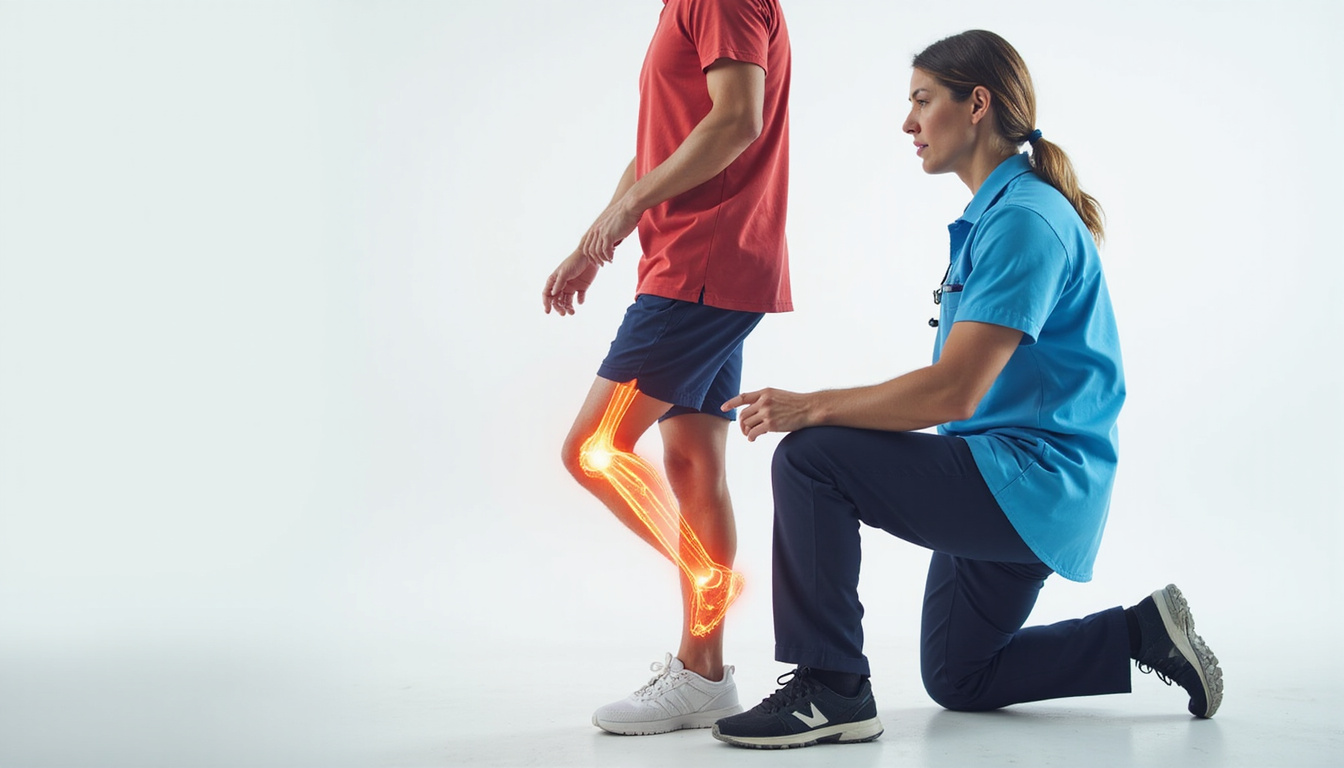
6. Balance Holds (Proprioception & Stability)
Why Picklers need it:
Better balance helps you avoid awkward moves that twist the knee.
How to do it:
• Stand on one leg with a slight bend in the knee.
• Hold the position for 20–30 seconds.
• Switch legs.
Reps: 2–3 rounds per leg
Progression for Picklers: Hold your paddle in front as you balance or mimic a dink motion.
Weekly Pickleball Knee Strengthening Plan
Here is a plan for recreational and competitive Picklers:
• 2–3 times per week (on off‑court days):
– Squats
– Step‑ups
– Lateral band walks
– Reverse lunges
– Calf raises
– Balance holds
• Before each session:
– Warm up for 5–7 minutes (using the routine above)
• After play:
– Stretch gently for 3–5 minutes (covering quads, hamstrings, calves, and hips)
– Walk lightly to cool down instead of sitting right away
Smart Habits That Protect Your Knees on Court
Strength work is key, but daily choices matter as well.
• Check your shoes:
Wear court shoes with lateral support and cushioning.
Replace them when the tread wears thin or the cushioning feels flat.
• Play volume:
If your knees start to complain, cut down from seven days a week to 3–4 days.
Mix in drills instead of full games when needed.
• Surface awareness:
Recognize that hard courts are tougher on your knees than cushioned surfaces.
Rotate venues when possible.
• Technique tune-ups:
Good footwork is vital.
A few clinics or lessons can reduce awkward moves and protect your knees while also improving your game.
Nutrition & Joint Support For Committed Picklers
Strong muscles and good movement mechanics are important, but what you eat matters too.
Many dedicated Picklers use nutritional support to aid:
• Comfortable movement
• Healthy joint function
• Muscle recovery after long rec sessions or tournaments
Where Regenerix Gold Fits In
Regenerix Gold is a nutrition-based supplement designed to support joint and muscle health.
It offers several benefits for serious or active Picklers:
• Recommended by doctors and physical therapists
Many professionals include it as one part of a joint and muscle care plan.
It works alongside exercise, proper footwear, and mindful training loads.
• Over a decade of international use
Regenerix Gold has been used for more than ten years.
Users worldwide report positive outcomes when staying active.
• Made for people who move
While it does not claim to diagnose, treat, cure, or prevent any disease,
it is designed to support healthy joints and muscles.
For American Picklers who want to stay on the court, pairing a strong exercise routine with Regenerix Gold may be a smart part of your long-term plan.
Regenerix Gold
(Watch the video above to see how other active people use it.)
Always talk with your healthcare provider before starting any new supplement, especially if you have health concerns or take other medication.
FAQs: Pickleball Knee Strengthening & Joint Support
Q1: How often should I do pickleball knee strengthening exercises if I play 3–4 times per week?
Aim for 2–3 strength sessions per week.
Do them on days you are not playing full matches.
Keep these sessions short (15–20 minutes).
Focus on squats, lunges, lateral moves, and balance.
You can also do a lighter session after play.
Do not do heavy leg work right before a tournament.
Q2: Are there simple pickleball knee exercises I can do at home without equipment?
Yes.
Bodyweight squats, reverse lunges, wall sits, calf raises, and single-leg balance holds are all good.
Doing 2 sets of each a few times each week can improve knee stability and strength.
Q3: Can a joint supplement really help with knee support for pickleball players?
A high-quality joint supplement can support healthy joints and muscles.
It should be part of a plan that includes strength training, proper shoes, smart court time, and recovery.
Many Picklers use options like Regenerix Gold.
It is nutrition-based, recommended by health professionals, and has positive feedback.
It is not a replacement for training or medical care but can be a helpful add-on.
Bring Pro-Level Care To Your Rec-Play Knees
Many Picklers treat their paddles like precision tools but do not care for their bodies.
The players who stay on court, improve their rating, and avoid long breaks also:
• Do regular pickleball knee strengthening
• Warm up before playing hard
• Choose good shoes, watch the court surface, and use proper technique
• Support their joints and muscles with good nutrition and recovery
If you invest time, money, and pride in this game, invest in the knees that carry you.
Consider a bottle of Regenerix Gold alongside the exercise plan in this guide.
As a smart player aware of the rising costs of medical care, you can act early rather than waiting for pain to worsen.
Protect your knees now.
Keep running down lobs, poaching at the kitchen, and stacking up wins for years to come.
https://youtu.be/mGrH5UWFxUs?si=X9bScbG6dvejGkZf
Health Note
Always consult a licensed medical doctor for your health issues.
Special Discount
If you prefer preventive nutrition to minimize expensive knee surgery and potentially addictive pharmaceuticals, Regenerix Gold is your savvy solution.
You qualify for a special discount.
Simply use the link below and a discount will automatically be applied during checkout.
Get Regenerix Gold => HERE


