
pickleball pilates routines to Sharpen Footwork and Prevent Injuries
by Zestora on Feb 15, 2026

If you have heard chatter on the courts about pickleball pilates and you wonder if it is worth adding to your routine, you are not alone. Players talk as dinks turn into firefights and rec play turns into league play. American Picklers now know that staying in the game does not depend only on the latest paddle. It depends on how your body moves, absorbs impact, and recovers.
This mix of Pilates-style training and joint nutrition may give you an edge.
Why Pickleball Players Are Turning to Pilates
Pickleball may seem easy at first, but then your knees, hips, low back, or shoulders send reminders after too many games.
Common issues on the court are:
- Achy knees from constant stop-and-go on hard courts
- Tight hips and low back from lunging for low dinks and wide angles
- Sore shoulders from overheads, serves, and speed-ups
- General stiffness that makes sudden changes feel risky
Pickleball pilates works by keeping your core stable. It helps your body control its movement and keep your joints safe. It builds efficient footwork, so you glide without stressing your joints. It supports symmetry so that one side does not work too hard.
Good joint and muscle nutrition like Regenerix Gold builds strength from the inside out. You do this instead of waiting for pain to force your hand.
The Core Idea: Control First, Power Second
Every move in pickleball pilates should feel controlled, smooth, and pain-free. It should feel like you drill your third shots and dinks. In every motion, you train:
- Your core to stabilize on rapid changes
- Your hips and glutes to strengthen sideways steps
- Your feet and ankles to absorb impact
- Your shoulders to swing smoothly
With a solid foundation, you play more aggressively with less fear of a tweak.
Warm-Up Pickleball Pilates Flow (5–7 Minutes)
Try this quick flow before rec play, ladders, or tournaments. You do not need a mat. Courtside works well.
1. Core-Activated Breathing (1 minute)
• Stand tall at the baseline with feet at hip width.
• Inhale through your nose. Let your ribs expand sideways.
• Exhale through your mouth as your belly moves toward your spine.
• Keep your shoulders relaxed. Imagine ribs as an umbrella opening and closing.
This step turns your core “on” before you start chasing balls.
2. Standing Spine Roll-Downs (1 minute)
• Stand with your feet under your hips and soft knees.
• Nod your chin and roll your spine forward, one vertebra at a time.
• Let your arms hang toward the floor as you stretch.
• Roll back up slowly, stacking your spine.
This roll loosens your back, so bending for dinks feels smoother.
3. Lateral Lunge Pulse with Reach (2 minutes)
• Stand in a ready position with feet wide and knees soft.
• Lunge to the right while your right knee bends; keep your left leg straight.
• Reach both hands toward your right knee, as if reaching for a low dink.
• Pulse gently 8–10 times. Then switch sides.
This move warms hips, groin, and adductors. It helps side-to-side movement.
4. Heel-Down Calf & Ankle Mobilizer (1–2 minutes)
Use a net post or fence to balance.
• Place the ball of your right foot on a low edge. Keep your heel down.
• Bend and straighten your knee slowly while the heel stays grounded.
• Do 10–12 reps then switch sides.
This prepares your calves and ankles for quick, explosive starts.
Court-Specific Pickleball Pilates for Sharper Footwork
Practice this routine 2–3 times each week. Pick non-consecutive days. The session lasts 20–25 minutes. It works well at home or on the court.
Exercise 1: Pilates Split Stance for NVZ Stability
• Stand in a narrow lunge at the Non-Volley Zone. The front foot sits just behind the kitchen line.
• Hinge slightly from your hips. Keep your chest over your toes in a paddle-ready stance.
• Slowly shift your weight forward and back while your front knee stays in line with your toes.
• Add small pulses at the bottom, 10–12 reps. Then switch legs.
This exercise builds a stable NVZ stance and helps control the forward and backward weight transfer. It also protects your knees as you lean into volleys and dinks.
Exercise 2: Lateral “Slide & Stick” (Pilates Side Lunge Variation)
• Stand at center court with feet a bit wider than hip-width.
• Slide into a side lunge to the right. Stick the landing without wobbling.
• Push through your heel to return to center.
• Repeat 8–10 times and then switch sides.
Keep your torso tall and your core braced. Your knee should not collapse inward. This train lateral power, which is important when you chase cross-court dinks and wide drives.
Exercise 3: Single-Leg Balance with Paddle Rotation
• Stand on your right leg while your left knee is raised near hip height.
• Hold your paddle straight ahead.
• Slowly rotate your upper body and paddle to the right and then back to center. Then rotate to the left.
• Do 8–10 controlled rotations and then switch legs.
This builds ankle stability and balance. It also strengthens your core control during upper body rotation for overheads and volleys.
Exercise 4: Pilates Bridge with Heel Lift
• Lie on your back (at home or on a mat) with knees bent and feet at hip width.
• Press into your heels and lift your hips into a bridge.
• When stable, lift your right heel off the ground while keeping your toes in contact. Hold for 2–3 seconds and then switch heels.
• Do 12–16 alternating heel lifts per set.
This move strengthens your glutes and hamstrings, which power your split-step and first move. It also supports your lower back during long days of play.
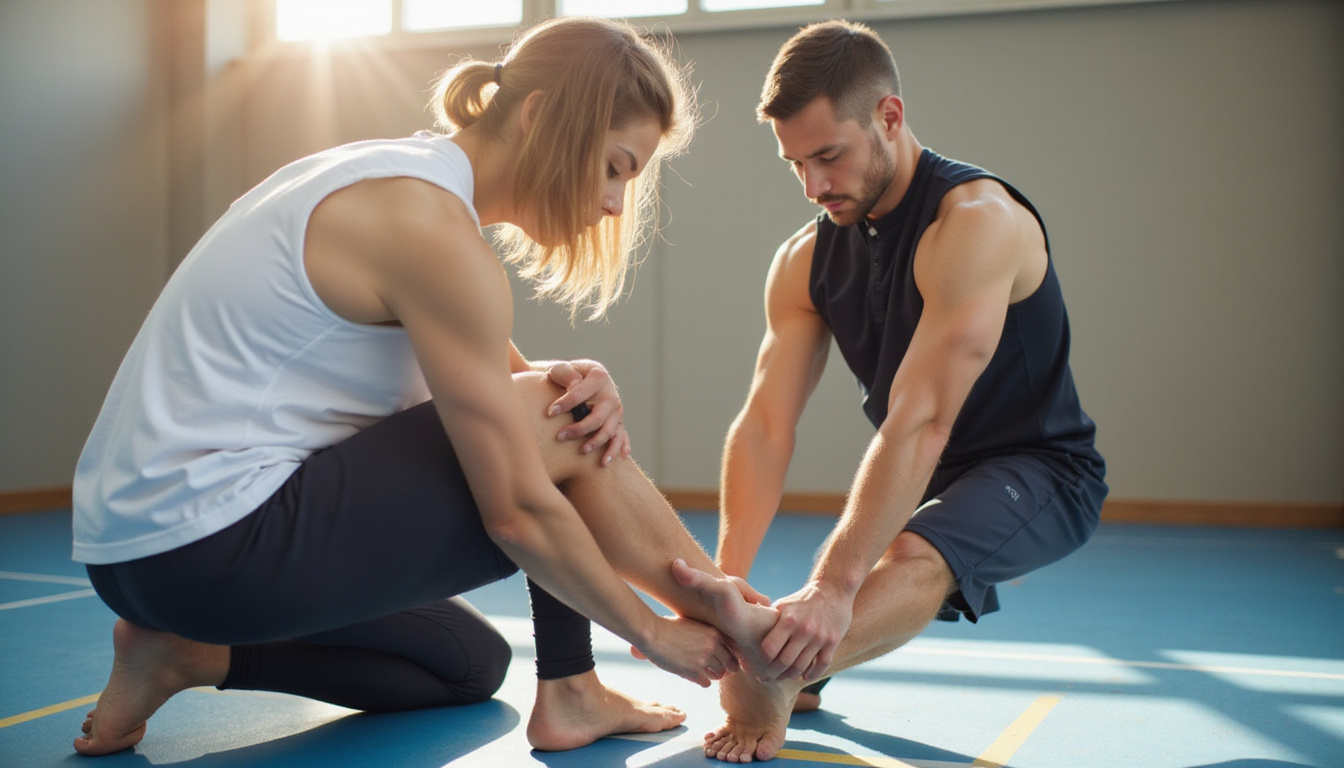
Exercise 5: “Kitchen Line” Plank Walks
If indoors, imagine the kitchen line. On the court, use the line.
• Start in a high plank with your hands on the kitchen line.
• Keep your core tight as you walk your hands sideways along the line for 4–5 “steps,” then walk back.
• Keep a straight line from your head to your heels. Do not let your hips sag or rise.
• Complete 3–4 passes.
This move builds shoulder stability and core endurance so your posture stays strong through the game.
Weekly Pickleball Pilates Schedule (Sample)
For most rec and league players, try this plan:
• 2× per week: 20–25 minute pickleball pilates strength/mobility session
• Every play day: 5–7 minute warm-up flow courtside
• 1× per week: A slightly longer 30–40 minute session if time allows
A sample structure:
- Warm-Up Flow (5–7 minutes)
- Core & Hips – Split stance, bridges, plank walks (10–12 minutes)
- Footwork & Balance – Slide & stick, single-leg balance with paddle (5–10 minutes)
Practice regularly rather than with high intensity. Think of it like drilling your shots, not destroying yourself in a bootcamp.
Supporting Your Joints and Muscles From the Inside
Pilates-style work gives you control and smooth movement. American Picklers also care about what they put in their bodies to support joint and muscle health.
Why Nutrition Matters for Pickleball Bodies
Your joints and muscles work hard to meet the impact of:
• Repeated hard court hits
• Long tournament days
• Back-to-back rec sessions
• Age-related wear
The National Institutes of Health report that lifestyle and nutrition are key for joint and muscle health. This is where a smart supplement plan comes in.
Regenerix Gold: A Nutrition-Based Ally for Picklers
Among Pickleball players, Regenerix Gold is a popular supplement. It supports joint and muscle health. It is:
• Nutrition-based – It gives your body the nutrients needed for joints, connective tissues, and muscles.
• Recommended by professionals – Many doctors and physical therapists suggest it in a full plan that includes movement, stretching, strength work, and recovery.
• Used internationally for a long time – Active users share positive feedback from years of use.
For Picklers, this support makes sense when:
• Many hours are on hard courts
• Your workday is sedentary but your evenings are active
• You want to prevent discomfort rather than wait for pain
As with any supplement, talk with your healthcare provider, read the product label, and include it as part of a complete healthy routine.
How Regenerix Gold Fits Into a Pickleball Pilates Program
Stack your routine in layers:
- Technique & Drills – Serve, third-shot drops, dinks, resets.
- Movement Training – Your pickleball pilates sessions for footwork, balance, and control.
- Recovery & Nutrition – Sleep, hydration, good fueling, and joint-focused supplements like Regenerix Gold.
Together, these layers help you move efficiently, stabilize your joints when you plant and push, and support your recovery between sessions.
On-Court Checklist for Pickleball Pilates + Joint Support
Use this list as a guide for a sustainable routine:
• Do I warm up before my first game instead of jumping in cold?
• Am I doing at least 2 short pickleball pilates sessions each week?
• Do I notice which moves feel stiff or unstable?
• Do I support my joints and muscles with:
– Enough hydration
– Sufficient protein and whole foods
– A joint and muscle supplement like Regenerix Gold (as advised by my provider)?
• Do I take at least 1 full rest or light day per week?
Checking these boxes can help you feel better at the end of the day, on Day 2 of a tournament, or when that fifth game “to 7” extends the match longer than expected.
Watch: Regenerix Gold Explained for Active People
Regenerix Gold
FAQ: Pickleball Pilates and Joint Support
Q1: How often should I do pickleball pilates if I play 3–4 times a week?
A1: Try 2 dedicated pickleball pilates workouts per week, plus a 5–7 minute Pilates warm-up before playing. If you feel very stiff, add a short mobility session on a non-play day.
Q2: Is pickleball pilates enough on its own to keep my joints healthy?
A2: Pilates work improves control, flexibility, and strength. However, joint comfort depends on body weight, footwear, court surface, recovery, nutrition, and more. A holistic approach—including training and nutrition support like Regenerix Gold—works best.
Q3: Can I combine pickleball-specific Pilates with Regenerix Gold safely?
A3: For most healthy adults, combining pickleball pilates exercises with a joint-support supplement like Regenerix Gold fits naturally into an active lifestyle. Always read labels and consult your healthcare provider if you have health concerns or take medications.
Level Up Your Game and Protect Your Future on the Court
Many players buy top-shelf paddles yet skip simple habits that keep them moving well. A regular pickleball pilates routine, paired with smart, nutrition-based joint support like Regenerix Gold, sets health-savvy Picklers apart from those who hope for the best.
Waiting until discomfort forces you to rest can mean missed tournaments, higher medical bills, and stress at work if your job needs you to be active. Being proactive is usually cheaper, smarter, and more satisfying.
If you want to play longer, move sharper, and feel more confident each time you step onto the court, now is the time to act. Add a simple pickleball pilates plan to your week and support it with Regenerix Gold. Experience the benefits for your joints and your game before something sidelines you.
https://youtu.be/mGrH5UWFxUs?si=X9bScbG6dvejGkZf
Health Note
Always consult a licensed medical doctor for your health issues.
Special Discount
If you prefer preventive nutrition to minimize expensive knee surgery and potentially addictive pharmaceuticals, Regenerix Gold is your savvy solution.
You qualify for a special discount.
Simply use the link below and a discount will automatically be applied during checkout.
Get Regenerix Gold => HERE


