

If you notice your third-shot drops feel cramped, your overheads fall short, or your dinks lose finesse, then your pickleball range of motion may hold you back more than your paddle or shoes. Many American picklers feel joint and muscle strain. Improving mobility boosts performance without extra court time.
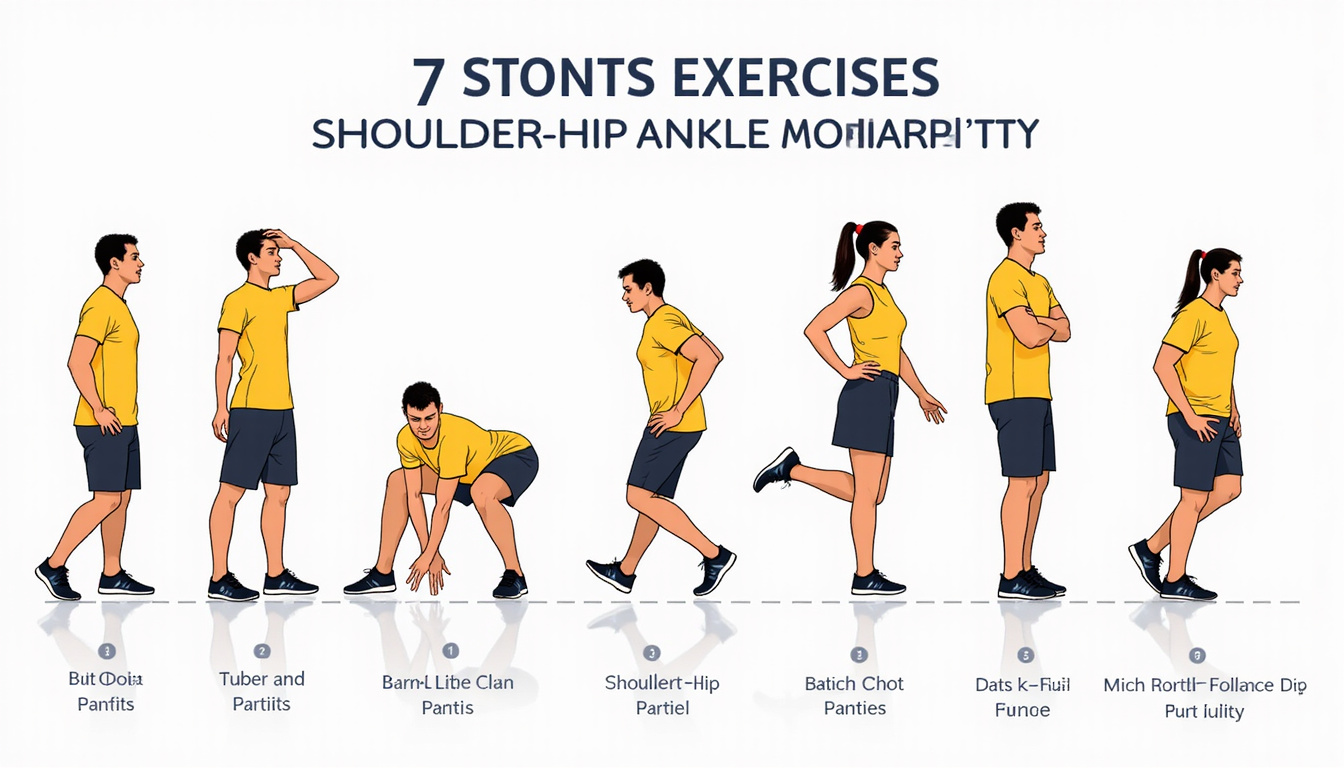
Below are seven focused exercises along with recovery tips and nutrition advice (including how Regenerix Gold supports healthy joints and muscles). They help you move freely, hit confidently, and play longer with less discomfort.
Why Range of Motion Matters So Much in Pickleball
Pickleball needs more than good hand–eye coordination. You need a range of motion that lets you:
- Use your shoulder mobility for high overhead lobs and resets.
- Move your hips and ankles to get low in the kitchen without feeling stuck.
- Rotate your upper back (thoracic spine) for powerful drives and spin on volleys.
- Keep your knees and hips smooth for split-steps, lunges, and quick recoveries.
When your pickleball range of motion is limited, you end up with awkward moves. You muscle the ball instead of swinging with ease. Every move costs extra energy and you feel more soreness in your joints and muscles the next day.
The good news is you do not need to stretch for hours. Ten to fifteen minutes of focused work a day—plus smart hydration and supplements—can show a noticeable difference in a few weeks.
How to Use These 7 Mobility Exercises
• Do them 3–5 days per week.
• Before play, perform each exercise lightly for 5–8 reps to “wake up” your joints.
• On off days or in the evenings, do the full routine, holding stretches a bit longer.
• Move with control, not speed. A little tension is fine, but stop or change if you feel sharp pain.
1. Deep Lunge Hip Opener (for Low Kitchen Dinks & Volleys)
Pickleball makes you lower into a partial lunge near the non-volley zone. Tight hip flexors and quads can stress your knees and low back.
How to do it:
- Begin in a half-kneeling position with your right knee on the ground and your left foot forward.
- Keep your torso tall. Gently shift your hips forward until you feel a stretch in the front of your right hip.
- Squeeze your right glute to support your lower back.
- Hold for 20–30 seconds, then switch sides.
Pickleball benefit:
You will feel more comfort when lunging toward the kitchen, have better balance for low dinks, and reduce tugging in the front of your hip when you push off.
2. Thoracic Open-Book Rotations (for Drives & Roll Volleys)
Powerful drives and roll volleys come from your mid-back (thoracic spine) rather than only your shoulder.
How to do it:
- Lie on your side with your knees bent at 90 degrees and stacked.
- Extend your arms straight in front with palms together.
- Keeping your knees touching, lift your top arm and rotate it to the opposite side. Let your chest turn toward the ceiling.
- Follow your hand with your eyes. Stop when you feel a comfortable stretch in your mid-back and chest.
- Return slowly and repeat 8–10 times per side.
Pickleball benefit:
You get smoother torso rotation on both forehands and backhands, a better reach on wide balls, and a reduced need to “arm” the ball.
3. Wall Angels (for Overheads & Blocking in the Transition Zone)
If you struggle with smashes or feel pinching in your shoulders, your shoulder mobility and scapular control may need work.
How to do it:
- Stand with your back, head, and glutes pressed against a wall; keep your feet about 6 inches forward.
- Raise your arms so that your elbows and wrists touch the wall in a “goalpost” shape.
- Slowly slide your arms upward as high as you comfortably can, then slide them back down.
- Keep your ribs from flaring; engage your core.
- Complete 10–12 repetitions.
Pickleball benefit:
You achieve cleaner overheads, easier high resets, and more confident hand battles thanks to smoother shoulder movement.
4. Ankle Dorsiflexion Rockers (for Fast Starts & Sudden Stops)
Quick changes of direction start at your feet and ankles. When ankle motion is limited, your knees or hips must absorb extra stress.
How to do it:
- Stand facing a wall with your left foot about 3–4 inches away, toes forward.
- Keep your heel down. Bend your front knee to gently touch the wall.
- If your heel lifts early, move your foot closer. If it is too easy, move it slightly farther.
- Rock in and out of the stretch 10–15 times, then switch sides.
Pickleball benefit:
This exercise creates smoother split-steps, better push-off, and greater stability when stopping quickly after chasing a lob.
5. Standing Hip Airplanes (for Balance at the Kitchen Line)
Many picklers feel pulled wide and fight to avoid toppling sideways. Control of the hips and rotation is key.
How to do it:
- Stand on your right leg with a soft bend in the knee. Use a wall or a chair for support if needed.
- Hinge forward at the hips until your body and left leg form a straight “T.”
- Slowly rotate your pelvis open to the left, turning your chest and hips. Then rotate gently back toward the floor.
- Keep your spine long. Let the motion come from the hip rather than your lower back.
- Perform 6–8 slow rotations, then switch legs.
Pickleball benefit:
You improve single-leg balance for wide dinks or Erne attempts and reduce wobbling when stepping back from the kitchen.
6. Wrist Flexor and Extensor Stretch (for Dinks, Drops & Punch Volleys)
Pickleball stresses the wrists, especially for players who use soft hands and spin. Tight wrist and forearm muscles can limit your paddle control.
How to do it:
• For the flexors (palm-side):
1. Extend your right arm in front with the palm up.
2. With your left hand, gently pull your fingers and palm back toward you.
3. Hold for 20–30 seconds and switch sides.
• For the extensors (back-of-forearm):
1. Extend your right arm with your palm facing down.
2. With your left hand, gently flex the wrist so that the fingers point down.
3. Hold for 20–30 seconds and switch sides.
Pickleball benefit:
A smoother, more controlled dink and drop comes with less tightness in your forearms after long plays.
7. 90/90 Hip Rotations (for Shuffles & Recovery Steps)
Pickleball footwork asks your hips to rotate in and out. This movement helps with shuffles, crossovers, and recovery from the transition zone.
How to do it:
- Sit on the floor with your knees bent and feet flat, roughly shoulder-width apart.
- Lean back a little on your hands.
- Allow both knees to drop to one side while letting your hips rotate. Then gently move them to the opposite side.
- Keep your feet planted firmly.
- Complete 10–15 controlled reps for each side.
As you improve, try sitting upright without using your hands and hold each side for 5–10 seconds.
Pickleball benefit:
You enjoy quicker directional changes, smoother shuffles along the baseline and kitchen, and less hip stiffness after extended play.
Simple Daily Mobility Flow for Picklers
Here is an easy method to add these drills to your routine:
-
Pre-match warm-up (5–8 minutes):
• Ankle rockers: 8 per side
• Deep lunge hip opener: 15–20 seconds per side
• Open-book rotations: 5 per side
• Wall angels: 8 repetitions -
Post-play or off-day routine (10–15 minutes):
• 90/90 hip rotations: 10–15 reps
• Hip airplanes: 6–8 per side
• Wrist stretches: 20–30 seconds in each position
• Longer holds on hip and chest stretches
Do these daily for 3–4 weeks. Soon, you may notice more fluid movement on the court and better paddle control. Your pickleball range of motion turns from a weakness into an asset.
Nutrition & Recovery: Supporting Joints and Muscles from the Inside
Range of motion depends not only on stretching but also on how well your joints and muscles recover from court play.
Many picklers are weekend warriors. They play on multiple days at clubs, rec centers, or local tournaments. Such play can lead to:
• Morning stiffness before the first game
• Tightness in the knees, hips, shoulders, or lower back
• Sore muscles that last longer than you expect
Remember these basics:
• Hydration: Even a little dehydration reduces performance and makes exertion feel harder.
• Protein: It helps repair your muscles after a heavy practice or long game.
• Fruits and vegetables: Their antioxidants support overall tissue health.
Some players also choose nutrition-based supplements to support healthy joints and muscles.
Regenerix Gold: Nutrition-Based Support for Pickleball Joints and Muscles
For those who want to extend their playing life and protect their pickleball range of motion, Regenerix Gold adds a nutrition-based boost to your mobility routine.
Key points for players:
• Nutrition-focused formula: Regenerix Gold is a dietary supplement that gives your joints and muscles nutrients. It is not a drug and is not meant to diagnose, treat, cure, or prevent any disease.
• Endorsed by doctors and physical therapists: Many healthcare providers recommend it along with exercise, mobility work, and healthy training habits.
• Proven track record: For over a decade, picklers and active adults have trusted Regenerix Gold to support their joint and muscle health.
• Perfect for the pickleball lifestyle: Whether you play three times a week, travel to tournaments, or return to court sports after a break, nutritional support complements your on-court work.
When used with the seven mobility exercises above, proper rest, and sound technique, Regenerix Gold becomes a small investment toward longer play and better joint and muscle care.
Regenerix Gold
FAQ: Pickleball Range of Motion & Joint Support
Q1: How can I improve my pickleball range of motion without spending an hour stretching?
A: Focus on a short mobility circuit that targets your hips, shoulders, ankles, and wrists—similar to the seven exercises above. Ten to fifteen minutes, 3–5 times per week, along with a brief pre-match warm-up, is usually enough.
Q2: What helps with joint mobility for pickleball players who play several times a week?
A: Regular dynamic mobility work, proper warm-ups and cool-downs, good hydration, enough protein, and sleep are essential. Some players also add nutrition-based supplements like Regenerix Gold to support healthy joints and muscles.
Q3: Are there specific joint supplements for pickleball range of motion that are safe?
A: In the U.S., dietary supplements like Regenerix Gold are regulated as foods rather than drugs. They are intended to support normal joint and muscle function. Always read labels, follow usage directions, and consult your healthcare provider if needed.
Take Action: Protect Your Game, Protect Your Body
Many picklers know someone who had to cut back—or even quit—because their body could not keep up. Court time is precious. Medical visits, imaging, extra time off work, and a decreased ability to play can be very costly.
Do not wait until your joints and muscles force you to slow down. Build a simple mobility habit, respect your warm-ups and cool-downs, and support your body with good nutrition and options like Regenerix Gold.
If you truly care about your pickleball range of motion, your longevity on the court, and playing “one more game” without hesitation, try Regenerix Gold. It is a small investment when compared to the cost of time away from the sport, and it sets you apart as a player in control of your future.
https://youtu.be/mGrH5UWFxUs?si=X9bScbG6dvejGkZf
Health Note
Always consult a licensed medical doctor for your health issues.
Special Discount
If you prefer preventive nutrition to minimize expensive knee surgery and potentially addictive pharmaceuticals, Regenerix Gold is your savvy solution.
You qualify for a special discount.
Simply use the link below and a discount will automatically be applied during checkout.
Get Regenerix Gold => HERE


