
Pickleball Wrist Stabilization: Top Techniques to Prevent Pain and Improve Power
by Zestora on Jul 07, 2026

If you’ve spent time on the courts and feel pain when you flick a dink or hit an inside‑out drive, consider pickleball wrist stabilization. Your wrist connects your paddle to the ball. When your wrist is unstable or overworked, your power drops, your control becomes uneven, and discomfort may follow soon after play.
This guide speaks directly to American Picklers who play hard, chase ratings, and seek to protect their bodies while improving their game.
Why Wrist Stabilization Matters So Much in Pickleball
Pickleball may seem simple from the stands, yet we understand the challenges.
The game forces your wrist, forearm, and elbow to work hard with moves like:
- Third‑shot drops
- Fast‑hand battles at the NVZ
- Roll volleys and topspin drives
- Late‑night rec games after work
Good wrist stabilization in pickleball lets you:
- Hold a firm, controlled paddle face at contact
- Channel core and shoulder rotation into real power
- Avoid unnecessary “floppy” motion that overloads small wrist parts
- Keep a soft touch in games without overusing your wrist
If your wrist is a weak link in your body chain, your tiny forearm muscles must muscle the ball, instead of letting your legs, hips, and shoulders share the load.
Common Wrist Mistakes Picklers Make
Even strong players (3.5–4.0) can show hidden wrist habits that limit both power and longevity.
1. Over‑Flicking in the Kitchen
When you use your wrist to flick every dink, reset, and block, your shoulder and body lose their role. The wrist becomes the only engine. After long play, the joint may feel tight, tired, or sore with some movements or grips.
2. Death‑Grip on the Paddle
A tight hold, especially when the rally speeds up, can cause extra shock on the wrist with off‑center hits. A softer, relaxed grip helps the paddle absorb impact instead of your wrist shouldering all the force.
3. Hyper‑Extended or Bent Wrist at Ready Position
When your ready position has the wrist over‐extended or bent rather than held neutral, every quick exchange puts stress on it. Over many games, this tension adds up.
4. Skipping Strength and Mobility Work
Many players quickly spend on new paddles, tournaments, and clinics, yet skip 5–10 minutes of joint preparation. Your wrist handles much stress; it responds well to regular strengthening and mobility drills.
Foundations of Proper Pickleball Wrist Stabilization
Think of wrist stabilization as a three‑part support system:
- Technique – how you use your wrist during strokes
- Strength & Mobility – how well nearby muscles support it
- Recovery & Nutrition – how well your tissue repairs between sessions
Working on all three stops “weekend warrior” wrist pain and builds confident play.
On‑Court Technique Tweaks to Protect Your Wrist
Keep the Wrist Mostly Neutral
In most strokes, keep your wrist near neutral instead of cocked or snapped. A neutral wrist:
- Keeps the paddle face consistent
- Lets larger muscles create power
- Reduces repeated strain on small wrist parts
Feel your shoulder and forearm drive the hinge while your wrist stays quiet.
Use a Softer, Smarter Grip
Think of a 1–5 grip pressure scale:
- Baseline grip: 3/5 – relaxed but steady
- Contact moment: 4/5 – a brief, firmer squeeze at impact
- Never: 5/5 constant grip, which leads to fatigue and pain
A softer grip alone may ease wrist and forearm tension.
Shorten Your Swing in the Kitchen
For dinks, blocks, and resets:
- Keep the paddle near your body
- Drive with your shoulder instead of relying on your wrist
- Focus on guiding the paddle instead of flicking it
Picture your wrist as a stable hinge and your paddle as a wall. You redirect speed rather than make it.
Use Your Body for Power Drives
When you drive for speed:
- Load with your legs
- Rotate your hips and torso
- Let your arm and wrist transfer that energy
You will hit harder when your wrist is stable and your core works hard to produce power.
Off‑Court Exercises to Build a Stable, Powerful Wrist
Try these simple, pickleball‑specific drills three to four times a week. Always work within a comfortable range and stop if you feel any pain.
1. Wrist Flexion & Extension with Light Dumbbell
• Sit and rest your forearm on your thigh; hold a light dumbbell or water bottle, palm up.
• Lift the weight slowly using just your wrist, then lower it slowly.
• Flip your hand so the palm faces down and repeat.
This drill builds controlled motion for dinks and resets.
2. Radial & Ulnar Deviation (Side‑to‑Side Control)
• Hold a light dumbbell like a hammer.
• Keep your forearm still; then slowly tilt the dumbbell side to side.
This move boosts stability as you adjust your paddle for spins and cuts.
3. Forearm Pronation/Supination with a Paddle
• Hold your paddle in front of you with your elbow bent at 90 degrees.
• Rotate the paddle slowly with your forearm, not only with your wrist.
This drill improves control for roll volleys and topspin drives.
4. Isometric Holds
• Take your paddle into your ready position.
• Press the paddle gently against an object (like a wall or your opposite hand) in various directions without moving it.
• Hold each push for 5–10 seconds, then repeat.
This builds lasting strength for fast exchanges.
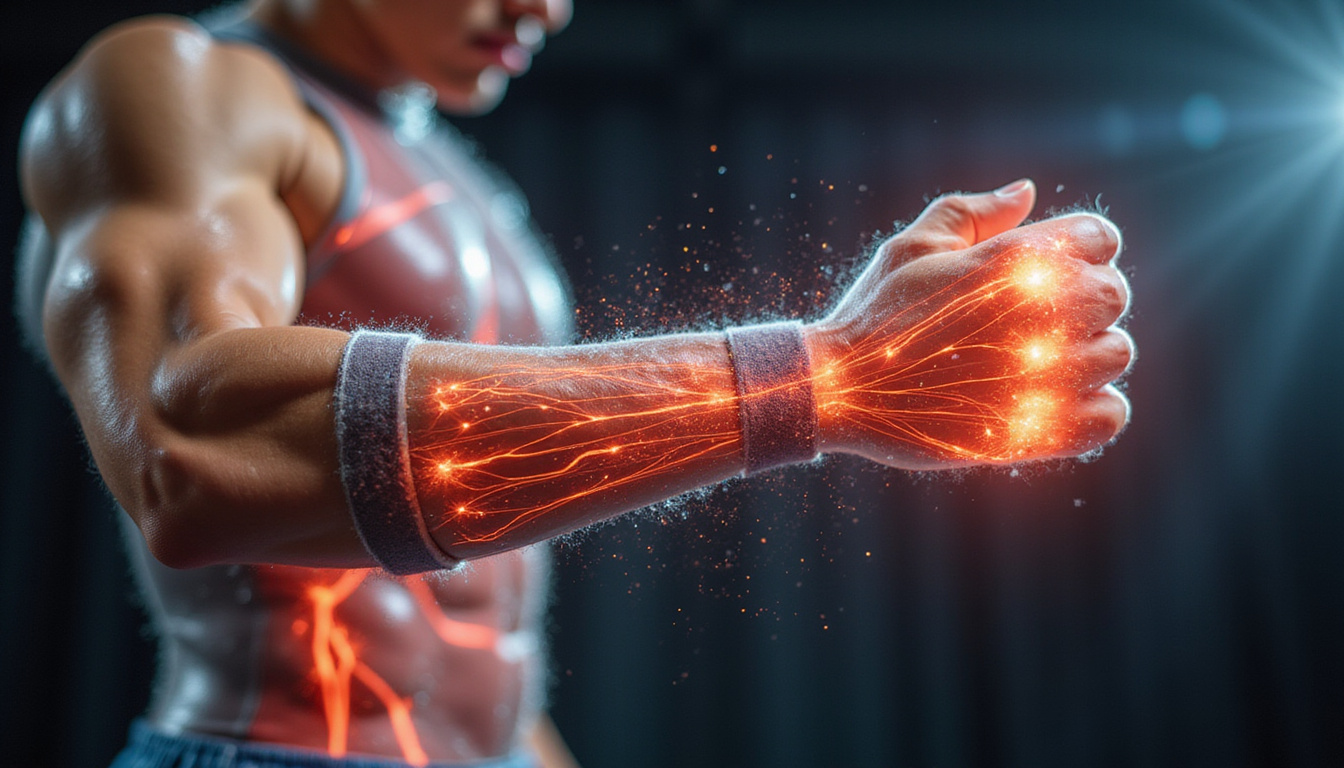
5. Finger and Grip Work
• Use a soft grip trainer or a rolled towel.
• Squeeze and hold for 5 seconds, then relax.
This exercise trains a relaxed grip that can lock in at contact.
Mobility and Warm‑Up Routine for Game Day
Do not jump into a game without preparing your joints.
Before your first game:
- Wrist Circles – 10 in each direction, slow and steady
- Prayer Stretch – press your palms together at chest level, then gently push down
- Reverse Prayer Stretch – place the backs of your hands together and gently press
- Forearm Stretch – with your arm straight, pull your palm and fingers back gently
- Light Shadow Swings – mimic dinks, volleys, and drives at half speed
These warm‑up moves prepare your tissues so that you avoid a shock test during your first rally.
Recovery and Load Management for Frequent Players
If you play four to seven days a week, or mix league, ladder, and open play, managing your load is vital.
• Rotate intensity. Not every session demands full‑tilt speed. Include “touch days” with more dinks and strategy.
• Take micro‑breaks. Between games, move your wrist and forearm instead of staying static (and scrolling on your phone).
• Check grip size and paddle weight. A grip that is too small or a very head‑heavy paddle may strain your wrist. Experiment to find a stable, natural feel.
Nutrition Support for Joints and Muscles: Where Regenerix Gold Fits In
Along with smart technique and training, many serious Picklers look for nutrition‑based joint support, especially with more play.
Regenerix Gold is made for players like you:
• It offers comprehensive joint and muscle support rather than a quick‑fix painkiller.
• It is a nutrition‑focused product with ingredients that help joint comfort, mobility, and muscle function as part of a healthy lifestyle.
• Doctors and physical therapists recommend it to active adults, including racquet and paddle‑sport athletes who want to keep moving pain‑free.
• It has helped players for over a decade, with users worldwide valuing its contribution to long‑term mobility.
No supplement can treat or cure a condition. Yet good nutrition, paired with smart biomechanics and training, may help your on‑court longevity. The NIH notes that certain nutritional components support joint health when used as part of healthy habits (source: National Institutes of Health).
For competitive Picklers, holistic support is key. Staying proactive can help keep you driving, slamming, and playing long after others face stiffness or injury.
How Regenerix Gold Complements Wrist Stabilization Work
Think of your routine in four parts:
• Technique & Drills – focus on protecting and strengthening wrist mechanics
• Warm‑Up & Mobility – get your body ready before you serve
• Recovery & Load Management – respect your body after hard play
• Targeted Nutrition (like Regenerix Gold) – supply ongoing support for joints and muscles
Many Picklers who work on all four areas find:
- More confidence to take big swings when the ball sits up
- Less hesitation in fast‑handed exchanges at the NVZ
- Better readiness the next day, with less post‑session stiffness
Results vary, but an integrated approach works better than simply changing paddles or using a brace.
Simple Daily Routine for Better Pickleball Wrist Stabilization
Here is a daily plan to follow:
-
Before play (5–10 minutes)
• Do a wrist mobility series
• Practice light shadow swings
• Check that your grip is relaxed and your wrist is neutral -
After play (5–10 minutes)
• Stretch your wrist and forearm gently
• Massage with your opposite hand or a soft ball
• Rehydrate and enjoy a protein‑rich meal or snack -
On off‑days (10–15 minutes)
• Perform strength drills (wrist curls, paddle rotations, isometrics)
• Watch match videos or run mental reps to reinforce good technique
• Continue daily supplementation if you use a product like Regenerix Gold
Video: Learn More About Regenerix Gold
Regenerix Gold
FAQ: Wrist Support, Strength, and Pickleball Performance
Q1: What helps most for pickleball wrist support during fast‑hand exchanges?
A: Start with a neutral, stable wrist in your ready position. Use your shoulder and forearm to react quickly instead of snapping the wrist. Add off‑court isometric holds and forearm work to build a strong base.
Q2: How can I strengthen my wrist for pickleball without overloading it?
A: Use low‑load and high‑control drills like light dumbbell wrist curls, side‑to‑side motions, paddle rotations, and finger/grip work. Keep your movements slow and controlled. If you feel pain, reduce the intensity and check with a professional.
Q3: Can supplements help with pickleball wrist strength and joint comfort?
A: Supplements do not replace proper training. Still, a well‑designed, nutrition‑based product like Regenerix Gold can support your joint and muscle health as part of your overall plan. Always read labels and consult your healthcare provider.
Ready to Play Longer and Hit Harder?
If you are serious about pickleball and want to improve wrist stabilization, you are already ahead of many players at open play. Now is the time to act like the high‑level athlete you are becoming:
• Clean up your mechanics so your wrist is a strong, stable link.
• Build strength and mobility with a simple weekly routine.
• Support your body from within with nutrition‑based choices.
Adding Regenerix Gold to your routine is a smart move. It helps protect your long‑term ability to play, to work hard, and to win—while others face sidelining injuries or high medical bills later.
If you want to keep competing, working, and living life on your terms, try a bottle and feel the difference.
https://youtu.be/mGrH5UWFxUs?si=X9bScbG6dvejGkZf
Health Note
Always consult a licensed medical doctor for your health issues.
Special Discount
If you prefer preventive nutrition to minimize expensive knee surgery and potentially addictive pharmaceuticals, Regenerix Gold is your savvy solution.
You qualify for a special discount.
Simply use the link below and a discount will automatically be applied during checkout.
Get Regenerix Gold => HERE


