

Below is the revised text. It uses dependency grammar ideas by keeping linked words close together and short simple sentences. The language has been adjusted for a Flesch reading ease of about 60–70. All section titles and formatting remain unchanged.
If you’re a U.S. golfer who loves clean irons and loud tee shots but often feels like a rusty cart, the right golf exercises can change your game. These moves boost power, accuracy, and consistency. They also ease muscle aches that hit on the back nine, in the car, or after a long day at the range.
This guide is for real golfers. You talk in clubhead speed, strike patterns, and shot shapes rather than generic fitness talk. We explain golf-specific work, how to fit it around your rounds, and smart recovery tips (including thoughtful supplementation) so you can keep swinging well.
Why golfers need golf-specific training (not just random gym work)
Golf is not about heavy bench presses. It is about proper sequencing, fast rotation, and repeating your swing when tired without your body screaming at you.
Here are three clear reasons for dedicated golf exercises:
- Power – Good ground force and hip turns yield more ball speed without losing control.
- Accuracy – Strong hips, glutes, and a solid core keep the club on the right path.
- Consistency – When your body moves the same way each time, your contact and low point are more controlled.
A focused routine also eases common golfer pains such as a tight lower back after hard drives, sore shoulders from mats, or cranky wrists and elbows after tournaments.
The engine: lower-body golf exercises for effortless power
Your lower body is like an engine. If your legs and hips are weak, you swing mostly with your arms. This leads to loss of distance and more back stress.
1. Split squats (rear foot elevated if you can)
Why golfers love it: It builds strength on each leg and stabilizes your hips. This directly supports your backswing load and follow-through.
How to do it:
• Stand in a split stance with your rear foot on a small box or bench.
• Lower your back knee toward the ground while keeping your chest tall.
• Push up through the front heel.
Golf cue: Think of driving your lead leg at impact. No swaying is allowed—just a strong, stable base.
2. Hip hinges (Romanian deadlifts)
Why: They work your glutes and hamstrings. These muscles support the proper posture and ground force in your downswing.
How:
• Hold dumbbells or a barbell in front of you.
• Soften your knees and hinge from the hips, with a neutral spine.
• Push your hips back until you feel tension in your hamstrings, then drive forward to stand.
Golf cue: Keep your address posture strong. A proper hinge lets you hold your position through impact.
3. Lateral lunges
Why: Golf needs both rotation and side-to-side moves. This drill helps you load one side and push from it just like the weight shift in your swing.
How:
• Step out to the side and sit back into that hip with your toes pointing forward.
• Keep your other leg straight before pushing back to center.
Golf cue: Feel the load move into your trail hip on your backswing and then into your lead hip on the follow-through.
The transmission: core golf exercises for stable, repeatable strikes
Forget endless crunches. A strong core stops unwanted motion and sends force in the right way at the right time.
4. Anti-rotation press (Pallof press)
Why: This move trains you to hold off twisting. A stable midsection helps your arms and club stay on plane.
How:
• Attach a band to a sturdy anchor at chest height.
• Stand sideways to the anchor and hold the band at your chest. Step out until you feel tension.
• Press the band straight out, hold for one second, then return.
Golf cue: Keep your ribs and pelvis perfectly aligned just like your address. No extra movement.
5. Rotational cable or band chops
Why: It trains the very rotation you use from swing transition to impact.
How:
• Stand in your athletic stance with a band or cable above one shoulder.
• Rotate your torso and hips to pull the handle across your body.
• Slowly return to the start.
Golf cue: Let your trail hip and glute work as you rotate. Finish with a balanced, smooth position.
6. Dead bug variations
Why: They teach your core to stay braced while your limbs move. This follows your swing pattern where your trunk holds still with moving arms.
How:
• Lie on your back with your arms up and knees bent at 90°.
• Lower the opposite arm and leg toward the floor while keeping a flat low back.
• Return to start and switch sides.
Golf cue: Keep your torso quiet while your arms and legs move in control.
The steering: upper-body golf exercises for control and clubface stability
Your upper body feels most of the swing. It must act in support of a strong lower body.
7. Scapular push-ups and wall slides
Why: Clean shoulder blade movement lifts your swing and helps reduce common shoulder aches among golfers.
Scapular push-ups: • In a plank, keep your arms straight. • Let your chest sink between your shoulder blades. • Push up away from the ground.
Wall slides: • Stand with your back and arms against a wall at 90° angles. • Slowly slide your arms up and down. • Keep your ribs in and stable.
Golf cue: Smooth shoulder motion gives you a better takeaway and a less abrupt transition.
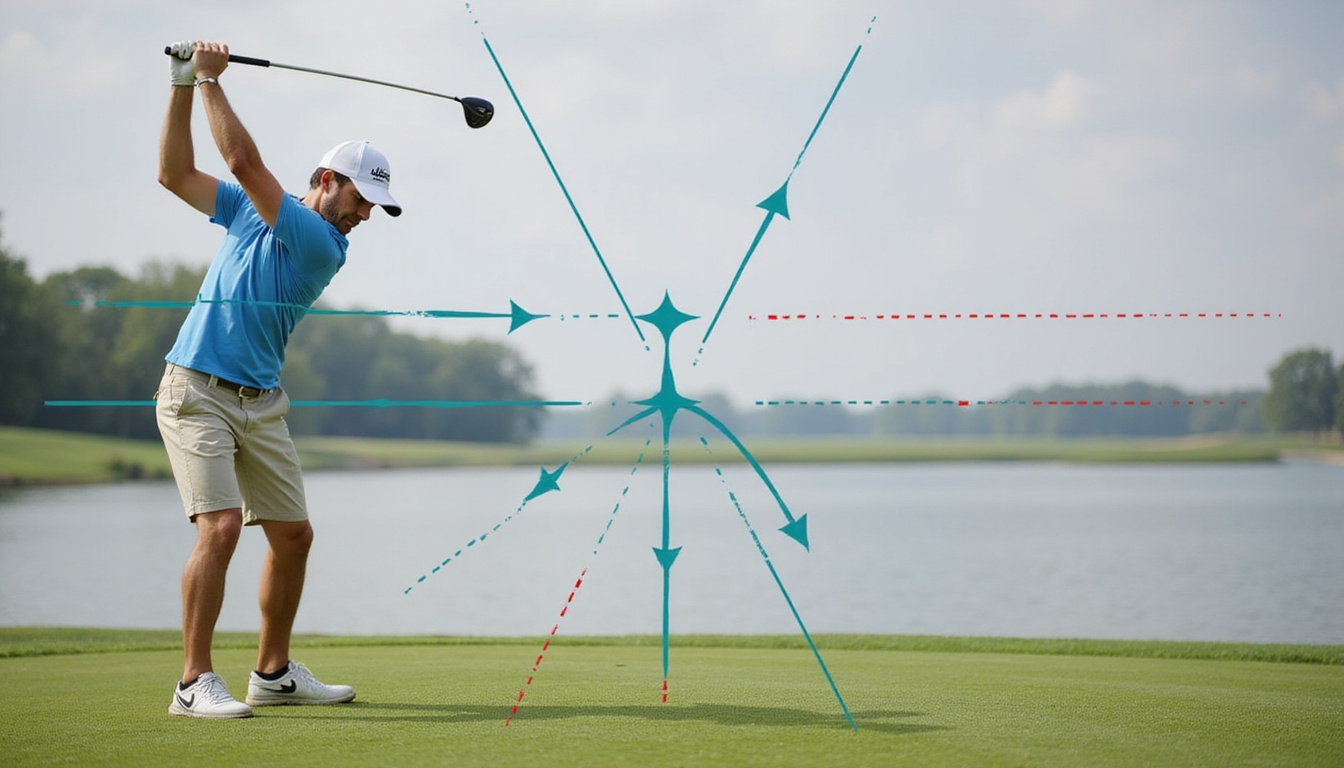
8. Single-arm rows
Why: They balance out push-heavy moves and support a strong, stable lead side.
How: • Place one knee and one hand on a bench and keep the other foot on the floor. • Row a dumbbell toward your hip with your shoulder down and back.
Golf cue: Imagine a strong lead side at impact so the club does not flip or stall.
9. Forearm and grip work
Why: A strong grip and steady forearms keep the clubface aware late in your round. This avoids over-squeezing and added tension.
You may try: • Farmer’s carries with heavy dumbbells while walking tall. • Wrist curls and reverse curls with light weights. • Towel squeezes during your practice swings.
Golf cue: Maintain a firm yet relaxed grip—like holding toothpaste without squeezing any out.
Sample weekly plan for real golfers
Competitive and serious golfers often mix these exercises around their rounds:
• 2–3 strength days per week (30–40 minutes)
• Daily 5–10 minute mobility sessions (before rounds or in the evening)
• Light speed or rotational work twice a week (on non-consecutive days)
Example week
-
Monday – Strength (Lower + Core)
• Split squats
• Hip hinges
• Lateral lunges
• Pallof press
• Dead bugs -
Wednesday – Strength (Upper + Core)
• Single-arm rows
• Scapular push-ups
• Wall slides
• Grip work
• Rotational chops (light to moderate) -
Friday – Power and Mobility (lighter)
• Dynamic warm-up (leg swings, arm circles)
• Medicine ball rotational throws (if possible)
• A short mobility session for the hips, spine, and shoulders
Keep mobility practice simple. Try cat-camels, thoracic rotations, or hip flexor stretches. They help you rotate freely.
Warm-up on the range: a 5-minute pre-round routine
Before you step onto the course or hit the balls, try this quick warm-up:
• 10 bodyweight squats
• 10 hip hinges with your hands on your hips
• 10 trunk rotations with a club over your shoulders
• 10 arm circles in each direction
• 10 gentle swings with two clubs, each swing growing longer
This routine makes you feel looser, helps you hit cleaner early, and may reduce pain on the back nine.
Recover like a pro: joints, muscles, and smart supplementation
A powerful, consistent swing depends on your recovery as much as your workout. Recovery matters between rounds, range sessions, and workouts.
Key recovery tips for golfers: • Sleep: Your body repairs muscle and tissue as you rest. • Nutrition: Adequate protein, balanced carbs and fats, plus hydration, support repair. • Movement variety: Gentle walks and light mobility keep stiffness away. • Thoughtful supplementation: Some choose supplements to support joint function and ease muscle discomfort.
Research shows that ingredients like collagen and certain plant extracts may help tissue repair (source: NIH Office of Dietary Supplements). Remember that supplements are tools—not cures—and talk with a healthcare professional if you have concerns.
Frequently asked questions about golf exercises
1. What are the best golf exercises for distance?
For most golfers, good exercises for distance build strong legs, hips, and a stable core:
• Split squats or lunges
• Hip hinges (RDLs)
• Cable or band rotational chops
• Medicine ball rotational throws (if you have one)
Pair these with a proper warm-up and some light speed work to boost your distance.
2. Which golf exercises help with accuracy?
Exercises for accuracy focus on stability and control:
• Pallof presses (anti-rotation)
• Dead bugs
• Single-leg balance drills
• Scapular work (wall slides, scap push-ups)
These moves help you maintain proper posture, control your low point, and square the clubface at impact.
3. How often should I do golf exercises during the season?
Many golfers do golf exercises 2–3 times a week in-season. Keep sessions brief, and avoid heavy lower-body work the day before a big round. When playing tournaments:
• Do one light, mobility-focused session
• Focus on sleep, hydration, and joint-friendly foods
• Rely on a warm-up routine rather than heavy training the day before competition
Regenerix Gold: for golfers who want their body to match their swing goals
Serious golfers treat their body as part of their equipment—like custom shafts or fitted wedges. If you follow your golf exercises, practice smart, and want extra support for your joints and muscles, consider a targeted supplement.
Regenerix Gold is made for golfers who seek to support healthy joints and muscles. It helps you play your game, walk 18 holes, hit the range, and stay active off the course. It is no shortcut or cure-all; nothing beats solid training, smart practice, and good recovery. Yet it is a premium option for golfers who invest in their body like they invest in their driver or putter.
If you value long-term health and performance, talk to your healthcare professional about Regenerix Gold. Then combine it with your exercise routine, consistent mobility, and a good schedule. You will gather every edge—for the scorecard and for your body after the round.
Regenerix Gold
Health Note
Always consult a licensed medical doctor for your health issues.
Special Discount
If you prefer preventive nutrition to minimize expensive knee surgery and potentially addictive pharmaceuticals, Regenerix Gold is your savvy solution.
You qualify for a special discount.
Simply use the link below and a discount will automatically be applied during checkout.
Get Regenerix Gold => HERE


