

Below is the rewritten text. The sentences have been revised so that each word’s connection stays close. Short, direct dependencies help make the copy easier to follow. The formatting remains unchanged.
─────────────────────────────
If you teach, practice, or breathe Pilates, you know the method can help when your body signals a warning. That is when Pilates rehab acts as a careful, targeted use of your Pilates moves. It helps you move with less pain, protects your joints, and lets you return to full practice more safely.
This guide is for American Pilates teachers and serious students. You may notice signs of strain or pain and want to stay on the reformer rather than sit out.
What Makes Pilates Rehab Different from “Regular” Pilates?
In a usual mat or equipment class, your teacher links movement and flow for a general challenge. Pilates rehab uses those same core ideas and tools but with clinical care:
- It uses smaller ranges of motion.
- It slows the pace and offers more cues.
- It sets springs to a targeted level.
- It loads and unloads joints and myofascial lines intentionally.
You will not face “killer ab series” or intense jumpboard work. Instead, you see:
- Careful spinal movement.
- Closed-chain work for the hips.
- Gentle footwork with planned resistance.
- Breath-led movement before the hold.
You still do Pilates. The aim now is nervous system training and gentle mechanical work rather than a pure workout.
Are You a Candidate for Pilates Rehab?
You may be a good fit for a rehab approach if you notice any of these signs during or after class:
- You grip or brace (in your hip flexors, upper traps, or jaw) to finish a sequence.
- You need to “pop” or “crack” your spine for small relief.
- One side works harder in footwork, single-leg work, or arm springs.
- You feel fine in class but stiff, sore, or tired the next day.
- You change nearly every exercise but feel no progress.
These signs show that your body may be compensating. Pilates rehab aims to re-write your movement patterns. This helps you keep practicing without extra pain.
Important: If you feel severe pain, sudden weakness, or other worrisome symptoms, consult a doctor before changing your routine.
Principle #1: Start with Breath and Nervous System Down-Regulation
In Pilates rehab, breath is the first exercise, not just a warm-up. You already use lateral breathing and rib expansion. Now, breath stands at the front.
Why it matters for recovery:
- It calms the nervous system so muscles let go of tightness.
- It boosts blood flow to stressed tissues.
- It helps build better intra-abdominal pressure to protect the spine.
Try this before you use a spring:
- Lie on your back on the reformer or mat with knees bent and feet flat.
- Place one hand on your lower ribs and the other on your belly.
- Inhale. Let your ribs widen into your hand.
- Exhale. Allow your ribs to drop. Let your pelvic floor and abdominals respond by drawing in gently.
Spend 2–3 minutes here. This simple reset changes every move that follows.
Principle #2: Mobilize, Then Stabilize
A common mistake is to force core strength when stiff joints limit movement. In Pilates rehab, you first restore small, safe motions and then add controlled load.
Spinal example:
-
Mobilize
- Do cat–cow on the tower or mat, linked with your breath.
- Use pelvic clocks or compass in supine.
- Do short spine prep without full inversion.
-
Stabilize
- Practice the supine imprint-to-neutral move with leg slides.
- Try dead bug variations with arms in straps and legs on the bar.
- Do quadruped arm/leg raises with firm mid-back support.
This approach teaches your spine to move and then hold safe alignment under gentle load.
Principle #3: Regress to Progress—Intelligent Scaling of the Repertoire
Pilates practitioners are often high achievers. They do not like to go back. In Pilates rehab, regression is a smart strategy, not a flaw.
Smart regressions that feel like Pilates:
- Footwork
• Use lighter springs and focus closely on heel-to-toe tracking.
• Add a ball or block between your thighs for alignment. - The Hundred
• Use tabletop legs resting on the footbar or strap support.
• End on rib placement and controlled breath rather than burn. - Side-lying leg series
• Decrease the range while keeping the pelvis aligned. - Long stretch/plank moves
• Start with a quadruped or forearm plank on a box, then move to full long stretch.
Your aim is to build a clear, stable pattern first. Later, you may increase the challenge.
Principle #4: Use Springs as Your “Therapeutic Dosage”
In regular classes, springs are set for harder or easier moves. In Pilates rehab, think of springs as dosage. Too much or too little spring may irritate. The right setting supports you with healthy stress.
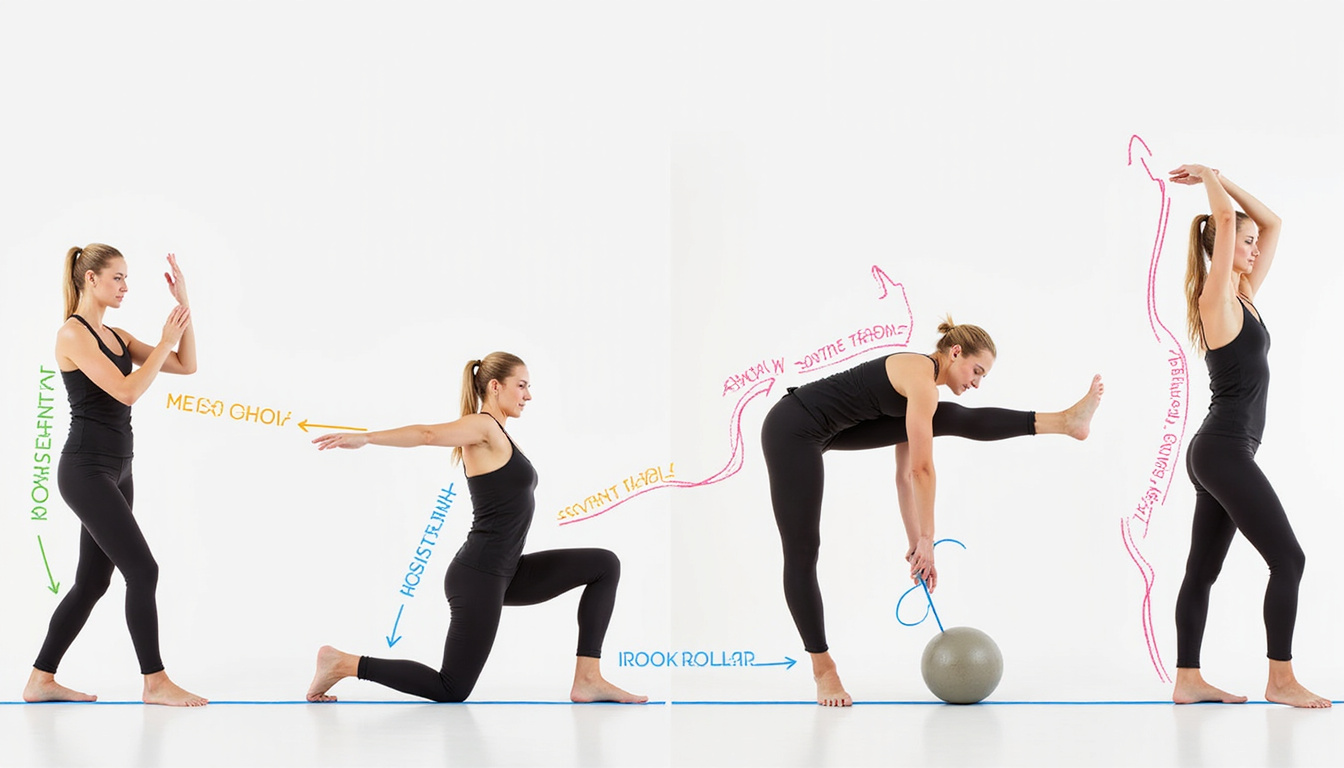
Practical spring strategies:
- For joints that feel unstable:
• Use slightly heavier springs. They give clear feedback in closed-chain moves like footwork or elephant. - For areas with stiffness and guarding:
• Use lighter springs. They encourage small, controlled motions and boost proprioception (for arm springs or leg circles).
Ask: “What spring setting gives clear, supported motion?” rather than “How can I push my client harder?”
Principle #5: Respect Fatigue—Especially in the Small Stabilizers
In rehab, fatigue is a warning sign, not a medal of honor. When small stabilizers (the deep hip rotators, multifidi, lower traps, etc.) tire, big muscles take over and the pattern fails.
Watch for:
- Shaking that starts in a small muscle and spreads to a whole leg or torso.
- Lost breath rhythm.
- Increased bracing or breath holding.
- A sudden rise in “pinchy” or “grindy” sensations.
In Pilates rehab, you stop before fatigue spreads. You may change position, reduce load, or shift focus.
A Sample 30-Minute Pilates Rehab Session Outline
Use this outline for your own practice or to adapt it for clients.
- Breath + Alignment Check-In (3–5 min)
- Lie on your back and focus on breath work.
- Practice pelvic neutral or imprint.
- Gentle Mobilization (5 min)
- Do pelvic clocks.
- Use book-openers or arm arcs.
- Loaded but Supported Footwork (6–8 min)
- Work with light to moderate springs and a narrow range.
- Focus on ankle, knee, and hip tracking.
- Targeted Core Work (6–8 min)
- Do supine arms-in-straps work, supporting your legs.
- Try dead bug variations, marching, or heel slides.
- Hip and Shoulder Girdle Integration (5–7 min)
- Practice side-lying leg work on a reformer or mat with a band.
- Use arm springs that target clear scapular glide.
- Nervous System Down-Shift + Integration (2–3 min)
- Do gentle spinal rotations.
- Relax with a child's pose over a box or bolster.
Adjust the time and complexity based on your symptoms and capacity.
Supporting Your Pilates Rehab with Smart Lifestyle Habits
Movement is key, yet recovery involves the whole body. Many Pilates practitioners push a busy schedule. They teach classes back-to-back, then squeeze in their own practice. Rehab means treating recovery like an athlete does.
Consider:
- Sleep and recovery windows: Deep repair and adaptation need quality sleep. (source: NIH)
- Everyday posture: How you sit or stand can support or undo your studio work.
- Reasonable loading outside the studio: Lifting heavy bags or poor posture may add to discomfort.
Where a Joint & Muscle Supplement Can Fit In
Many American Pilates professionals now use joint and muscle supplements as part of a whole recovery plan. This is common for those who teach many classes, rotate between mat and reformer, or combine different workout forms.
In Pilates rehab, a high-quality supplement like Regenerix Gold may support:
- Joint comfort during and after workouts.
- Healthy cartilage and connective tissue.
- Muscle recovery after repeated teaching or long class days.
Remember, dietary supplements do not diagnose or cure disease. They work best with smart movement, proper rest, and a balanced diet. If you are pregnant, nursing, taking medication, or seeing a doctor, consult a trusted healthcare professional before beginning any new supplement.
FAQ: Pilates Rehab and Recovery
-
Is Pilates rehab enough, or do I need physical therapy too?
For mild, related discomfort, a Pilates rehab approach with a skilled instructor may help many. If you have serious issues, sudden changes in function, or are worried about a condition, see a doctor. Many teachers work with physical therapists so you get both care and movement training. -
How often should I do Pilates rehabilitation sessions?
Many people benefit from 2–3 Pilates rehab sessions a week. Take a day off between challenging sessions. On off days, include light walking, gentle stretching, and breath work. Let your energy and recovery guide the session frequency. -
Can I do Pilates for injury rehab and still take group classes?
Yes. You might swap some group sessions for private or semi-private rehab focus. You may need to change choreography, ranges, or spring settings. Tell your teacher what you feel. Think of Pilates injury rehab as a smarter phase that upgrades your technique so you return to group classes with better form and less worry.
Why Savvy Pilates Practitioners Choose Regenerix Gold
As a serious Pilates teacher or practitioner, your body is both your tool and your lifestyle. Time off the reformer can mean lost income, missed progress, and extra stress over medical bills. Many move-minded professionals seek support for their joints and muscles even before problems grow.
Regenerix Gold helps people who want to keep moving high-level while trusting their joints and muscles. For those who use Pilates rehab wisely, it is a smart add-on to a routine that already uses precise movement, mindful loading, and good recovery.
If you make long-term, data-based health decisions and know how much time off work can cost, using a joint and muscle supplement can be a small, predictable cost compared with the alternative. Consider adding Regenerix Gold to your daily plan. It helps keep your body ready for the studio, your clients, and the life you have built.
Regenerix Gold
Health Note
Always consult a licensed medical doctor for your health issues.
Special Discount
If you prefer preventive nutrition to minimize expensive knee surgery and potentially addictive pharmaceuticals, Regenerix Gold is your savvy solution.
You qualify for a special discount.
Simply use the link below and a discount will automatically be applied during checkout.
Get Regenerix Gold => HERE


