

If you play hard and your ankles feel tight, wobbly, or “sticky,” then your distal mobility may hold your game back. Distal mobility means the movement of joints far from your center – your ankles, feet, and toes. For Pickleball players, ankle and foot motion are prime real estate. Better mobility means quicker first steps, safer lunges, smoother split-steps, and more confidence when you plant and pivot on awkward balls.
This guide shows why distal mobility matters for Picklers. It connects mobility with ankle strength and balance. It then gives you the best exercises to restore that mobility without turning your warm-up into a full-time job.
Why distal mobility is a big deal in Pickleball
Pickleball is not just “casual fun” anymore—especially if you play rec ball 3–5 times a week or join leagues and tournaments. Your ankles work hard with:
• Fast lateral shuffles that cover the kitchen
• Sudden stops after chasing a lob
• Hard plants and twists on third-shot drops and drives
• Backward and diagonal steps that do not always feel textbook-perfect
If your distal mobility is limited – especially in your ankle – you may notice:
• Stiff or restricted dorsiflexion when your knee cannot track forward over your toes
• Hesitation or instability when you change direction quickly
• Extra load on your knees, hips, or lower back as your ankle struggles to “give”
• A feeling that your feet are not quick or reactive in the non-volley zone
Improving distal mobility does more than make you feel looser. It also:
• Provides better shock absorption
• Boosts balance and stability during awkward reaches
• Enables smoother, more efficient movements through the whole chain
Distal mobility 101: What it means for your ankles
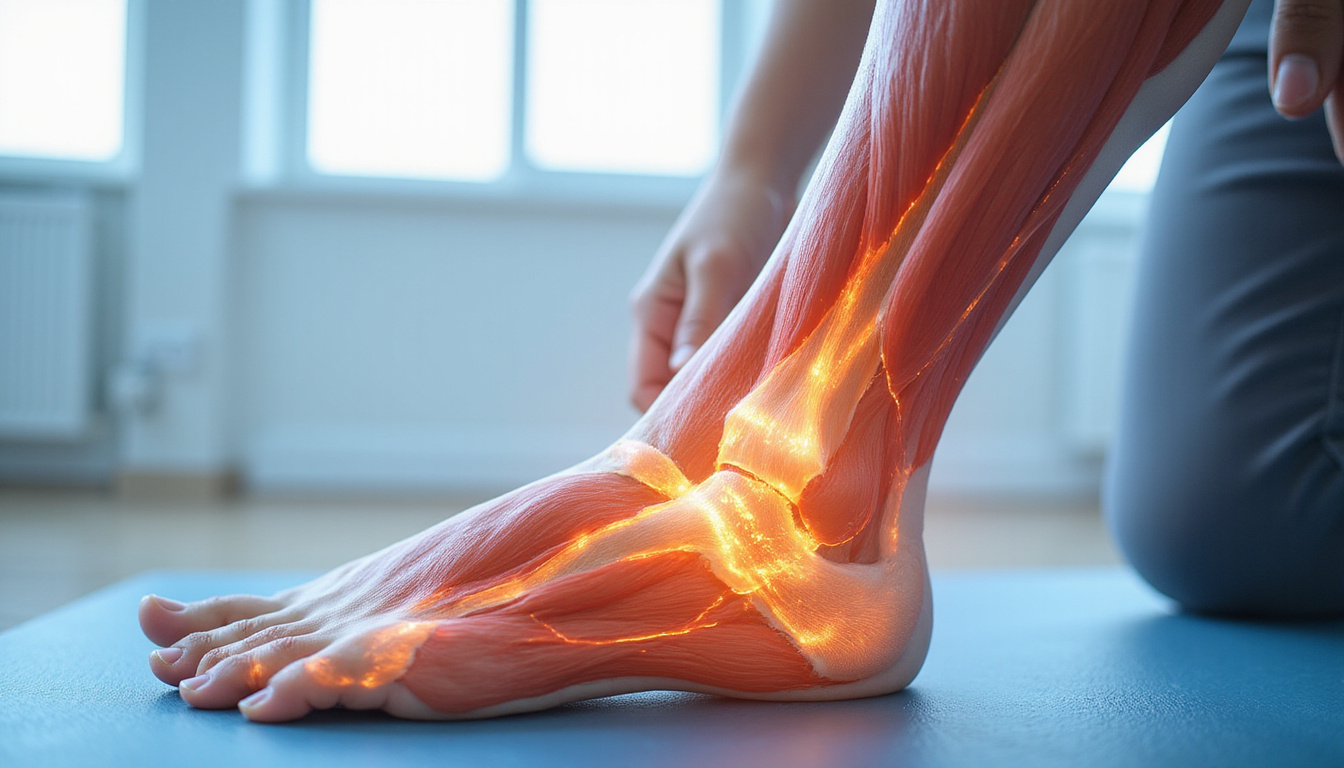
“Distal” means parts of your body that are farther from the center. Your feet, toes, and ankles are classic examples. For Pickleball players, ankle distal mobility includes these motions:
• Dorsiflexion – your knee moves forward over your foot. This motion is huge for lunges, split-steps, and drops.
• Plantarflexion – your toes point away. This helps with push-off and quick acceleration.
• Inversion/Eversion – your foot rolls inward then outward. These motions are key for edging, cutting, and staying upright when you face off-balance shots.
• Toe mobility – especially the big toe, which is crucial for push-off and stability
When these movements are limited, your body forces other joints (knee, hip, and low back) to compensate. This extra load can sap your power and control on court.
Warm-up: Prepping your ankles before you step on court
These drills target distal mobility in your ankles and feet. They take 3–5 minutes and work well by the parking lot or near a fence.
1. Ankle circles – Controlled range builders
• Sit or stand while holding onto a fence or bench.
• Lift one foot off the ground.
• Draw slow, large circles with your toes, 10–15 clockwise and 10–15 counterclockwise.
• Switch sides.
Keep the movement smooth and controlled. Think of oiling a rusty hinge before that first kitchen exchange.
2. Dynamic calf rock-backs
• Stand facing a wall or fence with one foot in front of the other.
• Keep your front heel on the ground.
• Rock your front knee gently forward over your toes until you feel a stretch in your lower calf and ankle.
• Rock back out.
• Complete 15–20 reps on each side.
This exercise wakes up dorsiflexion, which you need for every split-step or lunge.
3. Toe and arch activation
• Stand tall, barefoot if possible, on a safe surface.
• Spread your toes as wide as you can, then relax.
• Then lift just your big toes, followed by your lesser toes.
• Do 10–15 reps for each movement.
This drill primes the small stabilizers in your feet that keep you upright when you move off the kitchen line.
These exercises go deeper than just a quick warm-up. Do them 3–4 times a week on non-consecutive days. Think of them as part of your “Pickleball maintenance plan.”
1. Half-kneeling ankle dorsiflexion drill
Why Picklers need it: Better dorsiflexion leads to cleaner lunges for short balls and helps you decelerate safely after chasing a lob.
How to do it:
- Get into a half-kneeling position with one knee down and your other foot flat in front.
- Keep your front heel on the floor.
- Drive your front knee gently forward so it passes over your toes (aim for the area of the second or third toe).
- Pause at the end of the movement for 1–2 seconds, then ease back.
- Complete 2–3 sets of 12–15 reps per leg.
Avoid pain; you are coaxing motion, not forcing it.
2. Ankle “windshield wipers” for inversion/eversion
Why Picklers need it: This drill improves your ankle’s ability to handle lateral steps. It also helps prevent that “rolling” feeling if you get caught wrong-footed.
How to do it:
- Sit on a chair or bench with your feet flat on the ground.
- Keeping your heels on the floor, slowly roll your feet so that your soles turn inward, then outward.
- Keep the movement controlled; do not jerk or bounce.
- Do 2–3 sets of 15–20 reps.
Think of this drill as teaching your ankle to navigate messy foot positions safely when you scramble during a point.
3. Heel-elevated deep squat hold
Why Picklers need it: This drill trains both ankle and hip mobility. You rely on these motions when you squat for low balls or recover quickly from a lunge.
How to do it:
- Place your heels on a rolled towel or a low wedge.
- Stand with your feet shoulder-width apart.
- Slowly squat as deep as comfortable, keeping your heels supported and your chest up.
- Hold the squat at the bottom for 20–30 seconds while you breathe steadily.
- Do 2–3 holds.
You should feel a strong stretch in your ankles and calves, along with gentle work in your hips and thighs.
4. Single-leg balance with ankle tilt
Why Picklers need it: This drill combines balance and distal mobility. It simulates a one-legged recovery after reaching for a wide dink or an ERNE.
How to do it:
- Stand on one leg near a wall or fence for light support with your fingertips.
- Keep a slight bend in your standing knee.
- Let your ankle sway gently in tiny circles or in a “figure 8” pattern, while your knee stays mostly over your toes.
- Hold for 30–45 seconds per leg and complete 2–3 sets.
This drill teaches your ankle to make small adjustments – exactly what happens during live points.
5. Calf raise with slow lower and toe focus
Why Picklers need it: This exercise builds strength in your calf and foot muscles while reinforcing controlled plantarflexion. It is crucial for quick first-steps and safe push-off.
How to do it:
- Stand with both feet while holding a fence or chair for support.
- Slowly rise onto your toes over 2–3 seconds.
- Pause at the top for 1 second.
- Lower yourself back down slowly over 3–4 seconds, letting your ankles move through the full range of motion.
- To increase the difficulty, do this exercise on one leg.
- Complete 2–3 sets of 10–12 reps.
Keep the movement controlled – you are training strength and stability, not bouncing.
A Simple Pickleball Distal Mobility Routine
Put these exercises together into a quick and efficient program:
- Ankle circles – 1 set each direction per leg
- Dynamic calf rock-backs – 15–20 reps per leg
- Half-kneeling dorsiflexion – 2 sets of 12–15 reps per leg
- Ankle windshield wipers – 2 sets of 15–20 reps
- Calf raises (slow lower) – 2 sets of 10–12 reps
- Single-leg balance with ankle tilt – 2 sets of 30 seconds per leg
Do this routine 3–4 times weekly. After a few weeks, you will likely notice smoother movement, more trust in your footing, and less need to brace when you change direction.
Recovery, Nutrition, and Distal Mobility: Where Regenerix Gold Fits In
Your on-court work and exercises are just part of the overall plan. Your joints and muscles also benefit from proper recovery and nutrition.
Many American Pickleball players now focus on nutrition to support:
• Comfortable, flexible joints that can handle constant stops, starts, and lunges
• Healthy muscles that bounce back after long rec sessions or tournaments
• Overall physical resilience so they keep performing at their best
Regenerix Gold is a nutrition-based supplement recommended by doctors and physical therapists. It supports healthy joints and muscles while you remain active. It has been used internationally for over a decade, and many users say it helps them feel more confident—whether they compete in 4.0 brackets or simply enjoy weekday open play.
While no supplement can replace training, sleep, or smart load management, some players find that a targeted formula for joint and muscle health is a good addition to:
• Distal mobility exercises
• Strength training
• Good hydration and protein intake
• Adequate rest days
Always consult your healthcare professional if you have questions or use medications before starting any new supplement.
Regenerix Gold
On-Court Habits to Protect Your Ankles and Boost Distal Mobility
Along with your off-court routine, adopt these habits when you play:
• Respect your warm-up. Spend a few minutes on the warm-up drills above before starting cold dinks or drives.
• Scale your intensity. If your ankles feel stiff, ease into cutting and hard direction changes instead of going full throttle from the start.
• Rotate your shoes. Use Pickleball-specific court shoes with proper lateral support to reduce unnecessary strain on your ankles.
• Add “movement breaks.” Between games, perform quick ankle circles, calf rock-backs, or toe spreads instead of sitting on the bench while scrolling on your phone.
These small changes help you maintain distal mobility gains and improve on-court performance.
When to Get Things Checked Out
Watch out if your ankles:
• Feel unstable or give way often
• Swell, bruise, or cause sharp pain
• Make it hard for you to bear weight or walk normally
If any of these signs appear, pause your self-management routines and see a qualified healthcare professional (such as a sports PT or orthopedic provider). They can rule out serious issues, give you a tailored plan, and advise you on safe recovery so you can return to court.
FAQ: Distal Mobility and Pickleball
Q1: How does distal mobility help my balance in Pickleball?
A1: Better distal mobility in your ankles and feet lets your body make tiny corrections whenever you land, lunge, or change direction. This extra “give” in your joints means steadier balance at the kitchen and during scramble points.
Q2: What are the best distal mobility ankle drills for Pickleball players?
A2: Some of the best drills are half-kneeling dorsiflexion, ankle circles, ankle windshield wipers, and single-leg balance with ankle tilt. These exercises work in many directions and challenge your balance, just as on-court moves require.
Q3: Can distal joint mobility affect my knee and hip during Pickleball?
A3: Yes. When your distal joint mobility – especially at the ankle – is limited, your knee and hip compensate by taking more load. This extra strain can lead to more pressure on those joints during lunges, stops, or twists. Improving ankle and foot mobility spreads the load more evenly and makes movements more efficient overall.
Play Longer, Move Better: Your Next Step
Good hands, a solid strategy, and a deep bag of shots only tell part of the Pickleball story. The hidden edge comes from the basics: how well your ankles move, how stable your feet are, and how confidently you plant, cut, and recover without joint concerns.
You now have a practical distal mobility plan along with on-court habits to support your game. If you want added nutritional support for your joints and muscles—like many long-term players do—consider trying Regenerix Gold as part of your routine.
Getting a bottle is a small investment compared with:
• The cost of time off work from a bad injury
• The high expense of repeated medical visits
• The frustration of missing league, ladder, or tournament play because your body won’t cooperate
Players who plan for long-term health tend to remain on court, keep their spot in the best rec groups, and spend less time sidelined.
If you want to be that player – the one who moves well, recovers well, and makes smart decisions behind the scenes – start your distal mobility work and consider adding Regenerix Gold to your Pickleball toolkit.
https://youtu.be/mGrH5UWFxUs?si=X9bScbG6dvejGkZf
Health Note
Always consult a licensed medical doctor for your health issues.
Special Discount
If you prefer preventive nutrition to minimize expensive knee surgery and potentially addictive pharmaceuticals, Regenerix Gold is your savvy solution.
You qualify for a special discount.
Simply use the link below and a discount will automatically be applied during checkout.
Get Regenerix Gold => HERE


