
Pickleball joint flossing: fast moves to relieve pain and boost mobility
by Zestora on Oct 19, 2026

Below is the revised version that links words closely in simple, clear sentences. The formatting remains as in the original text.
––––––––––––––––––––––
If your knees bark after a third game,
or your paddle shoulder feels “sticky” on overheads,
or your hips protest when you sprint for an Erne,
you are not alone.
Many players now try pickleball joint flossing.
They use it on the court as a simple way to ease discomfort and boost mobility.
This helps them play longer, harder, and with more confidence.
Below we unpack what joint flossing is and why it matters for Picklers.
We explain how to do it safely and show how Regenerix Gold—a targeted nutrition strategy—can support healthy joints and muscles.
This way you can stay in the kitchen by choice, not by bodily force.
––––––
What is pickleball joint flossing?
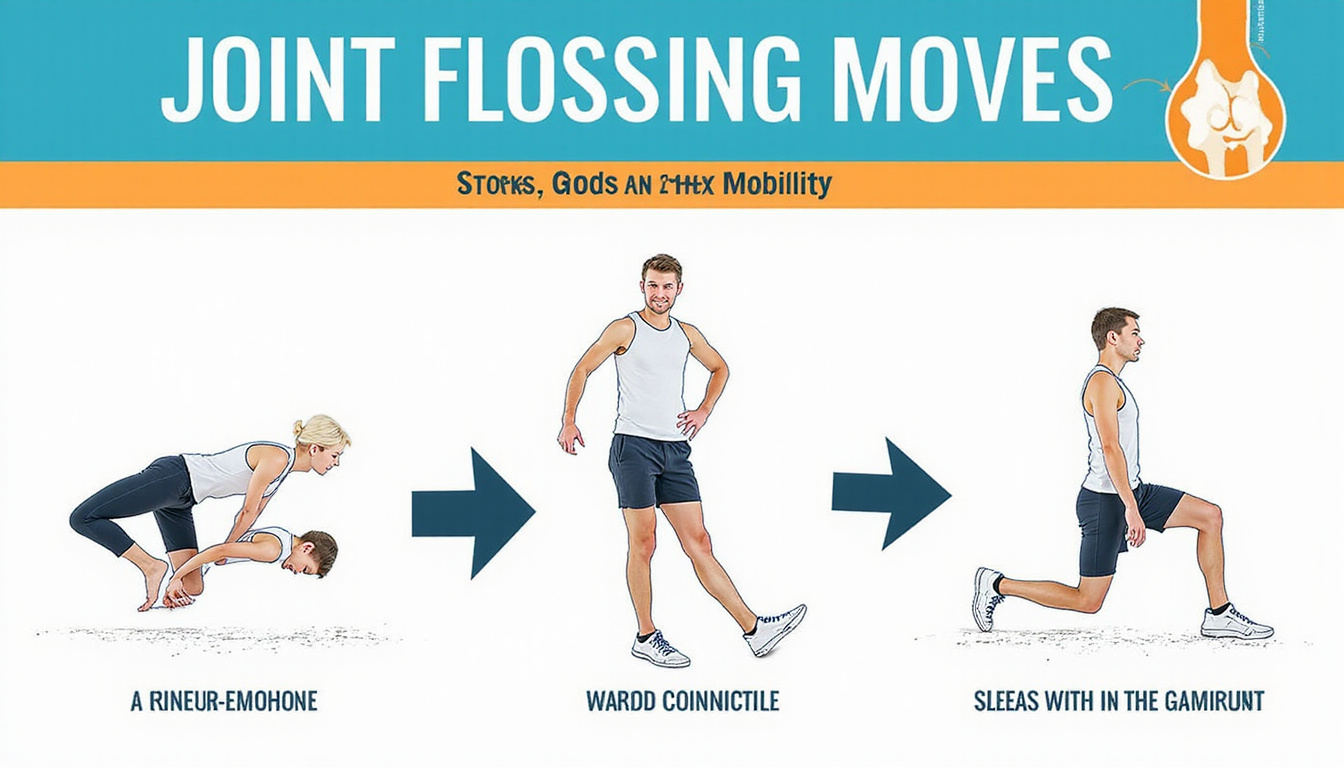
In pickleball, “joint flossing” means moving a joint gently and repeatedly.
A joint and its tissues glide in a safe range of motion.
Imagine a smooth string running through a ring again and again instead of a hard yank once.
For Picklers, pickleball joint flossing is about these points:
• Move the joint slowly in small steps.
• Stay just below the mark of discomfort.
• Move in many directions, not just one.
• Reset stiffness before and after each game.
Rather than static stretching in the parking lot, joint flossing gives your body quick “mobility snacks.”
You can do these snacks between points, games, or sessions.
––––––
Why Picklers Need Joint Flossing
Pickleball has quick bursts, hard stops, and twisty footwork.
These put stress on joints that do not move well.
Common areas of pain for Picklers are:
• The paddle shoulder on overheads, drives, and dinks.
• The elbow and wrist from constant hitting and resetting.
• The knees from split steps, lunges, and rapid turns.
• The hips and low back from rotation and reaching.
• The ankles from shuffles, crossovers, and lunges to the kitchen.
When joints do not glide, muscles tighten.
The body then uses awkward mechanics and causes twinges.
Joint flossing works by:
• Gently warming up the cartilage and connective tissues.
• Increasing circulation in stiff spots.
• Training your system to feel safe in new positions.
• Widening the range for lunges, volleys, and overheads.
You do not wait for a bad moment to chase a lob.
Instead, you keep your joints ready for the next rally.
––––––
Key Principles for Safe Pickleball Joint Flossing
Before you try any moves, remember these rules:
-
Stay below pain
You may feel a mild stretch, but not sharp pain.
If a move hurts, reduce the range or change it. -
Slow and smooth wins
Do not bounce quickly.
Think of gliding or polishing the joint. -
Small sets, often
Try 10–20 reps per move.
Do 1–2 sets before you play, and once more after or between games. -
Breathe normally
Do not hold your breath.
Slow, steady breathing keeps muscles relaxed. -
Use both sides
Floss the side that feels fine as well.
Balanced joints lead to smoother moves.
––––––
Fast Pickleball Joint Flossing Moves for the Court
You can do these moves by a fence or in a warm-up area.
You need no fancy gear or yoga mat.
1. Shoulder Flossing for Smoother Serves and Overheads
If your paddle shoulder feels stiff on serves, drives, or speed-ups, try these moves.
A. Shoulder circles with reach
• Stand tall with no paddle.
• Reach your right hand forward at chest height.
• Make small circles with your fist and let the circles grow.
• Do 10 circles clockwise and 10 counterclockwise.
• Repeat with your arm a bit to the side and then a bit overhead.
• Switch sides.
B. “Figure-8” Shoulder Floss
• Keep your arm relaxed at your side with your thumb forward.
• Draw a sideways “figure-8” with your hand.
• Let the shoulder rotate gently.
• Do 10–15 reps on each side.
This flossing helps your rotator cuff and capsule glide freely.
It keeps your swing smooth at the top of your motion.
––––––
2. Elbow and Wrist Flossing for Dinks and Drives
If long dink rallies or heavy drives make your forearm tight, try these moves.
A. Wrist Glide with Elbow Tuck
• Tuck your right elbow close to your side at a 90-degree angle.
• Open your hand with the palm up.
• Slowly bend your wrist back (fingers to the sky) and then flex (fingers down).
• Keep your elbow close; move only the wrist.
• Do 15–20 reps. Switch sides.
B. Forearm Rotation (Supination/Pronation)
• Keep the same elbow-tucked position with your fist closed.
• Rotate your forearm so your palm faces up, then down slowly.
• Do 15–20 reps on each side.
These moves ease the tissues around your elbow and wrist.
This is a win when you play long dinking sessions.
––––––
3. Hip Flossing for Lunges and Lateral Movement
Tight hips can make wide balls and low volleys hard.
A. Standing Hip Swing (Front-to-Back)
• Hold the fence or net post with one hand.
• Stand on your left leg and swing your right leg gently forward and back.
• Start with a small swing.
• Do 15–20 swings then switch legs.
B. Standing Hip Opener (In-and-Out)
• Use the same stance, holding the fence.
• Swing your right leg across your body and then out to the side like a gate.
• Keep the motion slow and controlled.
• Do 10–15 reps then switch sides.
These moves floss the hip joint in many directions.
They keep your split step, lunges, and recovery smooth.
––––––
4. Knee Flossing for Happier Court Coverage
Your knees work hard with starts, stops, and turns.
Keep them moving well with these moves.
A. Supported Knee Slides
• Hold the fence or net post.
• Stand with feet hip-width apart and a soft knee bend.
• Slide your knees forward and back over your toes in a small range like a mini squat.
• Do not push for depth—keep it smooth.
• Do 15–20 reps.
B. Knee Circles
• Stay in the same stance.
• With knees slightly bent, make small circles with both knees together.
• Do 10 circles in one direction and 10 in the other.
• Keep your heels on the ground.
These moves help your knees feel well-lubricated before full play.
––––––
5. Ankle Flossing for Better Balance at the NVZ
A rolled ankle can stop you in your tracks.
Flossing your ankles boosts stability for shuffles and quick turns.
A. Ankle Pumps
• Stand or sit on a bench.
• Raise one foot slightly.
• Point your toes away, then pull them toward your shin slowly.
• Do 20 reps, then switch sides.
B. Ankle Circles
• Use the same position.
• Draw slow circles with your toes.
• Do 10–15 circles in each direction on each ankle.
Better ankle movement leads to quicker and controlled moves at the kitchen line.
––––––
Sample Pre-Game Pickleball Joint Flossing Routine (5–7 Minutes)
Use this routine before rec play, ladder league, or tournaments:
- 1 minute: Shoulder circles and figure-8s (both arms)
- 1 minute: Wrist and forearm flossing
- 2 minutes: Hip swings (front/back and in/out)
- 1–2 minutes: Knee slides and circles
- 1–2 minutes: Ankle pumps and circles
You can also add a move or two between games when you feel stiff.
Think of it as a “reset” before the next battle in the kitchen.
––––––
Why Nutrition Matters as Much as Movement
Joint flossing is a strong tool, but it is one half of the plan.
Your joints and muscles need quality building blocks too:
• Nutrients that build cartilage and connective tissues
• Nutrients that support a healthy inflammatory response
• Compounds that protect against exercise stress
Research shows that certain nutrients help joint comfort and function when paired with regular exercise and a healthy lifestyle.
For an active Pickler on the court many hours each week, this internal support makes a big difference.
It can be the difference between calling it quits early and playing “just one more game” (or even five more).
––––––
Regenerix Gold: Nutrition Support for Picklers’ Joints and Muscles
Many American Pickleball players now add Regenerix Gold to their routines.
They use it as a nutrition way to support healthy joints and muscles—especially when playing several times a week.
Here’s how it fits with joint flossing and performance:
• Nutrition-based formula
Regenerix Gold is a dietary supplement.
It offers specific nutrients to support joint and muscle health.
It is not a drug and does not diagnose or cure any disease.
It gives your body the nutritional support it needs.
• Recommended by doctors and physical therapists
Many healthcare pros, including doctors and PTs, recommend Regenerix Gold.
They pair it with movement, mobility work, and smart training.
• A decade of positive use
Regenerix Gold has been used worldwide for more than ten years.
Users share positive feedback when they want to stay active with less joint worry.
• Complements your joint flossing routine
Joint flossing works from the outside in.
Regenerix Gold works from the inside out by providing targeted nutrients.
Use it with a balanced diet and regular exercise.
–––––– Regenerix Gold
––––––
How to Combine Joint Flossing, Smart Habits, and Regenerix Gold
Here is a sample plan for an active American Pickler:
• Before You Play
Do your 5–7 minute joint flossing routine.
Start with light paddle hits.
Follow with a few third shots and dinks to raise the intensity gradually.
• During Play
Between games, take 30–60 seconds to do one or two flossing moves for spots that feel stiff (e.g., shoulders or knees).
• After Play
Cool down with gentler flossing moves.
Add a few minutes of easy walking.
• Daily Support
Use Regenerix Gold as directed on the label.
Pair it with good hydration, enough protein for muscle support, and a healthy diet.
Always talk to your healthcare provider before starting any new supplement.
This is especially important if you have any health issues, take medications, or if you are pregnant or nursing.
––––––
FAQ: Pickleball Joint Flossing and Joint Support
Q1: Is pickleball joint flossing good for knee and hip stiffness?
Yes.
Many players say that gentle joint flossing for the knees and hips makes them feel looser during play.
Remember to avoid forcing movements or pain.
Pair the flossing with proper exercise and nutrition.
Q2: How often should I do joint mobility drills for pickleball?
Most Picklers do joint flossing before and after games.
They also add a few sessions on rest days.
Regular short sessions work better than long, intense ones.
Q3: Can a joint support supplement help my pickleball performance?
A joint and muscle support supplement like Regenerix Gold can complement your drills.
It adds nutritional support.
It is not a fast-acting drug or treatment for medical issues.
It is part of an overall plan to stay comfortable, mobile, and ready to play.
––––––
Play Smarter, Not Shorter
You work hard to earn your rating and perfect your third shot.
You practice cross-court dinks over and over.
Investing in paddles, shoes, and clinics is smart.
But do not ignore your body’s hardware—your joints and muscles.
Do these three things:
• Build a quick pickleball joint flossing routine into your warm-up and cool-down.
• Respect your body with proper rest and moderate volume.
• Support your joints and muscles from the inside out with a supplement like Regenerix Gold.
Use it as directed and follow professional advice.
This is what the best, long-term Picklers do.
They protect their ability to stay on the court, compete, and enjoy the game.
They worry less about hard stops or overheads that might hurt later.
If you want to reduce healthcare costs and avoid downtime,
consider getting a bottle of Regenerix Gold.
Pair it with your new joint flossing routine and see the difference.
Your future self at the kitchen line may thank you with every smooth step, swing, and split step.
https://youtu.be/mGrH5UWFxUs?si=X9bScbG6dvejGkZf
Health Note
Always consult a licensed medical doctor for your health issues.
Special Discount
If you prefer preventive nutrition to minimize expensive knee surgery and potentially addictive pharmaceuticals, Regenerix Gold is your savvy solution.
You qualify for a special discount.
Simply use the link below and a discount will automatically be applied during checkout.
Get Regenerix Gold => HERE


